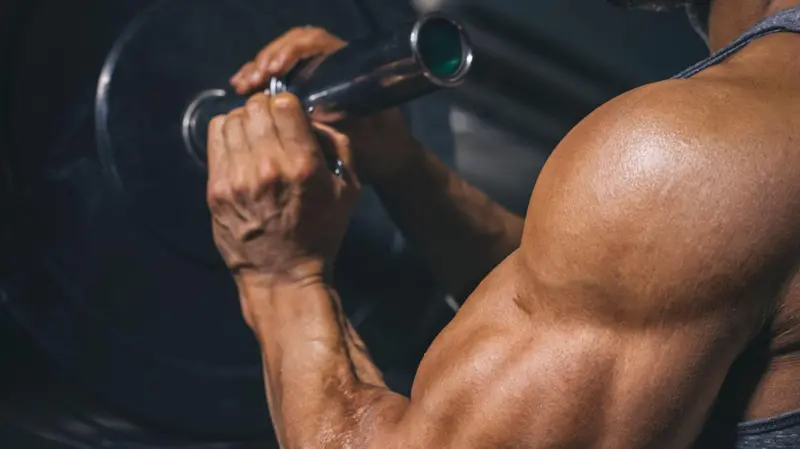
young bodybuilders dying

Why are young bodybuilders dying so early

Brazilian bodybuilder and fitness influencer Melson Araujo recently shared a gym photo showing his impressive physique. Just a few hours later the 35 year old reportedly became ill at home and died suddenly.

The exact cause of his death has not been officially confirmed. However his passing has added to growing concerns about the number of young bodybuilders who have died unexpectedly in recent years.

Earlier this year 22 year old Brazilian bodybuilder Gabriel Ganley also died after suffering sudden cardiac arrest.

In 2024, two other Brazilian bodybuilders in their 30s and 40s also died from heart related problems including one who collapsed during a competition.

Similar cases have been reported around the world. American bodybuilder Dallas McCarver died in 2017 at the age of 26, while German fitness influencer Jo Lindner passed away in 2023 at the age of 30.

These deaths have raised an important question. why are some people who appear extremely fit and healthy dying at a young age?

A 2025 study published in the European Heart Journal examined nearly 20,000 amateur and professional bodybuilders who competed between 2005 and 2020.

Researchers found that professional bodybuilders were more than five times more likely to die from sudden cardiac arrest than amateur competitors.

The study recorded 121 deaths including 46 caused by sudden cardiac arrest. The average age at death was 45 years but for active competitors it was only 34.7 years.

Researchers believe several factors may increase the risk, including the use of performance enhancing drugs rapid weight loss before competitions and extremely intense strength training.

Another 2025 study from Denmark published in the journal Circulation followed 1,189 men who used anabolic steroids and compared them with nearly 60,000 men over 11 years.

The researchers found that steroid users had a nine times higher risk of developing cardiomyopathy a disease that weakens the heart muscle.

They also had about three times the risk of heart attack and heart failure.

Experts say anabolic steroids may also raise blood pressure speed up the build up of plaque in the arteries and change the structure of the heart.

Autopsy reports from several bodybuilders have shown that many had enlarged hearts and thicker heart walls especially in the left ventricle.

These changes can increase the risk of dangerous heart rhythm problems and heart failure.

One of the best known cases was Dallas McCarver, whose heart weighed 833 grams more than twice the normal weight of an adult male heart.

A 2022 review also found that many American bodybuilders had hearts that were much larger and thicker than normal.

In some cases even athletes in their 20s showed enlarged hearts thickened heart muscles, and serious coronary artery disease.

Similar Posts

  • Parents stress linked to giving children smartphones

    Many parents give smartphones to their children and a major reason behind this behaviour has now been identified. Parents who experience stress tend to give their children devices to keep them occupied or calm while also being less likely to enforce limits on screen time. A study conducted by the Center for Children and Families at Florida International University included 822 parents raising children between the ages of 4 and 8. The participants provided information through online surveys about their children’s behavior, parental stress and screen-time habits. The findings showed that parents tend to allow their children to use smartphones for longer periods when their children’s behaviour becomes difficult to manage. Researchers said parents should not hesitate to seek support for managing their own stress. They also advised parents to set limits on children’s screen time and provide them with purposeful, age-appropriate content. They emphasized that parents should establish appropriate boundaries and spend quality time with their children to promote a healthy environment. A considerable amount of research has been conducted on children’s excessive smartphone use. A study published in January 2026 explored links between online content and problems related to children’s development. Similarly, research published in BMC Public Health in October 2024 found that spending excessive time in front of screens can have negative effects on mental health. The risk of depression, anxiety, irritability and other problems was particularly higher among children aged 9 and 10. The research found that the more time children spent in front of screens, the more severe their symptoms of depression tended to be. According to the study, activities such as video chatting, watching videos and playing video games were associated with a greater increase in this risk.

  • Beautiful childhood is lost

    Childhood has changed dramatically over the years, and many of its simple joys seem to be disappearing. In the past, children spent their evenings playing outdoors with cousins and neighbourhood friends flying kites, playing with marbles rolling tyres through the streets and enjoying games that created lasting memories.   I still remember how the evening sky in our city used to be filled with colourful kites bringing excitement and happiness to children of all ages. Today however these traditions are becoming rare. Instead of outdoor activities many young children spend hours using mobile phones and tablets often because they are given these devices to keep them occupied.   Excessive screen time at an early age can affect eyesight delay language development reduce social interaction, and limit opportunities to develop important physical and communication skills.   While technology certainly has its benefits, it should not replace the experiences that help children learn build friendships and enjoy a healthy childhood. Parents should encourage outdoor play family interaction and traditional games so that children can grow up with happy memories and balanced development rather than spending most of their childhood in front of screens

  • Patients are not being treated equally

    I want to draw attention to the problem of unequal treatment of patients in hospitals. Some patients are treated well because they are rich or have connections while poor patients often have to wait for a long time and do not receive proper attention. This is unfair and can put patients’ lives at risk. Doctors and hospital staff should treat every patient equally regardless of their financial status or social position. Hospitals should provide proper care medicines and emergency treatment to everyone. request the authorities to take strict action against this unfair practice and ensure that all patients receive equal and respectful treatment.

  • Riyadh, Ankara, Islamabad — and the Empty Chair in New Delhi

    By Rai Saad Ali Three folders, two green and one crimson, changed hands beneath a portrait of Saudi King Salman at Al-Safa Palace in Mecca, the ink still fresh on the pages inside. Erdoğan, Crown Prince Muhammad bin Salman and Shehbaz Sharif held them up for the cameras at the Makkah Al-Mukarramah Summit for Joint Defence on August 7th, 2026. It was a carefully staged image, and the message was unmistakable: three of the Muslim world’s most consequential states, standing together in Islam’s holiest city, making clear that the region’s old security order is no longer one whose terms they are content merely to accept. The Mecca Joint Defence Agreement, signed that day by Türkiye, Saudi Arabia and Pakistan, commits each signatory to treat an armed attack against any one of them as an attack against all three. It builds on the bilateral Strategic Mutual Defence Agreement signed by Islamabad and Riyadh in 2025, but Türkiye’s accession changes the strategic arithmetic considerably. What was previously a two-country understanding, rooted in a decades-old relationship, is now a trilateral framework spanning the eastern Mediterranean, the Gulf and South Asia — and it was signed without so much as a courtesy call to New Delhi. That mutual-defence clause is exactly what has prompted comparisons to NATO’s Article 5, which treats an attack on one member as an attack on all. But the parallel does not hold up well under scrutiny. It would be misleading to oversell this agreement as a “Muslim NATO.” It is not one. The pact names no adversary, creates no joint military command, and does not specify what response would be required if a signatory were attacked. It establishes a framework for defence cooperation and coordination rather than a NATO-style alliance with clearly defined operational commitments, and Saudi officials have stressed that the agreement is defensive in character and not directed against any particular country. That distinction matters. NATO is more than seventy years old and has evolved into a mature institutional and military alliance over generations; the Mecca Agreement is still in its infancy. Over time, it could develop stronger institutions and deeper coordination that bring it closer in character to NATO. For now, that remains a possibility rather than an established trajectory. Yet dismissing the agreement as merely aspirational would be its own mistake. Frameworks matter, especially when they are signed in Mecca rather than in a foreign ministry conference room. The choice of venue was not incidental. It was a statement about whose summit this is, and who now gets to convene the Muslim world’s most powerful states at a moment when Washington’s security guarantees have begun to look less than absolute. That erosion of confidence in Washington is precisely what makes the partnership’s internal logic so coherent: each partner brings something the others lack, and that complementarity is the pact’s real substance. Turkey supplies NATO’s second-largest standing military and an increasingly self-sufficient defence-industrial base — the same industry that in 2023 sold Saudi Arabia drones in what Ankara called its largest defence export deal to date, and which has for years supplied Pakistan with warships and trainer aircraft. Pakistan brings the only nuclear deterrent in the Muslim world and a military establishment with decades of experience training and advising Gulf forces. Saudi Arabia brings the capital and the religious legitimacy that only the custodian of the two holy mosques can offer. What ties these three complementary roles together is a detail that deserves precision rather than a slogan. Pakistan’s air force flies the JF-17 Thunder, co-produced with China. Türkiye, a NATO member since 1952, has simultaneously built its own defence-industrial relationship with Beijing even as it remains formally inside the Western alliance system. That a NATO state, a nuclear-armed South Asian state with deep Chinese defence ties, and the Gulf’s foremost oil power can now sit inside the same mutual-defence framework shows how far the unipolar security order of the post-Cold War decades has already eroded. This is not a Pakistani ambition imposed on the region. It is a regional response to a security vacuum that Washington’s and Tel Aviv’s conduct in West Asia has itself created. The timing explains the substance. The pact was signed more than five months into the US-Israel war on Iran, a conflict that has sent missile and drone fire onto Gulf infrastructure and shipping, with Houthi strikes compounding the sense among Gulf capitals that American deterrence no longer covers them the way it once did. Riyadh, battered directly by this spillover, has drawn the obvious conclusion: a security guarantee is only as good as the willingness of the guarantor to honour it, and Washington’s recent conduct has not inspired confidence on that score. Ankara and Islamabad, for their part, were the two capitals best positioned to answer that call — one with hard power, the other with a record of reliability as a security partner to the Kingdom stretching back decades, long before this agreement made it formal. While Ankara and Islamabad were positioning themselves as reliable partners, New Delhi’s response has been telling in its caution. The Ministry of External Affairs said only that India is “closely following” developments and will “study the implications” — the language of a capital reacting to events it did not shape, rather than one setting the regional agenda. That contrast is the real story here, more than any single clause in the agreement’s text. That caution is not merely rhetorical. The substantive concern for India is not abstract: analysts have already flagged the live question of how a mutual-defence clause would be read if India were to conduct cross-border counter-terror operations against targets inside Pakistan, as it has in the past — even as others note such operations sit in a different legal category from state-on-state aggression. That ambiguity is itself a diplomatic cost to India: a Gulf partner it has spent two decades cultivating on energy, trade and counter-terrorism cooperation has now formally elevated Pakistan to treaty-partner status, indifferent to how

  • Motherhood impacts health more than fatherhood

    Having children brings major changes to parents physical mental and social lives but a new study suggests that mothers are affected much more than fathers. The research published in the Journal of Family Studies looked at how becoming a parent changes health and daily habits including exercise and smoking. The study found that becoming a father has little effect on men’s overall health before or after the birth of a child. However the situation is different for women. Researchers found that a mother’s age and the number of children she has can influence her health. Women with only one child or those whose children have reached their teenage years were more likely to experience symptoms of depression. On the other hand mothers with two or more young children were generally found to have better overall health. The biggest lifestyle change was seen in physical activity.  Mothers were much less likely to exercise than fathers. According to the study only 16% of mothers with young children exercise regularly while men’s exercise habits remain almost the same whether they have children or not. Researchers believe this is because mothers spend much more time caring for their children leaving them with less time to look after their own health. As a result their physical and mental well being may be affected.

  • |

    Dubai Airport introduces passport-free AI immigration system

    If you want to travel abroad, you usually need considerable time at the airport for passport checks, identity verification and other procedures. Imagine being able to board your flight without showing your passport, identity documents or ticket. It would save a lot of time. It may sound unbelievable but this has become possible at an airport in a Muslim country due to Artificial Intelligence (AI) technology. At Dubai Airport, AI technology helps passengers complete immigration procedures at high speed. The new system was first introduced in September 2025 for passengers boarding flights. However, now immigration procedures have also been made faster for passengers arriving from other countries at Dubai Airport. The new system uses AI, biometric cameras and flight data to complete the verification of passengers and their luggage within seconds. This technology allows up to 10 passengers to pass through border control simultaneously. Passengers walking through the red-carpeted Terminal 3 no longer need to show travel documents or stop for manual checks. They only need to complete registration before arriving at Dubai Airport so that their passport details and facial images can be identified. The system completes passenger clearance in just 3.4 seconds. According to Dubai Airports CEO Paul Griffiths, the airport has invested in camera technology allowing passengers to enter or leave the country without carrying a passport, passing through gate readers or facing difficulties during the process. He further stated that the new technology is currently being tested on first-class passengers and will gradually be made available to all passengers.

Leave a Reply

Your email address will not be published. Required fields are marked *