

whistling past graveyard

Whistling Past the Graveyard

By Syed Hashim Abbas Bukhari

 In the age-old debate about the pros and perils of Artificial Intelligence (AI), one of the main stances of the Luddites is the absence of emotions in AI thus making it ill equipped to handle situations requiring empathy and emotional intelligence. However, one could argue that this point of distinction between humans and AI is rapidly vanishing as we witness our younger generation increasingly suffering from the phenomenon of emotional desensitization. Let us take a walk through the realms of social media. When our country was fighting a war, the younger generation was engaged in its own meme war on social media, seemingly unaware of the seriousness and gravity of the situation. Whether the world was on the brink of World War 3, facing a new global pandemic or staring down the barrel of rocketing oil prices, the reaction of the younger generation showed alarming levels of emotional desensitization. Instead of intellectual debates, protests, or striving to find a solution, the younger generation indulges in creating memes designed to generate nothing more than likes, shares, and comments.

According to researchers, emotional desensitization is a form of emotional numbing or habituation where a situation that triggered a strong feeling no longer affects you as intensely. This is becoming a rising area of concern for our elders who equate our response to these dire and serious situations as a lack of maturity and emotional sensitivity on our part. The argument presented over here is that owing to our access to endless streams of information our generation should be more emotionally evolved as compared to our predecessors. The reality, however, seems contrary to this belief, as our exposure to warfare, natural disasters, and other calamities increases, our levels of emotional sensitivity has seemingly taken a nosedive. The question that should be raised is whether we should be classified as emotionally desensitized or is it our generation just whistling past the graveyard.

It is a basic human psychology that when we experience grief or trauma, which is too much to process, we use various coping mechanisms. For some of us it may be anger, humor, violence or isolation but we all have coping mechanisms enabling us to survive various emotionally charged experiences. A study of social behaviors reveals that with the passage of time we have changed our coping mechanisms. In the past humans used to display their emotional trauma or suffering through anger and sought comfort through social gatherings. In the case of our generation, social media has taken the place of social gatherings, and anger has been replaced with humor. Thus, the endless stream of memes, reels, and shorts on every emotionally charged event.  Our stance on mental health, gender equality, racism, climate change, and countless other previously ignored or snubbed issues prove us to be a more emotionally sensitive and mature generation. We are the generation that believe that actions speak louder than words. We may seem to be whistling past the various graveyards or making light of serious situations but we are the generation that is breaking down the glass ceiling, bringing down the walls of inequality, and trying to build a society that embodies the morals and values of justice, kindness, and integrity for all. With each new generation the prioritization of emotionally sensitive areas may change, the coping mechanisms may be adapted according to the changing environment, or ways to display emotions may evolve but the thing to understand is that we haven’t become emotionally disengaged or desensitized, we are only embracing our emotions in our own distinct way. As Hazrat Ali (AS) said:

“Do not force your children to behave like you, for surely they have been created for a time which is different to your time.”

Similar Posts

  • Brain molecule may improve sleep

    Millions of people around the world struggle with insomnia and other sleep problems. Now scientists in China have identified a natural brain molecule that may help explain how the body knows when it is time to sleep. The discovery could lead to safer and more effective sleep medicines in the future. The study published in Nature Neuroscience found that a natural molecule called tryptamine (TrpA) plays an important role in increasing the body’s need for sleep. Researchers say this molecule sends signals to the brain that it is time to rest. Experts explained that good sleep is essential for overall health. During sleep the brain organizes memories stores information and removes waste that builds up during the day. However many people do not get enough sleep because of insomnia stress depression anxiety or problems with the body’s internal clock also known as the circadian rhythm. To better understand the process researchers studied mice which are active at night and pigs which are active during the day. Using a special fluorescent sensor they measured the amount of tryptamine in the animals’ cerebrospinal fluid at different times. The scientists found that the longer the animals stayed awake the higher their tryptamine levels became. This suggests that the molecule reflects the body’s natural “sleep pressure” the growing need for sleep after spending many hours awake. The team also discovered that active nerve cells release tryptamine while the body is awake. The molecule then attaches to a receptor called GPR139 which activates sleep promoting nerve cells in an area of the brain known as the hypothalamic preoptic area. In the next stage of the study researchers tested experimental compounds that activated the GPR139 receptor. The results showed that the animals slept longer and experienced better quality sleep. Scientists say finding the same results in both mice and pigs suggests that this biological system may also exist in humans. If future studies confirm this the discovery could help develop new treatments for insomnia and other sleep disorders that are safer more effective and have fewer side effects than many current sleep medications.

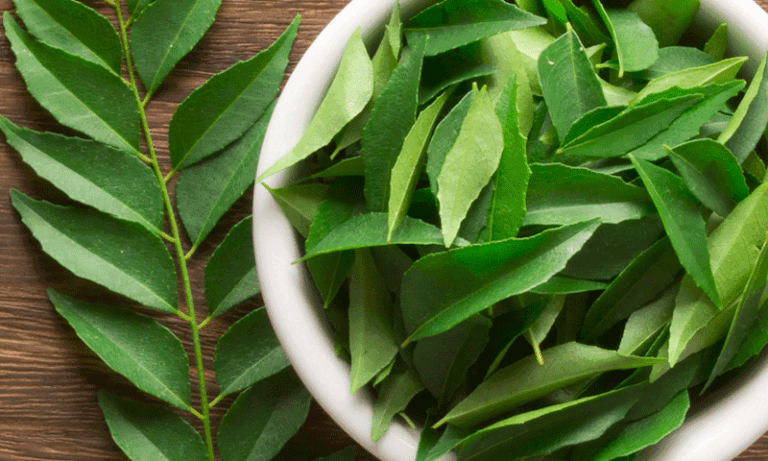
  • Top health benefits of curry leaves

    Curry leaves are best known for adding a rich flavor and fresh aroma to food but they also offer many health benefits. Packed with important nutrients and natural plant compounds these leaves can be a healthy addition to your daily diet. Rich in nutrients Curry leaves contain vitamins A, B, and C along with other nutrients that help support overall health.  Their natural antioxidants may help protect the body from damage caused by harmful molecules. May support weight loss Many people use curry leaves as part of a healthy weight loss plan. Drinking curry leaf tea on an empty stomach every morning for several weeks is believed to support weight management when combined with a balanced diet and regular exercise. Some people also eat 10 to 15 fresh leaves in the morning and drink warm water afterward. May help lower Cancer risk Curry leaves contain natural compounds called flavonoids which have antioxidant properties.  Research suggests these compounds may help protect cells from damage and could play a role in lowering the risk of certain types of cancer. However more human studies are needed. Good for People with Diabetes Curry leaves are a good source of dietary fiber which may help support healthy blood sugar levels.  They may also improve the body’s ability to manage glucose making them a helpful addition to a diabetes friendly diet. They should not replace prescribed treatment. Supports digestive health Curry leaves have long been used to help with digestive problems such as constipation and diarrhea.  They contain natural plant compounds that may help support healthy digestion and improve gut health. •Easy ways to add curry leaves to your diet •Curry leaves are easy to use in everyday meals. You can •Add them to soups curries and lentil dishes. •Use them in stir fries or vegetable dishes. •Blend them into smoothies. •Brew them into herbal tea. Adding curry leaves to your diet is a simple way to boost flavor while enjoying their potential health benefits. Combined with a balanced diet and healthy lifestyle they can be a nutritious part of everyday meals

  • |

    Experts reveal how ancient Egyptians built pyramids?

    The centuries-old Egyptian pyramids have long remained a major focus of interest for people and scientists. For years, scientists have been trying to solve the mystery of how such massive pyramids were constructed in ancient Egypt thousands of years ago. Now, a possible answer has emerged. Earlier, it was believed that ropes and sledging systems were used to transport stones to the upper sections of the pyramids. However, evidence discovered near the Nile River suggests that experts of that era had already mastered advanced construction techniques centuries before the construction of the Great Pyramid of Giza in the desert. Archaeologists have excavated a 5,000-year-old cemetery-like site near the eastern bank of the Nile River. Two tombs discovered there have construction styles remarkably similar to those of the Egyptian pyramids built centuries later. The walls of these tombs were thicker at the bottom and gradually became narrower toward the top. This design provided greater stability to the structures. Similar techniques were later used in the construction of step pyramids and other large pyramids. Researchers also discovered evidence of ancient methods used to cut stones and wood which were employed in the construction of the tombs. The tombs were discovered in Egypt’s Jabal al-Tayr region where people have been buried for thousands of years. The style of these tombs resembles the tombs of kings in Abydos, one of Egypt’s oldest cities. This suggests that advanced construction techniques may have been widely known across Egypt even before the construction of the pyramids. Researchers said the tombs provide a glimpse into experimental construction methods that may have eventually led to the construction of the Egyptian pyramids. Experts said preliminary analysis indicates that the construction style of these tombs was quite similar to that of the pyramids associated with Egypt’s First Dynasty. Egypt’s First Dynasty ruled the country around 3100 BC. According to Egypt’s Tourism Minister, Sherif Fathy, the new discovery will help researchers understand how these construction techniques evolved throughout ancient Egyptian history. Earlier, in May 2024, researchers discovered a buried branch of the Nile River beneath the desert that once flowed around more than 30 pyramids thousands of years ago. This discovery helped solve the mystery of how ancient Egyptians transported extremely heavy stones to the pyramid construction sites. The 40-mile-long branch of the river once flowed around the Great Pyramid of Giza and other pyramids. Thousands of years ago, it gradually became buried beneath desert sand and agricultural land. According to the research, the presence of this ancient river explains how 31 pyramids were constructed between approximately 4,700 and 3,700 years ago in a valley that has now become a deserted strip of desert. The valley is located near Memphis, the ancient capital of Egypt and is home to the Great Pyramid of Giza, the only surviving wonder of the ancient Seven Wonders of the World. A study published in the journal Nature Communications reported the discovery of this ancient branch of the river. The research team used radar satellite technology to identify the hidden river channel. Surveys of the area and analysis of samples confirmed the presence of the ancient river. According to researchers, the river was once very powerful but may have gradually become buried under sand because of drought around 4,200 years ago. The Great Pyramid of Giza is located just one kilometer from the bank of this buried river. Around 2.3 million stone blocks were used to build the pyramid with each block weighing between 2.5 and 15 tons. Researchers said the ancient river also provides clues about why pyramids were built at different locations. They explained that the river’s course and flow changed over time which may have led Egyptian rulers to construct pyramids at different locations.

  • Bad breath causes and prevention

    Almost everyone experiences bad breath at some point in life. In medical terms this condition is called halitosis. While it is often temporary some people may have bad breath for a long time. In certain cases it can also be a sign of an underlying health problem. Experts estimate that about half of all adults experience bad breath at least once in their lifetime. •Common causes of bad breath •Poor oral hygiene One of the main causes of bad breath is not cleaning your teeth gums and tongue properly.  Tiny food particles can stay in the mouth and break down over time. This allows bacteria to grow and produce an unpleasant smell. •Not cleaning the tongue The tongue naturally collects bacteria. If it is not cleaned regularly these bacteria mix with leftover food and can cause bad breath. Cleaning your tongue every day is just as important as brushing your teeth. •Strong smelling foods Foods such as garlic onions and certain spices can make your breath smell bad. After digestion some of the natural oils from these foods enter the bloodstream and reach the lungs where they affect the smell of your breath. •Smoking Smoking is another common reason for bad breath. It leaves a strong smell in the mouth reduces saliva and increases the growth of harmful bacteria. •Dry mouth and not drinking enough water Saliva helps wash away food particles and bacteria. When your mouth is dry bacteria stay longer and produce bad odors. A dry mouth can happen if you sleep with your mouth open take certain medicines have problems with the salivary glands, or simply do not drink enough water. •Gum and tooth problems Plaque can build up around the teeth and gums if you do not brush and floss properly. Over time this can lead to gum disease infections, and bad breath. •Nose throat or sinus infections Bad breath may also be caused by sinus infections throat infections tonsil stones or other conditions affecting the nose and throat. •Certain medical conditions Sometimes bad breath is linked to health problems such as diabetes kidney disease liver disease or acid reflux. If bad breath continues even after improving oral hygiene it is a good idea to consult a doctor or dentist. •Simple tips to keep your breath fresh •Brush your teeth twice a day. •Clean your tongue every day. •Floss regularly to remove trapped food. •Drink plenty of water to keep your mouth moist. •Avoid smoking. •Limit foods with strong odors before social events. Visit your dentist regularly for check ups and cleanings. In many cases bad breath can be prevented with good oral hygiene and healthy daily habits. However if the problem does not go away it may be a sign of an underlying medical condition that should be checked by a healthcare professional.

  • Why Popcorn became the ultimate movie snack

    Watching TV or a movie often feels incomplete without something to eat. For many people popcorn is the first snack that comes to mind. But have you ever wondered how popcorn became the most popular food at movie theaters? The tradition began in the 19th century when popcorn became a popular snack at fairs festivals and circuses. In those days it was usually sold from small street carts. A major turning point came in 1885 when the first popcorn machine was invented. This made it easier to prepare fresh popcorn quickly and sell it to large crowds. By 1907, the United States had nearly 5,000 movie theaters with tickets costing just 5 cents. Popcorn sellers started placing their carts outside theaters where moviegoers could easily buy popcorn before going inside. As movie theaters became more modern and luxurious many owners banned outside food. However the rule did not last long. By the 1930s theaters began selling popcorn inside and outside their buildings realizing it was a profitable business. Today popcorn is one of the biggest sources of income for many cinemas with some estimates suggesting it accounts for up to 85% of concession stand sales. Another reason popcorn became the perfect movie snack is that it is light easy to eat and does not make much noise allowing people to enjoy their film without disturbing others.

  • Lower protein may boost longevity

    Protein rich foods such as cereals coffee water and many other products have become increasingly popular. However a new study suggests that for many people eating less protein instead of more may actually be better for overall health and could even help people live longer. The review published on July 31 in the journal Cell Press Blue examined more than 350 scientific studies exploring the connection between lower protein intake and healthy aging. Researchers found that reducing protein intake may improve metabolism help cells respond better to nutrients lower cell damage and support normal cell function. Together these effects may promote better health and a longer lifespan. The study’s lead author Dudley Lamming said that protein is important for people who exercise regularly because it helps build muscle and improves workout results. However he added that most people are not very physically active which means they may be eating more protein than their bodies actually need. In some cases this could have negative effects on health. Experts also noted that the right amount of protein is different for everyone.  It depends on factors such as age overall health physical activity and lifestyle. They recommend following a balanced diet and getting advice from a healthcare professional before making major changes to protein intake.

Leave a Reply

Your email address will not be published. Required fields are marked *