experts warn against

Experts warn against extra soft pillows

A soft pillow may feel comfortable at first but health experts say it is not always the best option for good sleep.

They explain that a pillow should not only feel soft in the store but also provide proper support for your head and neck throughout the night.

Physiotherapists say many people choose pillows after trying them for only a few minutes. However the real test comes after several hours of sleep. As your head presses down on the pillow it can lose its shape.

If it does not give enough support your neck and spine may become misaligned leading to pain or stiffness in the morning.

Allan Fu, a physiotherapist and lecturer at the University of Sydney says many people judge a pillow by how comfortable it feels at first.

He believes the most important thing is whether the pillow keeps your head and neck properly supported all night. A short test in a store is not enough to know how well a pillow will perform.

Experts say the average human head weighs about 4.5 kilograms which means a pillow is under constant pressure while you sleep.

If it is too soft it may not support your head and neck properly. That is why comfort should not be the only thing to consider when buying a pillow.

Research suggests that latex and memory foam pillows may help reduce neck pain because they keep their shape better and provide steady support.

Feather and synthetic fiber pillows can also be used but experts recommend choosing firmer versions as very soft ones lose their support more quickly.

Experts also advise against judging a new pillow after just one night. Feather and synthetic pillows usually settle into their normal shape within a day or two while memory foam pillows may take several weeks to fully adjust to your body.

When buying a pillow experts recommend lying on it for a few minutes if possible.  A pillow that feels slightly firmer or a little higher at first may become more comfortable with regular use.

They say proper support is more important than softness for keeping your neck healthy.

Similar Posts

  • |

    Increasing fuel prices

    From Meer Baloch Through the columns of your respected newspaper, I would like to draw the attention of the concerned authorities to the continuous increase in fuel prices in Pakistan. The rising cost of petrol and diesel has made life difficult for ordinary people. Higher fuel prices increase transportation costs, which also raise the prices of food, medicines, and other daily necessities. Poor and middle-class families are suffering the most because their incomes remain the same while expenses continue to rise. The government should take effective measures to control fuel prices and provide relief to the public. It should also promote affordable public transport and reduce unnecessary taxes on fuel. I hope my letter will create awareness and encourage the authorities to take prompt action.

  • Why Popcorn became the ultimate movie snack

    Watching TV or a movie often feels incomplete without something to eat. For many people popcorn is the first snack that comes to mind. But have you ever wondered how popcorn became the most popular food at movie theaters? The tradition began in the 19th century when popcorn became a popular snack at fairs festivals and circuses. In those days it was usually sold from small street carts. A major turning point came in 1885 when the first popcorn machine was invented. This made it easier to prepare fresh popcorn quickly and sell it to large crowds. By 1907, the United States had nearly 5,000 movie theaters with tickets costing just 5 cents. Popcorn sellers started placing their carts outside theaters where moviegoers could easily buy popcorn before going inside. As movie theaters became more modern and luxurious many owners banned outside food. However the rule did not last long. By the 1930s theaters began selling popcorn inside and outside their buildings realizing it was a profitable business. Today popcorn is one of the biggest sources of income for many cinemas with some estimates suggesting it accounts for up to 85% of concession stand sales. Another reason popcorn became the perfect movie snack is that it is light easy to eat and does not make much noise allowing people to enjoy their film without disturbing others.

  • Talking to yourself could be sign of intelligence

    Some habits are considered by people to be signs of foolishness or poor mental ability. In fact, many people associate such habits with a lack of concentration, poor discipline or mental decline. However, one such habit that may seem strange to others has been linked to intelligence in some research reports. Yes, the habit is talking to yourself which is often viewed negatively by people. According to research reports, if you have a habit of talking to yourself, it does not mean you are crazy. Instead, it could be a sign that you are more intelligent than other people. Although people may not generally view this behaviour positively, there is evidence suggesting that talking to yourself can benefit the brain. It may improve memory, boost confidence and help with concentration. A 2012 study found that people who talked to themselves were able to identify objects in pictures more quickly. Similarly, a 2023 study found a connection between self-talk and self-control or self-discipline. The study suggested that people who talk to themselves often have a better understanding of themselves. However, these benefits may occur when self-talk is practiced in moderation. Negative self-criticism, on the other hand, can have harmful effects. So, if you have a habit of talking to yourself, there is no need to feel embarrassed about it. This unusual habit may help you analyze details, improve concentration and sharpen your mind.

  • Freedom: The Right We Must Protect

    Hani Rasheed Through the pages of your esteemed newspaper, I wish to highlight the importance of freedom in our society. Freedom is not a luxury or a favour; it is a basic right of every human being. People deserve the freedom to express their opinions, choose their future and live with dignity. Unfortunately, many people still face restrictions, fear and injustice when they raise their voices. When freedom is suppressed, society loses hope and progress comes to a standstill. A nation cannot truly develop if its people are afraid to speak the truth. The government and society must protect the rights and freedom of citizens. Freedom should be used responsibly, but no one should be silenced through injustice or fear. It is time to understand that protecting freedom means protecting the future of our nation. I hope your newspaper will highlight this important issue and encourage the authorities to protect the fundamental rights of the people

  • Hotel buffet leftovers reused or thrown away?

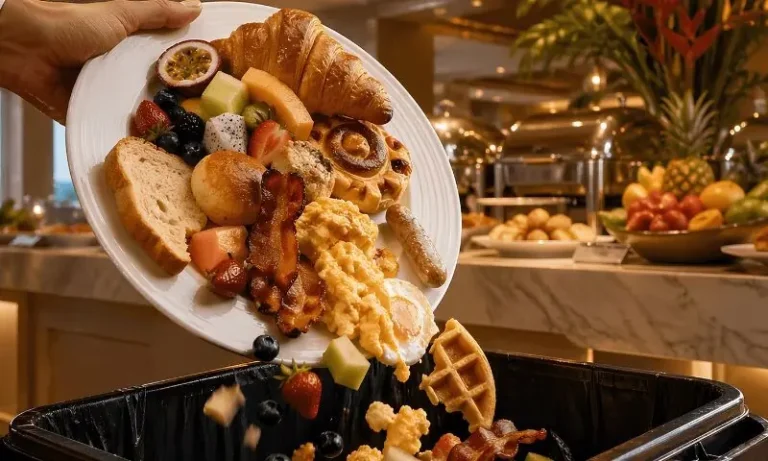
    Hotel buffets are known for their wide variety of colorful and delicious dishes.  Luxury hotels often serve many different foods allowing guests to enjoy whatever they like. But many people wonder what happens to the large amount of food left after the buffet ends. Is it served again or is it thrown away? The answer depends on each hotel’s policy local laws, and food safety rules. Hotels must follow strict health guidelines when handling leftover food. According to reports leftover buffet food is usually divided into three groups. The first group includes food that was prepared in the kitchen but never placed on the buffet table. If it has been stored safely and kept at the correct temperature it may be used later. The second group is food that was displayed on the buffet. Even if it looks fresh it is usually thrown away after the buffet because it has been left out for too long increasing the risk of bacteria. The third group is food left on guests’ plates. This food is never reused and is always thrown away for health and safety reasons. Food safety experts explain that cooked food can become unsafe if it stays at room temperature for too long. That is why hotels often discard buffet food even when it still looks good. Some unused ingredients can be given a second purpose. For example fruits and vegetables that were never placed on the buffet may be used in soups smoothies desserts or jam.  Leftover bread can be turned into breadcrumbs or croutons. Many hotels around the world also donate safe, untouched food to charities and non profit organizations.  This helps provide meals to people in need while reducing food waste. Before donating hotels make sure the food is still safe to eat. Food that can no longer be eaten is sometimes used to make compost or biogas.  Compost turns food waste into natural fertilizer while biogas plants convert organic waste into energy helping protect the environment. Experts say modern hotels are also taking steps to reduce food waste.  They prepare food more carefully study guest eating habits use artificial intelligence and data to predict demand and refill buffet trays only when needed instead of filling them all at once. Guests can also help reduce waste by taking only the amount of food they can finish and going back for more if needed. Although hotel policies and local laws differ from country to country the hotel industry is making greater efforts to reduce food waste maintain high food safety standards and support environmentally friendly practices.

  • |

    Creative expression as survival in times of crisis

    In times of severe military occupation, state violence, and political trauma, art and literature undergo a fundamental transformation. They shift from aesthetic expression to vital tools for survival, record-keeping, and resistance. When conventional channels of news, speech, and movement are heavily restricted or censored, art and literature fulfill critical functions within a society. Documenting Counter-Narratives and Resisting Erasure In occupied zones, official narratives often frame political conflict using terms like normalcy or integration. They sanitize structural violence and human suffering. Kashmiri writers, poets, and essayists use narrative to preserve collective memory against state-enforced amnesia. Through poetry, fiction, and memoirs, literature captures the psychological reality of curfews, enforced disappearances, communication blackouts. It reminds of the loss of autonomy, rendering the lived experience of civilians indelible. Fine arts, illustration, and graphic art record incidents and emotional states that photojournalism or state-approved media often cannot access or transmit.  Processing Collective and Intergenerational Trauma Art creates a necessary intellectual and emotional container for a traumatized populace. Concepts such as unheimlich (the uncanny, or feeling un-homed in one’s own land) or grief over exile and displacement find structural expression through creative metaphors. Poetic forms allow writers to articulate loss, mourning, and fear in ways that transcend direct prose. The work of iconic Kashmiri poets such as the late Agha Shahid Ali, whose poetry continues to resonate. It demonstrates how verse can turn localized grief into a universal cry for human dignity. Artists frequently turn to raw mediums like paint, installation, and physical textiles to project the interiority of living under siege, using symbolic motifs like barren land, barbed wire, cages, or domestic objects disrupted by violence. Evading Censorship Through Metaphor and Allegory When direct political discourse leads to state surveillance, detentions, or legal suppression, creative expression relies on metaphor, symbolism, and myth. Playwrights and novelists weave political critiques into historical, mythological, or surreal settings, allowing themes of oppression, tyranny, and liberation to be discussed safely. On the ground, quick visual mediums like graffiti, posters, and digital art become decentralized tools. The mediums act for mass communication and solidarity, circulating rapidly across networks even during communication rollbacks.  Transcending Boundaries and Building Global Solidarity Art and literature serve onnect the isolated region to the global diaspora and international human rights communities. On memorial dates like August 5 (observed as Youm-e-Istehsal or Black Day by Kashmiris and solidarity groups worldwide), exhibitions, literary readings, poster competitions, and performance art allow communities across the world to bear witness to the ongoing struggle. Art transforms passive sympathy into active political consciousness. It forces the global audiences to confront physical realities of occupation beyond distant headlines. In times of intense crisis, art does not exist as an escape from reality. Rather, it becomes the definitive site where human dignity, historical truth, and resistance are actively preserved.  

Leave a Reply

Your email address will not be published. Required fields are marked *