increasing fuel prices
|

Increasing fuel prices

From Meer Baloch

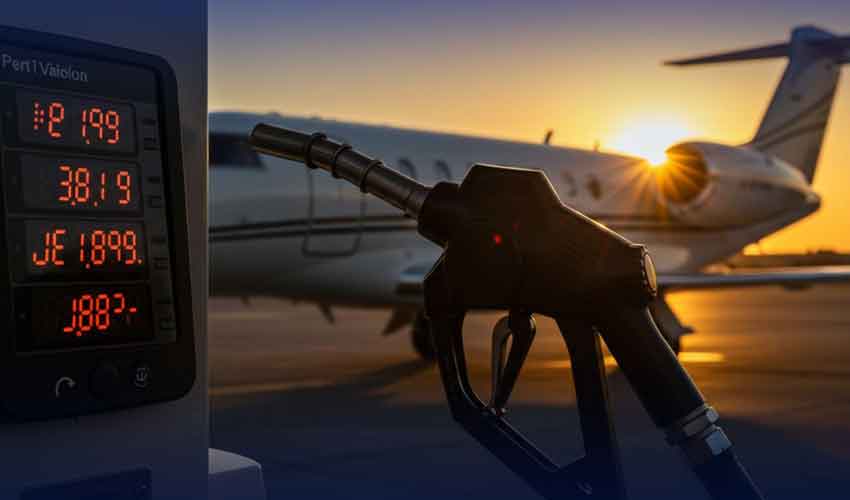
Through the columns of your respected newspaper, I would like to draw the attention of the concerned authorities to the continuous increase in fuel prices in Pakistan. The rising cost of petrol and diesel has made life difficult for ordinary people.

Higher fuel prices increase transportation costs, which also raise the prices of food, medicines, and other daily necessities. Poor and middle-class families are suffering the most because their incomes remain the same while expenses continue to rise.

The government should take effective measures to control fuel prices and provide relief to the public. It should also promote affordable public transport and reduce unnecessary taxes on fuel.

I hope my letter will create awareness and encourage the authorities to take prompt action.

Similar Posts

  • |

    India’s top court orders release of minors amid exam protests

    NEW DELHI: India’s Supreme Court has ordered authorities to release minors detained during protests over examination paper leaks and directed officials to preserve evidence linked to allegations of excessive police force. Chief Justice Surya Kant reportedly issued the interim directions while hearing petitions filed by student protesters and activists. The petitions accuse police and paramilitary personnel of using excessive force, including baton charges and other crowd-control measures, against demonstrators. The court also directed authorities to preserve all available surveillance material from the protests. This includes CCTV recordings, drone footage and body-camera video. Officials were further told to protect the personal and digital information of protesters and ensure that it is not publicly disclosed. The court reportedly barred authorities from taking coercive action against protesters while the matter remains under consideration. Justice Kant stressed the importance of an independent investigation into allegations of mistreatment. He said accountability must be established if wrongdoing occurred. The government has defended the security forces’ response, describing the measures as necessary for crowd control. Solicitor General Tushar Mehta told the court that around 250 police officers were also injured during the unrest. He reportedly said the government had no objection to an investigation into allegations involving protesters. The protests erupted after question papers for a national medical college entrance examination were leaked. The controversy triggered demonstrations in New Delhi and several other parts of India. Protesters demanded reforms to the examination system, withdrawal of cases against demonstrators and compensation for families of students who died by suicide following the controversy. The demonstrations ended after the education minister resigned and the government agreed to several demands raised by the protesters. Meanwhile, the Indian government has proposed tougher penalties for examination paper leaks. Under the proposed amendments, the maximum prison sentence could be increased to 10 years, while fines could rise to more than $1 million. The government says the proposed changes are intended to strengthen the examination system, speed up legal proceedings and restore confidence among students and young people. The issue has also created political tension in parliament. Opposition lawmakers have repeatedly raised concerns about the police response to the protests and demanded accountability. In several cities, clashes between demonstrators and security personnel led to tear gas and baton charges. Authorities also suspended a police officer in an eastern state after he allegedly fired rounds into the air while attempting to disperse student protesters. Concerns have additionally emerged over the use of artificial intelligence-powered surveillance during demonstrations. Activists have questioned the deployment of police surveillance equipment capable of providing wide-area monitoring of protest gatherings. A protest group that helped lead the movement has claimed that hundreds of students were arrested in different states. However, the figure has not been independently verified.

  • | | |

    Why is the risk of an India-China clash rising in …

    Tensions along the India-China border remain a major security concern, particularly in Arunachal Pradesh despite recent efforts by both countries to improve relations and maintain peace along their disputed frontier. India’s National Security Adviser Ajit Kumar Doval and Chinese Foreign Minister Wang Yi recently held talks in Beijing on the long-running border dispute. The meeting marked the 25th round of discussions between the two countries special representatives on the boundary issue. Following the talks China’s Ministry of Foreign Affairs said Wang Yi emphasized the importance of stable relations between China and India. He described the two countries as important neighbours and emerging economies arguing that improved and stable bilateral relations are in the fundamental interests of both populations. According to the Chinese statement Wang called for a strategic and long-term approach to bilateral relations stronger communication and efforts to reduce differences. He also urged both sides to remove obstacles and promote cooperation as good neighbours and friendly partners. Doval also struck a conciliatory tone during the discussions. According to the Chinese statement he said India and China are ancient civilizations with large populations and important economies adding that the two countries should be viewed as partners rather than rivals. Doval reportedly said that under the guidance of the leadership of both countries India-China relations had returned to the right track. He also said overall peace had been maintained in border areas and that exchanges and cooperation in several fields were making progress. However, the disputed border remains a sensitive issue. Arunachal Pradesh is particularly important because China claims large parts of the Indian-administered territory and refers to the region as “Zangnan” or southern Tibet. India firmly rejects China’s territorial claims and considers Arunachal Pradesh an integral part of the country. The two sides have previously experienced serious confrontations along the Line of Actual Control making border management and military deployments highly sensitive. During the latest talks both sides discussed advancing negotiations on boundary demarcation strengthening border management mechanisms improving procedures and expanding cross-border cooperation. Although the latest diplomatic engagement indicates that both countries are seeking to prevent further escalation unresolved territorial claims and military activity continue to create the possibility of confrontation. The key challenge for India and China will be to maintain dialogue while managing their competing territorial claims and preventing local disputes from developing into a broader military crisis.

  • Better Facilities in Turbat’s Hospitals

    Hani Rasheed  Turbat urgently needs better healthcare facilities. Although some improvements have been made, many patients still face shortages of medicines, medical equipment, and specialist doctors. Poor families often have to travel to other cities for treatment which is costly and difficult. Access to quality healthcare is a basic right and should be available to everyone. The authorities should ensure that hospitals are fully equipped, essential medicines are available, and qualified doctors and staff are appointed. Better healthcare services will reduce the suffering of patients and improve the well-being of the people of Turbat.

  • | |

    Ishaq Dar arrives in Manila for ASEAN Forum

    Deputy Prime Minister and Foreign Minister Ishaq Dar arrived in Manila, Philippines, on Wednesday to attend the 33rd ASEAN Regional Forum (ARF) Ministerial Meeting. The visit reflects Pakistan’s continued engagement with regional and international partners on key political, economic, and security issues. Dar reached Manila with a high-level delegation. During his visit, he will participate in the ARF plenary session and hold several bilateral meetings with foreign ministers and senior officials from participating countries. These meetings are expected to focus on strengthening diplomatic ties, expanding economic cooperation, and discussing regional developments. Upon his arrival, Dar was welcomed by senior officials of the Philippine Department of Foreign Affairs, Pakistan’s Ambassador to the Philippines Asima Rabbani, and officials of the Pakistani Embassy. The ASEAN Regional Forum is one of the region’s most important diplomatic gatherings. It brings together foreign ministers and senior representatives from ASEAN member states and partner countries to discuss peace, security, and regional cooperation. This year’s meeting will focus on several pressing international issues. Participants will exchange views on growing geopolitical tensions, regional security challenges, energy security, food supply concerns, trade cooperation, and the impact of ongoing global conflicts. The situation in Myanmar will also be high on the agenda. Leaders are expected to review efforts to implement ASEAN’s Five-Point Consensus and discuss ways to support peace and stability in the country. The continuing tensions between the United States and Iran are also expected to feature prominently during discussions. Delegates will assess the impact of the conflict on regional security, global energy markets, and international trade. Senior diplomats from major world powers are attending the forum. These include representatives from the United States, China, India, Japan, Australia, South Korea, Russia, the United Kingdom, and the European Union. The meeting provides an opportunity for bilateral engagements and dialogue on shared global challenges. ASEAN countries are also expected to discuss measures to strengthen regional energy cooperation. Member states are exploring ways to improve oil-sharing mechanisms to reduce the impact of possible disruptions in global energy supplies.

  • | |

    Nolan’s Odyssey explores the cost of flawed choices

    Christopher Nolan’s The Odyssey explores a character who is far from a conventional hero. Odysseus is brave, intelligent and determined. He is also deeply flawed. That complexity appears to be at the centre of Nolan’s interest in the ancient Greek epic. The nearly 3,000-year-old story follows Odysseus as he attempts to return to Ithaca after the Trojan War. His journey is filled with violence, loss, temptation and encounters with powerful gods and mythical creatures. Yet the film is not simply about a warrior trying to find his way home. It is also about the consequences of his decisions. Odysseus repeatedly makes choices that produce consequences he struggles to control. His actions often begin with understandable motives. Revenge, anger, pride and a desire to protect his men push him into increasingly dangerous situations. His treatment of the Trojans is one example. Odysseus considers himself a man who respects the rules of combat. However, the Trojan War forces him into tactics that contradict his personal principles. The wooden horse becomes the most striking example of this conflict. His deception helps the Greeks defeat Troy, but it also establishes a chain of events that follows him long after the war ends. His encounter with the Cyclops Polyphemus further exposes his weaknesses. Odysseus and his crew manage to escape the Cyclops’ cave. But instead of leaving quietly, Odysseus attacks again. His decision is driven by anger and revenge. The consequences are devastating. Polyphemus calls upon his father, Poseidon, to punish Odysseus. The resulting curse turns the journey home into an extended ordeal. Odysseus continues trying to save his men. However, his efforts repeatedly end in tragedy. One decision leads to another, and the consequences gradually become impossible to contain. His crew members begin to lose faith in their commander. The man determined to bring them home becomes the leader whose decisions ultimately contribute to their deaths. This moral conflict is familiar territory for Nolan. The director has repeatedly built stories around protagonists whose choices carry enormous consequences. Bruce Wayne, for example, attempts to protect Gotham by allowing a dangerous lie surrounding Harvey Dent to survive. The consequences eventually force him to confront the price of that decision. In Oppenheimer, the central character develops the atomic bomb in an attempt to help defeat Nazi Germany. Yet his success leaves him haunted by the destructive power he helped unleash. Dunkirk presents another interpretation of home. For the soldiers trapped on the beaches of France, home represents survival, safety and the possibility of returning with their dignity intact. For Oppenheimer, however, home becomes something more complicated. It represents the peace of mind he can no longer recover after witnessing the consequences of his work. For Odysseus, home is deeply personal. Ithaca represents his family, his kingdom and the identity he lost during two decades away. Returning home is therefore more than reaching a physical destination. His journey changes him. He leaves as a king and eventually returns disguised as a beggar. Along the way, he encounters monsters, hostile forces and divine punishment. He also watches his companions disappear one by one. By the time Odysseus reaches the end of his journey, the question is no longer simply whether he can return home. The bigger question is whether a man who has experienced so much violence can ever truly return as the person he once was. That question sits comfortably within Nolan’s broader storytelling style. His characters often achieve their goals but pay an enormous personal price. Their victories rarely come without consequences. The Odyssey brings that recurring theme to one of its most ancient and powerful forms. Odysseus survives the journey, but survival does not erase what happened along the way. His homecoming becomes a reckoning with the violence, losses and choices that shaped him. Nolan’s interpretation therefore turns the epic into more than an adventure story. It becomes a meditation on guilt, responsibility, identity and the lasting cost of extraordinary choices. At its heart, The Odyssey asks what happens when a man spends years fighting to return home, only to discover that the journey has changed the meaning of home itself.

  • | |

    Olivia Munn reveals the style shift that helped he…

    Olivia Munn is opening up about how she found her personal style again after navigating motherhood, postpartum anxiety and a difficult breast cancer journey. The 46-year-old actress recently spoke with USA Today about how her experiences changed the way she viewed her body, clothing and identity. For Munn, fashion became more than choosing an outfit. It became a way to reconnect with herself after years of major changes. (People.com⁠) Munn first struggled with her changing body after welcoming her son, Malcolm, in 2021. She said she had expected her body to return to how it looked before pregnancy, but that did not happen. Breastfeeding, weight changes and a larger bust also meant many of her clothes no longer fit. At the same time, Munn was dealing with postpartum anxiety, which she described as an isolating experience. Instead of immediately replacing her entire wardrobe, she began making more intentional choices. Comfort, simplicity and clothing that made her feel confident became more important than following every new trend. Her style journey took another turn after she was diagnosed with breast cancer in 2023. Munn underwent multiple surgeries, including a double mastectomy and later reconstruction, as she focused on her health and recovery. (People.com⁠) After going through what she described as years of “back-to-back battles,” Munn reached a turning point. She realized she was tired of feeling disconnected from the way she dressed and decided she wanted to reclaim that part of herself. Rather than allowing her experiences to dictate what she could wear, Munn began figuring out what made her feel comfortable and authentic again. Her approach became less about dressing according to expectations and more about dressing for herself. That mindset also influenced her recent partnership with fashion brand Anne Klein. Munn has embraced clothing that feels polished while still fitting her lifestyle and changing body. Her story highlights how personal style can become part of rebuilding confidence after major life changes. For Munn, finding the right clothes was not simply about looking good. It was about recognizing herself again. After years of physical and emotional challenges, she is choosing to make room for joy, confidence and self-expression. Munn’s style shift is ultimately a story about reclaiming identity. She is no longer waiting to feel like her old self. Instead, she is discovering who she is now—and dressing for that woman.

Leave a Reply

Your email address will not be published. Required fields are marked *