
indian student protest
|

Indian student protest to continue after clashes in Delhi leave nearly 180 injured

A youth led protest movement in India has vowed to continue demonstrations demanding the resignation of Education Minister Dharmendra Pradhan after violent clashes with police in New Delhi left nearly 180 people injured.

The movement, known as the Cockroach Janta Party, cancelled plans for another march to parliament but said protests would continue at the Jantar Mantar demonstration site. Organisers said they wanted to avoid further injuries after Monday’s confrontation with security forces.

The campaign began as an online satirical movement but has rapidly grown into one of the biggest public challenges facing Prime Minister Narendra Modi during his third term in office. It has attracted widespread support from young people angered by repeated examination paper leaks and allegations of corruption in India’s education system.

Thousands of protesters from Delhi and nearby regions gathered outside parliament on Monday to demand accountability over a national medical entrance examination leak that affected more than two million students earlier this year. The exam had to be conducted again after question papers were leaked, while reports of several student suicides linked to the controversy intensified public outrage.

Police used batons and tear gas to disperse demonstrators after violence broke out during the march. According to Delhi Police, more than 118 police and security personnel, along with around 60 protesters, were injured during the clashes. Most of those hurt received medical treatment and were later discharged from hospital.

Authorities also detained around 70 protesters and said legal action would be taken against them. Police accused demonstrators of ignoring restrictions on public gatherings and behaving aggressively despite repeated warnings.

On Tuesday, around 500 protesters gathered peacefully at Jantar Mantar despite light rain and heavy security across central Delhi. Paramilitary forces remained deployed while barricades were placed on several roads to prevent further unrest.

CJP founder Abhijeet Dipke apologised to supporters for the violence they faced during Monday’s protest. He expressed particular concern over female demonstrators who he claimed were assaulted by male police officers during the clashes. Dipke announced that while the movement would continue its campaign, organisers would not attempt another march towards parliament because they feared more young people could be injured.

The protest movement gained significant momentum after social activist Sonam Wangchuk joined the campaign with a hunger strike in late June. Wangchuk was later moved to hospital by authorities, a move that further fuelled criticism of the government among supporters.

The group’s demands include the resignation of the education minister, the release of Wangchuk and financial compensation for the families of students who reportedly died by suicide following the examination leak.

Government officials have indicated they are open to discussions. Health Minister JP Nadda recently met representatives of the movement and requested time to consider their demands. Parliamentary Affairs Minister Kiren Rijiju also called for calm and said ongoing talks should not be disrupted.

Opposition parties criticised the government’s handling of the protests and accused authorities of using excessive force against peaceful demonstrators. Leaders of the ruling Bharatiya Janata Party rejected those claims and argued that the violence appeared to have been deliberately provoked.

Political analysts believe that even if negotiations reduce immediate tensions, the wider frustration among India’s younger generation is unlikely to disappear. Concerns over unemployment, repeated examination scandals and growing distrust in public institutions continue to drive dissatisfaction, making youth unrest an increasingly important political issue for the government.
Similar Posts

  • | |

    KP CM directs comprehensive review of hospital saf…

    PESHAWAR: Khyber Pakhtunkhwa Chief Minister Sohail Afridi and Chief Secretary Shahab Ali Shah contacted the provincial Health Secretary and directed him to conduct a comprehensive review of security and safety arrangements at hospitals across the province. During the discussion, it was also decided to establish monitoring teams to inspect and assess safety measures at hospitals. The teams will be tasked with checking whether hospitals are adequately prepared to deal with emergencies and whether the required safety protocols are being properly implemented. According to sources in Peshawar, the monitoring teams will include officials from several departments, including Civil Defence, the Health Department, Rescue services, the Provincial Disaster Management Authority (PDMA), and other relevant departments. The involvement of multiple departments is aimed at ensuring a coordinated assessment of hospital safety arrangements. Sources said the monitoring teams will particularly examine fire safety arrangements and other precautionary measures at hospitals. The teams will assess whether hospitals have adequate arrangements to prevent and respond to fire incidents and other emergencies. The move comes as the provincial government focuses on strengthening safety standards in healthcare facilities and ensuring that hospitals are properly equipped to deal with any untoward incident. The Health Department has also called a meeting to discuss safety arrangements at hospitals across Khyber Pakhtunkhwa. According to sources, the meeting will review the preparations in place to deal with any untoward incident or emergency situation at healthcare facilities. Officials will also examine existing safety procedures and identify areas where improvements may be required. The meeting is expected to focus on ensuring that hospitals follow appropriate safety protocols and that relevant departments are prepared to respond quickly in case of an emergency. Khyber Pakhtunkhwa Health Secretary Fayyaz Ali Shah said that standard operating procedures (SOPs) would be developed for all hospitals across the province. He stressed the importance of ensuring proper safety arrangements at healthcare facilities and said that negligence regarding fire safety measures would not be tolerated. The Health Secretary further made it clear that hospital administrations would be expected to comply with the safety requirements and take all necessary precautions to protect patients, attendants, doctors, nurses and other hospital staff. The provincial government’s decision to establish monitoring teams is expected to provide a mechanism for regularly assessing safety arrangements and identifying shortcomings at hospitals. The teams will inspect facilities and report on the condition of fire safety systems and other emergency preparedness measures. The inclusion of Civil Defence, Rescue, PDMA and other departments in the monitoring process is also intended to improve coordination between institutions responsible for emergency response and disaster management. The government has directed the Health Department to ensure that safety standards are implemented effectively across all hospitals in the province. The development of province-wide SOPs is expected to provide hospitals with clear guidelines regarding fire prevention, emergency preparedness and response procedures. Officials have reiterated that no negligence will be tolerated when it comes to fire safety arrangements in hospitals. The upcoming inspections and departmental meeting will help determine whether existing measures are sufficient and what additional steps may be required to improve safety. The initiative reflects the provincial government’s efforts to strengthen emergency preparedness and ensure safer healthcare facilities throughout Khyber Pakhtunkhwa.

  • | |

    GB to auction hunting permits for Markhor, blue Sh…

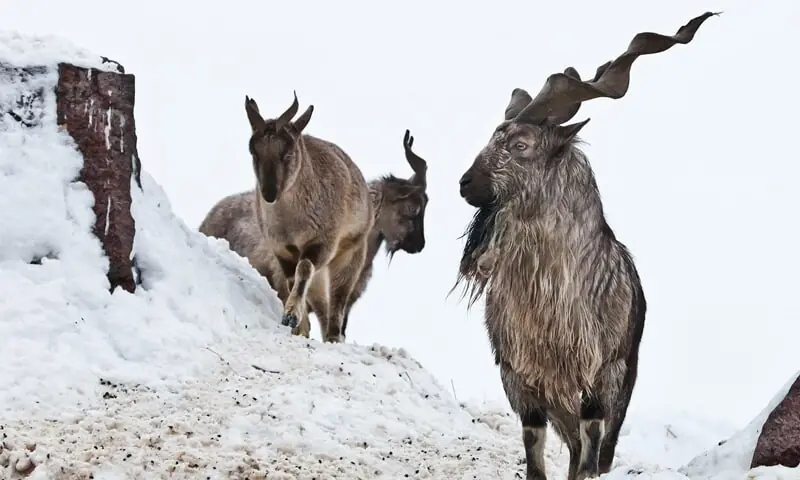
    GILGIT: The Parks and Wildlife Department of Gilgit-Baltistan is set to auction hunting permits for three Astore markhors, 14 blue sheep and 100 Himalayan ibexes under the region’s Trophy Hunting Programme for the 2026-27 season. The base price for an Astore markhor permit has been fixed at $200,000, making it the most expensive permit on offer. The minimum price for a blue sheep permit has been set at $25,000, while permits for Himalayan ibex will start at $11,000. According to the auction notice, four Astore markhors are included in the exportable quota. However, one permit from the previous hunting season has been carried forward, leaving three fresh permits to be auctioned this year. The open auction will take place on September 10 at the Forest Complex in Jutial, Gilgit. The trophy hunting season will begin on October 15, 2026, and continue until April 10, 2027, in accordance with the GB Trophy Hunting Guidelines 2019. Hunting will be permitted only within officially designated conservation areas. The department said the annual hunting quota has been determined following wildlife population surveys conducted by experts. GB Chief Conservator Parks and Wildlife Zakir Hussain said that the department collected approximately Rs350 million through permit auctions last year against a target of Rs550 million. He said several permits remained unused during the 2025-26 season, including those for two Astore markhors, five blue sheep and 10 exportable Himalayan ibexes. The unused permits resulted in an estimated revenue loss of around Rs200 million. According to officials, the cancellation of hunting plans by American and other international hunters was linked to the law-and-order situation following violent protests in Gilgit and Skardu. Local business owners and tourism operators have expressed concern over repeated increases in trophy hunting permit prices. They argue that higher baseline rates have discouraged foreign hunters and negatively affected businesses connected with hunting tourism. Ikram Beg, a local business owner who sells hunting equipment, said the trophy hunting programme was facing significant challenges. He claimed that the Wildlife Department had increased baseline prices by more than 300 per cent over the past two years without adequately incorporating recommendations from major stakeholders. According to Beg, excessive price increases could make Gilgit-Baltistan less competitive in the international trophy hunting market. He warned that declining international participation could reduce government and community revenues while weakening incentives for local residents to participate in wildlife conservation. Beg stressed that trophy hunting should primarily serve as a conservation mechanism rather than simply becoming a source of increased government revenue. He said the programme’s long-term success depends on reasonable pricing, international participation, transparent administration and meaningful financial benefits for local communities. Local stakeholders have called for a review of the permit rates and greater consultation with communities, conservation specialists and industry representatives. They have also demanded transparency and strict adherence to applicable rules and regulations. Although trophy hunting remains controversial internationally, its supporters argue that regulated hunting can generate funds for conservation, discourage illegal hunting and provide financial benefits to communities living near wildlife habitats. In Gilgit-Baltistan, the programme began with community participation in Bar Valley, Nagar, in 1990. Under the existing revenue-sharing model, approximately 80 per cent of licence revenue goes to local communitiesfor wildlife protection and conservation activities. The region’s challenging terrain and harsh weather also make trophy hunting highly demanding. Hunters must navigate steep and rugged mountain slopes while dealing with extremely cold conditions. Gilgit-Baltistan is home to diverse wildlife because of its varied ecosystems and climate. Species found in the region include Marco Polo sheep, ibex, markhor, urial, blue sheep, lynx, snow leopards, brown and black bears, wolves, foxes and golden eagles. However, wildlife experts and conservationists continue to face concerns over illegal hunting, inadequate wildlife management and the effects of climate change, all of which pose long-term threats to the region’s biodiversity.

  • |

    Admiral Naveed Ashraf makes historic IISS address as UK visit deepens Pakistan-Britain defence ties

    LONDON: Chief of the Naval Staff Admiral Naveed Ashraf has concluded a high-profile official visit to the United Kingdom, highlighted by a landmark address at the International Institute for Strategic Studies (IISS) in London—the first by any serving Pakistan Navy chief. Addressing one of the world’s leading strategic think tanks, Admiral Ashraf outlined Pakistan’s perspective on the evolving security landscape in the Indian Ocean, stressing the importance of regional maritime stability, freedom of navigation and enhanced international cooperation to tackle emerging maritime security challenges. The address marked a significant milestone in Pakistan Navy’s engagement with the global strategic community and underscored its expanding role in international maritime security discourse. During his visit, organised in coordination with the Pakistan High Commission in London, Admiral Ashraf held a series of high-level meetings with senior officials of the Royal Navy, the UK Ministry of Defence, NATO Allied Maritime Command, and the Royal College of Defence Studies (RCDS). Discussions focused on strengthening bilateral naval cooperation, professional exchanges and regional security. The Naval Chief also met representatives of the Lloyd’s Market Association and the Joint War Committee, where discussions centred on maritime insurance, security risks in the Indian Ocean and the protection of global shipping routes. As part of his engagements, Admiral Ashraf attended the Royal International Air Tattoo (RIAT) at RAF Fairford, Europe’s largest military air show, where he interacted with senior military leaders from allied nations and representatives of the British defence industry. He also visited the Pakistan High Commission in London and met High Commission officials to discuss ways of expanding Pakistan-UK cooperation in defence, maritime affairs and strategic engagement. He later recorded his remarks in the High Commission’s guest book. Defence observers say the visit reflects the growing momentum in Pakistan-UK defence relations and demonstrates Islamabad’s commitment to expanding strategic dialogue with international partners. The historic IISS address, in particular, is being viewed as a significant diplomatic and strategic achievement, placing the Pakistan Navy more prominently within global maritime security discussions.

  • |

    Abhishek Bachchan, Aishwarya Rai spotted during New York outing

    Abhishek Bachchan and Aishwarya Rai Bachchan have once again delighted fans after recent photos of the couple enjoying a peaceful evening in New York surfaced on social media. The pictures, shared by a fan online, captured the Bollywood stars taking a relaxed evening walk together during what appeared to be a break from Abhishek’s filming schedule for his upcoming movie King. The couple also happily stopped to pose for a selfie with a fan, earning praise from admirers for their warm and friendly gesture. For the casual outing, Abhishek opted for a simple look, wearing a T-shirt paired with a cap, while Aishwarya looked elegant in an all-black outfit. Their relaxed appearance and cheerful expressions quickly caught the attention of fans, with many expressing happiness at seeing the couple spending quality time together. The photos have gone viral across social media, where fans have been celebrating the rare glimpse into the couple’s personal life. Known for keeping their family life largely private, Abhishek and Aishwarya occasionally make public appearances together, making such candid moments especially meaningful for their supporters. In a recent interview, Abhishek reflected on the early days of his relationship with Aishwarya and shared memories of their first meeting. He recalled that they first met in 2000 while working on the film Dhai Akshar Prem Ke. Looking back, the actor admitted that he had no idea at the time that Aishwarya would eventually become his life partner. He explained that although they got along well from the beginning, he did not immediately realize that she was his soulmate. Abhishek also spoke warmly about their marriage, expressing gratitude for Aishwarya’s role as a mother to their daughter, Aaradhya. He credited her for raising their daughter with strong values and described Aishwarya as not only a devoted parent but also his soulmate. Reflecting on nearly two decades of married life, the actor said their journey together has been like a dream. He also hinted that he has special plans to celebrate their upcoming 20th wedding anniversary, although he chose not to reveal any details, saying he wanted to keep the surprise for the right time. During the conversation, Abhishek was also asked about the secret to maintaining a happy marriage. Responding with his trademark sense of humour, he joked that husbands should say “sorry” to their wives three times every night before going to bed, drawing laughter with his light-hearted advice. The actor has often spoken about the importance of family and balancing his personal and professional life. His comments once again highlighted the strong bond he shares with Aishwarya and the mutual respect that has defined their relationship over the years. Professionally, Abhishek is preparing for the release of King, one of his highly anticipated upcoming projects. Fans are eager to see him return to the big screen, while the latest New York pictures have added another reason for admirers to celebrate the couple, offering a rare and heartwarming glimpse into their life away from the spotlight.

  • |

    Pakistan Stock Exchange ends week lower as KSE-100 falls 1,325 points

    The Pakistan Stock Exchange (PSX) witnessed a relatively volatile trading week, with the benchmark KSE-100 Index ending lower after losing 1,325 points over the five trading sessions. The benchmark index settled at 180,104 points at the close of the week, compared with its previous level, reflecting a decline in investor sentiment and selling pressure across the market. During the week, the KSE-100 Index moved within a range of 2,568 points. The index touched a weekly high of 182,347 points, while its lowest level stood at 179,778 points, highlighting fluctuations in trading activity throughout the period. Despite the overall decline in the benchmark, trading activity remained substantial. A total of approximately 3.41 billion shares changed hands during the week, with the combined traded value reaching around Rs152 billion. The market’s overall capitalization also came under pressure during the reporting period. According to the weekly market data, total market capitalization declined by approximately Rs107 billion, falling to Rs20.13 trillion. Market participants continued to monitor developments affecting domestic economic conditions, investor confidence and broader market sentiment. The movement in the benchmark index reflected a cautious approach among investors, with fluctuations in buying and selling activity contributing to the week’s overall performance. The decline in the KSE-100 Index comes despite continued interest in equities, as investors assessed market valuations and economic indicators while keeping a close watch on developments that could influence the direction of the stock market in the coming sessions.

Leave a Reply

Your email address will not be published. Required fields are marked *