houthi red sea
|

Houthi Red Sea blockade threat raises fears of wider global energy disruption

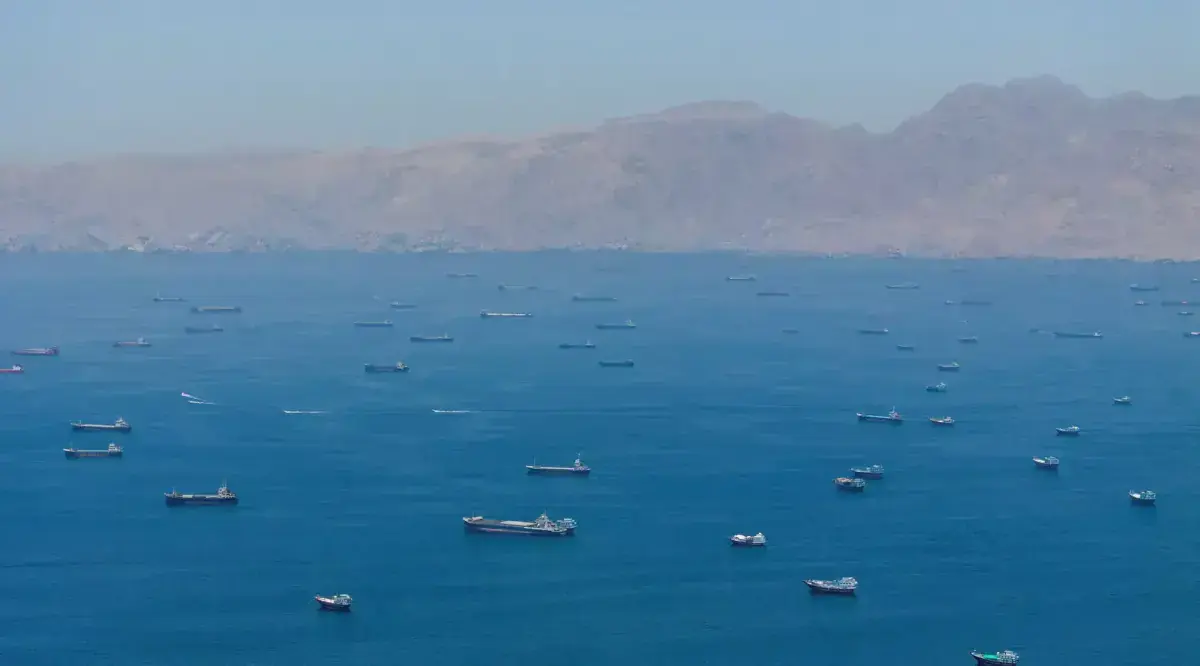
A new threat by Yemen’s Houthi movement to impose a maritime blockade on Saudi Arabia has raised concerns about global energy supplies as tensions across the Middle East continue to escalate. The announcement comes at a time when shipping through the Strait of Hormuz has already been disrupted, increasing fears that two of the region’s most important oil routes could be affected at the same time.

The Iran aligned Houthi group said it plans to target Saudi Arabia through a blockade in the Red Sea. While the group has not explained how it intends to enforce the measure, the warning has intensified concerns over the security of international shipping and energy exports.

The Bab el Mandeb Strait at the southern entrance to the Red Sea is one of the world’s most important maritime routes. It connects the Red Sea with the Gulf of Aden and serves as a key passage for oil shipments travelling between the Middle East, Europe and Asia.

Since disruptions in the Strait of Hormuz, Saudi Arabia has redirected much of its crude oil exports to its Red Sea port of Yanbu. From there, shipments bound for Europe pass through the Suez Canal, while cargo heading to Asian markets travels south through the Bab el Mandeb Strait.

Industry data shows that oil exports from Yanbu have increased sharply over the past year, making the Red Sea an increasingly vital route for global energy markets. Millions of barrels of petroleum now pass through the Bab el Mandeb every day, helping to stabilise international oil supplies despite ongoing tensions elsewhere in the region.

Analysts warn that any serious disruption in the Red Sea could significantly affect global energy prices by restricting another major export route from the Gulf. Saudi Arabia is reportedly considering expanding its pipeline network to the Red Sea coast to reduce dependence on vulnerable sea lanes.

The Houthis have been involved in conflict with Yemen’s internationally recognised government for more than a decade and have previously launched missile and drone attacks against Saudi Arabia. Although a truce reached in 2022 reduced fighting, tensions have risen again following recent military strikes around Sanaa.

The latest escalation began after Yemen’s recognised government said it had targeted Sanaa airport to prevent an Iranian aircraft from landing. The Houthis blamed Saudi Arabia for the attack and responded by firing missiles towards Abha airport in southern Saudi Arabia.

A senior Houthi official later warned that continued escalation could lead to the closure of the Bab el Mandeb Strait. Although the Houthis maintain that they make their own military decisions, the United States has long accused Iran of supplying the group with weapons, funding and training. The Houthis reject claims that they act as an Iranian proxy.

The movement previously disrupted international shipping after the outbreak of the Gaza war in late 2023. It launched attacks on commercial vessels in the Red Sea, saying the operations were intended to support Palestinians. Those attacks forced many major shipping companies to reroute vessels around southern Africa, increasing transport costs and delaying deliveries worldwide.

Although Red Sea traffic had begun recovering after attacks eased, shipping through the Suez Canal remains well below previous levels. The latest Houthi threat has renewed fears that instability could once again disrupt one of the world’s busiest trade routes.

During the recent conflict involving Iran, the Houthis played a more limited military role than other armed groups aligned with Tehran. However, their latest announcement suggests they may now be prepared to increase pressure on regional rivals, raising fresh concerns over the security of global energy supplies and international trade.


Similar Posts

  • |

    Gulf families seek fairer inheritance through UK law

    Wealthy families in the Gulf are increasingly preparing wills under British law to reduce the difference between the inheritance shares traditionally allocated to sons and daughters under Islamic law. According to a report in a Western publication, some experts have described the emerging trend as “Shariah Lite”, referring to families using the flexibility offered by English succession law to distribute their wealth among their children on relatively equal terms. British lawyers say families are increasingly exploring these legal arrangements to protect the financial future of their children, particularly in cases where they have only daughters or where daughters outnumber sons. Under traditional Islamic inheritance rules, the shares received by male and female heirs can differ depending on the family structure and circumstances. The growing use of foreign legal frameworks allows wealthy families with international assets to consider alternative succession arrangements within the limits of applicable laws. Experts say several factors are contributing to the trend, including changing attitudes among younger generations, increasingly complex marital arrangements and political uncertainty across parts of the Gulf region. These developments have encouraged affluent families to pay greater attention to estate planning, asset protection and succession arrangements to ensure that their wealth remains within the family and is transferred according to their wishes. Gulf states are also introducing legal systems that offer foreign residents and some families alternatives to traditional Sharia-based procedures. Abu Dhabi, for example, has established a separate civil legal framework for matters including divorce, providing an alternative route outside the traditional Sharia system. The growing interest in British wills highlights the changing approach of some wealthy Gulf families toward inheritance and succession planning, as they seek greater control over how their assets are distributed among future generations.

  • |

    Vincent Pastore dies at 80, The Sopranos stars mourn

    Veteran actor Vincent Pastore, best known for portraying Salvatore “Big Pussy” Bonpensiero in the acclaimed crime drama The Sopranos, has died at the age of 80. Pastore was found dead at his home in the Bronx on Saturday, August 1, after a neighbor checked on him. According to reports, those close to the actor had been unable to reach him for several days before he was discovered. It was also reported that he had spoken with his driver by phone the previous evening. The actor’s official cause of death has not yet been confirmed, and authorities have not released further details as investigations continue. Born on July 14, 1946, Vincent Pastore built a long and successful career in film and television. While he appeared in dozens of productions over the years, he became a household name through his unforgettable performance as Salvatore “Big Pussy” Bonpensiero in HBO’s groundbreaking series The Sopranos. His portrayal of the complex mobster earned widespread praise and helped establish him as one of the show’s most memorable cast members. Beyond The Sopranos, Pastore enjoyed a diverse acting career spanning several decades. His film credits included Mickey Blue Eyes, Two Family House, Riding in Cars with Boys, Witness to the Mob, Deuces Wild, Mafia!, Serving Sara, This Thing of Ours, Shark Tale, Bachelor Party Vegas, Once Upon a Time in Brooklyn, and Guy Ritchie’s Revolver. His television résumé was equally extensive, featuring appearances in popular series such as Law & Order, The Adventures of Pete & Pete, Gotti, Witness to the Mob, Hollywood Squares, Son of the Beach, For Your Love, Cyberchase, General Hospital, and The Curse. Throughout his career, Pastore became known for bringing authenticity, charisma, and humor to a wide range of characters. Following news of his death, many of Pastore’s former The Sopranos castmates shared emotional tributes, remembering both his talent and his warm personality. Edie Falco, who played Carmela Soprano, described his passing as a heartbreaking loss. She said it was completely unexpected and remembered Pastore as someone who was always full of life and energy. Michael Imperioli, known for portraying Christopher Moltisanti, reflected on their long friendship in a heartfelt message. He said it felt as though he had known Pastore forever and described him as a kind-hearted man who deeply loved his family and friends. Imperioli added that he would always miss him. Lorraine Bracco also honored her late co-star with a touching tribute, remembering him as a funny, charming, and beautiful soul. She expressed her sadness over the loss, calling the news absolutely heartbreaking. Dominic Chianese, who portrayed Corrado “Junior” Soprano, shared a simple but emotional message, saying they had lost a dear friend. He paid tribute to Pastore’s memory and described him as a true gem. Vincent Pastore leaves behind a lasting legacy through his memorable performances and the impact he made on audiences and colleagues alike. His work, particularly in The Sopranos, continues to be celebrated as part of television history. As fans and fellow actors mourn his passing, many are remembering not only his remarkable talent but also the kindness and generosity that defined him off-screen. The cause of Vincent Pastore’s death has not yet been officially determined.

  • | |

    Three accused in doctor Akash murder case eliminat…

    Three suspects arrested in the murder case of young doctor Akash were killed during a police operation in Karachi after an alleged exchange of fire between law enforcement officials and criminal suspects. According to the Special Investigation Unit (SIU), the incident took place in Umar Brohi Goth area of Gulshan-e-Maymar. Police officials said the arrested suspects had provided information about their escaped accomplices, following which a raid was carried out to arrest the remaining members of the group. During the operation, the alleged criminals opened fire on police teams. Officials said a police officer was also injured in the firing. The SIU claimed that the three suspects already arrested in connection with Dr Akash’s murder were killed after being hit by bullets fired by their own accomplices during the clash. The case relates to a robbery incident in Karachi’s Clifton area on July 13. Dr Akash was killed when armed suspects opened fire outside a bank during a cash-snatching attempt. Police said the suspects had targeted people carrying large amounts of cash. During the incident, the criminals allegedly took away Rs25 million from a total amount of Rs50 million withdrawn from the bank. Investigators later found that the suspects arrested in the case were allegedly involved in other criminal activities, including robberies outside banks and attacks on traders in Karachi. The police investigation also revealed the possible involvement of an unidentified woman in the robbery case. Officials said further investigation was being carried out to determine her role and identify other members of the criminal network. Authorities said efforts are continuing to trace the remaining suspects linked to the gang. The police have vowed to take action against individuals involved in organised street crimes and cash robbery incidents across the city.

  • |

    Italy faces growing childhood obesity crisis as diets change

    Italy is confronting a growing childhood obesity problem as traditional Mediterranean eating habits are increasingly replaced by calorie-heavy and highly processed foods. The issue is particularly serious in southern Italy. In parts of the Campania region, more than 40% of children aged eight and nine are reported to be overweight. Naples and surrounding communities have become major areas of concern for health professionals. Doctors say they are seeing increasingly younger patients with severe obesity. At a hospital in Naples, specialists who once mainly treated adults are now treating teenagers with serious weight-related problems. In severe cases, patients may require bariatric surgery to reduce the size of the stomach. However, doctors say some teenagers are now arriving at weights that make such procedures too risky. Some are first given medical treatment to help control appetite and lose enough weight to undergo surgery safely. Health experts point to major changes in Italian eating habits as one factor behind the trend. The traditional Mediterranean diet, built around vegetables, legumes, whole grains, olive oil and fish, is becoming less common. Instead, children are increasingly exposed to processed snacks, sugary drinks, refined carbohydrates and calorie-dense foods. Experts say the problem is not necessarily one particular meal but the cumulative effect of frequent snacking and poor diet quality. Doctors also say many parents struggle to recognise when their children are overweight. In some communities, a heavier child may traditionally be viewed as healthy or well-fed, making it harder for families to identify a potential health problem early. Physical activity can also be difficult for some children. Many schools operate in historic buildings that were not designed to provide adequate space for modern sports and exercise. Authorities are now attempting to address the problem through schools and community programmes. A regional initiative in Campania plans to involve more than 17,000 students across 25 schools in nutrition education and healthy lifestyle programmes, with families also receiving guidance. Italy has also taken a broader approach to obesity. In 2025, it became the first country to introduce a national law recognising obesity as a chronic, progressive and relapsing disease. Campania is also being used to test new approaches, including a controlled “fast-mimicking” diet for overweight adolescents. Researchers hope the programme could improve metabolic health, although some paediatric specialists have raised concerns about the limited evidence and possible psychological effects of restrictive diets on young people. Health experts stress that tackling childhood obesity will require more than simply telling children to eat less or exercise more. Families, schools, healthcare providers and policymakers all have a role in changing the environment around young people.

  • |

    South Korea records highest-ever temperature as extreme heatwave intensifies

    South Korea has experienced its hottest day since national weather records began more than 100 years ago, as an intense heatwave continues to grip the country and raise concerns over the growing impact of climate change. According to reports, the southeastern city of Yangsan recorded a temperature of 42.5 degrees Celsius (108.5 degrees Fahrenheit) at 1:26 p.m. local time on Sunday, setting a new national record. The Korea Meteorological Administration (KMA) confirmed that the reading surpassed all previously recorded temperatures since the country began maintaining official weather data more than a century ago. The latest milestone comes amid a prolonged period of extreme heat across South Korea. Yangsan has now recorded temperatures above 40 degrees Celsius (104 degrees Fahrenheit) for five consecutive days, highlighting the severity of the current heatwave. Weather officials have warned that the scorching conditions are expected to continue, with temperatures in many parts of the country remaining well above seasonal averages. Heatwave warnings remain in place across much of South Korea, where daytime temperatures have climbed into the upper 30s Celsius in numerous cities. More than 20 regions were placed under emergency heatwave alerts on Sunday, reflecting the widespread nature of the dangerous weather conditions. The emergency heatwave warning is the highest level of heat alert introduced by South Korean authorities this year to better respond to increasingly intense summer temperatures. The alert is issued when weather forecasts predict either a perceived temperature of at least 38 degrees Celsius (100.4 degrees Fahrenheit) or an actual air temperature of 39 degrees Celsius (102.2 degrees Fahrenheit) or higher, even if only for a single day. Meteorological data also indicates that South Korea has experienced a dramatic rise in the frequency of extreme heat over recent decades. According to the KMA, the average number of annual heatwave days has more than doubled over the past five years, increasing to 19 days compared with an average of just eight days during the 1970s. The weather agency defines a heatwave day as one in which the highest daytime temperature reaches at least 33 degrees Celsius (91.4 degrees Fahrenheit). It also classifies a tropical night as one in which overnight temperatures remain above 25 degrees Celsius (77 degrees Fahrenheit), preventing residents from receiving relief from the daytime heat. Climate scientists have repeatedly warned that human-driven climate change is increasing the frequency, intensity, and duration of heatwaves around the world. Rising global temperatures are contributing to more severe weather events, placing additional pressure on public health systems, infrastructure, agriculture, and energy supplies.South Korea’s record-breaking temperatures come during a year marked by numerous climate-related disasters across the globe. Several countries have experienced devastating droughts, destructive wildfires, severe flooding, and powerful storms, underscoring the growing challenges posed by extreme weather. Elsewhere, Europe continues to battle its own climate-related emergencies. Wildfires fueled by scorching temperatures and strong winds have spread across parts of Greece, forcing authorities to evacuate residents from threatened communities. Meanwhile, Spain and France remain under hot and dry conditions, increasing the risk of additional wildfires as firefighters remain on high alert. Experts say the latest record in South Korea serves as another reminder of the urgent need to address climate change and strengthen preparedness for increasingly frequent and intense extreme weather events.

  • | |

    Punjab Governor and Chinese consul General inaugur…

    Punjab Governor Sardar Saleem Haider Khan, accompanied by Chinese Consul General Sun Yan, visited the village of Ratwal in Attock district to inaugurate a newly established dispensary built with the support of the Chinese government. The inauguration ceremony marked another milestone in the long-standing friendship and development cooperation between Pakistan and China, particularly in the healthcare sector. The event was attended by local government officials, community leaders, residents, and representatives from both Pakistan and China. The newly inaugurated dispensary is expected to provide essential primary healthcare services to the people of Ratwal and surrounding villages, where access to medical facilities has traditionally been limited. Speaking at the inauguration ceremony, Governor Sardar Saleem Haider Khan said that the establishment of the dispensary would significantly improve access to basic healthcare for local residents. He noted that the project reflects the shared commitment of Pakistan and China to improving the well-being of communities through practical development initiatives. The governor emphasized that many rural communities face challenges in accessing quality medical care due to the shortage of healthcare facilities and long travel distances to major hospitals. He expressed confidence that the new dispensary would help address these challenges by offering timely medical treatment, basic health services, and preventive care closer to people’s homes. Sardar Saleem Haider Khan also highlighted the historic relationship between Pakistan and China, describing it as a friendship with unique significance and a remarkable history. He stated that the partnership between the two countries has continued to grow stronger over the decades through cooperation in infrastructure, education, healthcare, trade, and economic development. He added that China has consistently supported Pakistan during times of need and has played an important role in the country’s development through various collaborative projects. According to the governor, initiatives such as the Ratwal dispensary demonstrate that the friendship between the two nations extends beyond economic cooperation and directly benefits ordinary citizens by improving their quality of life. Chinese Consul General Sun Yan also addressed the gathering and reaffirmed China’s commitment to strengthening its relationship with Pakistan. She described the friendship between the two countries as everlasting and famously remarked that it is “higher than the Himalayas,” a phrase often used to symbolize the extraordinary bond shared by Pakistan and China. The Consul General further stated that China considers Pakistan its second home, reflecting the deep mutual trust and respect that characterize bilateral relations. She emphasized that China values its partnership with Pakistan and will continue to support projects that contribute to the country’s social and economic development. Sun Yan noted that healthcare cooperation is an important component of the broader partnership between the two nations. She expressed hope that the newly inaugurated dispensary would improve healthcare services for local residents and strengthen people-to-people ties by demonstrating the practical benefits of bilateral cooperation. Residents of Ratwal welcomed the opening of the dispensary, expressing optimism that the facility would reduce the burden of traveling long distances for routine medical treatment. The project is expected to provide essential healthcare services, including primary medical consultations, basic medicines, and preventive healthcare support, thereby improving the overall health and well-being of the surrounding communities. The inauguration of the China-assisted dispensary in Ratwal highlights the continued cooperation between Pakistan and China in promoting public welfare. It also reflects the shared commitment of both countries to investing in community development and strengthening their enduring partnership through projects that deliver tangible benefits to the people.

Leave a Reply

Your email address will not be published. Required fields are marked *