spacex revenue nearly
|

SpaceX revenue nearly doubles in first earnings report

SpaceX has released its first earnings report since becoming a publicly traded company. Revenue nearly doubled over the past year, even as artificial intelligence spending surged sharply.

Despite beating analyst forecasts on both revenue and earnings, the company’s stock slipped in after-hours trading. Investors appeared more focused on rising costs than on the strong topline numbers.

The company reported $7.8 billion in revenue for the second quarter. That marked a 92% jump compared to the same period last year. Net losses narrowed significantly to $541 million, down from $1 billion a year earlier. SpaceX began trading on the US stock market back in June.

Starlink, the company’s satellite internet division, remained the only profitable business unit. It generated $1.6 billion in revenue during the quarter. Elon Musk told analysts on the earnings call that people were underestimating the company. He pointed directly to Starlink’s rapid growth as proof.

Musk suggested Starlink could eventually power a large share of global internet access. Meanwhile, the company’s AI computing division posted a $1.2 billion loss on $2.5 billion in sales. The core space business also posted a loss, at $542 million on $962 million in sales.

Musk said SpaceX currently runs 1.4 gigawatts of AI computing capacity. He added that this figure is expected to hit 10 gigawatts within the next year. Chief Financial Officer Bret Johnson said capital spending would stay steady for the rest of the year.

Industry voices offered mixed reactions to the results. Carré Partners CEO Wendy Souvannarath noted that heavy AI investment has become the norm across tech firms. Analyst Brady Wang praised Starlink’s strong subscriber growth as a genuine bright spot.

However, IG analyst Fabien Yip pushed back on Musk’s framing. He said it was a stretch to call the company underestimated while its AI division kept losing money.

Similar Posts

  • | |

    Arooj Aurangzeb calls out support for Indian Gen Z

    Arooj Aurangzeb is a name that carries real weight in Pakistan’s student activism circles. In 2019, she went viral after a video of her reciting a powerful poem during the student solidarity march spread rapidly across social media. She was protesting alongside thousands of other students who were demanding the restoration of student unions and proper political representation for young people within the country’s institutions. The videos from that movement were electric, emotional and widely shared, including hers. Seven years later, she is back in the public conversation, but this time it is not because of a protest. It is because of a contradiction she says she can no longer stay quiet about. When Indian students began protesting over the NEET paper leak at Jantar Mantar, demanding justice and systemic reform in the country’s examination system, Pakistani social media users responded with visible enthusiasm. Support poured in from across the border, with many Pakistanis praising the Indian Gen Z for their courage, awareness and refusal to be silent. Arooj Aurangzeb watched that wave of support and felt something shift inside her. She took to social media to point out what she saw as a glaring and painful inconsistency. While Pakistanis were celebrating the Indian protesters and calling their movement inspiring, many of those same people had ridiculed, trolled and dismissed her and her fellow students when they took to the streets in 2019 for exactly the same kind of systemic change. She did not hold back. She highlighted the irony directly, asking how the same people who mocked Pakistani students fighting for their rights could turn around and feel so moved by Indian Gen Z doing the same thing. Her post was not framed as anti-India. It was framed as a question about selective empathy and the way Pakistanis sometimes extend more admiration to voices from abroad than to those speaking up at home. The internet did not respond with silence. Reactions were divided and sharp. Some users sided with her immediately. “We never stand by our own heroes,” one person wrote, capturing the frustration that Arooj was articulating. Others pushed back, with one commenter arguing that the dynamics of Indian and Pakistani Gen Z are completely different and that direct comparisons were unfair. Another raised a pointed question of their own, asking why so many Pakistani revolutionaries eventually leave the country on foreign visas, a remark that suggested the critique went both ways. Arooj Aurangzeb’s voice in 2019 was a reminder that young Pakistanis were willing to stand up and demand something better. Her voice in 2026 is a reminder that those same young people are still watching, still paying attention, and still asking why the recognition they deserved then continues to be denied while admiration flows so freely elsewhere.

  • | |

    Farooq Sattar calls for more provinces in Pakistan

    Muttahida Qaumi Movement-Pakistan (MQM-P) senior leader Dr Farooq Sattar has called for the creation of more provinces, saying Pakistan cannot be effectively governed through the existing four provinces or by the influence of a few political families. Speaking after arriving at the party’s Bahadurabad headquarters in Karachi, Sattar said the country needs a more inclusive and participatory federal structure with additional provinces to ensure balanced governance and fair representation. He said the movement for administrative reforms would continue until the establishment of more provinces across the country. According to Sattar, creating new provinces is essential for improving governance, strengthening the federation and addressing regional disparities. The MQM-P leader also praised the country’s leadership for demonstrating resilience during challenging times. He commended Field Marshal Syed Asim Munir, Prime Minister Shehbaz Sharif and the nation for showing determination and courage. Sattar reiterated that constitutional and administrative reforms are necessary to build a stronger and more representative Pakistan, adding that decentralisation would help improve public service delivery and promote national unity.

  • |

    Iranian lawmaker questions Saudi defence pact with Pakistan, Türkiye

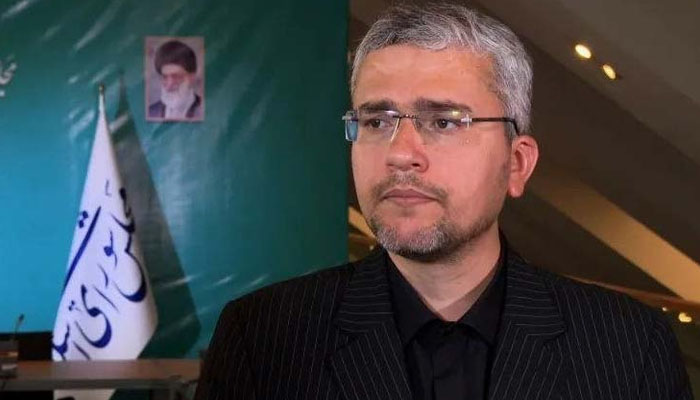
    TEHRAN: Iranian parliamentarian Ebrahim Rezaei has questioned whether Saudi Arabia’s new defence agreement with Pakistan and Türkiye can guarantee the Kingdom’s security. Rezaei, a member of Iran’s Parliament National Security and Foreign Policy Committee, made the remarks in a social media post. He said Saudi Arabia should understand that the agreement with Pakistan and Türkiye would not provide the level of protection Riyadh had failed to obtain despite decades of reliance on the United States. Rezaei described the agreement as a “paper pact” and urged Saudi Arabia to reconsider its policies so that it would not have to seek security guarantees from other countries. His comments came shortly after Saudi Arabia, Pakistan and Türkiye signed a joint defence agreement in Makkah. The agreement was signed amid concerns over potential attacks on Saudi Arabia by Iran-aligned militias in Iraq and Yemen. Saudi officials have reportedly warned of such security threats. Under the new agreement, an attack against any one of the three countries will be considered an attack against all three. The pact aims to strengthen defence cooperation and develop joint capabilities among Saudi Arabia, Pakistan and Türkiye. A trilateral defence summit was held at Al-Safa Palace in Makkah, attended by Saudi Crown Prince Mohammed bin Salman, Turkish President Recep Tayyip Erdogan and Pakistani Prime Minister Shehbaz Sharif. According to Pakistan’s Foreign Office, the three leaders signed the agreement, formally described as the Makkah Defence Joint Agreement.

  • | |

    Nadia Khan addresses divorce rumours with social media post

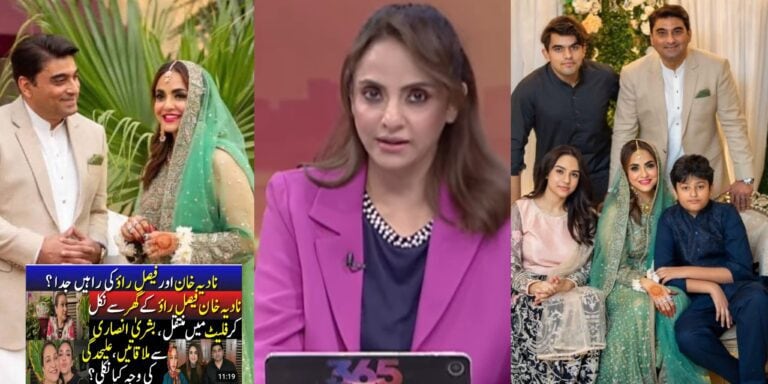
    Pakistani television host and actress Nadia Khan has seemingly dismissed recent rumours about trouble in her marriage by sharing a photograph with her husband, Faisal Rao, on social media. The post came after several YouTubers claimed that the couple had separated, sparking widespread speculation online. Nadia Khan is one of Pakistan’s most recognisable television personalities. She has appeared in dramas including Des Pardes, Bandhan, Manzilen, Kaisi Aurat Hoon Main, Dolly Darling, Kumzarf and Aesi Hai Tanhai. She is also known for her candid opinions on the entertainment industry through programmes such as Kya Drama Hai and Rise & Shine. Beyond television, Nadia enjoys a strong digital presence through her YouTube channel, OutStyle with Nadia, and has more than 2.6 million followers on Instagram. The actress married retired Pakistan Air Force officer Faisal Rao in January 2021. Since then, the couple has been living in Karachi and has largely kept their personal life away from the public eye. Although Nadia remains active on social media, she rarely shares family-related content and has stepped away from family vlogging because of her busy schedule with Kya Drama Hai and Rise & Shine. In recent days, Nadia’s limited posts about her personal life led to speculation from several YouTube channels, which claimed that she and Faisal Rao had divorced. Among those making the claim was YouTuber Mehreen Sibtain, while other content creators also repeated similar allegations. The rumours quickly spread across social media, prompting discussion among fans. Despite the growing speculation, Nadia chose not to issue a direct statement or publicly address the claims. Instead, after the rumours gained traction online, she shared a photograph with her husband on her Instagram Story. The image, posted around six hours before Reviewit published its report, appeared to reassure followers that the couple remains together. While Nadia did not write a lengthy caption or explicitly mention the divorce rumours, many social media users interpreted the post as her response to the ongoing speculation. Fans described the picture as a subtle but effective way of putting an end to the claims without engaging in unnecessary controversy. The actress has previously maintained that she prefers to keep her personal life private despite her public career. Over the years, she has focused her online presence primarily on her professional work, television appearances and lifestyle content rather than regularly sharing details about her family life. Following the Instagram Story, many of Nadia’s followers criticised the spread of unverified rumours and urged social media users to avoid believing claims that are not confirmed by the individuals involved. The shared photograph has since been widely viewed as Nadia Khan’s way of dismissing the divorce speculation, with no evidence supporting the claims that she and Faisal Rao have ended their marriage. 

  • | |

    Police officer took his own life after leading dou…

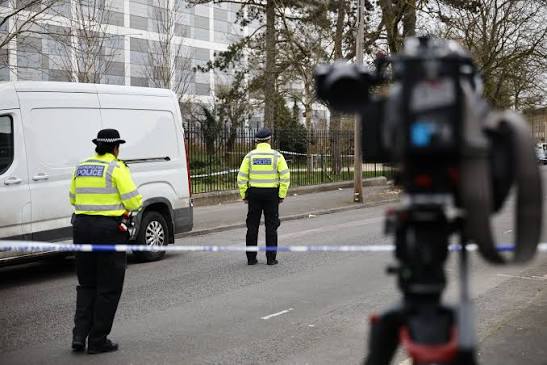
    An investigation has found that a police officer who died by suicide in May carried out a series of rapes and attempted murders targeting women over a period of at least fourteen years while serving as an officer. PC Alan Greer’s earliest known victim was a woman he raped inside her own home in Glasgow in 2012, shortly after she had contacted police to report an unrelated crime. The woman came forward late last year to report the assault, a disclosure that triggered one of the largest anti corruption investigations in Police Scotland’s history. Detectives have since identified eight additional victims, five of them sex workers who were attacked while Greer was off duty. Investigators have also established that Greer paid for sex from hundreds of women throughout his career and expect further victims to come forward as the inquiry continues. Assistant Chief Constable Lynn Ratcliff, who is leading the investigation, described the findings as deeply disturbing. She said the officer had abused his position of authority by returning to target a woman he had first encountered through his police duties. Ratcliff said the woman’s decision to come forward and speak with investigators became the catalyst that launched the wider inquiry. Her confirmation of the investigation followed months of reporting into Greer’s conduct. A source close to the case said the scale and nature of the case draws comparisons to the conviction of Wayne Couzens, the London police officer sentenced for the rape and murder of Sarah Everard five years ago, suggesting the Greer case could represent a similarly significant reckoning for Police Scotland. Greer was born in Australia in 1978 and moved to the United Kingdom at age six. He joined Strathclyde Police in 2009, and continued serving after the force merged into Police Scotland in 2013, building what appeared to be an unblemished seventeen year career. He initially worked as a uniformed response officer in Glasgow before moving into an officer safety training role based in Coatbridge around 2016, a position that involved training probationary officers and refreshing the skills of more experienced colleagues. Greer was 47 years old when he died in May, and was married with a child. Those close to him, including his family and police colleagues, are understood to have had no knowledge of his pattern of violence. Senior officers have said there were no clear opportunities that would have allowed the force to identify his offending earlier. The investigation traces back to a woman in her late thirties who walked into a Glasgow police station late last year to report the assault. She described how, in 2012, she had called officers to her home after a disturbance, only for one of the responding officers to later attack her. Cases involving police officers who abuse their positions of trust to target victims, particularly vulnerable women and sex workers, have prompted broader scrutiny of vetting and oversight procedures within UK police forces in recent years. Investigations of this kind often expose gaps in how forces monitor off duty conduct and respond to complaints against serving officers, and they tend to renew public pressure for independent oversight mechanisms capable of identifying patterns of abuse before they escalate over many years. The investigation into Greer’s offending remains active, and Police Scotland has said it anticipates identifying more victims as the inquiry proceeds.

  • | |

    Homenet Pakistan urges protection of democratic ma…

      Lahore, July 2026: HomeNet Pakistan, in partnership with AwazCDS/PDA, organized a high-level policy dialogue with Members of the Provincial Assembly (MPAs), including members of the Standing Committee on Local Government, to discuss legislative reforms aimed at promoting a stronger, more inclusive, and constitutionally compliant local government system in Punjab. The dialogue brought together parliamentarians, civil society representatives, and governance experts to exchange views on the future of local governance and explore ways to strengthen democratic institutions at the grassroots level. The session focused on ensuring political continuity, enhancing public participation, and improving the effectiveness of elected local governments.   Opening the event, Mr. Zia ur Rehman, Chief Executive of AwazCDS-Pakistan, highlighted the constitutional importance of Article 140A, which requires the devolution of political, administrative, and financial authority to elected local governments. He stressed that an effective local government system is essential for democratic governance and improved public service delivery. He urged the Punjab Assembly to introduce legal and institutional reforms that would safeguard democratic continuity, ensure the timely conduct of local government elections, and strengthen the autonomy of elected local bodies.   During the session, Ms. Ume Laila Azhar, Executive Director of HomeNet Pakistan, presented a set of policy recommendations designed to reinforce democratic governance at the local level. She emphasized the need for a stable and party-based electoral framework for local governments, noting that frequent legislative changes have weakened institutional continuity. She referred to the replacement of the Punjab Local Government Act 2022 with the Punjab Local Government Act 2025 as an example of policy shifts that have contributed to delays in restoring elected local governments across the province. She called for legal safeguards to prevent repeated delimitations and unnecessary postponements of local government elections. HomeNet Pakistan also recommended a transparent and representative mechanism for filling reserved seats allocated to women, youth, minorities, workers, persons with disabilities, and other marginalized groups. According to the organization, such measures would promote broader democratic participation and ensure that local governments better reflect the diversity of society.   In addition, the organization emphasized the importance of returning key municipal responsibilities—including water supply, sanitation, solid waste management, and local infrastructure development—to elected local governments. It proposed that provincial and district administrations should primarily provide technical guidance and institutional support rather than directly managing these essential services. The dialogue was attended by Ms. Sumbal Malik Hussain, Ms. Fizzah Maimona Rao, Ms. Somia Atta, Ms. Rukhsana Kausar, Ms. Farzana Abbas, Ms. Nasreen Riaz, and Ms. Attia Hanif, alongside representatives from civil society organizations and governance experts. Responding to the recommendations, the participating MPAs appreciated the constructive engagement and acknowledged the importance of strengthening democratic local governance. They reaffirmed the Punjab Government’s commitment to transparency, institutional reforms, and democratic accountability, expressing confidence that these principles would continue to guide the ongoing local government reform process. The parliamentarians informed participants that the delimitation process had made substantial progress, with geographical boundaries largely finalized. They stated that the remaining objections were expected to be addressed by the end of July 2026. Following the completion of the statutory process, they expressed optimism that the election schedule would be announced, paving the way for timely local government elections. The MPAs also committed to sharing the recommendations emerging from the dialogue with the Honorable Speaker of the Punjab Assembly and pledged to advocate for legislative reforms that promote constitutional compliance, political continuity, and an empowered local government system capable of responding effectively to citizens’ needs. Concluding the event, HomeNet Pakistan reaffirmed its commitment to working closely with parliamentarians, government institutions, and civil society partners to advance democratic governance, strengthen inclusive representation, and support the timely restoration of empowered elected local governments across Punjab.

Leave a Reply

Your email address will not be published. Required fields are marked *