dar jordan discuss
| |

Dar, Jordan FM discuss West Bank crisis and Palest…

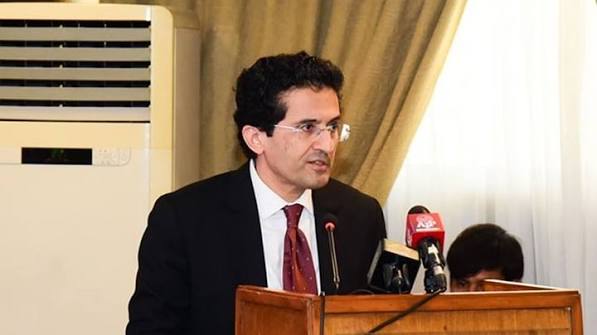
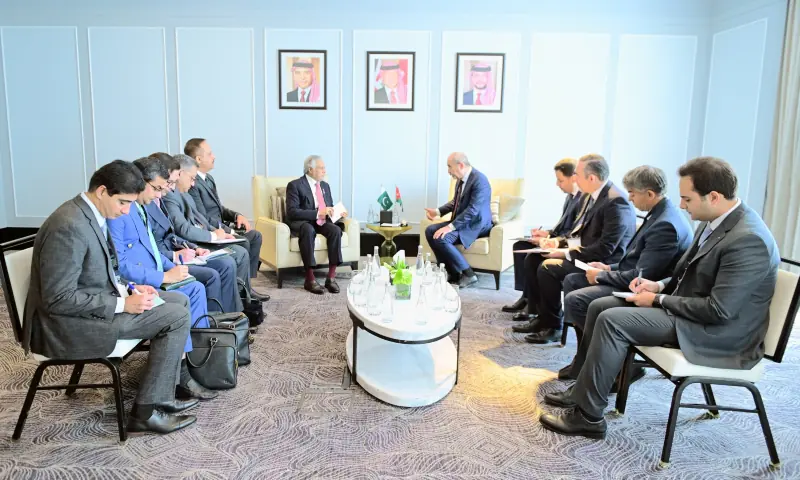
Deputy Prime Minister and Foreign Minister Ishaq Dar held talks with his Jordanian counterpart Ayman Safadi in Amman on Wednesday, where both leaders reviewed the worsening situation in the occupied West Bank and reaffirmed their support for the Palestinian cause.

The meeting took place on the sidelines of a ministerial conference focused on developing a coordinated stance on the situation in occupied Jerusalem. During the discussions, the two foreign ministers exchanged views on recent regional developments, with particular attention to escalating tensions in the Palestinian territories.

Dar praised Jordan’s longstanding role in protecting the Islamic and Christian holy sites in Jerusalem and acknowledged Amman’s continued support for the Palestinian people. Both sides also expressed satisfaction over the growing momentum in Pakistan-Jordan relations and pledged to further expand cooperation in political, economic, defence, education, cultural and people-to-people exchanges.

The two leaders also discussed broader regional issues, including recent developments involving the United States and Iran. They stressed that dialogue and diplomacy remain essential for reducing tensions and maintaining regional peace and stability.

Both ministers agreed to continue close coordination at bilateral and multilateral forums, including the United Nations and the Organisation of Islamic Cooperation (OIC), to address regional challenges and promote peaceful solutions.

During his visit, Dar also met Somalia’s Minister for Foreign Affairs and International Cooperation, Abdisalam Abdi Ali. The two leaders reviewed longstanding bilateral relations and explored opportunities to strengthen cooperation in politics, trade, defence, education and capacity-building. They also reaffirmed their commitment to working closely on issues of mutual interest at international forums.

Dar is attending the ministerial meeting in Jordan to join foreign ministers from Arab League member states and several Islamic countries in formulating a unified response to developments in occupied Jerusalem.

Pakistan is expected to reiterate its consistent support for the Palestinian people and call for the establishment of an independent and sovereign State of Palestine based on pre-1967 borders, with East Jerusalem as its capital.

Similar Posts

  • | |

    Pakistan enters AI era with inauguration of larges…

    Pakistan has taken a major step towards becoming a regional digital technology hub with the inauguration of Sky47 Karakoram-01, the country’s largest AI-ready data centre and cloud platform, at Capital Smart City near Islamabad. The facility was jointly inaugurated by Prime Minister Muhammad Shehbaz Sharif and Chief of Army Staff and Chief of Defence Forces, Field Marshal Syed Asim Munir, during a ceremony attended by federal ministers, senior government officials, business leaders, technology experts and representatives of the IT sector. Developed by Sky47 in collaboration with the Habib Rafiq Group, the state-of-the-art facility has been designed to deliver artificial intelligence computing, cloud services, secure data hosting, cybersecurity and high-performance computing infrastructure. The project is expected to strengthen Pakistan’s digital economy by enabling businesses, financial institutions, government organisations and technology companies to securely host and process data within the country while supporting the rapid growth of AI applications. The project also reinforces Capital Smart City’s ambition to become Pakistan’s premier destination for data centres, cloud computing and advanced technology investment. With its modern infrastructure, strategic location and dedicated technology zones, the city is positioning itself as a future hub for digital innovation and AI-led development. Addressing the inauguration ceremony, Prime Minister Shehbaz Sharif described Sky47 as a landmark project that would help shape Pakistan’s future and strengthen the country’s digital capabilities. He said the successful completion of the project within a short period reflected extraordinary commitment, professional expertise and determination. The Prime Minister said projects such as Sky47 were essential for building a dynamic, progressive and technologically advanced Pakistan. Referring to Pakistan’s recent achievements, he said that when the nation confronts challenges with determination, optimism and resilience, it is capable of accomplishing historic milestones. He described the project as an important guarantee for Pakistan’s future and said it would provide robust digital security for the country. He also paid tribute to Field Marshal Syed Asim Munir for his visionary leadership and acknowledged the support of technology partner ZTE, Federal Minister for Information Technology Shaza Fatima Khawaja, the Ministry of IT and all stakeholders involved in making the project a reality. The Prime Minister announced that similar state-of-the-art facilities would also be developed in Karachi and Lahore and called for government institutions to make full use of the new infrastructure. The Habib Rafiq Group, under the leadership of Zahid Rafiq, has played a pivotal role in delivering the project and expanding Capital Smart City’s vision beyond real estate into technology-led infrastructure. Industry observers believe the initiative will help attract further domestic and international investment in artificial intelligence, cloud computing and digital services. Speaking at the ceremony, Federal Minister for Information Technology Shaza Fatima Khawaja said the inauguration of Sky47 marked the beginning of a new era of artificial intelligence in Pakistan. She said the project would open the door to a new phase of economic growth by enabling the country to make better use of its digital resources, skilled workforce and data-driven innovation. She added that the future global AI race would depend on the secure, efficient and intelligent use of data. Sky47 Chief Executive Officer Hassan Abbas said there are around 12,000 data centres worldwide but only 22 in Pakistan, highlighting the country’s significant growth potential. He said Pakistan’s e-commerce sector is expanding by around 25 to 30 per cent annually and that Sky47 would provide a strong foundation for the country’s digital economy. The Sky47 data centre has the capability to support artificial intelligence, machine learning and high-performance computing while providing cloud computing, secure data hosting and enterprise digital services. It is also expected to play an important role in safeguarding sensitive national and commercial information. The inauguration is being viewed as one of Pakistan’s most significant technology milestones in recent years, reflecting the country’s ambition to build sovereign digital infrastructure and reduce reliance on overseas data hosting. Supporters of the initiative describe it as a major breakthrough achieved under the leadership of Prime Minister Shehbaz Sharif, with the support of Field Marshal Syed Asim Munir, and an important step towards positioning Pakistan as a regional hub for artificial intelligence, cloud computing and next-generation digital technologies.

  • | | |

    Pakistan marks Kashmir Exploitation Day

    Pakistan observed Kashmir Exploitation Day on August 5, with political leaders reaffirming their support for the people of Indian-administered Kashmir and describing India’s actions of August 5, 2019, as illegal and contrary to international law and United Nations resolutions. Deputy Prime Minister and Foreign Minister Ishaq Dar said Pakistan remains committed to supporting the Kashmiri people’s right to self-determination. In his message, he stated that India’s unilateral constitutional changes made on August 5, 2019, were unlawful and pledged Pakistan’s continued moral, political and diplomatic support for Kashmiris. He also urged India to reverse all measures that altered the disputed region’s constitutional status. The Foreign Office said Pakistan continues to observe Kashmir Exploitation Day to highlight the events of August 5, 2019. A spokesperson praised the courage, resilience and sacrifices of the people of Indian-administered Kashmir and reiterated Islamabad’s support for their cause. Punjab Chief Minister Maryam Nawaz paid tribute to the families of those who lost their lives during the Kashmir conflict and urged the United Nations and international human rights organisations to take notice of alleged human rights violations in the region. She said Pakistan would never accept the constitutional changes introduced by India in 2019. Sindh Chief Minister Syed Murad Ali Shah said India’s actions were against United Nations Security Council resolutions and called on the international community to play a greater role in protecting human rights in Kashmir. Senate Chairman Syed Yousaf Raza Gilani condemned India’s August 5 measures, saying attempts to alter the region’s demographic composition and identity were unacceptable. In Peshawar, a solidarity rally led by Khyber Pakhtunkhwa Governor Faisal Karim Kundi was held from the Civil Secretariat to the Governor House. Government employees and people from different walks of life participated in the event. Addressing the rally, Kundi said Pakistan would continue to stand with the people of Kashmir and support their aspirations. Sindh Home and Law Minister Zia-ul-Hassan Lanjar said the use of force and restrictions could not weaken the determination of the Kashmiri people. Sindh Assembly Speaker Owais Qadir Shah also urged the United Nations to play a more effective role in addressing the situation. Jamaat-e-Islami chief Hafiz Naeem ur Rehman said the struggle of the Kashmiri people would continue until the dispute is resolved in accordance with United Nations resolutions. Senator Sherry Rehman praised the resilience and determination of Kashmiris, while Federal Minister Amir Muqam, speaking at a rally in Islamabad, reiterated Pakistan’s support for Kashmir and criticised India’s policies in the disputed territory. PPP Parliamentarians Secretary General Nayyar Bukhari also condemned India’s 2019 constitutional changes, saying they had failed to suppress the Kashmiri people’s demand for self-determination and warning that such policies could undermine regional peace.

  • | |

    Sangeeta’s intimate direction to Moammar Rana criticized online

    Veteran Pakistani filmmaker Sangeeta has found herself at the center of online discussion after behind-the-scenes footage showing her directing actor Moammar Rana on set began circulating on social media platforms. ​The viral video, captured during the production of her upcoming film Mukho, shows the experienced director physically demonstrating how to execute a close romantic sequence between the lead actors. In the footage, Sangeeta steps in to personally guide Moammar Rana on body posture, facial expressions, and the specific physical proximity required for the scene. Taking a hands-on approach typical of traditional Lollywood directors, Sangeeta directly adjusted the actor’s positioning to demonstrate the movements needed to capture romantic chemistry on camera. ​Addressing her direct approach to film direction, the veteran filmmaker explained that hands-on instruction is an essential part of her creative process on set: ​”As a director with decades of experience, my focus is always on getting the exact emotion required for the scene. In traditional cinema, showing an actor how to move and convey feelings on camera is simply part of the job to ensure the final shot looks believable to the audience.” ​The behind-the-scenes clip quickly spread across online entertainment portals, triggering divided reactions among social media users. Critics described the physical guidance as awkward and unnecessary, arguing that established actors like Moammar Rana should be allowed more creative space without physical demonstration. Some commentators suggested that older directing methods might feel out of place in modern, contemporary filmmaking environments. ​Conversely, many fans and industry insiders came to Sangeeta’s defense, highlighting her career in Pakistani cinema spanning nearly 50 years. Supporters noted that veteran directors from the classic Lollywood era have long relied on direct physical demonstrations to communicate their creative vision clearly to the cast. They argued that her active role on set reflects her passion for filmmaking and close attention to detail rather than anything controversial. ​The online debate highlights the contrast between classic Lollywood production techniques and contemporary film set standards. While traditional directors frequently relied on direct physical instruction to achieve specific visual shots, modern digital coverage means behind-the-scenes moments are now routinely scrutinized and discussed by online audiences. ​As production on Mukho continues toward its scheduled release, the widespread reaction to the viral footage demonstrates how everyday moments from film sets regularly become topics of public debate in the digital age.

  • | | | |

    Pakistan’s blasphemy cases hit record low

    Pakistan has witnessed a significant decline in registered blasphemy cases this year following a crackdown on hardline religious groups, signalling what analysts describe as a major shift in the country’s security policy. According to figures cited by the Human Rights Commission of Pakistan (HRCP), only 13 blasphemy cases have been registered so far in 2026, marking a fall of nearly two-thirds compared with the same period in recent years. Data from conflict monitoring organisation ACLED also indicates that only one blasphemy-related riot or attack has occurred over the past year, compared with an annual average of more than seven incidents between 2021 and 2024. The decline comes after security agencies intensified action against several extremist organisations accused of exploiting blasphemy allegations to incite violence. Officials familiar with the matter said the campaign has included arrests of key figures, restrictions on organisational activities, freezing of financial assets and tighter monitoring of religious gatherings. The change was evident during an incident in Karachi last month, where allegations of blasphemy against a Christian family drew a large crowd. Police officers intervened before the situation turned violent and persuaded protesters to disperse peacefully. Authorities later determined that the accusations against the family were baseless, allowing them to be moved to safety without further harm. Analysts believe the reduced presence of organised extremist groups has played a key role in preventing mob violence that has historically followed blasphemy accusations. Pakistan has witnessed around 90 blasphemy-related lynchings since 1990, with many incidents beginning after rumours spread through local communities. Security experts say the military leadership has adopted a tougher stance against groups previously accused of using religious sentiments to mobilise supporters and pressure governments. They argue the policy shift is linked to broader efforts to strengthen Pakistan’s international image, attract foreign investment and improve relations with Western countries while tackling growing security threats at home. Officials also believe that curbing religious extremism is necessary to address worsening militancy in Balochistan and Khyber Pakhtunkhwa, where insurgent violence continues to challenge the state’s authority. Some analysts say extremist organisations and militant groups have historically drawn support from similar networks of radicalised youth. The country’s largest hardline religious party, Tehreek-e-Labbaik Pakistan (TLP), was banned last year after authorities concluded that its activities posed a threat to public order and Pakistan’s international reputation. Government measures reportedly included detaining senior leaders, sealing offices and restricting financial operations. The party has rejected the ban, calling it unconstitutional. Despite the decline in violence, observers caution that extremist ideology remains deeply rooted in parts of society. Human rights advocates say minority communities, including Christians, Ahmadis and Shia Muslims, continue to live under the fear of false accusations, as Pakistan’s blasphemy laws remain in force and carry the death penalty. Security analysts also warn that sustained enforcement will be necessary to prevent banned organisations from regrouping or resurfacing under new identities. They argue that long-term success will depend on consistent policies rather than temporary crackdowns.

  • | | | |

    Trump touts Iran talks as Netanyahu arrives

    US President Donald Trump has said that Washington is engaged in “very friendly talks” with Tehran as efforts continue to prevent a fresh escalation in the Iran war. Trump’s remarks came as Israeli Prime Minister Benjamin Netanyahu arrived in Washington for talks with the US president. The meeting is expected to focus heavily on the conflict with Iran and the possibility of reaching a longer-term agreement. The latest developments come after several days of reduced military activity between the United States and Iran. However, tensions remain high. Both sides continue to issue warnings and maintain their military positions. Iran has indicated that it remains open to diplomacy. At the same time, Tehran has warned that it is prepared to respond strongly if the United States launches another attack. Iranian officials have also stressed that Washington will not decide when the country should choose between negotiations and confrontation. Tehran has said that communication with the US is continuing through intermediaries. Qatar and Pakistan are among the regional countries involved in facilitating communication between the two sides. Iranian officials have described the diplomatic channel as active but uncertain. Several major issues remain unresolved. The nuclear programme is expected to be one of the central subjects in any future agreement. Sanctions, compensation for war-related damage and security arrangements are also likely to complicate negotiations. The Strait of Hormuz remains another major obstacle. The strategic waterway is vital for international energy supplies. Iran has insisted on maintaining a significant role in controlling and regulating movement through the strait. Washington, meanwhile, wants the waterway to return to normal operations. The issue has become an important source of leverage for Tehran and a major concern for the global energy market. Trump has indicated that he wants an agreement but has also warned that military action could resume if diplomacy fails. His comments have added pressure to the ongoing negotiations. The situation has also created wider economic concerns. Australia, which relies heavily on imported fuel, is considering plans for a new domestic oil refinery. The proposal comes as disruptions to global energy supplies raise concerns about fuel security. The conflict has also affected several Gulf states. Saudi Arabia has condemned a reported drone attack by Iran-aligned groups in Iraq targeting Riyadh and energy infrastructure in the kingdom’s Eastern Province. Satellite imagery has also shown smoke rising from areas in Saudi Arabia after Yemen’s Iran-aligned Houthis claimed attacks against oil-related facilities. Meanwhile, Netanyahu’s visit to Washington has added another layer to the diplomatic situation. Israel took part in the military campaign against Iran alongside the United States but has not been directly involved in the latest US-Iran diplomatic contacts. The Israeli prime minister is expected to discuss the conflict with Trump. Differences could emerge over the direction of US policy and the possibility of a diplomatic settlement. The meeting also comes amid continuing Israeli military operations in the occupied West Bank. Israeli forces have carried out further raids in the territory, while former senior Israeli military officials have reportedly urged Trump to pressure Netanyahu to reduce the violence. UN High Commissioner for Human Rights Volker Turk has also raised concerns over alleged violations of international law in the region. His office has documented incidents in Lebanon and said some could potentially amount to war crimes. Despite the latest diplomatic activity, the path toward a lasting agreement remains uncertain. Washington and Tehran appear interested in avoiding another major escalation, but serious disagreements continue to stand in the way of a final settlement. The Strait of Hormuz, Iran’s nuclear programme, sanctions and the consequences of the conflict are likely to remain central to the next phase of negotiations.

  • | | | |

    Mojtaba Khamenei appears in new video as health qu…

    TEHRAN: A new video showing Iran’s Supreme Leader Mojtaba Khamenei has emerged, offering a rare public glimpse of the Iranian leader amid heightened attention over his health and whereabouts. The footage was released by Iran’s semi-official Mehr News Agency and appears to show Khamenei sitting with several people and engaged in conversation. The agency did not disclose when or where the recording was made, nor did it identify the other individuals seen alongside him. Khamenei appears in normal condition in the short footage. The release comes after reports and speculation about his health had circulated in recent days, making the video particularly significant for observers following developments in Tehran. Iranian media presented the footage as evidence of the Supreme Leader’s continued presence and activity. The video does not provide independent confirmation of when it was recorded, however, leaving some questions unanswered about Khamenei’s current condition and location. The appearance comes as tensions surrounding Iran remain high. Iranian Foreign Minister Abbas Araghchi has reiterated Tehran’s determination to withstand pressure and continue what he described as resistance. “We are fully prepared for resistance despite all pressures,” Araghchi said, according to the statement cited by Iranian media. He also said Iran would not forget what he described as the unjust bloodshed of its martyrs, adding that those responsible would not be forgiven. Khamenei’s limited public appearances have attracted considerable attention since he became Iran’s Supreme Leader earlier this year. The latest footage is therefore likely to be closely examined both inside Iran and abroad as questions continue over the country’s leadership and its response to mounting regional pressures. For now, the exact timing and location of the recording remain undisclosed.

Leave a Reply

Your email address will not be published. Required fields are marked *