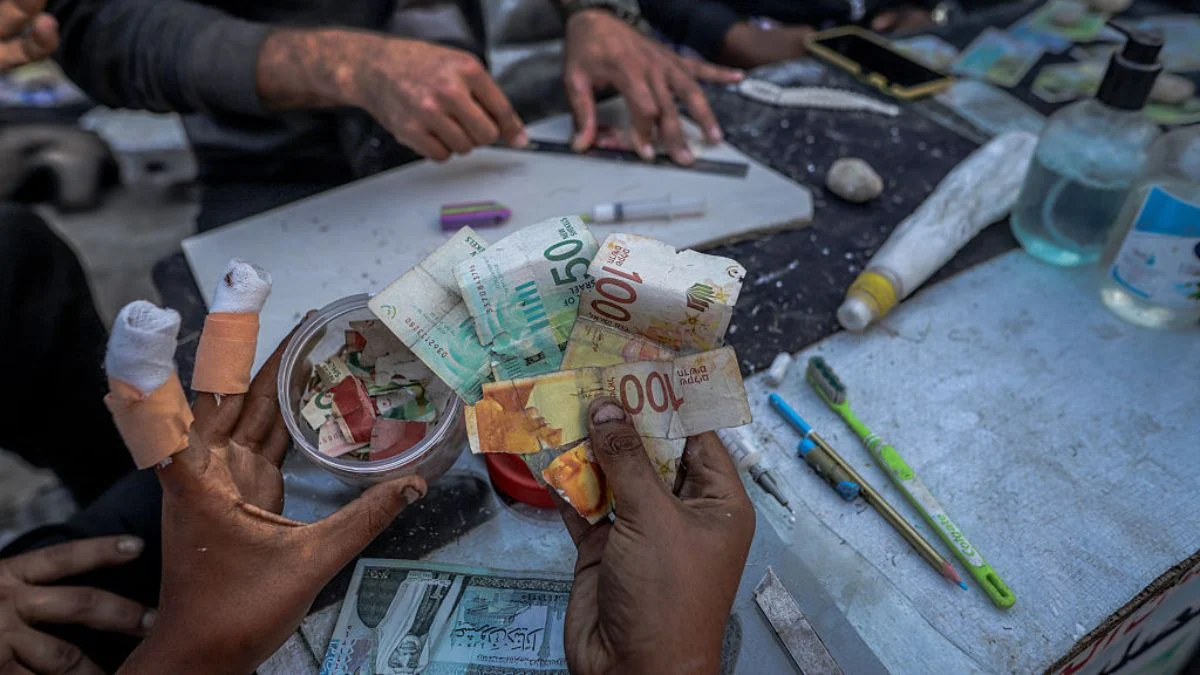
Israeli banks plan to end services for Palestinian banks raising fears of financial crisis
Israeli banks have informed Palestinian financial institutions that they plan to end key banking services within the coming weeks, a move that has sparked concerns about serious economic disruption in the occupied West Bank. Officials on both sides say the decision could affect trade, salaries, and the daily financial operations that rely on cooperation between the two banking systems.
The banking relationship allows Palestinian institutions to process transactions in Israeli shekels, the currency widely used in the Palestinian territories. These services are essential for paying for electricity, water, fuel, food imports, and other goods purchased from Israel. They also help transfer wages earned by thousands of Palestinians employed in Israel.
According to Palestinian banking officials, five local banks that depend on Israel’s Bank Hapoalim for correspondent banking services have been told those arrangements will end on August 13. Other Palestinian banks that work through Discount Bank have reportedly been informed that their services will stop on September 1 unless a solution is reached.
Israel’s Finance Ministry confirmed that both banks had announced plans to discontinue their correspondent banking services. The ministry said the decision reflects increasing legal and financial risks faced by Israeli banks while handling transactions for Palestinian institutions.
In a statement, the ministry said it is holding discussions with the banks to find a way to continue these services while protecting Israel’s economic and security interests. Officials are exploring options that would allow financial cooperation to continue under conditions that reduce legal exposure for the banks involved.
The banking arrangements have long depended on a government backed legal guarantee that shields Israeli banks from liability related to transactions carried out on behalf of Palestinian financial institutions. This protection is renewed every six months by the Israeli government.
However, banking officials say commercial lenders no longer believe the existing guarantees provide enough protection. They argue that the risks of possible money laundering claims or allegations linked to terrorist financing have increased over time. According to one Israeli banking official, the banks believe the responsibility should now be taken over directly by the government instead of remaining with private financial institutions.
Discount Bank confirmed that it had informed Israeli authorities of its concerns regarding the growing risks associated with these services. The bank said it has a responsibility to protect its depositors and shareholders while operating within an increasingly complex legal environment. Bank Hapoalim said the issue remains under review and did not provide further details.
Economic experts warn that ending these banking links could have serious consequences for the Palestinian economy. Without access to correspondent banking services, businesses and individuals may be forced to rely more heavily on cash transactions. That shift could weaken the formal banking sector, reduce financial transparency, and encourage the growth of an informal economy.
The decision could also place additional pressure on the Palestinian Authority, which already faces severe financial difficulties. The Authority depends heavily on local banks to finance public sector salaries and cover budget shortfalls. Financial analysts warn that if banks lose access to essential payment systems, the government’s ability to meet its financial obligations could be significantly weakened.
A Palestinian businessman with close connections to the banking sector said the stability of local banks is closely tied to the stability of the Palestinian Authority. He warned that serious disruption to the banking system could have wider political and economic consequences across the West Bank.
The latest development comes as the Palestinian Authority continues to struggle with reduced revenues after Israel suspended the transfer of customs and tax funds collected on its behalf. Those funds account for around two thirds of the Authority’s income, leaving its finances under increasing strain. Unless an agreement is reached soon, officials fear the planned banking cutoff could deepen the economic challenges already facing Palestinians in the occupied territory.