investigates possible russian
|

US investigates possible Russian role in Iranian strikes on CIA facilities

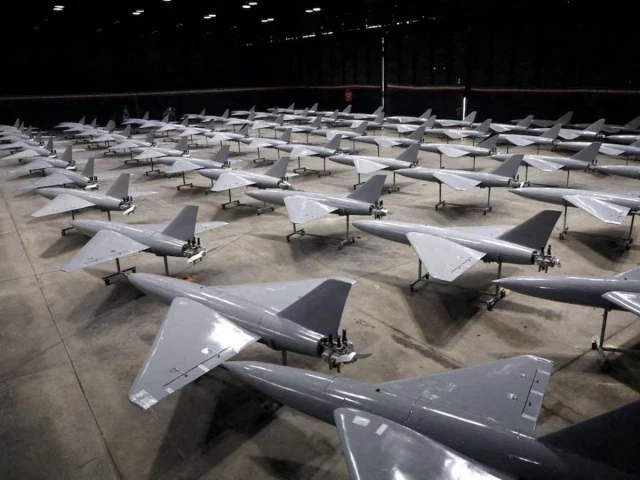
US intelligence agencies are examining whether Russia helped Iran carry out drone attacks on CIA facilities in the Gulf, raising fresh concerns about growing military cooperation between Moscow and Tehran. Officials are reviewing intelligence to determine whether Russia provided targeting information, advanced drone technology, or other forms of support that may have increased the accuracy of the attacks.

According to sources familiar with the investigation, analysts have not reached any final conclusions about Russia’s involvement. However, the precision of the strikes and Russia’s long history of military and technical cooperation with Iran have led intelligence officials to explore whether Moscow played a direct role in planning or supporting the operations.

The investigation follows a series of Iranian drone attacks that targeted sensitive US intelligence locations in the region. At least two CIA facilities were reportedly hit in March. One of the sites was located inside the US Embassy in Riyadh, Saudi Arabia, while another was in eastern Iraq. Officials familiar with the matter said additional CIA locations may also have been attacked, although they declined to reveal further details because of security concerns.

Western intelligence officials have also reviewed reports suggesting that Russia may have assisted Iran in selecting the targets. One intelligence assessment reportedly concluded that Russia likely contributed to identifying regional CIA facilities, although officials stressed that the findings remain under review and have not been publicly confirmed.

According to officials briefed on intelligence reports, the attack on the US Embassy compound in Riyadh involved two upgraded versions of Iran’s Shahed drones. They said one drone created an opening in the embassy’s outer structure while the second entered through the damaged area before exploding inside. No casualties were reported, but the operation demonstrated a level of accuracy that surprised intelligence analysts.

The investigation comes as tensions between the United States and Iran remain high following months of military exchanges across the Middle East. American officials are also examining recent Iranian strikes on a US military base in Jordan where ballistic missiles killed two American soldiers. Those attacks have intensified concerns that Iran may be receiving more advanced military support from Russia.

Analysts believe Russia has spent years helping Iran improve its drone capabilities. Intelligence sources say Moscow has assisted Tehran in increasing the range and precision of its Shahed drones through technical upgrades. Reports also suggest Russia supplied Iran with the Kometa M satellite navigation system, which is believed to provide greater accuracy and stronger resistance to electronic interference than Iran’s previous guidance systems. Russia has denied supplying the technology and dismissed earlier reports on the matter.

The White House referred questions about the investigation to the CIA, which declined to comment. Iran’s mission to the United Nations, the Russian Defense Ministry, and Saudi authorities also did not respond to requests for statements.

The exact number and locations of the targeted CIA facilities remain classified. Intelligence sources said more than one site but fewer than a dozen were struck during the attacks. Overseas CIA operations often include embassy based stations as well as secure facilities used for surveillance, logistics, intelligence gathering, and other sensitive missions.

US analysts are also investigating whether Russia supplied the intelligence used to identify the Riyadh facility. Some officials remain cautious, noting that Iran may have intended to strike the US Embassy as a whole rather than specifically targeting the CIA station located within the compound. Others believe very few countries possess both the intelligence capabilities and the strategic motivation to identify and support attacks against such highly sensitive US facilities.

Former CIA station chief Daniel Hoffman said closer military cooperation between Russia and Iran makes such assistance plausible. He argued that both countries share a common interest in reducing American influence across the Middle East and other regions where they seek greater strategic control. The investigation remains ongoing as US intelligence agencies continue to assess the available evidence.

Similar Posts

  • | |

    Ainak Wala Jin creator Hafeez Tahir condemns AI remake

    Veteran writer and director Hafeez Tahir, the creator of the iconic Pakistani fantasy television series Ainak Wala Jin, has strongly criticised the makers of the recently released AI-generated film adaptation, alleging that his original work was used without his permission. The AI-based adaptation was released in cinemas earlier this month, prompting Tahir to share a video on Instagram in which he expressed his disappointment and urged the public to spread awareness about what he described as the unauthorised use of his creation. In the caption accompanying the video, he referred to the matter as “daylight robbery.” Speaking directly to viewers, Tahir asserted that Ainak Wala Jin was entirely his original creation. “Today I am very angry because my life’s work, Ainak Wala Jin, is being taken and its name is being used in an AI-generated film that has been released in theatres. I’d like to tell you all that this is my idea, my concept, my creation,” he said. The veteran filmmaker further explained his role in developing the beloved television series. “I am the concept writer. I created the name, I directed it and made a quality serial,” Tahir stated. He added that he later sold the rights to a private television channel, which, according to him, continues to benefit from the show’s popularity by attracting millions of views through YouTube uploads. Tahir also alleged that neither the filmmaker nor the cinema releasing the AI adaptation sought his approval before using the title and concept. “Neither the filmmaker nor the cinema that released the film sought my permission,” he claimed. The creator further criticised the heavy reliance on artificial intelligence in the adaptation, arguing that it stripped away the originality and emotional appeal of the classic television series. “To take a series and base it on AI is to ruin an iconic idea. They’ve changed the appearance of the characters and destroyed them,” he said. Expressing particular disappointment over the portrayal of one of the show’s most recognisable characters, Tahir added, “My main character, Nastoor Jin, looks like a dacoit here. They have changed the original characters, their voices and replaced them with AI-generated music. In this way, they have ruined such a beautiful idea.” Concluding his statement, Tahir suggested he may pursue legal action over the matter. “Now tell me, should we stay quiet or move forward and take legal action?” he asked. The video drew significant attention online, with many fans supporting Tahir and expressing concern over the use of artificial intelligence to recreate a cherished Pakistani television classic without the creator’s involvement. Several users criticised the filmmakers for relying on AI, while others said the controversy was upsetting because Ainak Wala Jin remains an important part of their childhood memories. One fan described the series as a defining part of growing up, while another said the situation was “so upsetting.” Originally broadcast in 1993, Ainak Wala Jin became one of Pakistan’s most popular children’s fantasy dramas. Running for 152 episodes, the series followed Nastoor Jin, portrayed by Shahzad Qaiser, a genie who travels to the human world in search of a cure for his weak eyesight. The show remains one of the country’s most memorable television productions decades after its original release.

  • | |

    Egypt could join expanding Mecca Agreement, says E…

    Turkish President Recep Tayyip Erdogan has said Egypt could become part of the Mecca Agreement in the future, describing the framework as open to participation by additional countries. Speaking to Arab media, Erdogan said the agreement provides for collective action if any participating member comes under external attack. He suggested that the inclusion of Egypt could further broaden the scope of the regional arrangement. Erdogan also said Turkey’s immediate priority is not the European Union, arguing that Europe is currently facing serious shortcomings. He further stressed the need to reopen the Strait of Hormuz, warning that keeping the strategic waterway closed for an extended period would serve no country’s interests.

  • US destroyer left powerless for four days in South China Sea

    A US Navy destroyer spent four full days without power in the South China Sea last month, after suffering a serious mechanical breakdown. The incident has raised fresh questions about the strain on America’s naval fleet. The USS Benfold, an Arleigh Burke-class guided-missile destroyer, was carrying out routine operations in the Indo-Pacific region on July 24 when the failure occurred. US 7th Fleet spokesperson Cmdr. Matthew Comer told CNN the ship suffered what the Navy described as an engineering casualty involving its generators. The breakdown left the nearly 10,000-tonne warship unable to manoeuvre on its own. It also knocked out several essential onboard systems, including toilets, air conditioning, galley services and drinking water. Despite the disruption, Comer confirmed there were no injuries among the crew throughout the ordeal. He praised their response, describing it as resilient, professional and remarkably steady under difficult circumstances. To help manage the crisis, another US warship, the USS Robert Smalls, stepped in to supply cooked meals to the stranded crew. Additional support came from vessels attached to the USS George Washington Carrier Strike Group, which assisted throughout the four-day period. Once power could not be restored at sea, the Benfold was towed to Subic Bay in the Philippines for proper repairs. The Navy confirmed that repair work wrapped up by August 8, and the destroyer has since returned to active duty. The exact cause behind the generator failure remains under investigation. Officials haven’t yet confirmed what specifically triggered the malfunction aboard the vessel. The incident adds to growing concern that the US Navy is being stretched thin by its expanding list of global commitments. Ongoing tensions tied to the Iran conflict, alongside broader Indo-Pacific operations, have placed additional pressure on naval resources in recent months. This isn’t an isolated case either. Back in May, another US destroyer, the USS Higgins, also experienced a temporary loss of power and propulsion while operating in the same broader Indo-Pacific region. With back-to-back incidents now affecting multiple vessels, questions are mounting over whether ageing systems and overstretched deployments are beginning to take a toll on naval readiness.

  • | | |

    Global oil prices drop 12% in three days, Pakistan…

    Pakistani consumers have yet to benefit from a sharp decline in global oil prices, despite international petroleum markets recording a fall of up to 12% over the past three days. The continued high fuel prices have added to the financial burden on households already struggling with rising inflation. Over the last 12 days, fuel prices in Pakistan have increased significantly, with diesel becoming Rs. 65.08 per litre more expensive and petrol rising by Rs. 25.10 per litre. The increases followed the federal government’s decision on July 17 to introduce a daily fuel price adjustment mechanism in line with international market trends. On July 17, petrol was priced at Rs. 310.71 per litre, while high-speed diesel was available at Rs. 323.30 per litre. As of July 29, petrol is being sold at Rs. 335.81 per litre, whereas diesel has climbed to Rs. 388.38 per litre, marking one of the steepest short-term increases in recent years. Although consumers witnessed two minor reductions in petrol prices during this period, the relief was limited. Petrol prices were cut by Rs. 0.35 per litre on July 21 and by Rs. 1.00 per litre on July 27. Diesel prices, however, have not been reduced since the daily pricing mechanism came into effect. International oil markets experienced a sustained upward trend after July 17, contributing to higher domestic fuel prices. However, between July 25 and July 28, global petroleum prices fell sharply, with reports indicating a decline of approximately 12% across major international benchmarks. Despite this significant drop in global prices, Pakistani consumers have not yet received any corresponding reduction at the pump. The absence of immediate relief has sparked concerns among motorists and businesses, particularly those heavily dependent on transportation and logistics, where fuel costs directly affect operating expenses. Economists note that lower international oil prices, if sustained, could create room for a reduction in domestic fuel prices in the coming days. Any adjustment, however, will depend on several factors, including exchange rate movements, government taxes and levies, freight costs, and the pricing formula adopted by the authorities. With inflation continuing to squeeze household budgets, many consumers are hoping the recent decline in global oil prices will soon translate into lower petrol and diesel prices in Pakistan, easing transportation costs and reducing pressure on the overall cost of living.

  • | |

    Karachi : Cloudy and humid conditions expected ove…

      Karachi is expected to experience mostly cloudy and humid weather conditions during the next 24 hours, according to the latest forecast issued by the Pakistan Meteorological Department. The weather authorities have predicted that light drizzle may occur in different parts of the city, particularly during the morning and nighttime hours. The meteorological department stated that the overall weather situation in Karachi is likely to remain warm, humid, and partly cloudy throughout the day. Residents may experience increased moisture levels in the atmosphere, which could make the temperature feel higher than the actual recorded temperature. The presence of humidity, combined with limited sunshine due to cloudy skies, is expected to create uncomfortable weather conditions for many citizens. According to the weather forecast, the minimum temperature recorded in Karachi today was 28 degrees Celsius. Meanwhile, the maximum temperature is expected to remain between 33 and 35 degrees Celsius. Although these temperatures are typical for the coastal city during this period, the high humidity level may increase the feeling of heat among residents. The humidity level in Karachi has been recorded at 78 percent, indicating a significant amount of moisture in the air. The city is also experiencing sea breezes from the southwest direction, moving at a speed of approximately 11 kilometers per hour. These coastal winds may provide some relief from the heat, but the high humidity is likely to continue affecting the overall comfort level. The weather department has advised citizens to remain aware of changing weather conditions, especially during early morning and nighttime hours when chances of drizzle are higher. Light rainfall is not expected to cause major disruption, but some areas may experience temporary wet conditions due to the drizzle. Karachi’s coastal location often results in humid weather patterns, particularly when moisture-laden winds from the Arabian Sea influence the city’s atmosphere. Cloud cover and sea breezes usually help control extreme temperatures, but high humidity can make daily activities more challenging for residents. The meteorological department further explained that no major change in weather conditions is expected during the next 24 hours. The city will likely continue to experience cloudy skies, humid conditions, and occasional light drizzle in some areas. People are advised to plan outdoor activities while keeping the possibility of brief rainfall in mind. Overall, Karachi’s weather is expected to remain mild in terms of temperature but uncomfortable due to elevated humidity levels. The combination of cloudy weather, warm temperatures, and moisture in the air will continue to define the city’s weather pattern over the coming day.

Leave a Reply

Your email address will not be published. Required fields are marked *