jpmc launches free
| | | |

JPMC launches free advanced breast cancer radiothe…

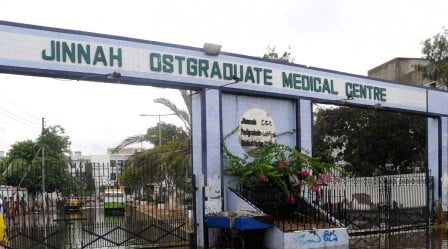
KARACHI: In a significant step towards improving cancer care in Pakistan, the Jinnah Postgraduate Medical Centre (JPMC) has established a state-of-the-art Breast Radiation Bay that promises faster, safer and completely free treatment for breast cancer patients. The new facility is expected to transform care for thousands of women by reducing treatment time while improving precision and patient safety.

Named the Bilquis and Abdul Sattar Edhi Breast Radiation Bay, the project has been developed through a joint collaboration between the Sindh government, the Patient Aid Foundation and the Edhi Foundation. Equipped with advanced tomotherapy technology worth more than Rs1 billion, the facility is in its final stages of completion and is expected to begin serving patients soon.

According to Prof. Tariq Mahmood, head of the CyberKnife Department at JPMC, the cutting-edge technology will dramatically shorten the duration of treatment. Radiation therapy that previously required 20 to 22 sessions can now be completed in just five sessions, reducing the physical and emotional burden on patients.

He explained that the new system delivers radiation with exceptional accuracy, targeting cancerous tissues while protecting healthy organs, particularly the heart. This precision is expected to improve treatment outcomes and reduce the risk of side effects, making cancer care both safer and more effective.

The Breast Radiation Bay will have the capacity to treat around 160 breast cancer patients every day, providing life-saving care to thousands annually. In addition to advanced radiotherapy, the centre will offer a complete range of diagnostic services, including mammography, biopsy, high-resolution CT imaging, and 360-degree helical radiation therapy, allowing patients to receive comprehensive care under one roof.

Medical experts say breast cancer remains the most commonly diagnosed cancer among women in Pakistan, with Karachi reporting one of the country’s highest incidence rates. They stress that early detection through regular screening greatly increases the chances of successful treatment.

Doctors also urge women to seek immediate medical advice if they notice warning signs such as breast lumps, changes in breast size or shape, skin dimpling, nipple discharge or changes in nipple appearance. While these symptoms do not always indicate cancer, timely evaluation is essential.

Health specialists believe the new facility marks a major milestone in Pakistan’s fight against breast cancer by expanding access to world-class treatment regardless of a patient’s financial circumstances. With advanced technology, free care and greater diagnostic capacity, JPMC aims to give thousands of women a better chance at early recovery and long-term survival.

Similar Posts

  • | | |

    Rising chip costs may increase phone prices in Pak…

    The rising cost of semiconductor chips in the global market could lead to another increase in mobile phone prices in Pakistan, as smartphone manufacturers continue to face higher production expenses. Industry experts say the global technology sector is experiencing a sharp rise in the cost of key components used in smartphones. The increasing demand for advanced semiconductor chips, particularly those used in artificial intelligence (AI) data centres, has placed significant pressure on chip manufacturers and global supply chains. In addition to AI-related demand, the prices of memory chips, silicon wafers, chip packaging materials and other electronic components have also increased. These factors have raised the overall cost of manufacturing smartphones, forcing companies to review their pricing strategies. The impact is being felt across the international mobile industry. Manufacturers are facing higher production costs, while suppliers are adjusting prices to cope with increased manufacturing expenses. As a result, smartphone companies are expected to pass part of the additional cost on to consumers. Pakistan’s mobile phone market is closely linked to global supply chains because most smartphones and their components are imported. Any increase in international production costs is likely to affect the prices of devices sold in the local market. Industry analysts say consumers may have to pay more for both premium and mid-range smartphones if the trend continues. They added that the exact increase will depend on international market conditions, import costs and currency exchange rates in the coming months. The expected rise would come at a time when consumers are already dealing with higher prices for electronic goods due to inflation and increased import expenses. A further increase in smartphone prices could reduce purchasing power and slow demand in the local market.

  • | |

    Pakistan goods transporters association declares i…

      The Pakistan Goods Transporters Association has raised serious concerns over the volatile and unpredictable daily adjustments in petroleum prices, stating that such frequent fluctuations make it impossible for the transport sector to continue operations smoothly. In a press conference held in Lahore, association officials, led by President Nabeel Mahmood Tariq, articulated a series of demands and grievances that have been mounting over recent months, warning that without immediate government intervention, the entire logistics and supply chain network could face severe disruption. Addressing the media alongside other senior office-bearers of the All Pakistan Goods Transporters Association, Nabeel Mahmood Tariq emphasized that the transportation industry is the backbone of the national economy, responsible for moving essential commodities, industrial raw materials, and consumer goods across the length and breadth of the country. However, he argued that the current pricing mechanism for petroleum products—which has seen almost daily revisions—has created an environment of extreme uncertainty for fleet operators. Unlike larger corporate entities, most truck owners and small transport companies operate on thin profit margins, and without a stable fuel pricing framework, they are unable to quote competitive rates to clients or plan their operational budgets effectively. Tariq pointed out that many transporters have already started grounding their vehicles, as each trip now carries the risk of financial loss if fuel prices rise unexpectedly mid-journey. Beyond fuel prices, the association president laid out a comprehensive list of demands aimed at reducing the financial burden on the sector. First and foremost, he called for an immediate end to unnecessary customs checking at various inter-provincial checkpoints. According to Tariq, these intrusive and repetitive inspections not only cause long delays—sometimes stretching into hours—but also open the door to harassment and bribery, which further inflate the cost of doing business. He urged the federal and provincial governments to streamline customs procedures and adopt a more efficient, technology-driven system that would expedite the movement of goods without compromising security or revenue collection. Another major point of contention raised by Tariq was the recent increase in toll taxes on highways and motorways. He demanded that this hike be rolled back completely, arguing that transporters are already struggling with rising maintenance costs, spare part prices, and tyre rates. The additional toll burden, he said, is simply unsustainable and forces many operators to take longer, less safe alternative routes, which ultimately hurts the overall efficiency of freight movement. Turning his attention to provincial policies, particularly in Punjab, Tariq called for the establishment of new, modern truck terminals across the province. He noted that existing truck stands and loading points are outdated, overcrowded, and lack basic amenities for drivers and helpers. New truck yards, equipped with proper parking, resting areas, workshops, and loading/unloading facilities, would not only improve working conditions but also reduce traffic congestion in urban centers. He also strongly condemned the 300 percent increase in token tax imposed on commercial vehicles in Punjab, labeling it as punitive and counterproductive. He demanded that this excessive tax hike be withdrawn immediately, asserting that it disproportionately affects small owner-operators who form the majority of the association’s membership. In a significant announcement, Nabeel Mahmood Tariq declared that the association fully supports the wheel-jam strike (hunger strike) called for August 8, which has been organized by various transport unions across the country to pressure the government into addressing these long-standing issues. He clarified that this is not a political move but a last-resort measure to draw attention to the existential crisis facing the transport industry. He warned that if the government fails to respond positively before that date, thousands of trucks, trailers, and tankers will park on the roads, effectively paralyzing the movement of food, medicine, fuel, and industrial goods. Such a strike, he cautioned, would have catastrophic consequences for an already fragile economy, leading to shortages, price hikes, and factory closures. Concluding his address, Tariq appealed to Prime Minister Shehbaz Sharif and the chief ministers of all provinces to personally intervene and hold urgent consultations with transport representatives. He reiterated that the industry is not asking for subsidies or charity, but merely for a predictable policy environment, fair taxation, and the elimination of corrupt practices at checkpoints. He expressed hope that the government would act wisely and avert a crisis that benefits no one except speculators and hoarders. The press conference ended with a unanimous resolution passed by the association leaders, vowing to continue their struggle peacefully but firmly until all their legitimate demands are met. The coming days, they warned, will be decisive for the future of Pakistan’s transport sector and, by extension, its entire supply chain.

  • |

    Houthis strike Saudi Aramco refinery following historic defence pact with Pakistan and Turkey

    Yemen’s Iran-aligned Houthis launched a drone strike against Saudi Aramco’s Jazan refinery, just two days after Saudi Arabia signed a tripartite defence pact with Turkey and Pakistan to bolster regional deterrence. The Saudi Energy Ministry confirmed that emergency crews extinguished a fire resulting from the drone strike at the 400,000-barrel-per-day facility, reporting no casualties or disruptions to operations. The Houthis also executed combined missile and drone strikes against the Yemeni Red Sea port city of Mocha, killing seven people and damaging critical maritime infrastructure near the Bab-el-Mandeb strait. The newly forged Saudi alliance with Pakistan and Turkey specifies that an armed aggression against one signatory constitutes an attack on all, though member states have not yet detailed any operational military response. Houthi military spokesperson Yahya Saree stated that the Red Sea strikes targeted Saudi military assets and ammunition stores, framing the operations as part of an ongoing naval blockade against the kingdom. The escalating attacks in the Red Sea further complicate global energy transport, depriving Saudi Arabia of key alternative routes while regional access through the Strait of Hormuz remains constrained.

  • | | | |

    Petrol down Rs3.39, diesel Rs4.07

    The federal government has announced another reduction in petroleum prices, lowering the rates of both petrol and high-speed diesel (HSD) effective August 5 under the recently introduced daily fuel pricing mechanism. According to a notification issued by the Ministry of Petroleum, the price of petrol has been reduced by Rs3.39 per litre, bringing the new rate to Rs328.56 per litre. The price of high-speed diesel has also been cut by Rs4.07 per litre, with the revised rate set at Rs385.86 per litre. The latest reduction follows a similar decrease announced a day earlier, reflecting continued adjustments under the government’s daily fuel price review system. The new pricing mechanism, introduced on July 17, determines fuel prices using a seven-day average of international oil market rates. The policy aims to align domestic petroleum prices more closely with global market trends and allow quicker adjustments in response to fluctuations in crude oil prices. Pakistan remains heavily dependent on imported crude oil and refined petroleum products, making local fuel prices highly sensitive to movements in international energy markets. Changes in global oil prices directly affect the country’s import bill, foreign exchange reserves and inflation. Energy analysts say international petroleum prices continue to be influenced by geopolitical developments, including tensions in the Middle East, decisions by OPEC+ countries, sanctions on major oil producers and disruptions in key global shipping routes. These factors can significantly impact crude oil prices and transportation costs, ultimately affecting domestic fuel prices in Pakistan.

  • | |

    Grammy CEO responds after BTS boycott shakes up 20…

    BTS has stunned fans and the music industry by announcing that they will not submit their music for consideration at the 69th Grammy Awards in 2027. The decision has quickly become one of the biggest entertainment stories of the year, with the Recording Academy’s CEO, Harvey Mason Jr., publicly responding to the K-pop group’s unexpected boycott.  The seven-member group shared a joint message explaining that they hope their music will be “heard and loved for what it is, rather than being divided by region or language.” Although BTS did not directly criticize the Recording Academy, their statement has widely been interpreted as a protest against the newly introduced Best Asian Pop Music Performance category, which will debut at the 69th Grammy Awards.  Responding to the announcement, Recording Academy CEO Harvey Mason Jr. said he was “saddened” by BTS’ decision but respected the group’s choice. He emphasized that the new Asian Pop category was created to celebrate the growth and diversity of Asian music rather than separate it from mainstream recognition.  Mason also addressed concerns that artists placed in the new category would be excluded from the Grammys’ top honors. He clarified that submitting work for a genre-specific category does not affect eligibility for major awards such as Album of the Year, Song of the Year, or Record of the Year. According to Mason, artists can compete in both genre and general field categories at the same time.  The controversy has sparked intense debate among fans and industry observers. Supporters of BTS argue that music should be evaluated based on artistic merit rather than geographical origin or language. Others believe the new category could provide greater recognition for Asian artists who have historically been underrepresented at the Grammys.  The boycott is particularly notable because BTS returned this year with their comeback album ARIRANG after completing military service. The album topped charts worldwide, making many fans expect the group to compete strongly during the upcoming awards season. Instead, the band has chosen to make a statement about representation in global music.  Whether BTS’ decision influences other K-pop artists remains to be seen, but it has already ignited an important conversation about how international musicians are recognized on one of music’s biggest stages. As the 2027 Grammys approach, the Recording Academy will likely continue facing questions over balancing inclusivity with equal competition for artists from around the world. 

  • Nine Foreign Nationals Rescued From Myanmar-bound Van

    TAK, Thailand — Police in Tak province have intercepted a van and rescued nine foreign nationals who were being trafficked toward the Thai-Myanmar border, following a dramatic tip-off from a former cyber scam compound victim currently residing in Dubai. The successful intervention has led to the arrest of the driver and the detention of the […]

Leave a Reply

Your email address will not be published. Required fields are marked *