rajab butt claims
| |

Rajab Butt claims his net worth has crossed Rs1 billion

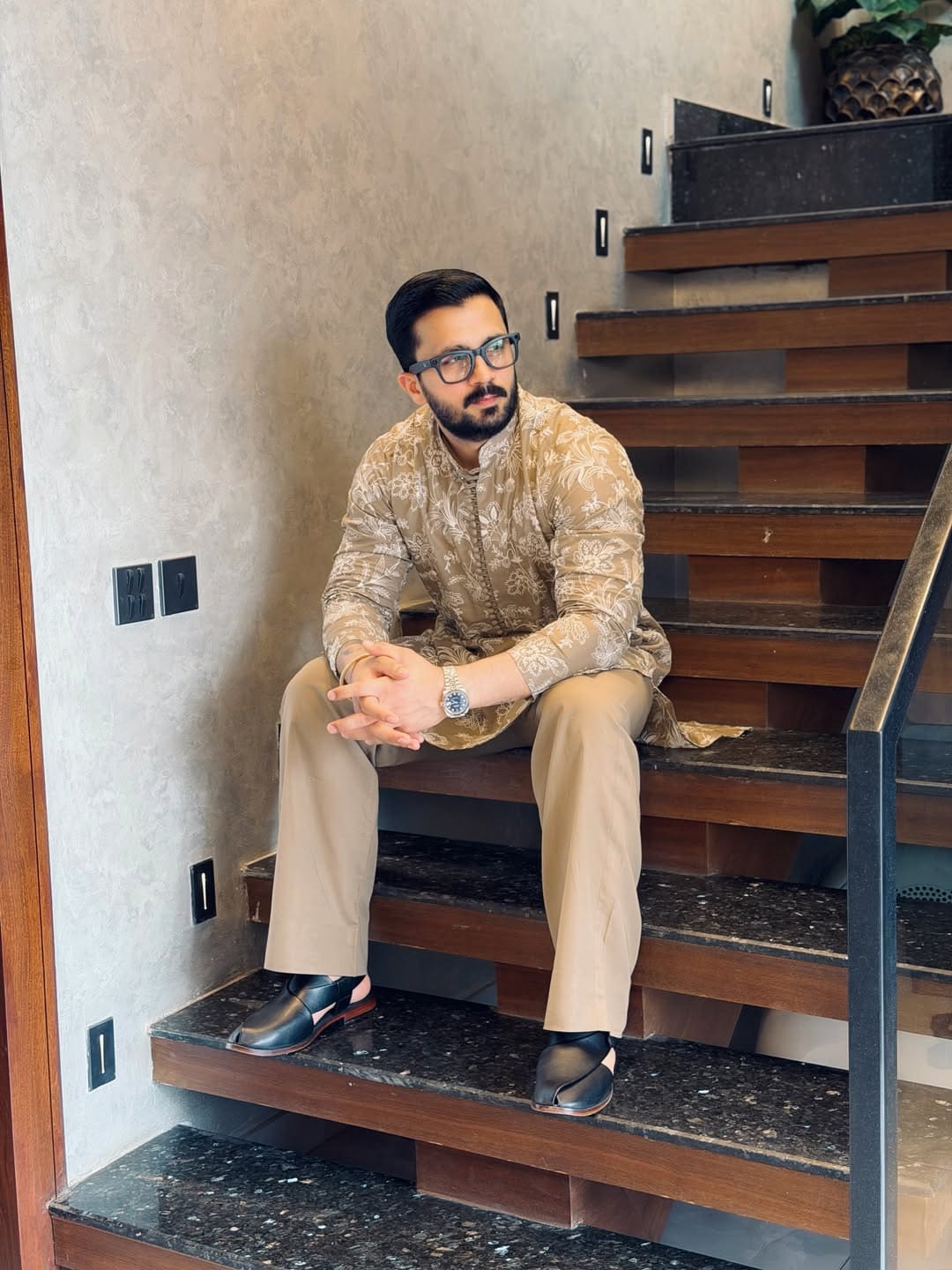
LAHORE, July 26: Pakistani YouTuber and social media personality Rajab Butt has claimed that his net worth has crossed Rs1 billion, saying he officially became a billionaire last year.

Butt made the claim during a podcast appearance where he was asked whether he considered himself a millionaire or a billionaire.

The YouTuber responded by asking the host whether she understood the difference between the two terms. After the host confirmed that she did, Butt revealed that he had crossed the billionaire mark in terms of his wealth.

According to Butt, his net worth has exceeded Rs100 crore, which is equivalent to more than Rs1 billion.

He attributed his financial success to years of hard work and his career as a digital content creator.

Butt has built a large following on YouTube and other social media platforms in a relatively short period. His content has also generated significant attention because of his publicly displayed lifestyle.

The YouTuber has frequently shared glimpses of an expensive lifestyle with his followers. His social media presence has included luxury items, costly watches, international trips and lavish celebrations.

His wedding also attracted considerable attention online and further increased public interest in his personal life and financial status.

Butt said his reported wealth was not achieved overnight. He described it as the result of around 12 years of hard work.

The rise of creators like Butt highlights the growing financial potential of Pakistan’s digital content industry. YouTube, brand promotions and other online platforms have created new opportunities for creators to build businesses and generate substantial income.

However, Butt’s net-worth claim is based on his own statement during the podcast. No independent financial records were provided in the discussion to verify the figure.

Similar Posts

  • | |

    Pakistan seeks $10b in US backstop facility

    Pakistan has formally requested a 10 billion dollar exchange stabilisation facility from the United States to boost its foreign exchange reserves and stabilise its economy, according to a source familiar with the development. The request, addressed to US Treasury Secretary Scott Bessent, seeks a Bilateral Exchange Stabilisation Support Facility with a maturity period of up to five years. This move follows Pakistan’s involvement in facilitating negotiations regarding the Iran war, an effort that elevated the country’s diplomatic standing and fueled expectations of economic support from Washington and international partners. If approved, the 10 billion dollar facility would help replenish Pakistan’s central bank reserves, reduce downward pressure on the rupee, and decrease dependency on multilateral lenders. It would also provide financial flexibility as Islamabad continues implementing strict fiscal and monetary measures mandated under its 7 billion dollar International Monetary Fund programme. These IMF-guided measures have required politically challenging tax hikes, spending cuts, and structural reforms to ensure fiscal discipline. Neither the Pakistani Ministry of Finance nor the US Treasury immediately responded to requests for comment regarding the proposal. US Exchange Stabilisation Facilities, typically administered through the Exchange Stabilisation Fund, are rare financial mechanisms that provide foreign governments with dollars, currency swaps, or guarantees. These backstops differ from the Federal Reserve’s permanent standing swap lines with major foreign central banks. A 2025 financial package provided to Argentina represented the first new exchange stabilisation facility granted to a foreign government since Uruguay in 2002, alongside Mexico’s long-standing swap agreement dating back to the 1940s. Pakistan narrowly avoided a debt default in 2023 by securing a 3 billion dollar IMF standby arrangement, which was later succeeded by the current 7 billion dollar Extended Fund Facility. However, its foreign reserves remain heavily dependent on official loans, debt rollovers, and financial deposits from bilateral partners like Saudi Arabia and China. This reliance leaves the country vulnerable to delays in IMF disbursements and shifts in bilateral support, as demonstrated in April when Pakistan repaid approximately 3.5 billion dollars to the United Arab Emirates, representing a fifth of its reserves, while receiving 3 billion dollars in fresh backing from Saudi Arabia. Despite these vulnerabilities, Pakistan’s central bank projected in January that its foreign exchange reserves could approach their 2021 historical high, reaching 20 billion dollars by the close of 2026. In April, rating agency Fitch noted that compliance with the IMF programme has enhanced Pakistan’s funding capacity, while rebuilt foreign exchange buffers offer a cushion against economic shocks stemming from Middle East instability. However, Fitch cautioned that escalating global energy costs and potential supply disruptions could rapidly erode these reserve buffers. Furthermore, foreign direct investment in Pakistan remains constrained due to recurring external account crises, policy shifts, security concerns, historical restrictions on profit repatriation, and a narrow export base. The nation’s credit rating remains firmly in speculative-grade territory, limiting access to international capital markets and keeping borrowing costs high. To navigate these economic pressures, Islamabad has sought deeper engagement with the Trump administration through various commercial and investment initiatives. These efforts include signing a stablecoin agreement for cross-border transactions with an affiliate of World Liberty Financial, advancing a memorandum of understanding to redevelop the Pakistan International Airlines-owned Roosevelt Hotel in New York with the US government, and encouraging US investment in the domestic mining sector, where the US Export-Import Bank announced 1.2 billion dollars in financing for the Reko Diq project.

  • |

    Kuwait introduces new regulations to strengthen e commerce sector

    Kuwait has introduced a comprehensive set of regulations for e commerce platforms aimed at improving consumer protection, increasing transparency and creating a unified legal framework for the country’s rapidly expanding digital marketplace. The new rules were issued by the Ministry of Commerce and Industry under Ministerial Resolution No. 109 of 2026 and came into effect on July 8. They apply to all online platforms involved in selling, ordering and delivering goods and services across Kuwait. Officials said the regulations were introduced to address the rapid growth of online shopping while clearly defining the responsibilities of digital platforms, merchants, delivery companies and consumers. The measures are also intended to encourage investment and promote fair competition within the sector. Under the new framework, companies operating electronic platforms must obtain the required licences and comply with existing commercial laws. They are also required to strengthen cybersecurity measures to protect their digital systems and safeguard customer data from misuse or cyberattacks. The regulations require platforms to display complete pricing information before customers confirm their purchases. This includes product prices, delivery charges, commissions and any additional fees. Platforms must also provide accurate information about merchants, publish clear terms and conditions and ensure that product descriptions are truthful and up to date. Businesses are now required to establish transparent policies for returns, exchanges and refunds. They must also create complaint handling systems that resolve customer issues within specified time limits while protecting consumers’ personal information. In addition, platforms must maintain proper records of electronic transactions and payments. The new rules also place responsibilities on delivery service providers to ensure goods are transported safely and delivered efficiently. Online platforms will be expected to supervise delivery operations and coordinate closely with merchants and delivery companies throughout the process. To prevent excessive charges, the ministry has introduced limits on service commissions. Platforms may charge a maximum commission of 17 percent when they provide delivery services and 10 percent when deliveries are handled directly by merchants. Consumer delivery fees have also been capped at one Kuwaiti dinar per order, with businesses prohibited from charging more than that amount. The Ministry of Commerce and Industry has been given authority to monitor compliance with the regulations. Officials will be able to inspect businesses, request information and impose administrative penalties on companies that fail to follow the new requirements. Existing licensed platform operators must also update their registered business activity to reflect the category of managing delivery services through electronic platforms. The ministry said an implementation guide will be issued to help businesses, delivery companies and consumers understand the new compliance requirements. According to the explanatory memorandum accompanying the regulations, the reforms are designed to address problems that emerged with the rapid expansion of e commerce, including inconsistent commission rates, high delivery charges and unclear commercial practices. Officials believe the new framework will improve service quality, strengthen consumer confidence and support the continued growth of Kuwait’s digital economy.

  • | |

    PML-N wins top AJK Assembly posts with clear major…

    MUZAFFARABAD: The Pakistan Muslim League-Nawaz (PML-N) has secured both key parliamentary positions in the Azad Jammu and Kashmir Legislative Assembly, with Chaudhry Tariq Farooq elected speaker and Ahmed Raza Qadri chosen as deputy speaker. Both PML-N nominees secured 32 votes each in the 53-member assembly during separate elections held on Tuesday. For the speaker’s position, PML-N Secretary General Chaudhry Tariq Farooq faced Pakistan Peoples Party (PPP) nominee Qasim Majeed. A total of 46 lawmakers participated in the voting. Farooq received 32 votes, while Majeed secured 13. One vote was declared invalid. Following the result, outgoing Speaker Chaudhry Latif Akbar administered the oath to Farooq. He subsequently handed over charge of the assembly to the newly elected speaker. Farooq then chaired the election for the deputy speaker’s office. The PML-N nominated Ahmed Raza Qadri, while the PPP fielded Amir Abdul Ghaffar Lone. The voting pattern remained unchanged, with 46 lawmakers casting ballots. Qadri secured 32 votes against Lone’s 13, while one vote was declared invalid. Farooq administered the oath of office to the newly elected deputy speaker after the announcement of the result. The successful elections give the PML-N control of the two most important parliamentary offices in the AJK Assembly. The party emerged as the largest political force in the recent AJK elections. Polling was held in three phases between July 27 and August 10. The PML-N won 25 of the 38 directly contested seats, while the PPP secured 12. The lone elected member of the Awami Dast-o-Bazu later joined the PML-N, further strengthening its position in the assembly. Members of the newly formed assembly congratulated Farooq and Qadri after they took charge of their respective offices. They expressed hope that the new leadership would ensure effective parliamentary proceedings and strengthen the functioning of the legislative institution.

  • |

    Democrats select Crowley, Flanagan as Republicans back Demuth in key state races

    Democratic socialist Francesca Hong and moderate David Crowley are locked in an extraordinarily tight contest for Wisconsin’s Democratic gubernatorial nomination, while Minnesota voters selected progressive Peggy Flanagan for the US Senate and Republican Lisa Demuth for governor. With 80 per cent of the votes counted in Wisconsin, Milwaukee County Executive David Crowley held a narrow lead of just a few hundred votes over Hong. The outcome remains too close to call in a race widely seen as a major test of progressive policy appeal in a crucial battleground state. Hong, a state representative and former chef, ran on a platform advocating for the abolition of Immigration and Customs Enforcement (ICE), a temporary moratorium on data centres, and increased corporate taxes. Her campaign faced late scrutiny over past social media posts concerning Thanksgiving, which she subsequently clarified. The victor of the Democratic primary will face Republican nominee US Representative Tom Tiffany in November. In Wisconsin’s 3rd Congressional District, Democrats selected Rebecca Cooke to challenge Trump-aligned Republican incumbent Derrick Van Orden. Cooke, a former small business owner and waitress who has out-fundraised Van Orden, secured backing from the Democratic Congressional Campaign Committee’s “Red to Blue” programme. Across the state line in Minnesota, Democratic voters chose Lieutenant Governor Peggy Flanagan as their US Senate nominee over moderate Representative Angie Craig. Flanagan, who campaigned on dismantling ICE, will seek the seat being vacated by retiring Democratic Senator Tina Smith. In Minnesota’s Republican gubernatorial primary, State House Speaker Lisa Demuth secured the nomination, defeating former MyPillow chief executive Mike Lindell despite his high-profile endorsement from Donald Trump. Demuth now advances to challenge Democratic nominee Senator Amy Klobuchar in the general election.

  • |

    Fatima Zehra says better facilities could have earned gold

    Pakistan’s trailblazing boxer Fatima Zehra believes she had the potential to win a gold medal at the Commonwealth Games if she had access to the same level of training facilities and international exposure as many of her competitors. The 22-year-old made history by becoming the first Pakistani woman to win a boxing medal at the Commonwealth Games after claiming bronze in the women’s 60kg category. Although she narrowly missed out on a place in the final, Fatima described the achievement as a proud moment for herself and for Pakistan. Reflecting on her campaign, Fatima said her main objective before the tournament was to secure a medal, while also hoping to progress to the final. She admitted that the competition was extremely challenging, with many of her opponents benefiting from extensive international training and experience. Her journey ended in the semi-finals, where she faced Canada’s Marie-Bathoul Al-Ahmadieh. Fatima acknowledged that her opponent’s speed and international experience proved decisive, making it difficult to overcome the challenge. Despite the defeat, she expressed satisfaction with her bronze medal, saying it was earned against some of the strongest boxers in the competition. She also noted that competing at such a high level allowed her to gain valuable experience by observing other elite athletes and learning from every bout. Fatima highlighted the gap between Pakistan’s sporting infrastructure and that of leading boxing nations. She pointed out that several countries, including regional rivals, organized overseas training camps in the United States before the Games, while Pakistan’s preparations took place entirely at home. According to Fatima, world-class coaching facilities, modern training environments, and regular international competition are essential if Pakistani athletes are to consistently challenge for top honors on the global stage. She believes greater government investment in sports development would significantly improve the country’s chances of success. The young boxer also acknowledged the role played by the Pakistan Army, the Pakistan Boxing Federation, and her coach, Raheel Adnan, crediting them for their guidance and support throughout her preparation. She said their encouragement was instrumental in helping her achieve the historic milestone. Looking ahead, Fatima has already shifted her focus to the upcoming Asian Games, which are scheduled to take place in Japan in September. She hopes the experience gained at the Commonwealth Games will strengthen her performances against Asia’s top competitors. Fatima previously won a bronze medal at the 2025 Islamic Games in Saudi Arabia, and she is determined to build on that success by aiming for an even stronger finish at the Asian Games. Her boxing journey has not been without challenges. She revealed that although boxing now runs in her family, her parents initially opposed her decision to pursue the sport. After competing at the Punjab level, she was forced to step away from boxing because of her family’s concerns. However, her coach Raheel Adnan convinced them to give her another opportunity, a decision that ultimately changed her career. Today, her family fully supports her ambitions, and her two sisters, Dua and Aiman, along with her younger brother Naday Ali, have also taken up boxing. Fatima secured her historic Commonwealth Games bronze after defeating New Zealand’s Jordan Wilson by a unanimous 5-0 decision in the quarter-finals. Under tournament rules, both losing semi-finalists were awarded bronze medals, marking a landmark achievement for women’s boxing in Pakistan.

  • |

    Mohammad Nawaz ruled out of Champions Cup

    Pakistan’s spin-bowling all-rounder Mohammad Nawaz has been ruled out of the National Champions Cup after suffering a fracture to the middle finger of his right hand. The Pakistan Cricket Board (PCB) confirmed the injury on Friday, revealing that Nawaz is expected to remain away from competitive cricket for at least three weeks. Nawaz sustained the injury while fielding during the National Champions Cup match between Pakistan Gold and Pakistan Blues at Multan Cricket Stadium on August 12. Despite hurting his finger, the experienced all-rounder remarkably completed his full 10-over spell. His efforts, however, could not prevent Pakistan Gold from suffering a six-wicket defeat against Pakistan Blues. Medical scans conducted on August 13 confirmed the fracture, forcing Nawaz to withdraw from the ongoing domestic competition. The setback comes at an inconvenient time for the left-arm spinner, who has remained an important part of Pakistan’s experienced white-ball setup. According to the PCB, Nawaz will report to the board’s Sports and Exercise Medicine Department after two weeks. He will then undergo rehabilitation under medical supervision, with his recovery closely monitored before a decision is made regarding his return to competitive cricket. The medical team will assess his progress throughout the rehabilitation process, while the priority will be ensuring that the finger has recovered sufficiently before he resumes full cricketing activities. Nawaz’s absence is a blow to his team’s campaign in the Champions Cup, where the tournament provides Pakistan’s established players and emerging talent with valuable competitive exposure. For Nawaz, the immediate focus will now shift from domestic cricket to recovery. The three-week initial timeline could change depending on how he responds to treatment and rehabilitation. The PCB is expected to provide further updates on his fitness as he progresses through the recovery programme.

Leave a Reply

Your email address will not be published. Required fields are marked *