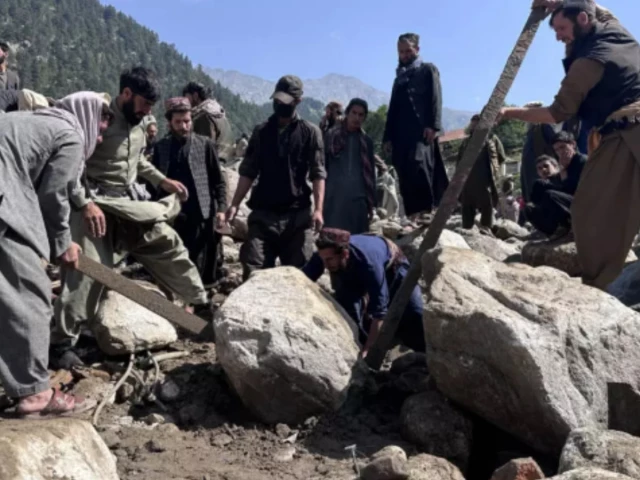
Flood disaster in Afghanistan leaves dozens missing as rescue efforts continue
Rescue teams and local residents are continuing a desperate search for around 100 people missing after a powerful flash flood swept through eastern Afghanistan, killing at least 23 people and leaving widespread destruction across Nuristan province.
The flood struck the remote provincial capital of Parun on Monday, sending huge volumes of water, mud and massive rocks crashing through homes, shops and public buildings. Authorities said the number of missing remains high as emergency workers struggle to reach areas buried under debris.
Residents have joined the search using wooden poles, shovels and even their bare hands as heavy machinery has proven largely ineffective in the rugged mountainous terrain. A bulldozer was deployed to remove some rubble, but rescue operations remain slow because of the enormous boulders and thick layers of mud covering parts of the town.
Many survivors described the disaster as unlike anything they had ever experienced. Farid Gul Zaheer, a local pharmacist, said the flood arrived with incredible force and compared the terrifying moment to an earthquake. He said people were screaming as they rushed to escape and he was injured while climbing higher ground to save himself.
The flood has caused extensive damage across Parun, destroying markets, hotels and dozens of businesses. Local officials confirmed that the city’s mayor and several government employees are among those still missing, raising fears that the death toll could increase as rescue operations continue.
Hotel manager Zakirullah Zaki said almost every business in the area had been wiped out by the flood. Although his hotel remained standing, it was surrounded by destruction. He said his younger brother, who had been missing after the disaster, was later found.
The Afghan Red Crescent Society has deployed volunteers to help search for survivors and provide emergency assistance to affected families. Relief teams are distributing food, clean drinking water and tents to people who have lost their homes while continuing efforts to locate those trapped beneath the debris.
Afghanistan’s Defence Ministry has also sent military personnel to support rescue operations in the disaster zone. The United Nations has begun assessing the scale of the damage and humanitarian needs in the affected region.
Survivors say the emotional impact of the disaster has been devastating. Zaheer said he had lost everything and described the community as deeply traumatised after spending a sleepless night fearing further danger.
The severe weather has also affected neighbouring Pakistan, where heavy rainfall and flooding have claimed additional lives in recent days. The back to back disasters have once again highlighted the growing threat of extreme weather across the region.
Afghanistan remains one of the countries most vulnerable to climate related disasters. Flooding has become more frequent in recent years, worsening an already severe humanitarian crisis. Earlier this year, heavy rains and floods across Afghanistan and Pakistan killed more than 200 people, causing widespread damage to homes, farmland and infrastructure.
Environmental experts have repeatedly warned that climate change is increasing the intensity and frequency of extreme weather events in Afghanistan, placing millions of people at greater risk as communities continue to struggle with poverty, displacement and limited disaster response resources.