shehbaz directs timely
| | | |

PM Shehbaz directs timely implementation of privat…

Prime Minister Shehbaz Sharif has directed all relevant ministries and institutions to ensure the timely implementation of targets and deadlines under the government’s privatisation programme, stressing the need for close coordination to complete the process according to schedule.

The directives were issued during a meeting held to review progress on the privatisation of state-owned enterprises. The meeting was informed that a total of 27 public sector organisations have been included in the government’s privatisation agenda, which is being carried out in three phases.

During the briefing, officials updated the prime minister on the progress of the privatisation of Islamabad, Lahore and Karachi airports, as well as several major public sector entities.

The meeting also reviewed the privatisation process of electricity distribution companies, including the Islamabad Electric Supply Company (IESCO), Faisalabad Electric Supply Company (FESCO), and Gujranwala Electric Power Company (GEPCO).

Officials informed the prime minister that Expressions of Interest (EOIs) have already been invited for all three companies. The deadline for investors to submit documents for FESCO has been set for August 7, while submissions for GEPCO will close on August 21. The deadline for IESCO is September 7, 2026.

The briefing noted that several international companies have expressed interest in acquiring the power distribution companies. Officials added that roadshows and engagement sessions with potential investors are continuing to attract further investment.

Prime Minister Shehbaz also reviewed the proposed privatisation of the Zarai Taraqiati Bank Limited (ZTBL) and directed authorities to design the transaction in a way that preserves the bank’s vital role in supporting Pakistan’s agricultural sector.

He emphasised that the bank should continue providing agricultural loans and financial services to farmers even after privatisation. The prime minister said farmers’ access to financial resources is essential for increasing crop yields and improving agricultural productivity.

He further stated that agriculture remains a key pillar of Pakistan’s economy and plays a critical role in ensuring food security. Therefore, any privatisation model should safeguard the sector’s long-term interests while maintaining uninterrupted financial support for farmers.

Similar Posts

  • |

    FBR demonstrates digital tax return features to Karachi tax bar

    ISLAMABAD: The Federal Board of Revenue (FBR) has demonstrated several features of its digital income tax return system to the Karachi Tax Bar Association (KTBA), including mechanisms for reporting investments in immovable property, declaring multiple business capital accounts, recording inheritance assets and calculating tax under relevant provisions of the law. The demonstration was held during an online consultation between the FBR Domain Team and representatives of the KTBA as part of the tax authority’s efforts to obtain feedback from taxpayers and tax practitioners on the design and functionality of the income tax return system. The meeting focused on improving the digital filing experience and identifying areas where the online return could be made simpler, more efficient and easier for taxpayers and professionals to use. KTBA President Mehmood Bikiya welcomed the FBR’s prompt response in arranging the session and appreciated the efforts made by the Domain Team to develop a responsive and user-friendly return system. According to the participants, the existing system is operating satisfactorily, with no major technical problems or significant glitches reported during the discussion. Instead, the meeting primarily focused on clarifications, suggestions for improvement and practical issues faced by tax practitioners while completing returns. The FBR officials addressed a number of queries through live demonstrations, allowing participants to better understand the available options and procedures within the digital system. During the session, the Domain Team demonstrated how taxpayers can report investments in immovable property, enter details of more than one business capital, declare tax under applicable sections and include inherited property in their tax records. Officials also clarified that certain information fields are optional. In particular, the chassis number required in the vehicle-related section does not have to be entered where it is not applicable or available. The consultation also covered several policy-related matters raised by the KTBA. These included the timing of refund applications, deemed assessment orders and procedures for revising income tax returns. The FBR Domain Team explained that such matters are governed by existing policy provisions, including the 15-day rule relating to deemed assessments. The concerns and proposals raised by the tax bar were also forwarded to the FBR’s Policy Wing for examination. Both sides agreed that continued consultations between tax officials and tax practitioners could help address implementation-related concerns and improve taxpayers’ understanding of the digital filing process. The KTBA also submitted several proposals for future versions of the income tax return system. One of the key suggestions was to introduce an option for uploading data through Excel files, which could reduce the time required to manually enter large volumes of information. Other proposals included reconsidering the requirement to enter certain financial information in subsequent years and introducing a system-generated PDF explaining the relevant legal provisions concerning residence status. The FBR Domain Team recorded the suggestions and indicated that they would be considered for possible incorporation into future versions of the return system. Most of the technical and operational questions raised during the meeting were resolved through on-screen demonstrations and explanations by the FBR team. The exercise also provided practitioners with a clearer understanding of the functions already available on the digital platform. KTBA Vice President Saud ul Hasan appreciated the FBR’s willingness to engage directly with representatives of the tax community. He said continued interaction between tax practitioners and the revenue authorities could promote greater understanding of taxpayers’ concerns and strengthen confidence in the digital filing mechanism. The FBR, meanwhile, reiterated its commitment to maintaining regular consultations with the business community, tax practitioners and their representative organisations. The tax authority said feedback received through such engagements would remain important in improving the income tax return system and making the filing process more transparent, straightforward and taxpayer-friendly.

  • | |

    China’s burger boom draws coffee chains and …

    Burgers have become one of China’s most contested fast food categories, with budget minded diners and shrinking household sizes fueling a rush that now includes hotpot operators and coffee brands alongside established global chains. Yum China’s Pizza Hut Burger Bar concept, which places a dedicated burger counter inside existing Pizza Hut locations, expanded to more than 200 outlets within six months, the company said in July. Yum China plans to grow the format to between 500 and 600 outlets by the end of 2026, representing roughly 10 percent of its total Pizza Hut store network in China. The surge into burgers reflects broader changes in Chinese consumer habits. As households shrink and economic uncertainty keeps spending cautious, diners increasingly favor lower cost, portable meals that deliver convenience without sacrificing value. That shift has transformed burgers from a niche Western import long dominated by McDonald’s, KFC and Burger King into one of the most fiercely contested segments of China’s restaurant industry, drawing a wave of new entrants eager to capture market share. Last month, hotpot chain Haidilao entered the space with a new concept called Huanxianbao, or Fresh Burger, which sells burgers alongside pizza, pasta and fried chicken. Coffee chain M Stand has also opened burger focused locations in several cities. China’s Western style fast food market was valued at 499.65 billion yuan, or about $74.1 billion, in 2025 and is projected to reach 587.09 billion yuan by 2027, according to data provider iiMedia Research, even as several global brands face broader challenges in the market. Burgers ranked as the top preference among consumers surveyed, with 55 percent selecting the category. While still a relatively small slice of China’s overall fast food industry, the burger segment alone was worth $18.4 billion in 2025 and is expected to grow 8.7 percent annually through 2035, according to Emergen Research. Part of the category’s appeal lies in simple economics. Food industry analyst Zhu Danpeng said burgers offer a lower cost alternative to full service restaurant meals while still functioning as a substantial meal, calling them a strong value for money option amid cautious consumer spending. Wang Fang, a university student in Beijing, said burgers have become a default lunch choice for her and her classmates because they cost less than ordering several dishes at a sit down restaurant. She said a burger loaded with meat, vegetables and butter makes for an affordable, balanced meal. The category’s rise also tracks with shifting demographics. Growing numbers of single person households, smaller families and young urban professionals have driven demand for convenient meals sized for one, a trend Yum China says is opening opportunities across its brand portfolio. Pizza Hut added burgers to its menu in 2024, and by 2025 the category accounted for a mid single digit percentage of Pizza Hut’s total sales in China, the company said. Yum China expects burgers to generate more than 1 billion yuan in sales this year, representing 5 to 6 percent of the brand’s revenue. The company said burgers resonate strongly with takeaway and delivery customers in China, where 43 percent of consumers order delivery at least once a week, compared with a global average of 23 percent, according to Euromonitor. The growing appetite for burgers has drawn competitors from across the industry. Domestic chains such as Tasiting now compete directly with McDonald’s, Yum China’s KFC and Shake Shack for market share. International brands are eager to join the competition as well. When US chain Five Guys opened its first stores in Beijing this month, customers waited more than two hours to be served. Wendy’s said in May that it plans to enter the Chinese market and open as many as 1,000 franchised restaurants over the next decade. Liu Tao, a 48 year old musician in Beijing, regularly takes his 11 year old son to McDonald’s on Sundays, fitting the meal into a tight schedule between the boy’s math and English classes. He said burgers work well when time is short and he needs food that feels clean, quick and won’t bore his son, noting that his son often eats in the car on the way to his next class.

  • | |

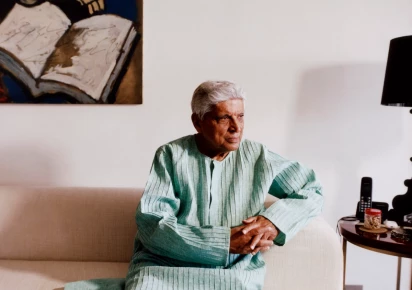
    Javed Akhtar says internet discourages originality

    Javed Akhtar has been writing words that endure for more than five decades, and in a candid conversation with Vogue India, he turned his gaze toward what he believes is happening to creativity in the digital age. What he found does not reassure him. The veteran lyricist and screenwriter argued that the internet and its algorithms have created a culture of creative fear, one in which people are no longer willing to take the risk of doing something that has not already been done before. “The echo chambers created by the internet have made most people afraid to do something for the first time,” he said. “Once someone else does it, they’re fine to follow in their footsteps.” He extended that observation into a broader concern about how people engage with ideas and the world around them. “People no longer want to pause, think, analyse or sit with an idea. They are living happily, so why would they bother to think about this universe or the vastness of nature? For them, it is a waste of time.” For Akhtar, this impatience is incompatible with the kind of work that lasts. “Meaningful creation requires time, discomfort and reflection,” he said, adding that his own willingness to question dominant voices and widely accepted ideologies has always come from exactly that kind of sustained engagement with ideas. He was particularly pointed about the music industry and the way commercial priorities have pushed the role of lyrics to the margins. “Today, words have become less important because the marketing team has decided that slow music won’t trend,” he said. The result, in his view, is an industry that remixes old material with inferior new writing rather than producing something genuinely fresh. “But then they take those same songs, edit the mukhras and remix them with some inferiorly written antaras. There was a time when writers had more space. Today, other forces dictate what music gets made. And yet, songs that are decades old still endure, while many recent ones have a short shelf life.” His advice to young writers was direct and unglamorous. Read more. Not only classical literature and celebrated authors, but light reading too. “The real loss is not in reading something trivial but in not reading at all,” he said. On the creative process itself, Akhtar drew a distinction that cuts to the heart of what separates craft from genuine art. “All arts can be divided into two parts. On one hand, there’s imagination, passion, fantasy and romance, and on the other, there is craft. You can learn the craft in a crash course. But imagining, fantasising and romanticising cannot be learned. There are no courses for yearning.” He closed with a lesson passed down from his father that has stayed with him throughout his career. “It is very easy to write in difficult language, but very difficult to write in easy language. When you write simply, there is no space for your idea to hide behind big words. Only if you are totally convinced of what you are writing can you afford to use transparent language.” It is a principle that has shaped some of Hindi cinema’s most enduring words, and one that no algorithm is likely to teach.

  • | |

    Subway launches legal action after Multan staff as…

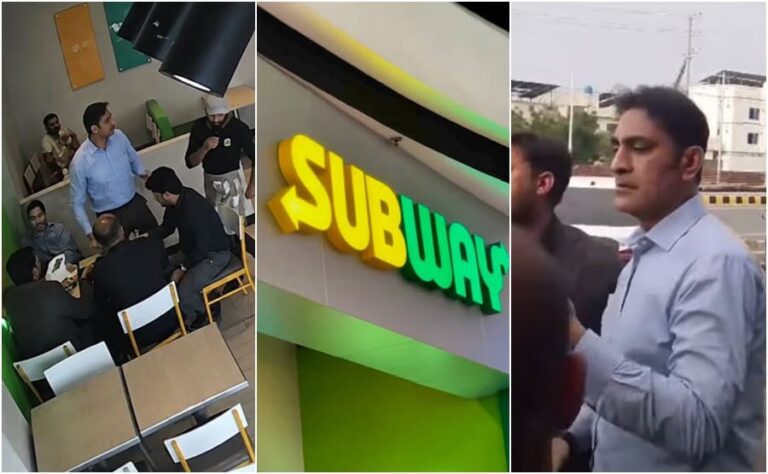
    MULTAN: Subway Pakistan has initiated legal proceedings after one of its employees was allegedly assaulted by a customer at its Multan outlet, an incident that has sparked widespread outrage on social media. The altercation, captured on the restaurant’s CCTV cameras, quickly went viral online, prompting strong reactions from the public and renewed calls for better protection of frontline service workers. The employee, identified as Fazil, said the incident occurred while he was performing his duties and enforcing the restaurant’s policy prohibiting customers from consuming food purchased from outside the outlet. According to Fazil, a group of customers entered the restaurant carrying samosas. After an initial request from another staff member was reportedly ignored, he approached the group himself and politely explained the restaurant’s policy. He said he respectfully asked the customers to finish their food quickly to avoid disturbing others and to comply with the outlet’s operating procedures. Fazil alleged that the situation escalated unexpectedly when one of the customers, identified as Asad Khan, slapped him without warning. He claimed that even after stepping away to avoid further confrontation, the accused followed him and assaulted him again. The employee further alleged that he was grabbed by the neck, dragged across the restaurant and physically attacked by three individuals for several minutes. He said he sustained multiple blows to his face, back and other parts of his body despite offering no resistance. In an official statement, Subway Pakistan strongly condemned the incident, saying the safety, dignity and well-being of its employees remain a top priority. The company confirmed that it has referred the matter to the relevant legal authorities and is pursuing legal action against those allegedly involved. Subway also reiterated its commitment to maintaining a safe and respectful environment for both employees and customers at all its outlets.

  • Two Former Convicts Confess To Murder Of Missing Russian Siblings In Chonburi

    SA KAEO / CHONBURI, Thailand — Two men wanted in connection with the disappearance of two Russian siblings in Chon Buri province have been arrested and have reportedly confessed to killing and burying the youths, marking a grim breakthrough in a case that has gripped the nation. Two Men Arrested In Pattaya As Search Intensifies […]

  • |

    Gazans welcome Hamas disarmament plan but remain doubtful of Israeli withdrawal

    Many Palestinians in Gaza have cautiously welcomed reports that Hamas has agreed to disarm under a new United States backed proposal, hoping it could eventually bring an end to the devastating conflict. However, despite this small sign of progress, many remain unconvinced that Israel will withdraw its forces or that lasting peace is within reach. US President Donald Trump recently announced that Hamas had accepted a plan to surrender its weapons as part of a broader roadmap aimed at stabilising Gaza and beginning reconstruction. Hamas later confirmed the agreement. Even so, Israeli military operations have continued, leaving many residents uncertain about whether the proposal will lead to any real change. Thousands of families remain displaced, while many others continue living in overcrowded tent camps where shortages of food, clean water, medicine and proper sanitation have created severe humanitarian conditions. Disease outbreaks and poor living conditions have become an everyday reality for much of the population. For many Palestinians, survival remains the immediate concern. Abdel Moneim Aboul Roos, a 24 year old tuk tuk driver who lost a leg in an Israeli airstrike, said discussions about disarmament and troop withdrawals mean little while people continue to struggle for basic necessities. He said access to food and medical care matters more than political agreements that have yet to improve conditions on the ground. The latest proposal builds on a ceasefire agreement reached last year with US support. That deal ended large scale fighting for a period, secured the release of Israeli hostages and increased humanitarian aid entering Gaza. It also included plans for a gradual Israeli military withdrawal, the formation of an international stabilisation force and the dismantling of Hamas’ weapons. However, the agreement soon stalled as both Israel and Hamas accused each other of violating its terms. Hamas retained its weapons while Israeli forces remained in the territory, causing negotiations to break down. The newly announced roadmap provides more detailed arrangements for transferring Hamas’ weapons to a technocratic Palestinian administration. According to the proposal, Israel would not participate in the disarmament process and would instead halt military operations to allow political transition and reconstruction efforts to move forward. Despite these commitments, many Gazans remain deeply sceptical because previous promises of peace failed to deliver lasting results. Displaced resident Ayman Ahmed said people have repeatedly been told that the war would end, only to see the violence continue. While he hopes Hamas eventually lays down its arms, he believes such a step is unlikely in the near future and expressed frustration that ordinary Palestinians continue to suffer while political leaders remain divided. The conflict began after Hamas launched its October 2023 attack on southern Israel, killing around 1,200 people and taking hundreds of hostages. Israel responded with a large military campaign in Gaza that has caused widespread destruction and heavy casualties. According to Gaza health authorities, more than 73,000 Palestinians have been killed during the war, while the fighting has displaced most of the territory’s population. The figures do not distinguish between civilians and fighters, although officials say women and children account for a large share of those killed. Many residents also fear that Israel has no intention of fully leaving Gaza even if Hamas is disarmed. Israeli officials have not publicly endorsed the latest roadmap and anonymous government sources have suggested that it does not match Israel’s security objectives. They have also indicated that Israeli forces intend to remain along the Yellow Line, a military zone separating Israeli controlled territory from the rest of Gaza. The military has strengthened its positions in these areas by building defensive barriers and carrying out demolition operations, leaving many displaced families uncertain whether they will ever return to their homes. Despite these fears, many Palestinians continue to hold onto hope. Anas Nakla, whose home in Rafah was destroyed during the war, said he still dreams of returning with his family even though nothing remains of his house. Mohamed Hamad, displaced from northern Gaza, believes that if the new plan results in even a partial Israeli withdrawal, it would restore hope that one day all displaced families could rebuild their lives in their own communities.

Leave a Reply

Your email address will not be published. Required fields are marked *