police intensify mir
| |

Police intensify Mir Ali Raza murder probe

Police have stepped up investigations into the abduction and murder of 25-year-old businessman Mir Ali Raza, whose body was found in Karachi’s Gulistan-e-Jauhar after he disappeared under mysterious circumstances. Investigators are pursuing multiple leads and examining digital evidence as they work to identify those responsible for the killing.

According to the investigation, Raza returned home from his business on the night of July 28. A short while later, he left again after telling his family that he would return within 10 minutes. When he failed to come back, his family became concerned and later reported the matter to the police.

CCTV footage collected by investigators shows a white vehicle arriving outside Raza’s residence at around 4am. The footage allegedly shows the businessman getting into the rear seat of the vehicle before it drove away. Police are trying to trace the vehicle and identify everyone who was inside at the time.

The businessman’s body was later recovered from bushes in Block 1 of Gulistan-e-Jauhar. A preliminary investigation found that he had been subjected to torture before being shot once in the chest. Officials also clarified that rumours claiming acid had been used were incorrect. They said the condition of the body resulted from decomposition after it had remained at the location for more than 30 hours.

Investigators discovered that before his disappearance, Raza had booked an online taxi and travelled to the kitchen facility used for his dessert business in Gulistan-e-Jauhar. The taxi driver confirmed dropping him off at the location. Police believe the kidnapping and murder occurred after he left the premises.

One of the biggest challenges in the investigation is the disappearance of the victim’s mobile phone. Police have requested technical assistance from telecom authorities to obtain his call records, location history and other digital data. Investigators are also examining the people he had recently contacted to determine whether any connection exists between those communications and the crime.

Authorities are also investigating the sudden deactivation of Raza’s social media accounts shortly before his body was discovered. Investigators are trying to establish whether the accounts were deactivated by the businessman himself or by someone who gained access to his phone after the incident.

Police have questioned employees working at the kitchen on the night of the incident, along with staff members employed at his restaurants. Several people have been interviewed as part of the investigation, but officials have not disclosed further details, saying the inquiry is still ongoing.

Investigators continue to analyse CCTV footage collected from nearby houses, shops and streets in an effort to reconstruct the victim’s final movements. However, officials say the absence of a citywide surveillance system and the poor quality of many privately installed cameras have made the investigation more difficult.

Similar Posts

  • |

    Oil prices fall as US-Iran pause raises hopes for Hormuz talks

    Global oil prices dropped sharply on Monday after signs of easing tensions between the United States and Iran raised hopes that negotiations could resume over the Strait of Hormuz, one of the world’s most important oil shipping routes. Investors welcomed the temporary pause in military action, believing it could reduce the risk of further disruptions to global energy supplies. The decline came after both countries appeared to step back from recent hostilities. Following nearly two weeks of military exchanges, the United States did not carry out additional strikes over the weekend. President Donald Trump’s envoy to the United Nations said Washington was allowing diplomacy a chance by giving negotiations more time. Iran also announced that it would halt retaliatory attacks against neighboring countries, offering relief to Gulf shipping companies and international energy markets. The latest pause has renewed hopes that the fragile ceasefire between the two sides could be restored after breaking down earlier this month. The recent conflict began after Iran targeted vessels passing through the Strait of Hormuz, leading to a rapid escalation in tensions with the United States. The confrontation later spread beyond the Gulf, with Iran backed Houthi fighters in Yemen attacking Saudi ships near the Bab al Mandeb Strait, another critical maritime route linking the Red Sea with global trade networks. The fighting caused oil prices to surge, with Brent crude climbing above $100 per barrel for the first time since May. However, reports that shipping traffic through the Red Sea had continued without major disruption, combined with the latest diplomatic developments, encouraged traders to reduce their concerns over possible supply shortages. Iranian officials said discussions with Oman had made progress regarding the future management of the Strait of Hormuz. According to Foreign Ministry spokesman Esmaeil Baqaei, the talks focused on establishing practical measures to ensure the safe movement of commercial vessels while respecting the sovereignty of countries bordering the strategic waterway. There were also reports that Pakistan was exploring efforts to revive peace talks between Washington and Tehran with support from China. Although no formal agreement has been announced, the diplomatic activity has strengthened expectations that both sides may return to negotiations instead of further military escalation. As a result, both major oil benchmarks recorded significant losses. Brent crude fell by more than seven percent during trading before recovering slightly, while West Texas Intermediate also declined sharply. Analysts said the market viewed the latest developments as a positive signal that reduced the immediate threat to global oil supplies. Lower oil prices also eased fears that renewed energy inflation could force central banks to raise interest rates again. This helped lift many stock markets across Asia, although technology shares continued to face pressure because of concerns about the long term returns on heavy investment in artificial intelligence. Stock markets in Hong Kong, Shanghai, Sydney, Wellington, Manila, and Tokyo posted gains, while Seoul, Taipei, Singapore, and Jakarta closed lower. Investors remained cautious ahead of earnings reports from major technology companies including Samsung, SK hynix, Microsoft, Meta, Apple, and Amazon, with particular attention on future spending plans and investment in artificial intelligence. Market participants are also awaiting this week’s US Federal Reserve policy meeting. While expectations for another interest rate increase have grown slightly following recent geopolitical tensions, most analysts believe the central bank will leave rates unchanged for now. Even so, some economists continue to predict additional tightening before the end of the year if inflation remains above target. The combination of easing tensions in the Middle East and hopes for renewed diplomacy has provided financial markets with some relief, though investors remain alert to any developments that could quickly reverse the recent decline in oil prices.

  • | |

    Court allows tax credit adjustment against super t…

    The Federal Constitutional Court has issued an important ruling in favour of corporate taxpayers. The court has declared the adjustment of tax credits against super tax legally valid. It has also overturned an earlier decision of the Islamabad High Court. Justice Amir Farooq authored the six-page detailed judgment. The court accepted the appeals filed by a private mobile phone company. The case relates to the adjustment of tax credits against super tax. The company had challenged a demand raised by the Federal Board of Revenue (FBR). The FBR had issued a notice to the private company. The notice required the company to pay super tax. The company approached the Islamabad High Court after receiving the notice. It argued that its available tax credit should be allowed to adjust against the super tax liability. The Islamabad High Court rejected the company’s petition. The company then challenged that decision before the Federal Constitutional Court. The Federal Constitutional Court has now accepted the company’s appeals. It has declared that tax credits available to a taxpayer can be adjusted against super tax. The court referred to the relevant provisions of the tax law. It observed that the tax credit available under Section 168 is a separate and legally recognised right. According to the judgment, a taxpayer should not be prevented from using this credit for adjustment. The court said forcing a taxpayer to seek only a refund would not be consistent with the intention of the law. The judgment also addressed the interpretation of financial and tax laws. The court observed that such laws should be interpreted in a manner that facilitates taxpayers. The court emphasised that taxpayers should be able to exercise rights provided to them under the law. A legal right to a tax credit cannot be unnecessarily restricted through an interpretation that creates additional difficulties for taxpayers. The court also issued directions to the FBR. The FBR has been directed to examine the taxpayer’s claim for adjustment. The department must consider the claim in response to the tax notice. The FBR will now have to decide the matter according to the applicable law and the court’s ruling. The judgment provides an important clarification for corporate taxpayers. It establishes that an eligible tax credit can be considered for adjustment against a super tax liability. The ruling may also have wider implications for companies facing similar tax demands. Businesses with legally available tax credits may now rely on the court’s interpretation when seeking adjustments against their tax liabilities. By setting aside the Islamabad High Court’s decision, the Federal Constitutional Court has clarified the legal position on the issue. The case also highlights the continuing dispute between taxpayers and the FBR over the interpretation and application of tax laws.

  • Govt probes drug price hikes

    The Pakistani government has asked pharmaceutical companies to explain steep increases in the prices of deregulated medicines after concerns over rising healthcare costs. According to sources the prices of some deregulated medicines have increased by as little as 76.8% and by as much as 1,621%, prompting government action. The Drug Regulatory Authority of Pakistan (DRAP) has issued show cause notices to 37 pharmaceutical companies that raised the prices of certain medicines by more than 50%. Federal Health Minister Mustafa Kamal said he had directed officials to issue notices to the companies. They have been asked to explain why they increased medicine prices by such large amounts. Sources said that 12 of the 37 companies have already submitted replies regarding price increases for 35 medicines. Two companies have requested more time to respond. However 23 companies have not yet replied to the notices. Reminder notices have now been sent to them. Officials say the government will decide its next steps after reviewing responses from all the pharmaceutical companies.

  • Thai Civilians Evacuate Border Areas as Clashes with Cambodia Escalate

    BANGKOK – Thai residents along the Cambodian border are evacuating their homes amid a renewed escalation of armed attacks, moving to inland shelters for safety. The Royal Thai Army issued an urgent directive on Monday instructing villagers in all border provinces to leave immediately. Two Thai Soldiers Injured in Border Skirmish with Cambodian Forces in […]

  • |

    UN extends Volker Turk’s term as Rights Chief

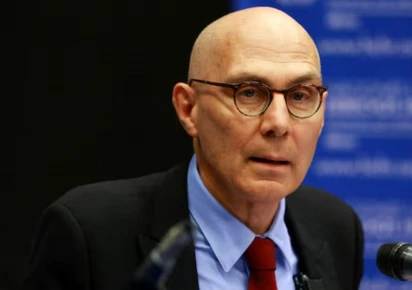
    The United Nations General Assembly has approved a second four-year term for UN High Commissioner for Human Rights Volker Turk. The decision was made despite strong opposition from the United States, Russia and Israel. The 193-member General Assembly voted overwhelmingly in favour of the extension. A total of 144 countries voted for the proposal. Ten opposed it, while 13 abstained. UN Secretary-General Antonio Guterres had proposed Turk for another full term. His current term is due to end in October. The vote came amid growing tensions between Washington and the United Nations. The US administration has reduced funding for several UN agencies. It has also withdrawn from a number of UN bodies. Washington had asked the General Assembly to delay the vote. US officials said more time was needed for consultations and review. The United States also warned that it could reconsider its relationship with the UN if the proposal was approved. US Representative for UN Management and Reform Jeff Bartos criticised the process before the vote. He said the decision did not allow enough time for discussion and oversight by member states. Bartos warned that the US could reassess its engagement, participation and funding of the United Nations. Despite the warning, most member states supported Turk. The European Union backed the extension. Several African and Latin American countries also voted in favour. China supported the proposal as well. Russia strongly opposed Turk’s reappointment. Russian Deputy Ambassador to the UN Dmitry Chumakov accused the rights chief of bias against Moscow. He also criticised Turk for making what Russia described as unfounded allegations against the country. Russia had proposed a shorter extension for Turk. Its plan would have kept him in the position only until the end of 2026. The General Assembly rejected that proposal by a large majority. Israel also opposed the decision. The Israeli Foreign Ministry criticised Guterres’ proposal and said the decision should have been left to the next UN secretary-general. Turk has faced criticism from several powerful countries because of his strong position on human rights issues. He has criticised Russia’s war in Ukraine. He has also raised concerns about Israel’s actions in Gaza. Turk has further called for investigations into deaths involving people held in US immigration custody. Human rights organisations have defended his position. They say the UN human rights chief must be able to challenge powerful countries when fundamental freedoms are threatened. The position has become increasingly important as conflicts and restrictions on civil liberties continue in different parts of the world. Turk is an Austrian lawyer. He has worked with the United Nations for decades. His UN career has included senior positions in Geneva. He has also served in field locations, including Kosovo. With the General Assembly’s latest decision, Turk will become the first UN human rights chief to serve two complete four-year terms. His reappointment is likely to keep human rights at the centre of international debate. It may also further test relations between the United Nations and countries that have opposed his approach.

  • | | | |

    Iran rejects talks on ceasefire extension

    Pakistan is making diplomatic efforts to help extend the ceasefire between the United States and Iran, as the current truce is scheduled to expire on Sunday, August 16. Sources said Islamabad is trying to use the understanding reached under the Islamabad Memorandum of Understanding to encourage both sides to maintain the ceasefire and return to negotiations. According to the sources, mediators believe additional time is needed to bridge differences between Washington and Tehran. Diplomatic efforts are therefore continuing to prevent the situation from deteriorating after the current ceasefire period ends. However, an Iranian senior official gave a different assessment of the situation. The official said there have been no discussions between Iran and the United States regarding an extension of the ceasefire. Iran has maintained that Washington must return to the agreement and honour its previous commitments. Tehran has also demanded a clear and credible timeline for the implementation of those commitments before any further understanding can be reached. Meanwhile, US President Donald Trump has made strong statements about the strategic Strait of Hormuz. Trump claimed that the United States now has complete control over the vital waterway and said Iran has limited options to challenge the American naval blockade. The Strait of Hormuz remains a major international shipping route and plays a crucial role in global energy supplies. Any prolonged disruption in the waterway could have serious consequences for oil and gas markets and international trade. Iranian military officials have warned that a renewed US offensive could lead to a wider confrontation. An Iranian military spokesman said energy transmission networks, power plants and infrastructure connected to the global internet could become targets if American military action resumes. The warning has raised concerns that any collapse of the ceasefire could expand the conflict beyond conventional military targets and affect critical infrastructure. Meanwhile, Turkish President Recep Tayyip Erdogan has expressed hope that additional countries will join the Makkah Defence Agreement. He indicated that broader participation could strengthen regional security cooperation. In another development, US Central Command said a Panama-flagged cargo vessel attempting to breach the naval blockade was disabled after a US helicopter fired a missile at the ship. The incident has further highlighted the risks facing commercial shipping in the region amid continuing tensions between Washington and Tehran. Separately, Japanese Prime Minister Sanae Takaichi discussed the situation with Iranian President Masoud Pezeshkian in a telephone conversation. Takaichi called for the Strait of Hormuz to be reopened once negotiations between Iran and the United States reach a successful conclusion.

Leave a Reply

Your email address will not be published. Required fields are marked *