
iran rejects talks
| | | |

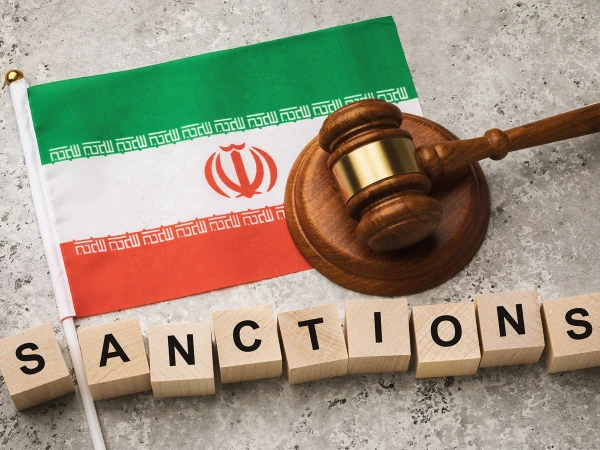
Iran rejects talks on ceasefire extension

Pakistan is making diplomatic efforts to help extend the ceasefire between the United States and Iran, as the current truce is scheduled to expire on Sunday, August 16.

Sources said Islamabad is trying to use the understanding reached under the Islamabad Memorandum of Understanding to encourage both sides to maintain the ceasefire and return to negotiations.

According to the sources, mediators believe additional time is needed to bridge differences between Washington and Tehran. Diplomatic efforts are therefore continuing to prevent the situation from deteriorating after the current ceasefire period ends.

However, an Iranian senior official gave a different assessment of the situation. The official said there have been no discussions between Iran and the United States regarding an extension of the ceasefire.

Iran has maintained that Washington must return to the agreement and honour its previous commitments. Tehran has also demanded a clear and credible timeline for the implementation of those commitments before any further understanding can be reached.

Meanwhile, US President Donald Trump has made strong statements about the strategic Strait of Hormuz. Trump claimed that the United States now has complete control over the vital waterway and said Iran has limited options to challenge the American naval blockade.

The Strait of Hormuz remains a major international shipping route and plays a crucial role in global energy supplies. Any prolonged disruption in the waterway could have serious consequences for oil and gas markets and international trade.

Iranian military officials have warned that a renewed US offensive could lead to a wider confrontation. An Iranian military spokesman said energy transmission networks, power plants and infrastructure connected to the global internet could become targets if American military action resumes.

The warning has raised concerns that any collapse of the ceasefire could expand the conflict beyond conventional military targets and affect critical infrastructure.

Meanwhile, Turkish President Recep Tayyip Erdogan has expressed hope that additional countries will join the Makkah Defence Agreement. He indicated that broader participation could strengthen regional security cooperation.

In another development, US Central Command said a Panama-flagged cargo vessel attempting to breach the naval blockade was disabled after a US helicopter fired a missile at the ship.

The incident has further highlighted the risks facing commercial shipping in the region amid continuing tensions between Washington and Tehran.

Separately, Japanese Prime Minister Sanae Takaichi discussed the situation with Iranian President Masoud Pezeshkian in a telephone conversation.

Takaichi called for the Strait of Hormuz to be reopened once negotiations between Iran and the United States reach a successful conclusion.

Similar Posts

  • |

    Benny Blanco gives peek into Selena Gomez’s Italian birthday getaway

    Benny Blanco is letting fans in on how he celebrated Selena Gomez’s birthday abroad. The 38-year-old music producer posted a TikTok video on Wednesday. The clip captured the couple’s time in Italy for Gomez’s 34th birthday, and instead of a big party, the two chose something more hands-on. They spent the day taking a cooking class together. The video showed them rolling out fresh pasta from scratch. They also prepared eggplant parmesan and a few other classic Italian dishes. At one point, the couple paused to toast with glasses of wine, adding a festive touch to the lesson. Blanco could not hide his excitement after tasting their eggplant parmesan. He told Gomez it was the best thing he had eaten in Italy so far. Gomez smiled and gave the credit right back to him, saying he was the one who made it. The clip also gave fans a glimpse of the Italian countryside surrounding them. Rolling hills and scenic views played in the background as the two enjoyed their day away from the spotlight. Toward the end of the video, Gomez was shown relaxing after the cooking session wrapped up. Blanco used the quiet moment to wish her a happy birthday on camera and told her that he loved her, capping off the sweet tribute. The couple’s Italian trip included more than just the cooking class. The night before, on July 21, they had dinner at Trattoria della Santa in Bologna. Married since September 2025, the pair have continued to share glimpses of their relationship, but this getaway felt especially personal. The restaurant’s owner, Riccardo Lelli, spoke about hosting the couple. He described them as absolutely amazing guests, and said that both Gomez and Blanco were kind and friendly throughout their visit. Lelli also noted that the couple made a point of thanking the staff. He said they appreciated both the food and the overall service during their meal. Fans have responded warmly to the birthday video, praising the couple for choosing a simple, meaningful way to celebrate rather than a lavish party. Many called the moment refreshing, especially given how public the couple’s relationship often is. For Gomez, turning 34 in Italy alongside her husband seems to have offered exactly the kind of low-key, joyful celebration she wanted.

  • | | |

    US can’t isolate Iran without China, NYT says

    WASHINGTON: The United States may find it difficult to economically isolate Iran completely unless China cooperates with Washington, according to a New York Times analysis, which highlights Beijing’s growing role in Iran’s oil exports and trade. China is Iran’s largest trading partner and a major buyer of its crude oil, giving Beijing considerable influence over the effectiveness of any US campaign aimed at cutting Tehran’s access to international revenue. According to figures cited in the analysis, China and Iran conducted around $41.2 billion in trade in 2025, while Chinese buyers imported approximately $31.2bn worth of Iranian crude during the same year. At times, Chinese customers have accounted for as much as 90 per cent of Iran’s total oil exports. That dependence creates a significant challenge for Washington. The United States can impose sanctions on Iranian banks, companies, oil traders and vessels, but cutting off those channels may not be enough if Chinese businesses continue buying Iranian crude. A particularly important role is played by China’s small independent refineries, commonly known as “teapots”. These private operators have relatively limited exposure to the global financial system, potentially making them less vulnerable to traditional US sanctions. The arrangement has allowed Iran to maintain an important source of revenue despite years of American restrictions. Continued Chinese purchases could therefore provide Tehran with the financial breathing room needed to withstand additional economic pressure. But Beijing has its own economic leverage over Washington. The New York Times analysis noted that China could potentially restrict exports of critical minerals needed by American technology and defence industries. Beijing has previously used restrictions on strategic minerals during periods of trade tension with the United States, demonstrating the potential economic cost of confrontation. That creates a difficult calculation for Washington. Increasing pressure on Iran could put the United States in a position where it also has to confront China, potentially widening an already complicated economic rivalry. The geopolitical equation is further complicated by developments in the Middle East. The analysis pointed to US military activity in the region and the movement of some American military assets from the Pacific. Chinese observers have interpreted such moves as potentially creating vulnerabilities in America’s strategic position in Asia. For Washington, the central question is therefore not simply how many sanctions can be imposed on Tehran. It is whether those measures can succeed while Iran retains access to one of its most important economic partners. If China continues purchasing Iranian oil and maintaining commercial ties with Tehran, Iran is unlikely to become completely isolated economically. The analysis suggests that Beijing’s decisions could ultimately determine how far the US pressure campaign can go — and whether Washington can tighten the economic screws on Tehran without opening another front in its increasingly complex relationship with China.

  • |

    Pakistan posts Rs3.6tr primary surplus as fiscal position improves in FY2025-26

    ISLAMABAD: Pakistan closed the financial year 2025-26 with a primary budget surplus of around Rs3.6 trillion, marking the third consecutive year of a surplus and allowing the country to comfortably meet a key fiscal condition agreed with the International Monetary Fund (IMF). The improvement came despite the government falling short of its tax collection targets, with stronger petroleum levy receipts, tighter expenditure controls and lower-than-expected debt servicing costs helping offset the revenue shortfall. According to the latest fiscal operations data released by the Ministry of Finance, the unadjusted primary surplus reached Rs3.63 trillion, equivalent to 2.6% of the country’s gross domestic product (GDP). The figure was approximately Rs464 billion higher than the IMF’s target of Rs3.16 trillion. The primary balance is considered an important indicator under Pakistan’s IMF programme because it measures the government’s fiscal position before interest payments on public debt. The latest figures indicate that the government maintained fiscal discipline despite continued pressure on revenues and expenditure. Overall fiscal deficit below target Pakistan’s overall budget deficit, after accounting for provincial cash surpluses, stood at approximately Rs3.3 trillion during FY2025-26. This was around Rs1.7 trillion lower than the amount initially projected in the federal budget. The federal government’s own deficit was recorded at Rs4.8 trillion, also significantly below the budgeted level. The better-than-expected outcome was primarily attributed to lower interest payments, stronger petroleum levy receipts and restrained development expenditure. Interest payments were around Rs1.3 trillion below the amount originally allocated in the budget. The government also collected approximately Rs101 billion more than its petroleum levy target, while federal development spending remained Rs82 billion below the initially approved allocation. The fiscal improvement also contributed to a moderation in the growth of public debt. Public debt increased by around 7% during the year, bringing some relief after several years of double-digit debt expansion. Provinces narrowly miss IMF cash surplus target The four provincial governments collectively generated a cash surplus of around Rs1.45 trillion during the fiscal year. Although the amount fell marginally short of the IMF’s combined requirement, the shortfall was only around Rs14 billion. Punjab contributed the largest share, recording a cash surplus of approximately Rs914 billion. Sindh posted a surplus of around Rs350 billion, followed by Khyber-Pakhtunkhwa with Rs165 billion and Balochistan with approximately Rs21 billion. Provincial governments, meanwhile, performed slightly better on revenue collection. Their combined tax receipts exceeded the IMF condition by around Rs18 billion, with collections crossing Rs1.2 trillion. FBR misses tax target Despite the overall improvement in the fiscal position, tax collection remained a major area of concern. The Federal Board of Revenue collected approximately Rs13 trillion during FY2025-26, falling nearly Rs1 trillion short of the IMF’s revised target. FBR tax receipts increased by about 11% compared with the previous year. However, this increase was broadly in line with nominal GDP growth, indicating that the tax-to-GDP ratio remained largely unchanged at around 10.3%. The figures suggest that additional revenue expected from new taxation and enforcement measures did not fully materialise. The government had anticipated around Rs700 billion in additional revenue from such measures. Non-tax revenue also remained below expectations by approximately Rs63 billion. Total non-tax receipts stood close to Rs5.1 trillion, including around Rs2.4 trillion in profits transferred by the central bank. Petroleum levy becomes key revenue source A major contributor to the stronger fiscal outcome was the petroleum levy. Collections under the petroleum levy climbed to around Rs1.567 trillion, representing an increase of approximately 28% over the previous year. The amount was also Rs101 billion above the target agreed with the IMF. The additional collection effectively represented roughly 25 days of petroleum price relief at a levy rate of Rs80 per litre on petrol and high-speed diesel. For the current financial year, the government has committed to collecting approximately Rs1.7 trillion through the petroleum levy. Meeting this objective is expected to require maintaining the levy at around Rs80 per litre, subject to the applicable petroleum pricing mechanism and market conditions. Development spending remains restrained The government’s fiscal consolidation strategy also affected development expenditure. Federal development spending was recorded at around Rs918 billion, approximately Rs82 billion below the originally approved budget allocation. However, the amount was still around Rs100 billion higher than the subsequently revised allocation. The figures reflect the government’s efforts to contain expenditure and prioritise fiscal targets amid pressure from debt servicing and revenue mobilisation. Debt servicing costs fall Lower-than-expected debt servicing provided another significant boost to the government’s fiscal position. The Ministry of Finance reported that debt servicing remained around Rs6.95 trillion during the year, compared with the budgeted amount of approximately Rs8.2 trillion. The government attributed the savings to tight fiscal management, improved cash handling and the early retirement of around Rs1.9 trillion in domestic debt. These measures helped reduce domestic debt servicing costs by nearly Rs1.97 trillion compared with the original estimates. Statistical discrepancy highlighted The fiscal operations report also identified a statistical discrepancy of around Rs853 billion across the federal and provincial accounts. According to the Ministry of Finance, the discrepancy was linked largely to changes in cash balances and differences in the recording and reporting of financial data. The negative discrepancy indicated that cash inflows were higher than recorded outflows. At the federal level, the discrepancy stood at approximately Rs448 billion. The ministry attributed the difference mainly to changes in commercial bank deposits as well as variations in reporting and accounting adjustments involving the State Bank of Pakistan, FBR and Economic Affairs Division. Provincial accounts showed a combined statistical discrepancy of approximately Rs405 billion. Punjab accounted for around Rs266 billion, Khyber-Pakhtunkhwa Rs95 billion, Balochistan Rs72 billion and Sindh around Rs28 billion. The ministry said movements in commercial bank deposits were among the principal factors behind the provincial differences. IMF review ahead The improved fiscal performance is expected to strengthen Pakistan’s position ahead of the next IMF assessment. An IMF mission is expected to visit Islamabad in the third week of September to review Pakistan’s economic performance during the previous fiscal year. The mission is also expected to

  • | |

    Dakota Johnson goes blonde to portray Marilyn Monroe in flesh impact

    Dakota Johnson has undergone a dramatic transformation, debuting platinum blonde hair to portray Hollywood icon Marilyn Monroe in the upcoming short film Flesh Impact. Newly released first-look images showcase the actress with Monroe’s signature curled hairstyle, bold red lipstick, and famous beauty mark, offering audiences an early glimpse of one of her most striking screen appearances to date. Written and directed by Academy Award-nominated filmmaker Maggie Gyllenhaal, Flesh Impact is a 17-minute short film created to mark what would have been Monroe’s 100th birthday. Rather than telling the story of Monroe’s life through a conventional biographical approach, the project presents an imaginative exploration of her legacy by examining both the woman the world knew and the future she never had the chance to experience. Johnson portrays Monroe during the height of her Hollywood career, while Academy Award-winning actress Ellen Burstyn plays an imagined older version of the screen legend. The cast also includes Sepideh Moafi and Peter Sarsgaard, adding further depth to the film’s unique interpretation of Monroe’s enduring influence. Gyllenhaal has described the project as an opportunity to look beyond Monroe’s glamorous public image and reflect on the complexity, vulnerability, and resilience that defined her life. The filmmaker aims to celebrate Monroe not simply as a global celebrity but as a woman whose story continues to resonate with audiences around the world decades after her death. Flesh Impact is set to make its world premiere at the 2026 Venice International Film Festival, where Ellen Burstyn will also be honoured with the prestigious Golden Lion for Lifetime Achievement. Following the release of the first images, Johnson’s transformation has already generated widespread attention, with many praising the actress’s remarkable resemblance to Monroe. More than six decades after her passing, Marilyn Monroe remains one of cinema’s most recognisable and influential figures, remembered for classics including Some Like It Hot, Gentlemen Prefer Blondes, and The Seven Year Itch. With Flesh Impact, Gyllenhaal and her cast hope to honour Monroe’s lasting legacy while offering audiences a thoughtful and imaginative perspective on the Hollywood icon’s extraordinary life. https://www.instagram.com/p/DbVfWs0Dpab/?igsh=Z3hwZjhteGdydXB5

  • |

    Mohammad Nawaz ruled out of Champions Cup

    Pakistan’s spin-bowling all-rounder Mohammad Nawaz has been ruled out of the National Champions Cup after suffering a fracture to the middle finger of his right hand. The Pakistan Cricket Board (PCB) confirmed the injury on Friday, revealing that Nawaz is expected to remain away from competitive cricket for at least three weeks. Nawaz sustained the injury while fielding during the National Champions Cup match between Pakistan Gold and Pakistan Blues at Multan Cricket Stadium on August 12. Despite hurting his finger, the experienced all-rounder remarkably completed his full 10-over spell. His efforts, however, could not prevent Pakistan Gold from suffering a six-wicket defeat against Pakistan Blues. Medical scans conducted on August 13 confirmed the fracture, forcing Nawaz to withdraw from the ongoing domestic competition. The setback comes at an inconvenient time for the left-arm spinner, who has remained an important part of Pakistan’s experienced white-ball setup. According to the PCB, Nawaz will report to the board’s Sports and Exercise Medicine Department after two weeks. He will then undergo rehabilitation under medical supervision, with his recovery closely monitored before a decision is made regarding his return to competitive cricket. The medical team will assess his progress throughout the rehabilitation process, while the priority will be ensuring that the finger has recovered sufficiently before he resumes full cricketing activities. Nawaz’s absence is a blow to his team’s campaign in the Champions Cup, where the tournament provides Pakistan’s established players and emerging talent with valuable competitive exposure. For Nawaz, the immediate focus will now shift from domestic cricket to recovery. The three-week initial timeline could change depending on how he responds to treatment and rehabilitation. The PCB is expected to provide further updates on his fitness as he progresses through the recovery programme.

  • | |

    Amnesty urges Pakistan to free Imran Khan

    Amnesty International has called on the Pakistani government to release former prime minister and Pakistan Tehreek-e-Insaf (PTI) founder Imran Khan as he completes three years in prison, urging authorities to restore his fundamental rights and ensure access to medical care, family members and legal counsel. In a statement issued ahead of the third anniversary of his imprisonment, Amnesty International’s South Asia office expressed concern over Imran Khan’s detention conditions, alleging that he has been denied a fair trial, kept in prolonged solitary confinement and restricted from meeting his relatives and lawyers. The organisation claimed that Imran has not been allowed to meet members of his family for several months and raised concerns over reports that his eyesight has worsened while in custody. It also said that both Imran Khan and his wife, Bushra Bibi, have faced prolonged restrictions on access to legal representatives. Amnesty urged the authorities to immediately restore the couple’s right to meet their lawyers and family members, provide appropriate medical treatment and end what it described as unlawful solitary confinement. The rights organisation also called on the government to ensure that planned public gatherings marking Imran Khan’s three years in detention are allowed to proceed peacefully. It stressed that citizens should be able to exercise their right to peaceful assembly without facing arbitrary restrictions or crackdowns. The appeal comes days after a United Nations special rapporteur also expressed concern over reports regarding Imran Khan’s health and urged authorities to provide him with humane treatment, proper medical care and access to doctors of his choice. Imran Khan has remained in Adiala Jail since August 2023. He is serving sentences in multiple cases, including the £190 million corruption case and the Toshakhana-II case, while also facing several other legal proceedings linked to the May 9, 2023 protests. PTI has repeatedly alleged that its founder is being denied adequate medical treatment, particularly for an eye condition, and has appealed to international human rights organisations to intervene. The party maintains that his constitutional rights and due process protections have been violated during his incarceration. The government has previously rejected allegations of mistreatment, maintaining that legal proceedings against Imran Khan are being conducted in accordance with the law.

Leave a Reply

Your email address will not be published. Required fields are marked *