extends volker turks
|

UN extends Volker Turk’s term as Rights Chief

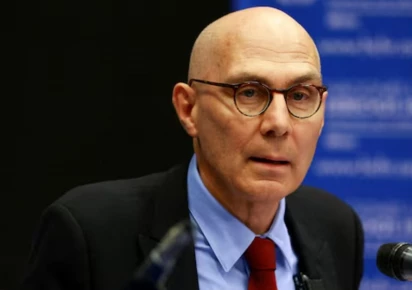
The United Nations General Assembly has approved a second four-year term for UN High Commissioner for Human Rights Volker Turk. The decision was made despite strong opposition from the United States, Russia and Israel.

The 193-member General Assembly voted overwhelmingly in favour of the extension. A total of 144 countries voted for the proposal. Ten opposed it, while 13 abstained.

UN Secretary-General Antonio Guterres had proposed Turk for another full term. His current term is due to end in October.

The vote came amid growing tensions between Washington and the United Nations. The US administration has reduced funding for several UN agencies. It has also withdrawn from a number of UN bodies.

Washington had asked the General Assembly to delay the vote. US officials said more time was needed for consultations and review.

The United States also warned that it could reconsider its relationship with the UN if the proposal was approved.

US Representative for UN Management and Reform Jeff Bartos criticised the process before the vote. He said the decision did not allow enough time for discussion and oversight by member states.

Bartos warned that the US could reassess its engagement, participation and funding of the United Nations.

Despite the warning, most member states supported Turk.

The European Union backed the extension. Several African and Latin American countries also voted in favour. China supported the proposal as well.

Russia strongly opposed Turk’s reappointment.

Russian Deputy Ambassador to the UN Dmitry Chumakov accused the rights chief of bias against Moscow. He also criticised Turk for making what Russia described as unfounded allegations against the country.

Russia had proposed a shorter extension for Turk. Its plan would have kept him in the position only until the end of 2026. The General Assembly rejected that proposal by a large majority.

Israel also opposed the decision.

The Israeli Foreign Ministry criticised Guterres’ proposal and said the decision should have been left to the next UN secretary-general.

Turk has faced criticism from several powerful countries because of his strong position on human rights issues.

He has criticised Russia’s war in Ukraine. He has also raised concerns about Israel’s actions in Gaza. Turk has further called for investigations into deaths involving people held in US immigration custody.

Human rights organisations have defended his position.

They say the UN human rights chief must be able to challenge powerful countries when fundamental freedoms are threatened.

The position has become increasingly important as conflicts and restrictions on civil liberties continue in different parts of the world.

Turk is an Austrian lawyer. He has worked with the United Nations for decades.

His UN career has included senior positions in Geneva. He has also served in field locations, including Kosovo.

With the General Assembly’s latest decision, Turk will become the first UN human rights chief to serve two complete four-year terms.

His reappointment is likely to keep human rights at the centre of international debate. It may also further test relations between the United Nations and countries that have opposed his approach.

Similar Posts

  • |

    Natalie Harp tipped as Karoline Leavitt’s likely successor

    White House press secretary Karoline Leavitt announced on Wednesday that she is stepping down from the Trump administration by the end of the month. She cited wanting more time with her family as the reason behind the decision. In a social media post, the 28-year-old explained that returning to the White House after having her daughter left her struggling to balance the demands of the role with being present for her two young children. She called it a bittersweet decision to move into a new chapter of her life. President Trump responded publicly, saying he understood and respected her choice. He added that Leavitt would remain part of his inner circle, describing her as one of his top outside advisors and an influential voice within the Republican Party going forward. The sudden announcement caught many off guard, sparking a wave of speculation online about what actually prompted her exit. No official replacement has been named yet, but multiple reports have pointed to Natalie Harp as a likely contender for the role. The 34-year-old serves as Trump’s executive assistant and is frequently seen by his side at public events. She reportedly manages much of his digital presence, including posting pre-approved content to his social media accounts after hours, according to a Wall Street Journal report from May 2026. Given her closeness to the president, Harp has emerged as one of the more plausible names being floated to take over the press secretary role. Alongside the succession talk, unverified theories have also surfaced online suggesting Harp may have played a role in Leavitt’s exit. Some reports, including one from the Irish Star, claim Harp accompanied Trump during a security-related jet switch amid threat concerns, while Leavitt was left behind, though this remains unconfirmed. A source told the Daily Mail that Harp holds an unusually close position within Trump’s team, describing her as closer to the president than anyone else on his staff. Separately, a widely circulated video appeared to show Leavitt seemingly sidelined during a tense exchange involving Trump and another woster believed to be Harp, shortly before her resignation announcement. None of these claims have been independently verified so far.

  • | |

    LHC grants bail to Libya boat tragedy suspect

    The Lahore High Court (LHC) has granted post-arrest bail to Muhammad Tahir, a suspect in the Libya boat tragedy case, ruling that investigations into international human trafficking cases must be supported by credible and legally admissible evidence rather than mere suspicion. Justice Amjad Rafiq issued a detailed 10-page written verdict explaining the reasons for granting bail. The court observed that allegations of human trafficking, being an international crime, require thorough and professional investigations based on concrete evidence. The court noted that the Federal Investigation Agency (FIA) should have obtained evidence from abroad and sought legal assistance from relevant international authorities during the investigation. It said cooperation with foreign agencies is essential in cases involving cross-border human trafficking. According to the written order, investigators should have collected digital and documentary evidence, including WhatsApp chats, call records, bank records, travel documents and other electronic data. The court stressed that such evidence is necessary to establish the active role of an accused in an alleged trafficking network. The judgment further stated that the standard of investigation must be strong enough to legally prove an accused person’s involvement rather than relying on assumptions or incomplete evidence. The court also highlighted the need for reforms to effectively combat human trafficking. It said stronger legislation, improved investigative methods and better law enforcement mechanisms are essential to tackle organised trafficking networks. The LHC ruled that the transfer of money into a person’s bank account alone cannot be treated as proof of involvement in human trafficking. It added that suspicion, speculation or banking transactions by themselves are insufficient to establish criminal liability in such cases. The court ordered the release of Muhammad Tahir on post-arrest bail against surety bonds of Rs500,000, subject to the conditions set by the court. The case will continue in accordance with the law while further investigation proceeds.

  • |

    Asian Football Confederation joins UEFA and CONCACAF in FIFA proposal standoff

    The Asian Football Confederation has taken a clear stand, and it is backing UEFA and CONCACAF on a growing football dispute. The issue centres on a FIFA proposal. It involves bringing private investment into the World Cup’s business operations. The AFC confirmed its position on Friday. In its statement, the AFC expressed solidarity with the two other confederations. It raised serious concerns over FIFA’s plan. The organisation represents 47 member nations. These include Australia, China, Japan and Saudi Arabia. Its statement made clear how seriously the body views the matter. The AFC did not stop there. It pointed out that talk of a possible World Cup boycott has already entered public discussion. According to the AFC, this alone should concern anyone who cares about the sport’s future. It added that this concern should apply across all confederations, not just a few. FIFA responded with its own statement soon after. It said every member association should get a fair chance to review the proposal. The governing body also acknowledged the feedback it had received from UEFA and CONCACAF. FIFA confirmed something significant in its response. All 41 member associations under CONCACAF had rejected the plan. This body oversees football across North and Central America. Their rejection focused specifically on selling a stake in the World Cup’s operations. FIFA also addressed reports around its consultation process. It said the process had been disrupted by what it called inaccurate media coverage. Still, it maintained respect for the concerns raised publicly. It reaffirmed its commitment to keeping things open and democratic. The organisation said it plans to continue with its consultation as scheduled. Its goal, according to the statement, is to let every member vote based on facts. FIFA wants to avoid decisions being shaped by speculation instead. This disagreement adds to a growing list of tensions. FIFA’s push for private investment has already faced resistance from two major confederations. Now, with the AFC joining them, the pressure on football’s global body appears to be increasing. For now, attention remains fixed on FIFA’s next move. All eyes are on how it plans to carry out its consultation process. Many are also watching to see whether these mounting concerns can be addressed, without deepening the divide among football’s governing bodies worldwide.

  • |

    Kashmir activist and journalist released on bail after years in custody

    Indian authorities have released Kashmiri human rights activist Khurram Parvez and journalist Irfan Mehraj on bail after they spent years in custody under terrorism related charges. Their families confirmed that both men were released from a prison in New Delhi late on Wednesday following a court order, although strict bail conditions will keep them in the capital while their trial continues. Parvez, a well known human rights defender and programme coordinator of the Jammu Kashmir Coalition of Civil Society, was arrested by India’s National Investigation Agency in November 2021 from his home in Srinagar. Mehraj, a freelance journalist who also worked with the same rights organisation, was arrested in 2023. Both men have been charged under India’s anti terrorism laws with allegedly financing terrorism and promoting separatist activities. The legislation allows authorities to detain suspects for long periods without trial and has frequently been criticised by rights organisations for its broad powers. Although they have now been granted bail, their freedom remains limited. Court conditions require both Parvez and Mehraj to stay in New Delhi during the legal proceedings. They are not permitted to return to Kashmir and must arrange their own accommodation in the capital while attending court hearings. Indian investigators had challenged the decision to grant bail, but a higher court upheld the order. The Jammu Kashmir Coalition of Civil Society has spent many years documenting alleged human rights violations in the region. The organisation has published reports on cases involving torture, unlawful killings, enforced disappearances, and unmarked graves in areas affected by the long running conflict. Its work has often drawn international attention and placed it at the centre of debates over human rights in Kashmir. Parvez has received support from several international human rights organisations that have repeatedly called for his release. In 2023, the United Nations Working Group on Arbitrary Detention described his arrest as retaliation for his human rights activities. The UN experts said the detention appeared intended to silence both Parvez and wider civil society efforts in Kashmir. The case has also renewed attention on press freedom in the region. Journalists working in Indian administered Kashmir have reported increasing restrictions, surveillance, and legal action since the Indian government revoked the region’s special constitutional status in 2019. Several media workers and activists say they have faced questioning, arrests, or pressure while reporting on political and security issues. The Indian government maintains that its actions are necessary to combat terrorism and protect national security. Officials argue that the anti terrorism laws are an essential tool in dealing with militant groups operating in the region. However, critics say the legislation has increasingly been used against journalists, activists, and civil society members who peacefully document human rights concerns. Government figures show that more than 3,600 people were arrested under anti terrorism laws in Kashmir between 2019 and 2023. More than half of those detained remain in prison while awaiting legal proceedings, highlighting concerns over lengthy pre trial detention. The release of Parvez and Mehraj has been welcomed by rights advocates, but legal proceedings against both men continue. They will remain in New Delhi under the conditions set by the court until their trial reaches its conclusion. Their cases are expected to remain closely watched by international human rights organisations and press freedom groups as they continue to raise concerns about civil liberties and legal protections in Indian administered Kashmir.

  • |

    Meta removes 756,000 Australian teen accounts amid new age law

    Meta has deactivated 756,000 Australian accounts believed to belong to users under the age of 16. The company confirmed the move on Thursday amid tightening regulations on youth social media use. The total includes 462,000 suspected underage Instagram accounts and 294,000 flagged Facebook accounts. All were removed between December, when the ban first came into effect, and June of this year. To identify these accounts, Meta relied on AI tools designed to scan user activity for contextual clues suggesting an underage user. These included things like birthday celebration posts or references to specific school grades, alongside reports submitted by other users. In an official statement, Meta said enforcement remains ongoing and that these numbers will likely continue rising. The company added that it shares the Australian government’s goal of ensuring safer, age-appropriate online experiences for young people. Meta also stated that it is actively meeting its legal obligations under Australia’s new social media rules. The announcement comes as the company faces mounting scrutiny and potential regulatory action tied to the country’s landmark youth protection laws. There is growing consensus globally that major tech platforms have failed to prioritise child safety in their product design. Features like infinite scrolling, engagement-driven algorithms and constant notifications are increasingly viewed by regulators as manipulative, disrupting both sleep and academic performance among young users. In response, Australian authorities recently doubled maximum penalties for non-compliance to roughly A$99 million, equivalent to about $69.75 million USD. Regulators have also been granted expanded powers to access internal company documents amid claims that platforms have not done enough to enforce existing restrictions. This crackdown reflects a broader global shift toward limiting youth access to social media, driven by mounting public health concerns. Reports from the World Health Organization and various long-term studies have linked heavy platform use to rising rates of adolescent anxiety, depression and body-image issues. Legal pressure on tech companies has intensified too, with several US lawsuits and court rulings exposing internal documents suggesting platforms knowingly prioritised engagement over user safety. That mounting evidence has fuelled growing legislative appetite worldwide for mandatory, government-enforced age verification systems.

  • | | | | |

    New US opportunities emerge for Pakistani nurses

    Pakistani nurses and other healthcare professionals could soon have better access to professional opportunities in the United States. A new initiative is being developed to strengthen medical education and workforce development in Pakistan. It also aims to help meet the growing demand for trained healthcare professionals in the US. The American Pakistan Education Foundation and the Pakistan Education Foundation are set to sign a memorandum of understanding in New York. The agreement will establish a framework for cooperation between the two organizations. It will focus on education, professional preparation, training, certification and qualification requirements. The initiative will also explore suitable pathways for qualified Pakistani healthcare professionals to access professional opportunities in the United States. The organizations plan to build stronger links with hospitals, healthcare systems, educational institutions and professional organizations in the US. The American Pakistan Education Foundation is a US-based nonprofit organization. It works on education, healthcare workforce development, professional training and community-focused initiatives in both countries. The project to create professional opportunities for Pakistani nurses was launched with support from New York State Assembly Deputy Speaker Phil Ramos. Members of the foundation’s board have already visited Pakistan twice. During the visits, they met relevant stakeholders and discussed ways to strengthen nursing education and the wider healthcare workforce. The discussions also focused on professional training and the development of medical skills. The delegation examined opportunities to expand institutional cooperation between Pakistan and the United States. Meanwhile, the Pakistan Education Foundation has launched an NCLEX nurse placement programme. The initiative is aimed at helping Pakistani registered nurses prepare for international licensing. A nationwide registration campaign was conducted under the programme. A total of 2,759 candidates registered. After a detailed screening and selection process, 300 eligible nurses were selected for training. More than 80 nurses have so far obtained NCLEX-related licensing credentials. They are now prepared to pursue international professional opportunities. More than 220 additional nurses are currently progressing through the examination process. The programme has also helped candidates who face financial difficulties. They have been able to prepare for the costly licensing examination without travelling abroad. The new memorandum is expected to provide a stronger basis for connecting qualified Pakistani healthcare professionals with potential employers in the US. The American Pakistan Education Foundation plans to establish links with hospitals, healthcare networks, nursing facilities, universities and professional organizations. These institutions could provide employment, training and partnership opportunities for qualified professionals. The two organizations also intend to strengthen nursing and medical education. They will explore professional development programmes for teachers and healthcare workers. Professional exchange programmes could also be developed. Scholarships and educational assistance may be considered as part of future cooperation. The Pakistan Education Foundation will identify nurses and other healthcare professionals with suitable educational and professional backgrounds. It will also assist candidates interested in further education, professional development and potential employment opportunities in the United States. Support could include exam preparation, professional training and assistance with certification and documentation. The proposed cooperation may also involve universities, nursing schools, hospitals, training institutions and professional organizations. Joint educational programmes could be developed for nurses and other healthcare professionals. Existing programmes could also receive additional support. A joint working group may be established to oversee implementation of the memorandum and develop further cooperation between the two organizations. Officials involved in the initiative have welcomed the development. They said the project could create stronger institutional links between Pakistan and the United States. The initiative is also being viewed as a step towards expanding international career opportunities for Pakistani healthcare workers.

Leave a Reply

Your email address will not be published. Required fields are marked *