khanewal placed flood
| |

Khanewal placed on flood alert as DC Hena Arshad o…

Protective embankments inspected at Head Sidhnai, Mai Safura, Kund Sargana and Fazil Shah as Ravi and Chenab water levels remain under continuous surveillance

Khanewal: Deputy Commissioner Khanewal Hena Arshad has issued a pre-emptive alert to all relevant departments, directing them to maintain complete operational preparedness for any possible flood emergency in the district.

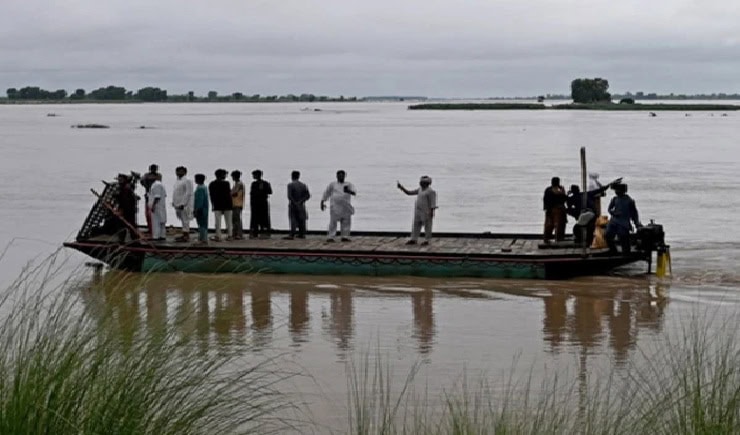
The alert comes as Punjab faces an evolving monsoon and river-flood situation. According to the latest official update, moderate flooding has been recorded in the River Chenab at Khanki, Qadirabad and Chiniot Bridge. Low-level flooding has also been reported at Trimmu on the Chenab and at Balloki and Sidhnai on the River Ravi.

The Deputy Commissioner visited Head Sidhnai, the Mai Safura Bund Breaching Section, Kund Sargana and Fazil Shah Bund, where she inspected flood-protection infrastructure and reviewed emergency response arrangements.

Officials of the Irrigation Department briefed her on the prevailing water situation in the Ravi and Chenab rivers, the structural strength of protective embankments, vulnerable riverine areas, evacuation planning and precautionary measures being taken to minimise possible losses.

Additional Deputy Commissioner Revenue Fazal Abbas, Assistant Commissioner Kabirwala Muhammad Haroon and officers representing the Irrigation Department, Rescue 1122, Revenue Department and other concerned agencies accompanied the Deputy Commissioner during the inspection.

At Head Sidhnai, Hena Arshad inspected the Mai Safura Bund Breaching Section, surrounding flood embankments and the railway bridge. She reviewed the condition of the protective infrastructure and the safety measures being implemented around vulnerable locations.

The Deputy Commissioner directed the Irrigation Department, Kabirwala tehsil administration, Rescue 1122, Revenue Department and other agencies to remain fully alert and maintain uninterrupted coordination.

She stressed that machinery, rescue boats, emergency equipment, personnel and transportation resources must remain available for immediate deployment. Any weakness detected in an embankment or protective structure should be repaired without delay, she added.

Earlier, while chairing a flood-preparedness meeting at Head Sidhnai, the Deputy Commissioner said that the district administration had completed the necessary arrangements to respond effectively to a possible emergency.

She ordered the immediate strengthening of flood embankments, removal of encroachments from waterways and vulnerable locations, and implementation of all remaining precautionary measures.

During her visits to Kund Sargana and Fazil Shah Bund, Hena Arshad instructed officials to prepare for the timely and safe evacuation of residents from low-lying riverine settlements whenever water conditions require such action.

She directed the administration to identify vulnerable populations in advance, maintain updated evacuation lists and ensure the availability of transport for families, livestock and essential belongings.

The Deputy Commissioner also ordered that flood-relief camps and facilities established by the Health and Livestock departments remain fully operational. These camps must be prepared to provide shelter, medicines, drinking water, food, veterinary assistance and other essential services immediately after an emergency is declared.

Punjab authorities have intensified flood monitoring across rivers, headworks and barrages. Drone surveillance has also been conducted at Head Sidhnai and other strategic locations to monitor water flows, riverbank erosion and possible incoming flood waves.

The wider provincial situation remains sensitive. More than 4,300 residents have already been evacuated from vulnerable settlements along the Chenab in Chiniot district following an increase in water levels, illustrating the speed with which river conditions can affect downstream communities.

The National Disaster Management Authority has also issued a weather advisory covering July 25 to July 30, warning of further monsoon activity and associated flooding hazards.

Hena Arshad said water levels and river conditions across Khanewal district were being monitored continuously. She instructed all departments to remain vigilant and respond immediately to any rise in water levels, weakening of embankments or other emergency situation.

“The protection of citizens’ lives, property and livestock is the district administration’s foremost priority,” the Deputy Commissioner said, reaffirming that negligence or delays in flood-preparedness measures would not be tolerated.

Residents of low-lying areas near the Ravi, Head Sidhnai and adjoining riverine belts have been advised to remain attentive to official announcements, avoid approaching rivers and flood channels, and cooperate with the administration if precautionary evacuation becomes necessary.

Citizens may contact Rescue 1122 during an immediate emergency or call the Provincial Disaster Management Authority’s disaster helpline 1129 to report flood-related risks and seek assistance.

Similar Posts

  • | |

    Court orders Azma Bukhari to appear in person over…

    LAHORE: The Lahore Sessions Court has directed Punjab Information Minister Azma Bukhari to appear in person and record her statement in a case involving the alleged circulation of a fake video on social media. The matter was heard by Additional Sessions Judge Nusrat Ali Siddiqui, who rejected Bukhari’s request to record her statement through video link. The court ordered her to personally appear at the next hearing to record her statement. Bukhari had challenged an earlier order issued by a judicial magistrate requiring her to appear before the court in person. The case relates to allegations surrounding the circulation of a fabricated video attributed to the provincial minister. Bukhari had approached the authorities against the alleged dissemination of the video and lodged a complaint with the National Cyber Crime Investigation Agency (NCCIA) against Falak Javed. The court’s latest order means Bukhari will have to appear before the Sessions Court at the upcoming hearing as proceedings in the case continue.

  • Thai Tanker Passes Safely Through Strait of Hormuz After Diplomatic Breakthrough

    BNGKOK – A Thai oil tanker has successfully transited the Strait of Hormuz following intensive diplomatic negotiations with Iran and Oman, Foreign Affairs Minister Sihasak Phuangketkeow confirmed on Tuesday, marking a significant breakthrough amid heightened tensions in the strategic waterway. Thai Oil Crisis Eases After Government Intervention The SET-listed energy firm Bangchak Corporation Plc subsequently […]

  • Thailand denies false reports about visa-free entry limits

    BANGKOK – The Ministry of Digital Economy and Society has issued a strong warning regarding false information circulating online about a supposed cap on visa-free entry into Thailand. The fake announcement claimed foreigners would be limited to just two visa-free entries per year. Thailand Launches National Crackdown on Foreigners Abusing Visa-Free Entries In a statement, […]

  • Asia’s First Tomorrowland Music Festival is Coming to Thailand in Chonburi 2026

    BANGKOK – Thailand’s Board of Investment (BOI) has granted incentives for the organization of the globally renowned Tomorrowland music festival in Chonburi province in December 2026. This marks the festival’s first entry into Asia and is projected to generate an economic impact of approximately 21 billion baht over a five-year period. Thailand to Make History […]

  • | | |

    Govt raises fuel prices as petrol pump strike thre…

    The federal government has increased the prices of petrol and high-speed diesel, while petrol pump owners have announced a nationwide strike after failing to reach an agreement with the government over the newly introduced daily fuel pricing system. Under the latest notification, the price of high-speed diesel (HSD) has increased by Rs7.15 per litre, rising from Rs360.06 to Rs367.21. The price of petrol has also been increased by Rs4.93 per litre, taking it from Rs315.80 to Rs320.73. The revised prices came into effect on July 22. The increase follows the government’s decision to replace the previous fortnightly fuel price adjustment system with a daily pricing mechanism. Under the new policy, petroleum prices can now change every day depending on international oil prices and fluctuations in the exchange rate. The new pricing mechanism has been strongly opposed by petrol pump owners and fuel dealers. They argue that daily price revisions are difficult to implement and create financial uncertainty for retailers across the country. After negotiations with government officials failed, the All Pakistan Petrol Pumps Owners Association (APPPOA) announced an indefinite nationwide strike beginning at midnight on Wednesday. The association said petrol pumps across Pakistan would remain closed until the government accepts its demands. Association leaders said discussions with the Petroleum Ministry failed to resolve major issues, including dealer profit margins and the implementation of daily fuel pricing. They insisted that the current system is not practical for petrol station operators and would create serious operational challenges. The Petroleum Retailers Association has also expressed support for the strike, raising concerns about possible disruptions in fuel supplies if the dispute continues. Meanwhile, the All Pakistan Petroleum Dealers Association (PPDA) is expected to decide whether it will formally join the protest. The association has called a meeting of its executive committee to discuss the situation and determine its future course of action. PPDA officials said they had already shared their concerns with the Oil and Gas Regulatory Authority (OGRA). According to the association, the regulator requested additional time to present the dealers’ concerns to the government before any final decision is made. Fuel dealers believe daily price changes make it difficult to manage inventories, update fuel prices, and maintain smooth business operations. They argue that the previous fortnightly pricing system provided greater stability and reduced uncertainty for both retailers and consumers. The government, however, maintains that the daily pricing mechanism will ensure that domestic fuel prices more closely reflect changes in global oil markets. Officials believe the new system will improve transparency and allow quicker adjustments to international price movements.

  • | | | |

    Petrol Price hits Rs320.73 after fresh hike

    The federal government on Tuesday announced a fresh increase in the prices of petrol and high-speed diesel (HSD), continuing its new policy of daily fuel price adjustments. According to a notification issued by the Ministry of Petroleum, the price of petrol has been increased by Rs4.93 per litre. The new price has been fixed at Rs320.73 per litre. The price of high-speed diesel has also been raised by Rs7.15 per litre. Consumers will now pay Rs367.21 per litre for HSD. The revised prices will come into effect from July 22. The increase follows the government’s recent decision to introduce a daily petroleum pricing mechanism. Previously, fuel prices were reviewed every two weeks. Under the new system, prices are revised every day based on changes in the international oil market. Officials said the daily pricing formula uses the average international oil prices recorded over the previous seven days. The policy is intended to ensure that fluctuations in global crude oil prices are reflected more quickly in domestic fuel rates. The government had also revised fuel prices a day earlier. At that time, the price of high-speed diesel was increased, while petrol received a slight reduction for only one day. The Oil and Gas Regulatory Authority (OGRA) will continue updating petroleum prices on a daily basis. The authority says the new system will improve transparency and allow consumers to see immediate changes linked to global oil prices. Officials said international crude oil prices have become highly volatile due to renewed tensions in the Middle East. Fresh conflict in the region has increased fears of disruptions to global energy supplies and pushed oil prices higher. Concerns over possible supply disruptions through key international shipping routes have also added pressure on global oil markets. Pakistan, which imports a large portion of its petroleum requirements, remains vulnerable to these fluctuations. Earlier, international oil prices had declined after hopes of easing regional tensions. However, the latest developments reversed that trend, forcing another increase in domestic fuel prices. High-speed diesel is mainly used by heavy transport vehicles, agricultural machinery and industries. Any increase in its price usually raises transportation costs and farming expenses, which can contribute to higher prices of essential goods. Petrol is the primary fuel for motorcycles, cars and other private vehicles. Officials said petrol consumption has also increased after restrictions were imposed on the use of indigenous gas in Punjab, leading more consumers to rely on petrol-powered transport.

Leave a Reply

Your email address will not be published. Required fields are marked *