thai tanker passes

Thai Tanker Passes Safely Through Strait of Hormuz After Diplomatic Breakthrough

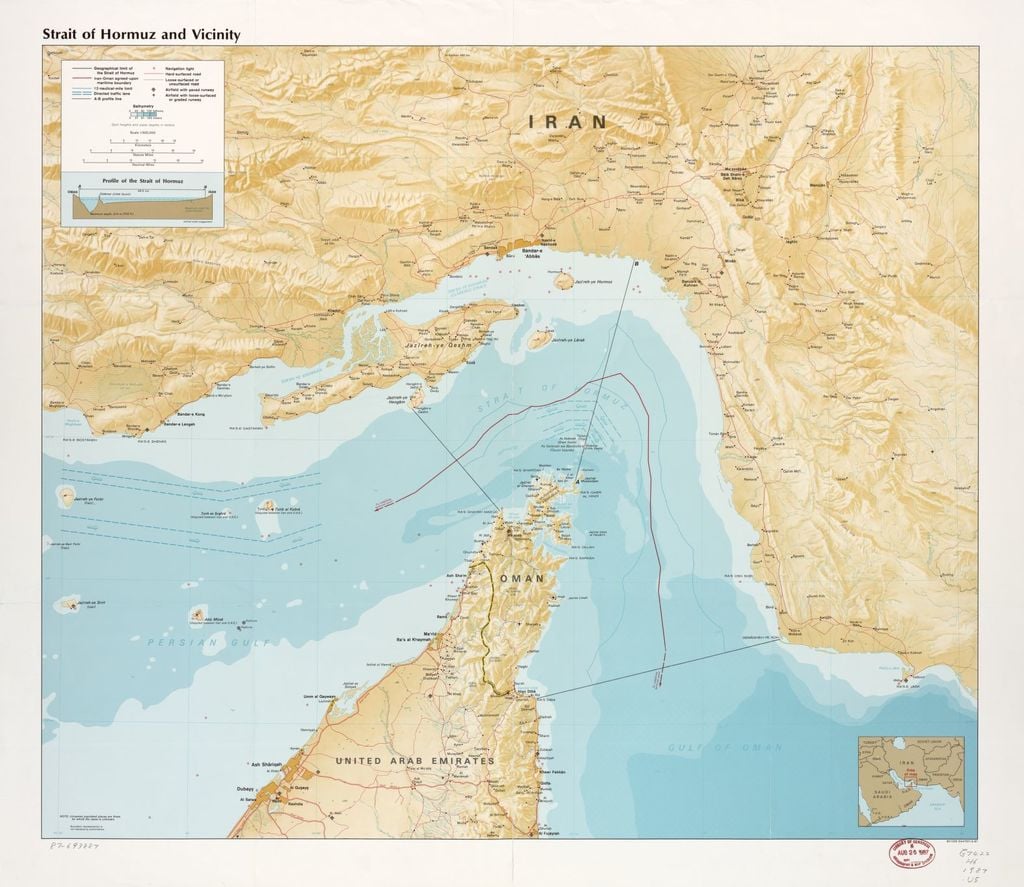
BNGKOK – A Thai oil tanker has successfully transited the Strait of Hormuz following intensive diplomatic negotiations with Iran and Oman, Foreign Affairs Minister Sihasak Phuangketkeow confirmed on Tuesday, marking a significant breakthrough amid heightened tensions in the strategic waterway.

Thai Oil Crisis Eases After Government Intervention

The SET-listed energy firm Bangchak Corporation Plc subsequently confirmed that a crude oil tanker which had been anchored in the Persian Gulf since March 11 had safely passed through the strait. “The tanker is currently on its way across the Indian Ocean and is expected to deliver crude oil to Thailand in early April,” the company said in a statement on Tuesday evening.

Diplomatic Efforts Bear Fruit

Bangchak expressed its appreciation to the Ministry of Foreign Affairs for coordinating with relevant authorities, as well as to the governments of Iran and Oman, “in facilitating the vessel’s passage in accordance with international law.”

The Iranian Embassy in Thailand also issued a statement, saying the passage was the result of “close cooperation between our two countries and the Sultanate of Oman.” The embassy added: “We value our friendship and will never forget our allies.”

According to Thai PBS, Iran has agreed to Thailand’s request to allow two Thai vessels — one belonging to Bangchak and another to SCG Chemicals — to transit the strait. The agreement followed Thailand’s formal request for facilitation of its vessels passing through the strategic waterway. Iran asked Thailand to provide a list of relevant vessels, and two ships have so far been submitted.

Ongoing Crew Situation

The development comes as Iran recently took responsibility for a missile attack on the Thai bulk carrier Mayuree Naree. It is now working with Oman on an attempt to reach the ship and rescue three Thai crewmen said to be still aboard, according to officials.

New Corridor Emerges

Maritime news and analysis service Lloyd’s List reported that a new “safe” corridor running through Iran’s territorial waters has emerged in recent days, with at least nine ships having passed through. Several countries including India, Pakistan, Iraq, Malaysia and China are in direct talks with Tehran to transit through its territorial waters in the strait.

Ships have been approved on a case-by-case basis, but the Islamic Revolutionary Guard Corps (IRGC) is now developing a vetting and registration system that would involve tolls of up to $2 million per vessel. Lloyd’s List reported that only one tanker is so far understood to have made a payment, said to be in the region of $2 million, with the IRGC reportedly requesting that tolls be paid in Chinese yuan.

Vessel Requirements

Ships hoping to use the pre-approved route are expected to communicate extensive details regarding both ownership of the vessel and destination of the cargo to the IRGC in advance of transit, with details being communicated via a series of Iran-affiliated individuals operating outside of Iran.

An estimated 400 vessels are currently waiting outside the strait, including 150 tankers, 120 bulk carriers and 130 others.

Regional Context

Iranian Foreign Minister Abbas Araghchi said the strait was “open, but closed to our enemies,” signaling a de-escalation from earlier remarks by the IRGC that any ship trying to transit the waterway would be set ablaze.

Thai Cargo Ship Attacked Near Strait of Hormuz, Three Crew Missing

Traffic through the strait has plunged by 95 percent since the United States and Israel launched a war on Iran three weeks ago, with major repercussions for global energy markets. Approximately one-fifth of the world’s oil transits through the Strait of Hormuz, making it one of the most critical maritime chokepoints in the world.

-Thailand News (TN)

Similar Posts

  • | | |

    PARCO, Cnergyico lead $1bn refinery exports

    Pakistan’s oil refining sector has achieved a major milestone. The country’s five major refineries exported petroleum products worth around $1.046 billion during the fiscal year 2025-26. This is the first time that the refinery sector has crossed the $1 billion export mark. The development has also strengthened the sector’s role as a source of foreign exchange for Pakistan. The achievement comes as the country continues to face pressure from a large trade deficit. Pakistan’s trade deficit is estimated at around $40 billion, increasing the importance of exports and import savings. The five major refineries made a significant contribution to the overall export earnings. Pakistan Arab Refinery Company (PARCO) recorded exports of around $277 million. Cnergyico Pakistan Limited exported petroleum products worth approximately $258 million. National Refinery Limited (NRL) recorded exports of around $238 million. Pakistan Refinery Limited (PRL) exported products worth approximately $200 million. Meanwhile, Attock Refinery Limited (ARL) exported petroleum products worth nearly $73 million. PARCO and Cnergyico remained the biggest contributors. Their combined exports reached approximately $535 million. This accounts for more than half of the total exports recorded by the five refineries. The development is particularly significant because the refining sector has traditionally been viewed mainly as a means of reducing Pakistan’s dependence on imported petroleum products. The latest figures show that the industry is increasingly contributing to both sides of the equation. It is helping reduce the import burden while also generating foreign exchange through exports. Cnergyico has also entered the global marine fuel market. The move could provide the company with new export opportunities and help expand Pakistan’s presence in the international fuel market. Industry modernization is expected to further improve the sector’s performance. Upgraded refinery facilities can increase production efficiency and enable companies to produce products that meet international market requirements. Further investment in refinery upgrades could therefore lead to higher exports in the coming years. It could also increase savings on petroleum imports. The latest performance highlights the growing importance of Pakistan’s refining industry. With continued modernization, better efficiency and access to international markets, the sector could become an increasingly important source of foreign exchange for the country. The development also comes at a critical time for Pakistan’s economy. Higher exports and lower import dependence are essential for reducing pressure on the country’s external account.

  • | |

    Supreme Court to honour Justice Musarrat Hilali

    The Supreme Court of Pakistan has decided to hold a full court reference on August 7 to honour the judicial services of Justice Musarrat Hilali ahead of her retirement from the country’s apex court. An official notification has been issued announcing the ceremony, which will pay tribute to Justice Hilali’s contributions to Pakistan’s judiciary and recognise her years of service on the bench. The full court reference will be attended by Chief Justice of Pakistan Justice Yahya Afridi, all judges of the Supreme Court, the Attorney General for Pakistan, representatives of the Pakistan Bar Council, office-bearers of the Supreme Court Bar Association, and members of the legal fraternity. The event is a longstanding judicial tradition held to acknowledge the professional achievements and public service of retiring judges. During the reference, senior judges, law officers and representatives of the legal community are expected to deliver speeches highlighting Justice Hilali’s legal career, commitment to the rule of law and contributions to the administration of justice. Justice Musarrat Hilali has served in several key judicial positions during her career and has been recognised for her role in strengthening Pakistan’s judicial system. The reference will mark the formal conclusion of her tenure at the Supreme Court while providing an opportunity for colleagues and members of the legal profession to express their appreciation for her dedication and service. The ceremony will take place at the Supreme Court of Pakistan on August 7, where members of the bench and bar will gather to bid farewell to the retiring judge and acknowledge her lasting contribution to the country’s judiciary.

  • | | |

    President delays assent for 19 high court judges

    The appointment of 19 additional judges to four high courts remains pending as President Asif Ali Zardari has yet to approve the summary. The Judicial Commission of Pakistan (JCP) approved the nominations during meetings held on July 20 and 21. The proposed appointments involve the Lahore High Court, Sindh High Court, Balochistan High Court and Islamabad High Court. Nine days have passed since the JCP approved the nominations. However, the president has not yet given his assent to the summary. The delay has caused concern within the government. A senior cabinet member questioned why the approval had not yet been granted. The official argued that the summary was initiated by the JCP rather than the prime minister. Therefore, according to the government’s position, the president could not send it back to the prime minister for reconsideration. The official also warned that continued inaction could create further tension within the superior judiciary. The government’s legal team is reportedly examining possible options to address the issue. The matter has also exposed differences between the government and the Pakistan Peoples Party (PPP). According to government officials, the PPP leadership is unhappy with the JCP because some of its preferred nominees were not considered for judicial appointments. The PPP had shown particular interest in securing the appointment of two candidates to the Sindh High Court. However, neither the judicial nor executive members of the JCP supported their nominations. Officials said the candidates were below the age of 45. Both government and judicial representatives reportedly agreed that nominees below that age should not be approved. PPP Senator Farooq H Naek, a senior legal figure and member of the JCP, had proposed 33 candidates for the four high courts. His proposed list included 16 candidates for the Sindh High Court, 10 for the Lahore High Court, five for the Balochistan High Court and two for the Islamabad High Court. A member of the commission said the PPP could potentially have secured appointments for other candidates from interior Sindh. Some of those candidates were considered sympathetic to the party. However, the commission member claimed that the party’s insistence on its two preferred nominees affected the outcome. The dispute comes amid wider political and judicial developments involving Sindh. JCP judicial members have already reached a consensus on the performance of constitutional benches in the Sindh High Court. The judges serving on those benches were given three months to demonstrate their performance. The commission’s judicial members also opposed the confirmation of Sindh High Court Additional Judge Syed Fiaz ul Hassan Shah. The development was viewed by some political circles as another setback for the PPP. The party has historically sought influence over judicial appointments in Sindh and other provinces. Last year, the PPP was able to influence appointments in several high courts, including the Sindh High Court, Peshawar High Court and Lahore High Court. The judicial landscape has also changed following the 27th Constitutional Amendment. After the amendment, Justice K K Agha was elevated to the newly established Federal Constitutional Court. Another judge of the Sindh High Court was transferred to the Islamabad High Court.

  • | |

    Pakistan invites foreign investors as UK peer prai…

    Interior Minister Mohsin Naqvi has assured foreign investors of full government support, saying Pakistan is ready to facilitate investment and provide opportunities across different sectors. Naqvi made the remarks during a meeting with British House of Lords member Lord Zamir Choudrey in Islamabad on Saturday. The interior minister said Pakistan has significant investment potential and that the government wants to create an environment where foreign investors can operate with greater confidence. He assured investors that all possible facilities would be provided to support their business activities in the country. The discussion also covered regional peace and stability. Naqvi said Pakistan was continuing its efforts to promote lasting peace in the region. He expressed optimism that the country’s diplomatic and peace initiatives would produce positive results. Lord Zamir Choudrey appreciated Pakistan’s efforts to contribute to regional stability. He also praised Prime Minister Shehbaz Sharif and Chief of Defence Forces and Chief of Army Staff Field Marshal Asim Munir for their efforts to promote peace. Choudrey said the government’s policies were helping create new opportunities for investment in Pakistan. The meeting comes as Islamabad seeks to strengthen economic ties with international partners while promoting Pakistan as an attractive destination for foreign investment. Pakistan has also been increasing cooperation with China on security and counterterrorism matters. Earlier this month, Naqvi met Chinese Minister of State for Public Security and Special Service Bureau chief Ling Zhifeng at the United Nations headquarters in New York. The two sides agreed to strengthen cooperation in internal security. Their discussions included border management, illegal immigration and efforts against drug trafficking. Meanwhile, security concerns surrounding Chinese nationals working in Pakistan remain a major issue. The CPEC Secretariat has decided to purchase a new bulletproof vehicle costing Rs95 million to strengthen security arrangements for Chinese citizens. The vehicle will reportedly be a 3,500cc Toyota Land Cruiser. It will be added to the existing fleet of security vehicles used for the protection of Chinese nationals. Government departments have also acquired or are seeking additional bulletproof vehicles and helicopters for security purposes. Officials have said Chinese citizens face significant security risks in Pakistan. As a result, they are generally restricted from travelling in ordinary, non-bulletproof vehicles. Planning Minister Ahsan Iqbal said the protection of Chinese nationals is a key responsibility of the Pakistani government. The purchase also highlights the security challenges linked to major China-Pakistan economic projects. The government is balancing efforts to attract more foreign investment with measures aimed at improving the security of international investors and workers.

  • | |

    Information Ministry accuses Al Jazeera of biased …

    The Ministry of Information and Broadcasting has accused international broadcaster Al Jazeera of presenting a misleading picture of the recently held Azad Jammu and Kashmir (AJK) Legislative Assembly elections, alleging that its coverage selectively portrayed the electoral process. In an official statement, the ministry said the broadcaster reported from selected polling stations in Muzaffarabad and relied on carefully chosen interviews and timings that did not accurately reflect the overall conduct of the elections. It claimed the reporting created a distorted impression of the voting process and failed to represent the broader electoral environment. The ministry further alleged that such coverage appeared aimed at undermining the credibility of the elections and ignoring what it described as the democratic will expressed by voters across the region. It maintained that the people of AJK had exercised their right to vote despite political tensions. Alongside its criticism of the coverage, the ministry reminded foreign media organisations operating in Pakistan that reporting assignments outside Islamabad, Lahore and Karachi require prior approval under the country’s External Publicity Guidelines. It urged all foreign correspondents to comply with the regulations governing reporting in other parts of the country. The AJK elections, however, remained under intense scrutiny after allegations of irregularities and isolated incidents of violence emerged during polling. Opposition parties accused authorities of interfering in the electoral process, while the ruling coalition exchanged allegations of rigging and misuse of state resources. Human rights organisations also expressed concern over reports of deaths and injuries linked to election-related unrest. They called for transparent and independent investigations into the incidents and stressed that maintaining public order should not come at the expense of fundamental rights, including peaceful assembly and freedom of expression. The elections were held against the backdrop of political unrest that has continued in AJK since last year’s protests over governance reforms and constitutional issues. The controversy surrounding reserved refugee seats in the AJK Legislative Assembly also remained a major political issue during the campaign.

  • | | |

    AJK polling extended amid disruptions and security…

    Polling in the first phase of the Azad Jammu and Kashmir (AJK) Legislative Assembly elections was extended by one hour on Monday. Voting in Bhimber, Mirpur and Kotli continued until 6pm. The extension was announced as several polling stations faced disruptions and complaints. Political parties also raised concerns about alleged interference and security issues during the voting process. The first phase of the AJK elections covers all 13 constituencies of Mirpur Division. The division includes four seats in Mirpur, three in Bhimber and six in Kotli. More than 1.4 million registered voters are eligible to cast their votes in the first phase. Election authorities established 2,454 polling stations and 3,701 polling booths across the division. Around 22,000 election officials were assigned duties to manage the polling process. Security was also increased at polling stations across the region. The Pakistan Peoples Party (PPP) raised several complaints during the day. PPP AJK Election Cell in-charge Sardar Abdul Shakoor called on the Election Commission to take immediate notice of disruptions at polling stations. Polling at Station 108 in LA-13 Kotli-VI was reportedly suspended for around two hours. Shakoor said the interruption was affecting voters and preventing them from exercising their right to vote. He demanded that polling be restored immediately. He also called for an investigation into the reasons behind the suspension. The PPP also alleged interference at several polling stations in LA-8 Raj Mahal and LA-12 Charhoi. The party claimed that some PML-N supporters were attempting to influence the polling process. The allegations included the presence of armed individuals near some polling stations. The PPP demanded stronger security arrangements to protect voters, polling staff and election material. Another serious incident was reported in LA-9 Nikyal. A PPP worker was killed during an incident that the party linked to alleged intimidation and the display of weapons. PPP officials identified the deceased as 35-year-old Mukhtar Younus. The party demanded the immediate arrest of those responsible for the incident. Shakoor alleged that weapons had been displayed in the area before polling day. He claimed that timely action by the authorities could have prevented the situation from worsening. The PPP also accused the federal government of interfering in the AJK elections. PPP Secretary General Nadeem Afzal Chan demanded that federal officials and government machinery remain neutral during the electoral process. He said political parties should be allowed to compete without outside interference. Chan also raised concerns over alleged use of state resources during the election campaign. He called for development announcements and other government activities that could influence voters to be stopped during the election period. The PPP has established an election monitoring cell in Islamabad. Senior party leaders are monitoring polling-related complaints through the cell. The monitoring team is also maintaining contact with election officials, district administrations, candidates and party representatives. The PPP said the purpose of the cell was to monitor the election process and report any violations. Meanwhile, the Election Commission took action against two presiding officers in Kotli. The officials were accused of failing to report to their assigned polling stations. They allegedly went to a private residence instead. An FIR was registered against both officials. They were arrested and later suspended from service. Election authorities said strict action would be taken against officials who violate election rules. They also warned that negligence and irregularities in the polling process would not be tolerated. Security remained a major focus during polling. Authorities declared 1,965 polling stations sensitive or highly sensitive. More than 19,000 security personnel were deployed across Mirpur Division. The force included around 17,000 police personnel. Around 2,100 Army personnel were also kept on standby. They could be deployed as a backup force if the security situation deteriorated. Despite the complaints and isolated incidents, polling continued at most stations. In LA-1 Dadyal, voting began in a peaceful atmosphere. Security arrangements were strengthened around all polling stations in the constituency. More than 105,000 voters are registered in Dadyal. The constituency has 139 polling stations and 234 polling booths. The first phase of the elections is being held under a revised schedule. Polling in Muzaffarabad Division and the 12 refugee constituencies is scheduled for August 2. The final phase will be held in Poonch Division on August 10. A total of 288 candidates are contesting the 13 seats in Mirpur Division. Election authorities have urged candidates, workers and voters to maintain peace and follow the electoral code of conduct.

Leave a Reply

Your email address will not be published. Required fields are marked *