court orders azma
| |

Court orders Azma Bukhari to appear in person over…

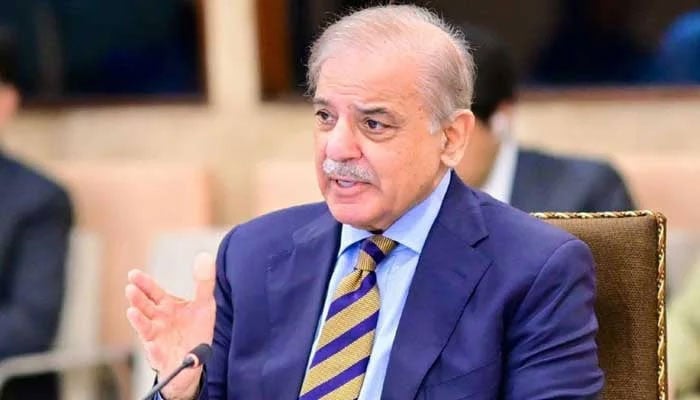
LAHORE: The Lahore Sessions Court has directed Punjab Information Minister Azma Bukhari to appear in person and record her statement in a case involving the alleged circulation of a fake video on social media.

The matter was heard by Additional Sessions Judge Nusrat Ali Siddiqui, who rejected Bukhari’s request to record her statement through video link. The court ordered her to personally appear at the next hearing to record her statement.

Bukhari had challenged an earlier order issued by a judicial magistrate requiring her to appear before the court in person.

The case relates to allegations surrounding the circulation of a fabricated video attributed to the provincial minister. Bukhari had approached the authorities against the alleged dissemination of the video and lodged a complaint with the National Cyber Crime Investigation Agency (NCCIA) against Falak Javed.

The court’s latest order means Bukhari will have to appear before the Sessions Court at the upcoming hearing as proceedings in the case continue.

Similar Posts

  • |

    India alarmed by Pakistan-Saudi-Türkiye alliance

    The defence agreement between Pakistan, Saudi Arabia and Türkiye has emerged as a major strategic concern for India. The three countries signed the Makkah Joint Defence Agreement on August 7. Under the pact, an armed attack against any one of the three countries would be treated as an attack against all three. The agreement has attracted significant attention in New Delhi. Indian analysts are assessing its possible impact on the regional balance of power. An Indian media analysis recalled comments made by Indian Army Deputy Chief Lieutenant General Rahul R Singh in 2025. He had said that during the military confrontation between India and Pakistan in May, India faced several forms of support for Pakistan. The analysis claimed that Pakistan was directly involved in the conflict. It also alleged that China provided satellite information to Pakistan. Türkiye was accused of providing military assistance to Pakistan. The assistance reportedly included drones and other defence equipment. Saudi Arabia’s participation has now added another dimension to India’s concerns. Indian analysts fear that Riyadh could support Pakistan if another armed conflict breaks out between India and Pakistan. The concern comes despite India’s strong relations with Saudi Arabia. The two countries have extensive economic and strategic ties. India and Saudi Arabia cooperate in oil, trade, investment, security and cultural affairs. Their bilateral trade is estimated at around $43 billion. Saudi Arabia also remains an important supplier of crude oil to India. It reportedly meets around 14% of India’s crude oil requirements. Pakistan and Saudi Arabia also have a long history of defence cooperation. Pakistan has provided military training to Saudi forces. Pakistani military personnel have also been deployed in Saudi Arabia at different times. The Indian analysis claimed that Pakistan sent around 8,000 military personnel and 16 JF-17 fighter jets to Saudi Arabia during 2026. It also referred to reports about possible Pakistani drone support and Chinese-made air defence systems. These developments were reportedly linked to Saudi Arabia’s security concerns and attacks involving drones. The relationship between Pakistan and Türkiye has also expanded significantly in recent years. The two countries have increased cooperation in defence technology and military production. Pakistan has acquired Turkish-made warships and other defence equipment. Türkiye has also supported the modernisation of Pakistan’s naval capabilities. The two countries are also cooperating in the field of unmanned aerial systems. Pakistan has acquired Turkish Bayraktar Akıncı drones. Both sides have discussed and worked on expanding cooperation in drone technology. Türkiye’s KAAN stealth fighter has also attracted interest from Pakistan. However, no final purchase agreement for the aircraft has been confirmed.

  • | |

    France wildfires force 150,000 to evacuate amid he…

    A relentless heatwave has triggered massive wildfires across southwestern France, forcing around 150,000 people to evacuate as flames swept through forests and threatened homes in one of the country’s most popular tourist destinations. French authorities ordered the complete evacuation of Cap Ferret, a renowned coastal resort, after fast-moving fires engulfed nearly 47,000 acres of forest. Officials said more than 100 homes had been damaged as firefighters continued battling the blaze under extreme weather conditions. The rapidly spreading fire has prompted an extensive emergency response, with President Emmanuel Macron directing the French military to assist firefighting teams in containing the flames and protecting nearby communities. The crisis has also spread beyond France. In neighboring Spain, authorities declared the country’s first-ever national emergency over a wildfire near Madrid, highlighting the growing impact of the ongoing heatwave across southern Europe. According to media reports, the Spanish wildfire has destroyed more than 43 homes, while approximately 19,000 residents living in mountainous areas west of Madrid were ordered to evacuate. More than 2,000 emergency personnel, supported by 10 firefighting aircraft, have been deployed to contain the flames. Officials warned that soaring temperatures, dry vegetation and strong winds have created ideal conditions for wildfires, making firefighting operations increasingly difficult. The latest disaster comes only weeks after France experienced one of its deadliest heatwaves in recent years. According to the country’s national public health agency, 21,674 deaths were recorded between June 17 and July 2, compared with an expected 15,910 deaths under normal conditions. The agency said the period saw 5,764 excess deaths—an increase of 36% above normal mortality levels—underscoring the severe health impact of prolonged extreme heat. Climate experts have repeatedly warned that rising global temperatures are increasing the frequency and intensity of heatwaves and wildfires across Europe. As emergency crews continue to battle the blazes in France and Spain, authorities remain on high alert, warning residents that worsening weather conditions could fuel further fires in the coming days.

  • |

    Sharmeen Ali opens up about rebuilding her life after divorce

    Pakistani actress Sharmeen Ali has candidly shared her journey of becoming financially independent after her divorce, revealing how she rebuilt her life while taking full responsibility for herself and her daughter. Speaking during a recent television morning show, the actress reflected on the difficult phase that followed the end of her marriage and how it ultimately led her to pursue a career in the entertainment industry. Sharmeen explained that after her separation, she felt she had no choice but to become self-reliant. Having married at a young age, she said she was unable to complete her education, leaving her with limited opportunities when she had to start over. Recalling that period, the actress said she returned to live with her parents after the divorce but was determined not to become a financial burden on them. She shared that her parents were growing older, and she wanted to support herself instead of relying on them for her daily expenses. Driven by that determination, Sharmeen began exploring different ways to earn a living. Before entering showbiz, she worked on various creative projects, including clothing design, home décor, and other freelance services. She said those early efforts helped her regain confidence and provided a foundation for a new beginning. According to the actress, her life changed within just three months when she received an opportunity to work from producer Nina Kashif. The offer marked the beginning of her acting career and opened the door to Pakistan’s television industry. Sharmeen admitted that not everyone in her family was initially comfortable with her decision to join showbiz. She said her loved ones had reservations about the profession, but given her circumstances, financial independence was her top priority. She believed pursuing a career in acting was the best way to secure a stable future for herself and her daughter. Although her early days in the entertainment industry were not easy, Sharmeen said she received only a limited number of projects at first. However, she remained grateful for every opportunity that came her way. She explained that those initial roles were enough to keep her moving forward and gradually helped her establish herself in the industry. The actress also reflected on the emotional impact her marriage had on her confidence. Despite having studied abroad before getting married, she said the experiences she went through during her marriage affected her deeply. She recalled that she had once been an independent and confident young woman, but after the challenges she faced, it felt as though that confidence had disappeared. Sharmeen said rebuilding her self-belief became one of the biggest challenges of her life. She described the period after her divorce as starting from zero, requiring patience, resilience, and consistent effort. Through hard work and determination, she slowly regained her confidence and created a new path for herself. Today, the actress views her journey as a reminder that difficult circumstances can become an opportunity for personal growth. By choosing independence and refusing to give up despite financial and emotional hardships, Sharmeen Ali has built a successful career while providing for her family. She hopes her story encourages others facing similar challenges to believe in themselves, remain persistent, and never lose hope, even when life demands a fresh start.

  • |

    India’s Supreme Court protects student protesters as government moves to tighten exam leak laws

    India’s Supreme Court has directed authorities not to take any coercive action against student protesters involved in recent demonstrations over examination paper leaks. The court also ordered the immediate release of all detained protesters who are under the age of 18 and instructed officials to preserve surveillance footage and digital records linked to the protests as allegations of police brutality continue to be examined. According to Indian media reports, Chief Justice Surya Kant issued the interim directions while hearing petitions filed by students and rights activists. The petitions accused police and paramilitary forces of using excessive force, including pellet guns, against demonstrators during weeks of protests in New Delhi and several other cities. The court stressed that all available evidence, including drone recordings, body camera footage and CCTV videos, must be secured to ensure a fair investigation. It also ordered that the personal and digital data of protesters should remain protected and must not be made public. The Chief Justice said any investigation into the allegations would be meaningless if responsibility was not fixed for those found guilty of misconduct. He emphasized the need for an independent and impartial inquiry into claims that innocent protesters were subjected to unnecessary violence during the demonstrations. The Indian government has maintained that police acted within the law while controlling large crowds. Solicitor General Tushar Mehta told the court that although complaints of attacks on students deserved serious attention, nearly 250 police personnel were also injured during the protests. He said the government had no objection to an independent investigation into the incidents. At the same time, the government has introduced proposed amendments aimed at imposing much tougher punishments for examination paper leaks. The bill, presented in parliament during the ongoing monsoon session, seeks to increase the maximum prison sentence for those involved in leaking examination papers from five years to ten years. It also proposes fines of more than one million dollars and faster court proceedings to deal with such cases. Senior minister Jitendra Singh said the amendments demonstrate the government’s commitment to protecting students and restoring confidence in the country’s examination system. He told lawmakers the proposed changes are intended to strengthen existing laws and ensure swift justice so that the credibility of national examinations can be rebuilt. The issue has dominated parliament since lawmakers returned for the monsoon session last week. Opposition parties have repeatedly disrupted proceedings while demanding accountability for the police response to the student movement and pressing the government to address concerns over the handling of the exam leak crisis. The nationwide protests began after question papers for a national medical college entrance examination were leaked, sparking anger among students who believed the integrity of the examination process had been compromised. The demonstrations ended on Saturday after Education Minister Dharmendra Pradhan resigned and the government accepted key demands from protest leaders. These included reforms to the examination system, the withdrawal of police cases against protesters and compensation for families of students who reportedly died by suicide following the scandal. Clashes between protesters and security forces were reported in several cities during the demonstrations. In New Delhi, police used tear gas and baton charges to stop protesters attempting to march toward parliament. Authorities also suspended a police officer in eastern India after he fired warning shots into the air while trying to disperse protesters. The protests have also sparked concerns over the government’s use of advanced surveillance technology. Activists questioned the deployment of AI powered mobile surveillance vehicles after images shared online appeared to show police using high mounted cameras capable of monitoring crowds from every direction. Meanwhile, the student group leading the movement claimed that hundreds of protesters remain in custody across different states despite earlier commitments made by the government.

  • | |

    Supreme Court upholds landlord’s right to us…

    The Supreme Court of Pakistan has ruled that a property owner has the exclusive right to decide how to use their property and is not bound by the wishes or preferences of a tenant. The judgment came while deciding a long-running landlord-tenant dispute involving a residential building in Karachi’s Saddar area. In an eight-page verdict authored by Justice Aqeel Ahmed Abbasi, the apex court set aside an earlier decision of the Sindh High Court, which had ruled in favour of the tenant. The Supreme Court observed that it is a well-established legal principle that a property owner is the sole judge of their own requirements. The court held that if a landlord submits a sworn statement declaring the need to use their property personally, that statement is sufficient to establish bona fide necessity unless proven otherwise. The judgment further stated that an owner cannot be compelled to use another portion of the property simply because a tenant believes alternative accommodation is available. The court emphasised that the landlord’s choice regarding the use of their property cannot be dictated by the tenant. The case involved a dispute over a flat in a building located in Karachi’s Saddar neighbourhood. During the proceedings, the tenant argued that several other flats in the same building had become vacant and could instead be used by the landlord. The Sindh High Court accepted this argument and ruled in favour of the tenant. However, the Supreme Court disagreed with that reasoning, stating that the availability of other vacant units does not deprive the owner of the right to reclaim a specific property for personal use. Allowing the landlord’s appeal, the Supreme Court ordered the tenant to vacate the flat within six months, bringing the legal dispute to a close while reaffirming the property rights of landlords under the law.

  • | |

    Iqbal Chair at Heidelberg University nears restora…

    HEIDELBERG: Pakistan’s Ambassador to Germany, Saqlain Syedah, has announced that the restoration of the Allama Iqbal Chair at Heidelberg University is in its final stages, describing it as a major step towards strengthening academic and cultural ties between Pakistan and Germany. She made the announcement while addressing a literary gathering and mushaira held at Iqbal-Ufer, located on the banks of the River Neckar in the historic German city of Heidelberg. The event brought together members of the Pakistani community, writers, poets, academics and representatives of local organisations. The ceremony was chaired by renowned poet and community leader Syed Iqbal Haider, while Pakistan’s ambassador attended as the chief guest. Among the distinguished participants were Heidelberg City Council member Waseem Butt and German professor Hans Herder, whose speech in Urdu received warm appreciation from the audience. Speaking at the event, Waseem Butt announced that Allama Iqbal’s 150th birth anniversary in 2027 would be celebrated in Heidelberg with special ceremonies and cultural events. In her address, Ambassador Saqlain Syedah highlighted the importance of literary gatherings in promoting the Urdu language and preserving Pakistan’s cultural heritage abroad. She also spoke about the deep historical and intellectual connection between Allama Muhammad Iqbal and the city of Heidelberg, where the philosopher-poet spent part of his academic life. The ambassador praised Syed Iqbal Haider for organising the literary event and thanked all participants for keeping Urdu literature and Pakistani cultural traditions alive in Germany. Syed Iqbal Haider also reflected on Allama Iqbal’s close association with Heidelberg and the River Neckar. He said Iqbal’s message of selfhood, human dignity and intellectual awakening continues to serve as a bridge between Eastern and Western thought. During the ceremony, the ambassador shared the encouraging news that practical steps to restore the Allama Iqbal Chair at Heidelberg University had reached their final phase. She expressed hope that the initiative would further enhance educational cooperation and cultural exchanges between Pakistan and Germany.

Leave a Reply

Your email address will not be published. Required fields are marked *