carlos brathwaite applauds
|

Carlos Brathwaite applauds Babar Azam’s captaincy

Former West Indies all-rounder Carlos Brathwaite has praised Pakistan captain Babar Azam for his outstanding leadership, describing his captaincy as a tactical masterclass during the ongoing Test against the Caribbean side.

Speaking during his analysis of the match, Brathwaite highlighted Babar’s calm decision-making and ability to read the game under pressure. He said the Pakistan skipper showed excellent awareness by slowing the pace of play at key moments and making smart field changes that unsettled the West Indies batters.

According to Brathwaite, one of Babar’s best tactical moves was the field placement against experienced batter Roston Chase. The carefully designed field forced Chase to rethink his natural game and prevented him from scoring freely.

“Babar’s field settings kept Roston Chase under constant pressure,” Brathwaite noted. “He had to keep adjusting his approach, and eventually that pressure led to a mistake.”

The former all-rounder added that Babar’s leadership reflected a high standard of captaincy, saying every move appeared to be planned according to the match situation rather than following a fixed strategy.

Brathwaite believes the Pakistan captain demonstrated maturity, patience and tactical intelligence, qualities that helped his team remain competitive during crucial stages of the contest.

Meanwhile, the Test match remains finely balanced. West Indies reached 103-6 in their second innings and currently hold a lead of 60 runs, setting up an intriguing finish over the remaining sessions.

Pakistan will now look to capitalize on any opportunity to wrap up the innings quickly, while the West Indies hope to extend their advantage with the lower order.

Brathwaite’s glowing assessment has once again placed the spotlight on Babar Azam’s leadership, with many cricket fans praising the Pakistan captain for his strategic approach and composure in high-pressure situations.
Similar Posts

  • | |

    Canada announces retaliatory tariffs as trade talks with US collapse

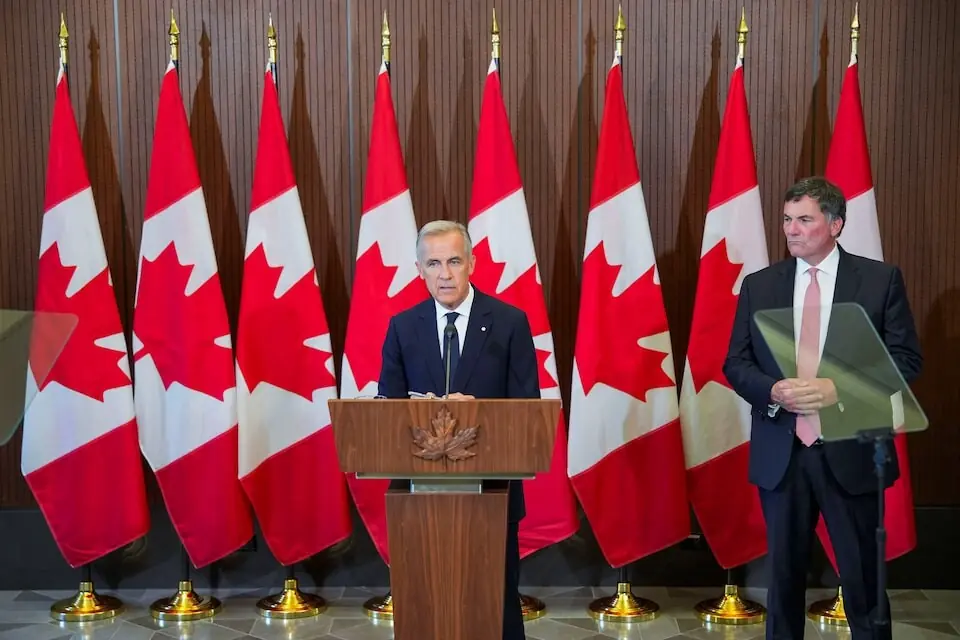
    OTTAWA: Canada has announced plans to impose new tariffs on a range of American products in response to steep duties introduced by US President Donald Trump on Canadian goods, marking another sharp deterioration in trade relations between the two North American neighbours. Prime Minister Mark Carney said on Saturday that Canada would adopt a “dollar-for-dollar” approach to Washington’s latest tariffs. The retaliatory measures are scheduled to take effect on September 8 and will cover products including US steel, electronics, appliances, agricultural equipment, pulp and paper and other goods. The announcement came after three days of intensive negotiations between Canadian and US officials ended without a trade agreement. Both sides blamed the other for the failure to reach a breakthrough, raising fresh uncertainty over the future of the United States-Mexico-Canada trade framework. Carney vows to defend Canadian economy Speaking at a press conference in Ottawa, Carney said Canada would respond to the US measures in an effort to shield workers, farmers, businesses and families from the economic impact of the new duties. “Canada will match Washington’s new tariffs dollar for dollar,” Carney said, stressing that Ottawa could not accept the conditions put forward by the US administration. Asked whether the dispute had effectively developed into a trade war, Carney responded in stark terms, saying Canada had been attacked and therefore had to defend its economic interests. The Canadian government said its countermeasures would target a broad selection of US products. Further details, including the specific goods affected and the tariff rates, are expected to be announced in the coming days. Carney also indicated that Ottawa would introduce support programmes for Canadian industries affected by the American duties. The assistance could remain in place for several years depending on the impact of the trade measures. US-Canada negotiations break down The latest dispute follows the collapse of negotiations that had been viewed as an opportunity to prevent a further escalation in tariffs. US Trade Representative Jamieson Greer described the failed talks as a missed opportunity for Canada and said Washington would proceed with measures responding to Canadian retaliation. He also suggested that no fresh negotiations were immediately planned. The White House and offices representing the US commerce secretary and trade representative did not immediately issue a detailed response to Canada’s announcement. The breakdown has created additional uncertainty for businesses operating across the US-Canada border, particularly industries that depend heavily on integrated North American supply chains. New US duties affect key Canadian exports The latest US tariffs apply to a range of Canadian exports, including wine, furniture, dairy products, cement, clothing, fishing equipment and hockey-related products. According to the Canadian government, the new duties affect approximately $20 billion worth of Canadian exports to the United States. Unlike some previous measures, the latest tariffs do not fully exempt products traded under the existing North American trade agreement. The new duties represent a relatively small share of Canada’s overall exports to the US, but officials and industry representatives warn that individual sectors could face significant pressure. Industries such as softwood lumber, wine, manufacturing and other export-oriented businesses could experience weaker demand, higher costs and potential employment losses if the dispute continues. Candace Laing, chief executive of the Canadian Chamber of Commerce, urged companies across the country to prepare for a prolonged period of uncertainty. Dispute over vehicles and trade conditions One of the most difficult issues during the negotiations involved the treatment of larger vehicles. Canadian negotiators reportedly sought to extend preferential tariff arrangements for light-duty vehicles to medium- and heavy-duty trucks. Washington opposed the proposal, according to people familiar with the negotiations. Carney said the US position could have placed Canadian-made models at a competitive disadvantage. He specifically pointed to vehicles produced in Canada, including Ford’s F-350, F-450 and F-550 trucks and General Motors’ Silverado. The Canadian prime minister also said some US proposals touched on issues involving Canadian culture, language and sovereignty, although he did not provide further details. Ontario backs Ottawa’s position Ontario Premier Doug Ford, a prominent critic of US tariffs, welcomed Carney’s decision to reject what he described as an unfavourable agreement. Ford said the proposed terms would have harmed Ontario’s automotive, steel and manufacturing industries, adding that he supported Ottawa’s decision to retaliate rather than accept a deal that he considered damaging to the province. Ontario is particularly exposed to disruptions in US-Canada trade because of its large manufacturing and automotive sectors and its close integration with American supply chains. Canada seeks new international partnerships The escalating dispute also comes as Canada seeks to reduce its economic dependence on the United States. Nearly 70% of Canadian exports are destined for the US market, making the country particularly vulnerable to changes in American trade policy. Carney has nevertheless pledged to strengthen Canada’s relationships with other countries and explore new trade and security partnerships. The prime minister was elected on a platform that included a tougher negotiating stance toward the Trump administration. His government has maintained that Canada should defend its economic interests while looking for opportunities to expand trade beyond its southern neighbour. Public opinion has also strengthened Ottawa’s position, with polling indicating that many Canadians oppose making major concessions to Washington. Conservative Party leader Pierre Poilievre, who leads the federal opposition, also called for national unity in response to the US tariffs.

  • |

    NEPRA seeks Rs34bn recovery from power consumers as industrial sector opposes tariff hike

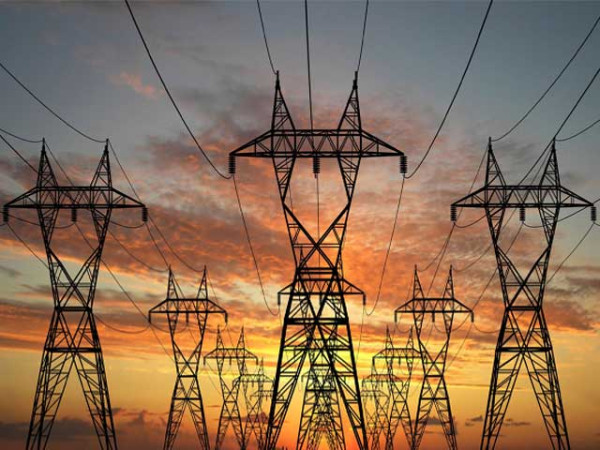
    ISLAMABAD: The federal government has proposed recovering around Rs34 billion from consumers of distribution companies (Discos) and K-Electric through the quarterly tariff adjustment (QTA) for April-June 2026, translating into an estimated increase of Rs1.34 per unit. The proposed adjustment has been attributed largely to higher capacity-related costs resulting from a decline in electricity consumption during the quarter. However, representatives of the industrial sector have strongly opposed the proposed increase, arguing that businesses are already facing high electricity costs and cannot absorb another financial burden. The National Electric Power Regulatory Authority (NEPRA) held a public hearing on Wednesday to examine the QTA request, during which representatives of industries, power distribution companies and the government presented their positions. Initially, the power distribution companies had requested an adjustment of Rs23.031 billion for the second quarter of fiscal year 2026 under the QTA mechanism. The amount was later revised upward to Rs33.778 billion. According to the figures presented before NEPRA, the largest component of the proposed adjustment is related to capacity charges, amounting to Rs46.280 billion. Variable operation and maintenance costs account for another Rs4.936 billion. The calculation also includes a negative adjustment of Rs13.517 billion related to Use of System Charges (UoSC) and the Market Operator Fee (MOF), which partially offsets the overall increase. Similarly, Rs3.040 billion has been included to account for the impact of transmission and distribution losses on monthly Fuel Charges Adjustments (FCA). A further negative adjustment of Rs21.175 billion has been made under the incremental consumption package. The distribution companies have also claimed Rs14.211 billion for costs relating to Small Power Producers (SPPs) and Captive Power Producers (CPPs) that they say remained unrecovered. Industrial sector voices concern During the hearing, industrial representatives raised strong objections to the proposed QTA adjustment, warning that another increase in electricity prices could further weaken the competitiveness of Pakistan’s manufacturing sector. Rehan Javed, Aamir Sheikh and Tanveer Barry conveyed their concerns to NEPRA officials in the presence of representatives from the Ministry of Energy and the distribution companies. The representatives argued that industries were already operating under considerable cost pressures and that any additional increase in electricity tariffs would raise production expenses and make it more difficult for local businesses to compete in domestic and international markets. Tanveer Barry, representing the Karachi Chamber of Commerce and Industry (KCCI), particularly questioned the sharp rise in capacity-related charges. According to Barry, capacity charges had increased from around Rs36 billion in the first quarter to more than Rs50 billion in the period under review. He said the increase could ultimately translate into a much larger financial burden for consumers. He estimated that the combined impact could place an additional burden of approximately Rs3.50 per unit on consumers, depending on the final adjustment approved by the regulator. Barry also pointed out that eight distribution companies had reported positive capacity charges, while three had recorded negative adjustments. He urged NEPRA to examine the calculations and underlying reasons for the variations before approving any additional burden on consumers. Lower electricity demand Officials of the Peshawar Electric Power Company (Pesco) told the hearing that electricity consumption had fallen by approximately five per cent during the period under review. They attributed much of the decline to weaker demand from domestic and commercial consumers. Increasing adoption of solar energy was also cited as one of the factors reducing demand from residential consumers. NEPRA Member Maqsood Anwar Khan questioned Pesco officials about whether load-shedding was also being carried out in areas where consumers regularly paid their electricity bills. The Pesco representatives acknowledged that load-shedding was taking place. Maqsood Anwar Khan observed that interruptions in electricity supply could themselves contribute to lower electricity sales, as consumers would naturally use less grid electricity when supply was unavailable. Solarisation becomes key point of debate The growing use of solar power also featured prominently during the hearing. The NEPRA member noted that the expansion of solar generation had provided relief to the national electricity system by reducing daytime demand from the grid. He observed that without the contribution of solar energy, pressure on the power system and the need for daytime load management could have been considerably greater. He further noted that increasing solarisation was shifting the pattern of load-shedding, with pressure becoming more visible during night-time hours when solar generation was unavailable. The NEPRA member also disagreed with the assertion that solarisation alone was responsible for a decline in electricity sales, maintaining that the impact of rooftop and distributed solar generation should be assessed in a broader context. Industry questions capacity payments Industrial representatives also questioned why consumers should continue to shoulder substantial capacity payments when many areas were still experiencing load-shedding. Barry argued that consumers were effectively being asked to pay for electricity generation capacity while not receiving uninterrupted power supply. He further raised concerns about capacity payments being made to older and relatively inefficient power plants. According to him, the under-utilisation of generating units was contributing to higher capacity-related costs and ultimately increasing the price of electricity for consumers. The industrial sector also questioned whether the dispatch of power plants was fully aligned with the Economic Merit Order (EMO), arguing that deviations from the merit order could contribute to unnecessary costs. The representatives called on NEPRA to undertake a detailed review of the QTA calculations before reaching a final decision. They urged the regulator to defer the proposed increase, warning that higher electricity costs would place additional pressure on industries, increase production expenses and potentially undermine Pakistan’s export competitiveness. NEPRA is expected to examine the claims and objections raised during the public hearing before determining the final quarterly tariff adjustment applicable to consumers.

  • | |

    Harry Potter fans save Dobby’s grave from power cable

    Harry Potter fans have successfully pushed for a major power infrastructure project in Wales to be moved away from the memorial site known as Dobby’s grave. The $581 million Greenlink interconnector is being developed to connect the electricity networks of the United Kingdom and Ireland. The project aims to help both countries share surplus renewable energy. The original route of the underground cable was planned to pass close to the memorial for Dobby, the beloved house elf from the Harry Potter series. The memorial is located on a beach in Pembrokeshire. It became a popular destination for fans after the area was used to film Dobby’s death scene in Harry Potter and the Deathly Hallows – Part 1. Fans regularly visit the site to pay tribute to the fictional character. Many leave stones with personal messages and tributes. Socks were also commonly left at the memorial, reflecting Dobby’s connection with the item in the Harry Potter story, but environmental authorities have asked visitors to stop leaving them. The proposed power cable route triggered a strong reaction among Harry Potter fans. Project manager Simon Ludlam said his team received hundreds of calls after details of the planned route became known. Ludlam initially did not understand why the location had caused such concern. He said a colleague eventually explained the significance of the site and the emotional attachment fans had developed to Dobby’s grave. Following discussions, the project team decided to alter the planned route. Ludlam said engineers worked on a new alignment to ensure that the cable would not pass close to the memorial. The revised route has now allowed the project to proceed without directly affecting the popular tourist site. However, the new alignment has raised another issue. It passes relatively close to a potential Bronze Age burial site. Planning documents from local authorities had identified archaeological remains in the area. An archaeological investigation reportedly found the remains of an inverted pottery vessel believed to resemble a Bronze Age collared urn. The vessel has been dated to approximately 1700 to 1500 BC. Such urns are commonly associated with burial sites and may indicate the presence of human remains. The situation has highlighted the challenge of balancing major infrastructure projects with cultural, historical and tourism interests. Local residents have also welcomed the decision to protect the Dobby memorial. The site attracts visitors from across the world and has become an important tourism attraction in Pembrokeshire. Local resident Jack Nicholas said visitors had travelled from countries including Italy, Australia and South Africa to see the memorial. He said the attraction brings tourists to one of Pembrokeshire’s notable beaches and helps nearby businesses. Tourism is a major part of the local economy. Pembrokeshire County Council estimates that the sector contributes around $815 million to the economy and supports about 23% of local employment.

  • | |

    Atif Aslam performs with Fahad Mustafa, Asim Azhar…

    Atif Aslam recently gave fans a special musical moment when he was joined on stage by Fahad Mustafa, Asim Azhar and Talha Anjum at the launch of his new album Subha Aye Naa. The star-studded gathering brought together some of Pakistan’s biggest names from music, television and film. (Facebook⁠) The four celebrities were spotted performing together during the event, creating a scene that quickly caught the attention of Pakistani entertainment fans. According to videos shared from the evening, Fahad Mustafa, Asim Azhar and Talha Anjum joined Atif on stage for a special rendition of his popular song “Hum Kis Gali Ja Rahe Hain.” (Instagram⁠) The unexpected combination of artists made the performance particularly exciting. Atif is known for his powerful vocals and emotional songs, while Asim Azhar has established himself as one of Pakistan’s popular contemporary singers. Talha Anjum, meanwhile, represents the country’s growing hip-hop scene through his work with Young Stunners and his solo career. Fahad Mustafa added a different element to the performance. Best known for his work as an actor, television host and producer, Fahad has also remained closely connected with Pakistan’s entertainment and music scene. The gathering came as Atif celebrated the launch of Subha Aye Naa, his fourth album, making the occasion significant for his fans. The album launch also highlighted how Pakistan’s entertainment industry continues to bring together artists from different parts of the creative world. (Facebook⁠) Social media users were quick to notice the chemistry between the four stars. Images and videos from the event showed the performers sharing the stage, giving fans a rare crossover between mainstream pop, acting and Pakistani hip-hop. For many listeners, seeing Atif Aslam perform alongside younger artists such as Asim Azhar and Talha Anjum also reflected the changing landscape of Pakistani music. While Atif remains one of the country’s most recognised voices, newer musicians are bringing different sounds and audiences into the spotlight. The album launch therefore became more than a promotional event. With four major Pakistani stars coming together for a live performance, it offered fans an entertaining celebration of the country’s evolving music culture. The memorable stage appearance is likely to remain one of the standout moments from Atif Aslam’s latest musical chapter, especially for fans who enjoyed seeing different generations of Pakistani entertainment come together.

  • | |

    Jungkook asks fans to stop shoving cameras in his face

    BTS member Jungkook has addressed fans directly after a series of privacy violations left him visibly frustrated, drawing a clear line between genuine fan support and behaviour that crosses into rudeness and disrespect. During a live session on Weverse, Jungkook spoke candidly about an incident that had clearly bothered him. He described going into a bakery to simply buy bread when a fan shoved a camera directly into his face without warning or permission. “Taking pictures together isn’t a problem, but I went in to get some bread and there was someone who shoved a camera in my face. That’s not good manners,” he said, adding plainly that this kind of behaviour was “kind of rude.” It was not an angry outburst. It was a measured and direct appeal from someone who has consistently tried to maintain a warm relationship with his fanbase while also asking to be treated like a human being rather than a subject for content creation. This is not the first time Jungkook has raised these concerns. He has previously spoken about fans showing up near his home, sending unsolicited deliveries and tracking his private movements and whereabouts. Each time, he has responded with patience and directness, asking people to reconsider whether what they were doing was genuinely supportive or simply intrusive. The latest comments come at a significant moment for BTS as a group. The band is currently preparing for its highly anticipated group comeback, with all members having completed or in the process of completing their mandatory military service in South Korea. Fans have been eagerly watching every update, which may partly explain the heightened intensity of interest in the members’ private lives during this period. But for Jungkook, that context does not change the basic principle he was articulating. The response from the BTS ARMY was largely supportive. Many fans took to social media to echo his message, encouraging other supporters to engage with the group’s work in ways that did not involve crossing personal boundaries. The conversations that followed touched on a broader tension that exists within large, dedicated fanbases, where the line between admiration and intrusion can blur, sometimes without the fan even realising it. Jungkook’s willingness to address the issue directly, on his own terms, in a live conversation with fans rather than through a formal statement, reflects a specific kind of relationship he has always tried to maintain. He speaks to his audience honestly and without pretence, which is precisely why the message landed the way it did. Respecting a public figure’s private moments is not a complicated ask. When someone is simply trying to buy bread, the most supportive thing a fan can do is let them.

  • | |

    Alia Bhatt leads female celebrities in India’s brand rankings

    Actor Alia Bhatt has emerged as India’s highest-ranked female celebrity in the Kroll Celebrity Brand Valuation Report 2025, securing sixth place overall with a brand value of $93.9 million. While Shah Rukh Khan retained his position as India’s most valuable celebrity brand, Alia topped the list among female stars, reflecting her strong commercial appeal and endorsement value. According to the report, Deepika Padukone ranked seventh with a brand value of $89.2 million, while Alia’s husband, Ranbir Kapoor, secured 10th place with a brand valuation of $80 million. Among the rising stars, Rashmika Mandanna claimed 12th position with a brand value of $75.2 million. Veteran actress Kareena Kapoor Khan ranked 15th with a brand value of $61.8 million, followed by Kiara Advani in 16th place at $51.9 million. The report also highlighted the growing commercial influence of younger actresses. Kriti Sanon secured 18th place with a brand value of $50.2 million, supported by the success of her skincare venture, while Ananya Panday ranked 19th with a valuation of $48.5 million, driven by her partnerships with several international brands

Leave a Reply

Your email address will not be published. Required fields are marked *