court allows tax
| |

Court allows tax credit adjustment against super t…

The Federal Constitutional Court has issued an important ruling in favour of corporate taxpayers.

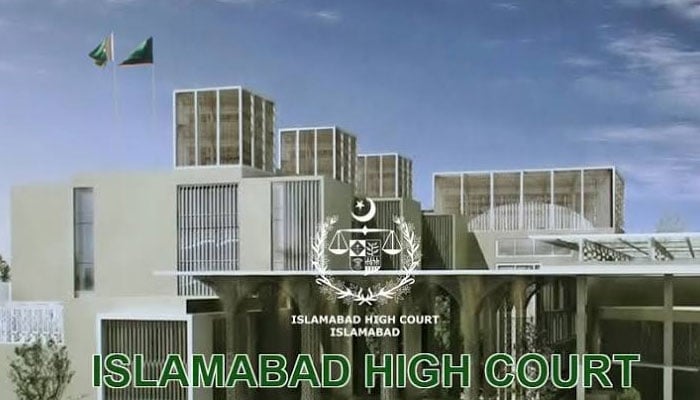
The court has declared the adjustment of tax credits against super tax legally valid. It has also overturned an earlier decision of the Islamabad High Court.

Justice Amir Farooq authored the six-page detailed judgment. The court accepted the appeals filed by a private mobile phone company.

The case relates to the adjustment of tax credits against super tax. The company had challenged a demand raised by the Federal Board of Revenue (FBR).

The FBR had issued a notice to the private company. The notice required the company to pay super tax.

The company approached the Islamabad High Court after receiving the notice. It argued that its available tax credit should be allowed to adjust against the super tax liability.

The Islamabad High Court rejected the company’s petition. The company then challenged that decision before the Federal Constitutional Court.

The Federal Constitutional Court has now accepted the company’s appeals. It has declared that tax credits available to a taxpayer can be adjusted against super tax.

The court referred to the relevant provisions of the tax law. It observed that the tax credit available under Section 168 is a separate and legally recognised right.

According to the judgment, a taxpayer should not be prevented from using this credit for adjustment. The court said forcing a taxpayer to seek only a refund would not be consistent with the intention of the law.

The judgment also addressed the interpretation of financial and tax laws. The court observed that such laws should be interpreted in a manner that facilitates taxpayers.

The court emphasised that taxpayers should be able to exercise rights provided to them under the law. A legal right to a tax credit cannot be unnecessarily restricted through an interpretation that creates additional difficulties for taxpayers.

The court also issued directions to the FBR.

The FBR has been directed to examine the taxpayer’s claim for adjustment. The department must consider the claim in response to the tax notice.

The FBR will now have to decide the matter according to the applicable law and the court’s ruling.

The judgment provides an important clarification for corporate taxpayers. It establishes that an eligible tax credit can be considered for adjustment against a super tax liability.

The ruling may also have wider implications for companies facing similar tax demands. Businesses with legally available tax credits may now rely on the court’s interpretation when seeking adjustments against their tax liabilities.

By setting aside the Islamabad High Court’s decision, the Federal Constitutional Court has clarified the legal position on the issue.

The case also highlights the continuing dispute between taxpayers and the FBR over the interpretation and application of tax laws.

Similar Posts

  • | | |

    PARCO, Cnergyico lead $1bn refinery exports

    Pakistan’s oil refining sector has achieved a major milestone. The country’s five major refineries exported petroleum products worth around $1.046 billion during the fiscal year 2025-26. This is the first time that the refinery sector has crossed the $1 billion export mark. The development has also strengthened the sector’s role as a source of foreign exchange for Pakistan. The achievement comes as the country continues to face pressure from a large trade deficit. Pakistan’s trade deficit is estimated at around $40 billion, increasing the importance of exports and import savings. The five major refineries made a significant contribution to the overall export earnings. Pakistan Arab Refinery Company (PARCO) recorded exports of around $277 million. Cnergyico Pakistan Limited exported petroleum products worth approximately $258 million. National Refinery Limited (NRL) recorded exports of around $238 million. Pakistan Refinery Limited (PRL) exported products worth approximately $200 million. Meanwhile, Attock Refinery Limited (ARL) exported petroleum products worth nearly $73 million. PARCO and Cnergyico remained the biggest contributors. Their combined exports reached approximately $535 million. This accounts for more than half of the total exports recorded by the five refineries. The development is particularly significant because the refining sector has traditionally been viewed mainly as a means of reducing Pakistan’s dependence on imported petroleum products. The latest figures show that the industry is increasingly contributing to both sides of the equation. It is helping reduce the import burden while also generating foreign exchange through exports. Cnergyico has also entered the global marine fuel market. The move could provide the company with new export opportunities and help expand Pakistan’s presence in the international fuel market. Industry modernization is expected to further improve the sector’s performance. Upgraded refinery facilities can increase production efficiency and enable companies to produce products that meet international market requirements. Further investment in refinery upgrades could therefore lead to higher exports in the coming years. It could also increase savings on petroleum imports. The latest performance highlights the growing importance of Pakistan’s refining industry. With continued modernization, better efficiency and access to international markets, the sector could become an increasingly important source of foreign exchange for the country. The development also comes at a critical time for Pakistan’s economy. Higher exports and lower import dependence are essential for reducing pressure on the country’s external account.

  • | | |

    Good News for Indian Tourists to Thailand! Thai Cabinet Will Not Revert Them to 15 Days Visa on Arrival as Previously Proposed

    Great news for Indian tourists and Thai tourism businesses focused on Indian travelers! Thailand’s Cabinet approved revisions on July 14th, 2026, to its visa exemption framework that will allow Indian passport holders a 30-day visa-free stay upon arrival when Thailand’s Royal Gazette publishes upcoming overall 60 day visa changes, reducing to 30 for most countries. […]

  • Thai PM Honors Fallen Soldier, Reaffirms Support for Troops and Border Stability

    BANGKOK – Prime Minister Anutin Charnvirakul presided over the royal cremation ceremony for Private Thanaphat Nanthawong at Wat Chuak Nok in Amnat Charoen province on Tuesday, honoring the soldier who was killed while serving along the Thai-Cambodian border. The ceremony was attended by senior government and defense officials, civil servants, and members of the public. […]

  • | |

    Mir Raza murder case raises questions over investi…

    The father of young Karachi businessman Mir Raza has raised serious questions over the investigation into his son’s murder. He alleged that the case was being influenced. He claimed that signs of interference by the Sindh government were visible in the investigation. Lawyers protested at the City Court on Tuesday over the failure to arrest the suspects in the case. Mir Raza’s father, Mir Hussain, also spoke during the protest. He questioned the removal of Dr Usama from the case. According to Mir Hussain, Dr Usama was removed so that he would not be able to answer questions about the matter. He also questioned the preparation of the post-mortem report. He asked why the report was allegedly prepared on the basis of photographs. Mir Hussain questioned whether any pressure was involved in the preparation of the report. He demanded that the circumstances surrounding the post-mortem be properly examined. The victim’s father further criticised the police investigation. He said the police’s alleged incompetence in his son’s case was now evident. The protest was held as the suspects in the murder case remained at large. The lawyers demanded progress in the investigation and the arrest of those responsible. Mir Hussain called for transparency in the investigation. He said the family wanted answers regarding every aspect of the case.

  • | |

    AJK polls begin with 19,000 security personnel

    The first phase of the Azad Jammu and Kashmir (AJK) Legislative Assembly elections is being held today across the Mirpur division, with authorities completing extensive arrangements for polling and security. The first phase covers Mirpur, Bhimber and Kotli districts. Officials said all polling material has been delivered to the designated polling stations ahead of voting. AJK Chief Secretary Khushal Khan and Election Commission Secretary Raja Muhammad Shakeel said the authorities were committed to ensuring free, fair and transparent elections. They urged voters to exercise their democratic right peacefully. They also warned that strict action would be taken against anyone attempting to disrupt polling or create a law and order situation. Officials advised voters and political workers to avoid spreading or believing unverified information circulating on social media. They said all stakeholders must follow the election code of conduct. The AJK elections are being conducted in three phases. Polling in the Mirpur division is taking place today. The second phase will be held in Muzaffarabad on August 2, followed by the third phase in Poonch on August 10. Security has been significantly increased across the three districts. Mirpur police authorities said a detailed security plan has been prepared to protect voters, election staff and polling stations. Mirpur SSP Khurram Iqbal said security forces have adopted a three-layer strategy. Polling stations have been divided into highly sensitive, sensitive and normal categories. Security personnel and resources have been assigned according to the level of risk. The district has also been divided into 56 security sectors. Each sector is being supervised by a deputy superintendent of police. Monitoring and rapid-response teams will remain active throughout the voting process. Authorities have also prepared additional contingency arrangements to deal with emergencies. A second response force will be available if required, while a third security layer will operate under zonal commanders. More than 1.4 million registered voters are expected to participate in the first phase across 13 constituencies. Authorities have established 2,454 polling stations containing 3,701 polling booths. Around 3,500 election officials have been assigned duties for the polling process. Voting will take place from 8am to 5pm. The 13 constituencies include four in Mirpur district, three in Bhimber and six in Kotli. Of the total polling stations, 1,965 have been classified as sensitive or highly sensitive. More than 19,000 security personnel have been deployed across the division. The force includes around 17,000 police officers, while approximately 2,100 army personnel will remain available as a backup force. A total of 288 candidates are contesting the 13 seats. The main political competition is expected to involve the Pakistan Muslim League-Nawaz, Pakistan Peoples Party and Istehkam-e-Pakistan Party, along with several influential independent candidates. Authorities have appealed to voters, candidates and political workers to cooperate with security personnel and maintain peace throughout polling.

  • | |

    Beyond faith and defense

    The historical partnership between Pakistan and the Kingdom of Saudi Arabia stands as one of the most enduring bilateral relationships in the contemporary Muslim world. This history is anchored in shared Islamic values and a profound spiritual connection to the holy sanctuaries of Makkah and Medina. This alliance predates the modern era of Saudi oil wealth. The bond was formalized through the landmark Treaty of Friendship in 1951. It established an early blueprint for solidarity, ideological alignment and mutual support during crisis. Over the past seven decades, this connection has expanded from religious affinity into strategic collaboration. The Art of Strategic Neutrality Defense cooperation forms a central pivot of the bilateral relationship. Since the 1960s, the Pakistani military has played an instrumental role in advising, training, and building the infrastructure of the Saudi armed forces. Contingents of Pakistani troops have historically been deployed inside the Kingdom for defensive purposes, notably safeguarding the Holy Mosques during regional upheavals such as Operation Desert Storm. Moreover, thousands of Saudi defense personnel have undergone advanced training in Pakistani military institutions over the decades. However, the military relationship has also required careful navigation.  When conflict erupted in Yemen (2015), Pakistan’s parliament adopted a stance of strict neutrality to avoid inter-state Middle Eastern disputes, particularly while its domestic forces were actively engaged in counter-terrorism campaigns like Operation Zarb-e-Azb. Despite initial friction, Riyadh acknowledged Islamabad’s geopolitical constraints. This mature understanding was demonstrated when former Pakistani Army Chief General Raheel Sharif was appointed to lead the Islamic Military Counter Terrorism Coalition (IMCTC), focusing strictly on combating global extremism rather than taking sides in regional power struggles. Economic Interdependence and Human Capital Beyond defense, economic cooperation has provided crucial stability to Pakistan’s financial landscape. Saudi Arabia has repeatedly acted as a financial cushion. The country delivered multi-billion-dollar bailout packages, balance-of-payment assistance and deferred-payment oil supplies during economic hardship. Historically, this financial dynamic was complemented by administrative leadership. Pakistani economist Anwar Ali served as the Governor of the Saudi Arabian Monetary Agency from 1958 to 1974. He played a pivotal role in organizing the Kingdom’s modern financial infrastructure. Human capital remains another essential driver of this relationship. Over 2.7 million Pakistani expatriates reside and work within Saudi Arabia. Spanning critical sectors such as healthcare, engineering, construction, and information technology, these workers contribute directly to Saudi Arabia’s physical and economic development while generating vital remittance flows that sustain Pakistan’s domestic economy. Furthermore, administrative initiatives like the “Road to Makkah” project and reductions in visa fees have significantly streamlined pilgrimage procedures for millions of Pakistani citizens traveling for Hajj and Umrah. Geo-Economics, Vision 2030, and the Future of CPEC As both nations adjust to global realities, the bilateral partnership is changing into modern geo-economic framework. Saudi Crown Prince Mohammed bin Salman’s Vision 2030. The Kingdom aims to diversify its economy away from oil dependency by investing in global supply chains. A key element of this transformation includes multi-billion-dollar investment commitments in Pakistan. Furthermore, a proposed mega-oil refinery at the deep-sea port of Gwadar.   Ultimately, geopolitical challenges occasionally test bilateral diplomatic alignment. However, the strategic, economic and institutional ties between Islamabad and Riyadh continue to adapt. After all, it’s a dynamic future built on mutual survival and shared prosperity.

Leave a Reply

Your email address will not be published. Required fields are marked *