pti seeks immediate
| | | |

PTI seeks immediate hospital transfer for Imran Kh…

The Pakistan Tehreek-e-Insaf (PTI) has demanded the immediate transfer of party founder Imran Khan to a hospital after a medical report highlighted concerns over his blood pressure and anxiety.

The demand came after a report from Adiala Jail authorities was submitted to the Supreme Court. The report contains details of Imran Khan’s latest medical condition and recommendations for his care.

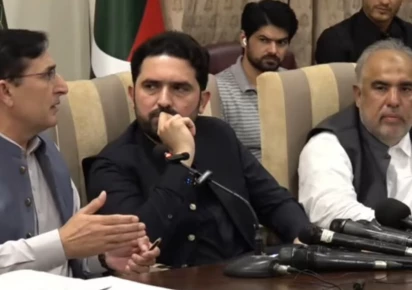
PTI leaders held a press conference on Monday and expressed concern over the former prime minister’s health. They called for him to be moved to a hospital where he could receive specialised medical treatment.

PTI Chairman Barrister Gohar Ali Khan said Imran Khan’s elevated blood pressure was a serious concern. He demanded that the former prime minister receive the best available medical care.

Gohar said Imran Khan should also be given access to his personal doctors. He demanded that his family members and lawyers should be allowed to meet him.

The PTI chairman said access to Imran Khan had remained restricted for months. He claimed that party representatives had repeatedly approached the courts seeking permission for meetings.

According to Gohar, the PTI had approached the high court around 25 times and the Supreme Court around 15 times over the issue.

He described meetings with family members, doctors and lawyers as Imran Khan’s fundamental legal right. He urged the judiciary to address the matter and ensure that the former prime minister received appropriate medical attention.

Gohar said the party’s concerns would not end until Imran Khan was provided proper medical treatment and regular access to his family and legal team.

He also criticised what he described as a prolonged dispute over access to the PTI founder. Gohar said the situation had continued since October and called for an end to what he termed a “cat and mouse game”.

The PTI’s demands came shortly before the Supreme Court was scheduled to hear matters concerning Imran Khan.

The jail report had recommended increasing family interaction to help manage his anxiety and blood pressure. It also contained details of his medical examinations and treatment.

PTI leaders argued that the reported health concerns should be treated seriously and that hospitalisation would ensure closer medical supervision.

The party has also continued to call for access to Imran Khan’s personal physicians, saying they should be allowed to assess his condition independently.

The issue of Imran Khan’s health has become a major political and legal point of contention. PTI leaders have repeatedly raised concerns over his medical care and restrictions on meetings.

Similar Posts

  • |

    Pamala Serena admits using insider tips to bet on cricket matches

    Netflix reality show contestant Pamala Serena has sparked widespread discussion after revealing that she used to place bets on cricket matches during her student years. The 34-year-old content creator made the confession in the latest episode of Lock Upp: Sach Ya Sazaa, which premiered on Saturday, July 25. During the show’s weekly Judgment Day segment, Pamala pressed the buzzer before fellow contestant Sufi Motiwala, earning immunity from elimination while agreeing to reveal a personal secret. As part of the challenge, the words “match fixing” appeared on the screen, leaving Pamala visibly surprised. She quickly clarified that she had never been involved in fixing matches herself. Instead, she admitted to using insider information to place bets on cricket games while studying. According to Pamala, she had a close friend who was connected to several cricketers and occasionally received predictions about match performances and likely outcomes. She claimed the information included details about which team might win and which players were expected to perform well. Pamala explained that she was living in London at the time, where betting through licensed bookmakers is legal. Using the tips shared by her friend, she placed wagers on cricket matches and said she earned a significant amount of money through the activity. Recalling the experience, she admitted that the opportunity to make quick money appealed to her as a student. However, she stressed that she no longer views those decisions positively and regrets relying on betting for financial gain. She also clarified that while gambling was legal where she lived, she eventually realized it was not the right way to earn money. Pamala said the experience taught her an important lesson, and she no longer takes pride in that chapter of her life. Her confession immediately generated conversation among viewers on social media, with many debating the ethics of betting using insider information. While some praised her honesty for openly discussing her past, others questioned whether such actions crossed ethical boundaries despite being legal in the country where they occurred. Pamala Serena was born in the United Kingdom to Indian parents before relocating to Dubai in 2012. She rose to prominence after winning the titles of Ms Universe Dubai 2021 and Ms UAE World 2022. She later expanded her career as a content creator and reality television personality, gaining international recognition through Netflix’s Dubai Bling. Lock Upp: Sach Ya Sazaa continues to stream exclusively on Netflix, with new episodes released from Saturday through Thursday. Hosted by filmmaker Farah Khan alongside actor Riteish Deshmukh, the reality series features contestants revealing personal secrets in exchange for advantages within the competition, often leading to dramatic moments and intense reactions from fellow participants and viewers alike.

  • | |

    79th Independence Day ignites nationwide patriotic…

    Independence Day celebrations were held across Punjab and Khyber-Pakhtunkhwa on Thursday, with political leaders, judges and government officials highlighting national unity, development, democracy and the sacrifices made for Pakistan. Punjab Chief Minister Maryam Nawaz Sharif, in her Independence Day message, said the occasion was a day for the younger generation to renew its commitment to the country’s future. She said she wanted to see young people equipped with books, pens and laptops, stressing that genuine development would only be achieved when no section of society was left behind. Lahore High Court Chief Justice Justice Aalia Neelum, addressing a flag-hoisting ceremony, said love for the homeland was part of faith. She said every citizen had a responsibility to work tirelessly for the country’s progress and added that the Punjab judiciary was striving to ensure the effective delivery of justice. Independence Day celebrations were also held at King Edward Medical University in Lahore. Punjab Health Minister Khawaja Salman Rafique attended the ceremony as chief guest, cut the Independence Day cake and led prayers for the country’s security and prosperity. He said every citizen must play a role in Pakistan’s development. A flag-hoisting ceremony was also organised at the Sports Board Punjab. The secretary sports, director general sports and other officials and employees attended the event. The national flag was hoisted and participants observed a minute of silence in memory of the martyrs who sacrificed their lives for Pakistan. Jamiat Ulema-e-Islam-Fazl chief Maulana Fazlur Rehman said Independence Day should also serve as an opportunity to reflect on the objectives and sacrifices behind the creation of Pakistan. He said the country was established in 1947 on the principles of unity, discipline and firm faith, but 79 years later the nation had still not fully achieved national cohesion. Fazlur Rehman called for overcoming regional, linguistic and group-based divisions and urged people to move forward as one Pakistani nation. He said the objectives of Pakistan’s creation included an Islamic system, a prosperous economy and stable democracy. Jamaat-e-Islami Pakistan chief Hafiz Naeemur Rehman said Pakistan was created on the basis of the Two-Nation Theory but the country had yet to fully realise the objectives for which it was established. He criticised successive governments for making people’s lives difficult and said the implementation of the Quran and Sunnah was essential to achieving Pakistan’s true destination. In Khyber-Pakhtunkhwa, Governor Faisal Karim Kundi hoisted the national flag at Governor House. Iran’s Consul General Ali Banafsheh Khah also attended the ceremony. Prayers were offered for Pakistan’s development, prosperity and stability, while Kundi and the Iranian consul general jointly cut the cake marking the country’s 79th Independence Day. K-P Adviser on Finance Muzammil Aslam said the province had witnessed significant improvements and called for greater efforts to strengthen the region. He said the provincial government had faced serious financial difficulties when it took office but the situation had subsequently improved. Aslam said officials should set clear targets for what they wanted to achieve before the next Independence Day. He also stressed the need for collective efforts to eliminate terrorism from the province. K-P Chief Secretary Shahab Ali Shah said the objectives behind the creation of Pakistan would be fulfilled. He said the people would not hesitate to make sacrifices for the country and would continue working towards its progress and stability. Federal Minister for IT Shaza Fatima Khawaja also congratulated the nation on Independence Day. She paid tribute to the martyrs who sacrificed their lives defending the country and described the armed forces as guarantors of peace and development. She said Pakistan’s growing international standing reflected the efforts of its political and military leadership. According to her, Pakistan is increasingly recognised globally for its commitment to peace, development, defence and its vision of a digital future.

  • | |

    Press freedom across South Asia

    Press freedom across South Asia faces significant structural constraints. Media environments throughout the region share a common historical legacy often relying on inherited colonial-era penal codes alongside modern cybersecurity legislation. However, the legal frameworks and regulatory instruments used to govern the press vary across neighboring countries. Comparative Analysis by Country  Pakistan Pakistan Electronic Media Regulatory Authority (PEMRA), Prevention of Electronic Crimes Act (PECA), and administrative policy frameworks like the Foreign Media Facilitation Guidelines. Media regulation in Pakistan relies heavily on administrative controls, licensing restrictions, and broad content advisories prohibiting coverage of sensitive political or national security subjects. While constitutional protections exist under Article 19, exceptions based on glory of Islam, national defense, and public order give authorities broad latitude to issue blackout orders, manage foreign correspondents’ mobility through No Objection Certificates (NOCs), and impose structural pressure on broadcast networks.  India Information Technology Rules (2021), Digital Personal Data Protection (DPDP) Act, and the Unlawful Activities Prevention Act (UAPA). While India possesses a large and diverse private media market, journalists increasingly face legal scrutiny under broad national security and anti-terror legislation. Amendments to digital media laws allow central authorities to demand the takedown of online content deemed harmful to state interests. Furthermore, criminal defamation suits and restrictions on access to conflict areas (such as Jammu & Kashmir) remain common mechanisms of regulatory pressure. Bangladesh Cyber Security Act (CSA)—which replaced the controversial Digital Security Act (DSA) and state information ministry directives. For years, non-bailable clauses in cybersecurity statutes were widely criticized by media watchdogs for chilling investigative reporting on corruption or state officials. Following recent political transitions, draft media reform policies have been introduced, though press operations remain tightly monitored during periods of political volatility and public unrest.  Sri Lanka Online Safety Act, Prevention of Terrorism Act (PTA), and Official Secrets Act. Sri Lanka’s regulatory framework expanded significantly with the passage of the Online Safety Act, which created a government-appointed commission with sweeping powers to classify online content as false statements and order its removal. Critical reporting regarding state response to economic crises or wartime history continues to face legal and physical friction in sensitive provinces. Nepal: Press Council Act and National Mass Communications Policy. Nepal consistently ranks highest in South Asia on global press freedom indices, supported by a constitution that explicitly guarantees press rights without prior restraint. However, challenges persist regarding local government transparency, criminal defamation provisions, and proposed social media regulation bills that civil society groups fear could introduce licensing hurdles for digital outlets.  Afghanistan Direct directives issued by the Ministry for the Propagation of Virtue and the Prevention of Vice and the Ministry of Information and Culture. Following the political shift in 2021, independent journalism in Afghanistan has faced near-total suppression. Women journalists are largely banned from broadcasting, international news services face widespread blocking, and all local reporting is subject to strict pre-publication censorship. Common Trends Across the Region Across South Asia, governments are increasingly shifting control from traditional print/broadcast regulators toward cybersecurity, online safety, and data protection laws to monitor digital newsrooms and independent creators. Constitutional guarantees of free speech throughout South Asia uniformly contain broad public order and national defense exceptions, which states routinely cite to enforce reporting restrictions during regional crises. Beyond direct legal action, states across the region frequently utilize non-judicial levers such as withholding state advertising funds, slow-walking accreditation, or requiring special travel permits to shape editorial stances.

  • | |

    Naqvi briefs president Zardari on security as terr…

    ISLAMABAD: Pakistan’s evolving security landscape came under close review on Thursday as President Asif Ali Zardari met Federal Interior Minister Mohsin Naqvi to discuss the country’s law and order situation, with particular attention given to the security challenges in Khyber Pakhtunkhwa and Balochistan. The meeting, held at Bilawal House, focused on the government’s ongoing efforts to strengthen internal security and counter terrorism. During the briefing, Naqvi updated the president on the latest developments in both provinces, where security forces continue operations against militant groups and work to maintain peace in sensitive areas. According to officials, the interior minister outlined measures being implemented to improve coordination among security institutions and enhance the country’s counterterrorism strategy. The discussion also covered steps aimed at ensuring stability while addressing emerging security threats. Beyond security matters, the two leaders exchanged views on Pakistan’s current political environment. They discussed the prevailing political situation and reviewed issues considered important for national stability and governance. The meeting also included deliberations on matters of mutual national interest, reflecting the government’s continued focus on balancing security priorities with broader political and administrative challenges. Pakistan has witnessed renewed security concerns in recent months, particularly in Khyber Pakhtunkhwa and Balochistan, where authorities have intensified intelligence-based operations against militant networks. The federal government has repeatedly stressed that restoring peace and strengthening national security remain among its top priorities. Officials said consultations between the presidency and the interior ministry will continue as authorities monitor the security situation and assess further measures needed to safeguard public safety. The discussions underscored the importance of close coordination among state institutions in responding to evolving threats while maintaining political stability across the country.

  • | |

    Rubio and Bessent stayed aboard decoy jet as Trump…

    Two members of President Donald Trump’s cabinet remained aboard a decoy aircraft after Trump quietly departed the plane and boarded a different flight while in Turkey last month, according to a US television network report. Secretary of State Marco Rubio and Treasury Secretary Scott Bessent stayed on what was widely believed to be Air Force One and did not join the alternate flight arranged for Trump due to security concerns tied to Iran. Trump boarded Air Force One on July 8 alongside both officials as well as members of the traveling press before slipping away via a catering truck, which transported him discreetly to a separate military aircraft. Because the designation “Air Force One” applies to whichever plane the president occupies, the original aircraft retained the call sign even after Trump had already left it, effectively turning it into the decoy. According to the report, Rubio and Bessent remained on the first aircraft in order to preserve the presidential line of succession in case anything happened to Trump during the flight. Under that line of succession, Vice President JD Vance would assume power if the president died or became incapacitated, followed by the Speaker of the House and the President Pro Tempore of the Senate. The Secretary of State ranks next in the order, followed by the Treasury Secretary. Others who stayed aboard the original aircraft designated as Air Force One included White House Deputy Chief of Staff Stephen Miller and White House communications director Steven Cheung. The second aircraft that carried Trump out of Ankara also included Defense Secretary Pete Hegseth, according to separate US media reports. Speaking to reporters Monday night, Trump said the decision to carry out the plane switch came from the US military and the Secret Service, who he said wanted him to travel on a different aircraft. He did not provide specifics about the nature of the security threat, saying only that he regularly receives numerous threats and that any consequential president faces the same. A request for comment sent to the White House had not been answered as of publication.

  • | |

    Ali Khursheedi calls for transparent probe into Mi…

      Sindh Assembly Opposition Leader Ali Khursheedi has called for a transparent investigation into the Mir Raza case, saying that hundreds of similar incidents have taken place in Karachi and that the authorities must take effective steps to address the situation. Speaking to the media in Karachi, the Muttahida Qaumi Movement (MQM) leader said that the Mir Raza case was not an isolated incident. He stressed the need for a transparent and impartial inquiry so that the facts could be established and those responsible could be held accountable. “Hundreds of cases like the Mir Raza case have occurred,” Khursheedi said, adding that a transparent investigation would be necessary to determine what had happened. He also questioned the performance of the Sindh government and urged people in Karachi to assess whether the provincial government was actually delivering on its responsibilities. The opposition leader said that the concerns of Karachi’s residents should be taken seriously, particularly in relation to law and order, governance and the protection of citizens. He questioned whether the people of Karachi believed that the provincial government was working effectively for the city. Khursheedi also commented on an incident that recently took place in the Bahadurabad area. He described the incident as unfortunate and said that it was not appropriate. However, he declined to discuss the matter in detail, saying that questions regarding the issue should be directed to the party leadership. “I am a worker, and you should ask the leadership these questions,” he told reporters when asked about the Bahadurabad incident. The MQM leader further expressed frustration over what he described as the continued deterioration of Karachi. He said that the situation had gone too far and that a stop must now be put to the problems facing the city. Khursheedi alleged that Karachi was being systematically damaged through what he described as a “system” of poor governance and mismanagement. He called for an end to practices that, in his view, were contributing to the decline of the city and affecting the daily lives of its residents. The opposition leader’s remarks come amid renewed concerns over security, governance and accountability in Karachi following the Mir Raza case. The incident has attracted attention and prompted demands for a thorough investigation into the circumstances surrounding the death. Khursheedi maintained that the authorities should not treat such cases as isolated incidents. Instead, he called for broader measures to improve law and order and ensure that citizens receive justice when serious incidents occur. He also emphasized the importance of transparency in investigations, particularly in cases that generate public concern. According to him, an impartial investigation could help establish the facts, restore public confidence and ensure accountability. The opposition leader’s criticism also reflects broader political tensions between the Sindh government and opposition parties over the administration of Karachi. Opposition leaders have frequently raised questions about the city’s governance, public services and law-and-order situation. Khursheedi said that Karachi’s residents should ultimately judge the performance of the provincial government based on their everyday experiences. He suggested that the condition of the city itself provides an indication of whether the government is fulfilling its responsibilities. Calling for immediate action, he said that “enough is enough” and that the deterioration of Karachi could not continue indefinitely. He urged authorities to take concrete steps to improve governance, investigate serious cases transparently and prevent further incidents from occurring. The MQM leader’s statements have added to calls for accountability and a transparent investigation into the Mir Raza case, while also highlighting wider concerns about Karachi’s governance and security situation.

Leave a Reply

Your email address will not be published. Required fields are marked *