hong kong democracy
|

Hong Kong democracy activist allowed to remain in UK after deportation scare

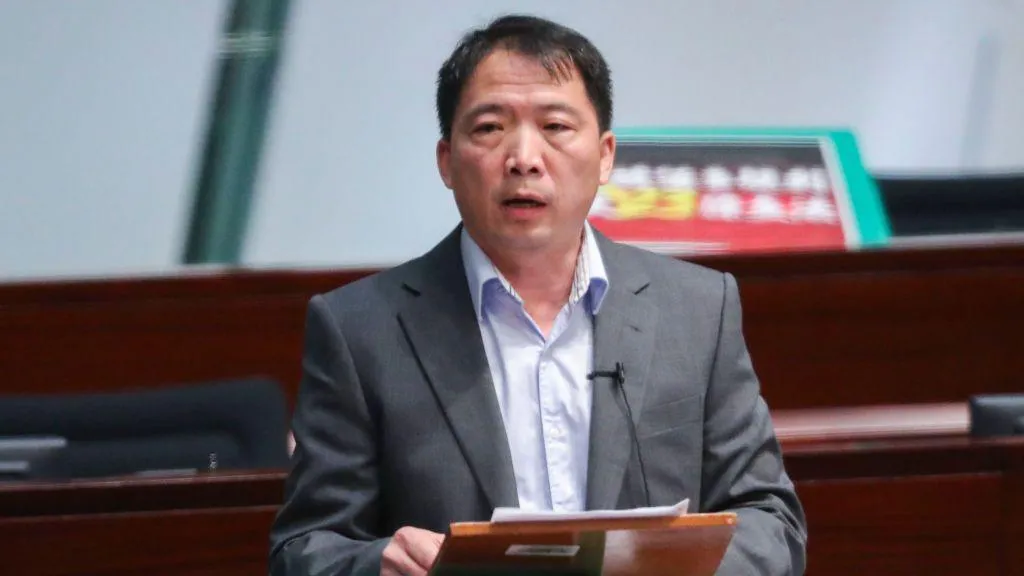
Former Hong Kong opposition leader Wu Chi-wai has been granted permission to stay in the United Kingdom for six months after initially facing the possibility of deportation upon arriving at Heathrow Airport. The decision ends several days of uncertainty and allows the veteran pro-democracy activist to reunite with his family after years of separation.

Wu arrived in London last Wednesday but was detained by UK Border Force officers for nearly 10 hours. Speaking to BBC Chinese, he said officials initially refused him entry and later informed him that he would only be allowed to remain in the country for one week before reporting back to the airport for deportation.

However, the situation changed on Monday when UK authorities approved his entry under standard visitor rules, allowing him to stay in the country for up to six months.

The 63-year-old is one of Hong Kong’s best known pro-democracy figures and formerly led the now dissolved Democratic Party. He was also among the group widely known as the Hong Kong 47, prominent activists and politicians prosecuted under Hong Kong’s national security law. Wu was released from prison in June after serving more than five years on convictions related to subversion and other charges.

Wu said the trip was mainly intended to reunite with his wife and son, who moved to the United Kingdom in 2022 and 2023. During his imprisonment, he said their contact was limited to monthly phone calls and letters, making the visit especially meaningful after years apart.

Before leaving Hong Kong, Wu said he sought advice from staff at the British Consulate General regarding his travel plans. According to him, officials assured him there should be no problems entering the UK and said they would inform the UK Border Force about his criminal record and travel itinerary in advance.

Wu said border officials questioned whether he was a genuine visitor travelling only to see his family. He also rejected media reports claiming that he intended to seek political asylum in Britain, insisting that he had no such plans.

The rights group Hong Kong Watch welcomed the UK’s decision to allow Wu to remain in the country. Policy Director Megan Khoo said the outcome was the correct one and argued that Wu should never have faced the threat of being sent back to the city where he had been imprisoned.

Wu entered Britain using a British National Overseas passport, a travel document available to many Hong Kong permanent residents born before the territory’s transfer from British to Chinese rule in 1997. Holders of the passport are generally allowed to visit the UK without a visa for up to six months.

The UK introduced a special visa route for British National Overseas passport holders in 2021 following the crackdown on Hong Kong’s pro-democracy movement. The programme allows eligible applicants to live, work and study in Britain and eventually apply for citizenship after meeting residency requirements.

Since the scheme began, more than 230,000 Hong Kong residents have received BNO visas, while nearly 170,000 have relocated to the United Kingdom, according to government figures.

The UK Home Office declined to comment on Wu’s individual case but reaffirmed its support for the Hong Kong community living in Britain. Meanwhile, the Hong Kong government said it had not received any request for assistance from Wu or other Hong Kong residents regarding the matter.
Similar Posts

  • | | | |

    HRCP, PFUJ slam new foreign media rules

    The Human Rights Commission of Pakistan (HRCP) and the Pakistan Federal Union of Journalists (PFUJ) have strongly criticised the government’s newly introduced Foreign Media Facilitation Guidelines 2026, describing the policy as a serious threat to press freedom and independent journalism. The criticism comes after the Ministry of Information and Broadcasting reminded foreign media organisations that journalists must obtain prior government approval before carrying out reporting assignments outside Islamabad, Lahore and Karachi under the revised External Publicity Guidelines. The ministry issued the reminder following concerns over international coverage related to Azad Jammu and Kashmir. In a statement, the HRCP said the new guidelines could discourage independent reporting on issues of public interest instead of facilitating journalistic work. The commission expressed concern that the policy reflects an increasing trend of restrictions on media freedom, including tighter controls on reporting and growing administrative hurdles for journalists. According to the rights body, requiring official permission before reporting from many parts of the country could create an atmosphere where critical journalism is discouraged. It urged the government to withdraw the new measures and ensure protection of freedom of expression in line with constitutional guarantees and international commitments. The PFUJ also condemned the notification, calling it a direct attack on press freedom. The journalists’ union argued that the policy not only limits the movement of foreign correspondents but also places restrictions on Pakistani journalists working for international media organisations. PFUJ President Afzal Butt and Secretary General Arshad Ansari questioned how journalists would be able to perform their professional responsibilities if access to large parts of the country is restricted. They warned that the policy could affect Pakistan’s international reputation and further weaken its standing in global press freedom rankings. The union also expressed concern that Pakistani journalists employed by foreign media organisations could face job losses if they are prevented from reporting from different regions of the country.

  • | | |

    Iran says US military weaker as Hormuz crisis deep…

    TEHRAN: Iran has intensified its rhetoric against the United States as attacks on commercial shipping and stalled peace efforts deepen uncertainty over the future of the war, with Tehran warning that the strategically vital Strait of Hormuz will remain closed unless Washington accepts its conditions. Mohammad Reza Naqdi, an adviser to the commander of Iran’s Islamic Revolutionary Guard Corps, said in an interview with PBS that the US military had proved “weaker than what we perceived” during the five-month conflict. Naqdi said Iran had gained valuable battlefield experience during the war and claimed Tehran would continue to emerge victorious. “The longer this war lasts, the more experience we gain,” he said, arguing that Iranian forces had learned how to confront the US military through direct experience. His comments came as maritime traffic through the Strait of Hormuz dropped sharply. Shipping data showed only eight vessels were tracked through the waterway on Tuesday, below a 10-day average of about 12 and the lowest daily figure since August 5. Before the conflict, the strait typically handled around 130 to 140 vessels a day. The slowdown has heightened fears over global energy supplies because Hormuz is a crucial route for oil and liquefied natural gas shipments. The International Maritime Organization has previously warned of serious risks to vessels and seafarers operating in the area. Shipping attacks raise fresh alarm Tensions also spread to other maritime chokepoints. Four crew members were reportedly killed in a suspected Houthi attack on a cargo vessel in the Bab el-Mandeb Strait, while two Yemeni rescuers were also killed, according to reports cited in the source material. The US military separately said an MH-60 helicopter fired two Hellfire missiles at a Panama-flagged cargo ship after the vessel allegedly ignored warnings linked to a blockade of Iranian ports. Maritime sources said the incident occurred off Pakistan in the Gulf of Oman. The attacks have added to concerns that the conflict could disrupt shipping routes connecting the Gulf with the Red Sea and beyond. Iran sets conditions for reopening Hormuz Iranian security official Mohsen Rezaei said the Strait of Hormuz would not reopen unless Washington agreed to Tehran’s demands, including the release of frozen Iranian assets and an end to conflicts across the region. Iran’s parliament is also preparing legislation that would restrict military and commercial vessels from countries Tehran considers hostile from entering the Gulf without Iranian authorisation. The proposed law is intended to strengthen Iran’s control over the strategically important waterway. US President Donald Trump, meanwhile, has continued to combine threats with suggestions that negotiations could eventually produce a settlement. He has claimed the United States has control over the Strait and warned Iran against further escalation. Oil markets have already reacted to the uncertainty. Brent crude rose 1.4 per cent to $88.91 a barrel, while US crude gained 1.3pc to $83.20. Pakistan seeks diplomatic space Amid the worsening security situation, Pakistan has continued diplomatic engagement with Tehran. Interior Minister Mohsin Naqvi visited Iran and met President Masoud Pezeshkian, with both sides stressing the importance of strengthening bilateral political, economic, trade, cultural and security ties. Pezeshkian praised Pakistan’s commitment to closer relations and said Tehran was ready to expand cooperation with Islamabad. Naqvi said his visit was aimed at following up on understandings reached between the two countries and accelerating implementation of existing agreements. With military rhetoric rising, shipping routes under pressure and negotiations at an apparent impasse, the Strait of Hormuz remains at the centre of a crisis whose consequences could extend far beyond the Middle East.

  • |

    QatarEnergy buys US LNG cargoes amid Hormuz crisis

    QatarEnergy has purchased 33 liquefied natural gas (LNG) cargoes from the United States this year to reduce supply disruptions caused by the ongoing conflict in the region and the closure of the Strait of Hormuz, according to industry sources. The LNG shipments have been arranged for key Asian markets, including South Korea, Taiwan, Bangladesh, India and Japan, as Qatar works to maintain supplies for its long-term customers. The move comes after QatarEnergy declared force majeure on some of its LNG contracts following the shutdown of shipping routes through the Strait of Hormuz. The waterway is a critical global energy corridor through which a significant portion of the world’s oil and gas supplies passes. The company’s decision to purchase additional LNG cargoes from the US represents a major increase compared with previous years. In 2025, QatarEnergy had purchased only four spot LNG cargoes, while the number has now risen sharply to 33 in 2026. The additional purchases are aimed at protecting Qatar’s reputation as one of the world’s most reliable energy suppliers and ensuring that customers continue receiving gas despite regional instability. Industry sources said the US LNG purchases represent a goodwill effort by QatarEnergy to support important Asian buyers affected by the disruption. The 33 cargoes are estimated to equal around one-third of QatarEnergy’s monthly LNG exports before the conflict and are valued at nearly $1 billion. Qatar is among the world’s largest LNG exporters, with Asia accounting for around 80% of its LNG shipments. Countries such as Japan, South Korea and India rely heavily on Qatari gas supplies for energy security. The Strait of Hormuz crisis has created uncertainty in global energy markets, forcing major producers and consumers to seek alternative supply arrangements. QatarEnergy has not officially commented on the reported LNG purchases, but the move highlights efforts by energy companies to adjust supply chains amid geopolitical tensions.

  • | |

    PM Shehbaz arrives in Madinah, visits Masjid-e-Nab…

    Prime Minister Shehbaz Sharif has arrived in Madinah during his visit to Saudi Arabia and paid his respects at Masjid-e-Nabawi ﷺ. The prime minister was accompanied by members of his delegation during his visit to the holy mosque. Prime Minister Shehbaz offered Nafl prayers at Riyaz-ul-Jannah. He also prayed for the peace, progress and prosperity of Pakistan and the well-being of its people. During his visit, the prime minister also had the honour of visiting Roza-e-Rasool ﷺ. He offered prayers and paid his respects at the sacred site. The visit to Madinah is part of Prime Minister Shehbaz Sharif’s ongoing engagement with Saudi Arabia. His visit also reflects the close and longstanding ties between Pakistan and the Kingdom of Saudi Arabia. The prime minister’s presence at Masjid-e-Nabawi ﷺ was marked by prayers for the country’s stability, development and prosperity. He also prayed for the safety and well-being of the Pakistani nation. Earlier, Prime Minister Shehbaz Sharif has described the signing of the Makkah Agreement for Joint Defence between Pakistan, Saudi Arabia and Türkiye as a historic step towards strengthening peace, security and regional stability. In a post on X, the prime minister said he had the honour of signing the agreement alongside Saudi Crown Prince and Prime Minister Mohammed bin Salman and Turkish President Recep Tayyip Erdogan.

  • | | | | |

    Iran displays wreckage of US, Israeli aircraft in …

    Iran’s Islamic Revolutionary Guard Corps (IRGC) has put the wreckage of US and Israeli aircraft on public display, offering a dramatic glimpse of the military hardware Tehran says was destroyed during the recent war. Images released by Iranian state-linked media show sections of aircraft arranged as part of an exhibition, including what has been identified as the remains of a US F-15 fighter jet. The display reportedly includes the aircraft’s ejection seat, canopy and part of its tail. The exhibition appears designed not only to showcase recovered wreckage but also to underline Iran’s claims about the effectiveness of its air-defence capabilities during the conflict. The appearance of the F-15 debris is particularly significant. Recent reporting has identified the wreckage as belonging to an F-15E Strike Eagle, while Iranian authorities have presented it as evidence of a successful engagement against US airpower. However, claims surrounding aircraft losses have been contested throughout the conflict. In earlier incidents, Iranian officials announced that US aircraft had been destroyed, while American officials disputed some of the claims. Independent identification of battlefield wreckage has also sometimes proved difficult. Iranian forces have previously showcased captured or downed US military equipment as symbols of resistance. A similar exhibition in Tehran in 2019 displayed wreckage of a US Global Hawk drone claimed to have been shot down by Iran. The latest display comes after Iran also claimed on July 30 that three US F-35 fighter jets had been destroyed at Jordan’s Al Azraq airbase. That claim has not been independently established. By placing the aircraft remnants on display, Tehran is turning battlefield debris into a powerful political and military message—one intended to demonstrate that even advanced American and Israeli aircraft can be targeted during wartime. The exhibition is likely to fuel further debate over the scale of aircraft losses during the conflict and the competing narratives presented by Iran, the US and Israel.

  • | | |

    15-year-old boy killed in mazda truck accident in …

    A 15-year-old boy was killed after a Mazda truck collided with his motorcycle near Chamra Chowrangi in Karachi’s Korangi area on Wednesday. According to Express News, the teenage motorcyclist died at the scene following the collision. His body was shifted to Jinnah Hospital for the completion of legal and medical procedures. Rescue officials identified the deceased as 15-year-old Sagar, son of Rajab. Police said the teenager was riding the motorcycle himself when the accident occurred. Korangi Industrial Area SHO Hukam Dad said the incident took place after the motorcycle was struck by a Mazda truck. Police arrested the truck driver shortly after the accident and took the vehicle into custody. Authorities have launched a further investigation to determine the circumstances that led to the fatal collision. The teenager was a resident of Korangi, according to police. After the completion of the necessary legal procedures, his body was handed over to his family. The incident has once again raised concerns about road safety in Karachi, particularly involving heavy vehicles and young motorcyclists. Traffic accidents involving trucks and motorcycles can have devastating consequences because of the significant difference in size and weight between the vehicles. Police are continuing to investigate the case, while further details regarding the circumstances of the collision may emerge as the investigation progresses. The authorities are expected to examine the accident scene and other available evidence as part of the investigation. The arrest of the truck driver means the police can also record his statement and establish the events immediately before the collision. For Sagar’s family, the incident has resulted in the tragic loss of a teenager at a very young age. The case remains under investigation, and police will determine further legal action based on the findings.

Leave a Reply

Your email address will not be published. Required fields are marked *