punjab orders crackdown
| |

Punjab orders crackdown on professional begging ma…

LAHORE: The Punjab government has ordered a province-wide crackdown against organized professional begging networks, with Lahore set to become the first “Beggar-Free City” under a coordinated enforcement campaign.

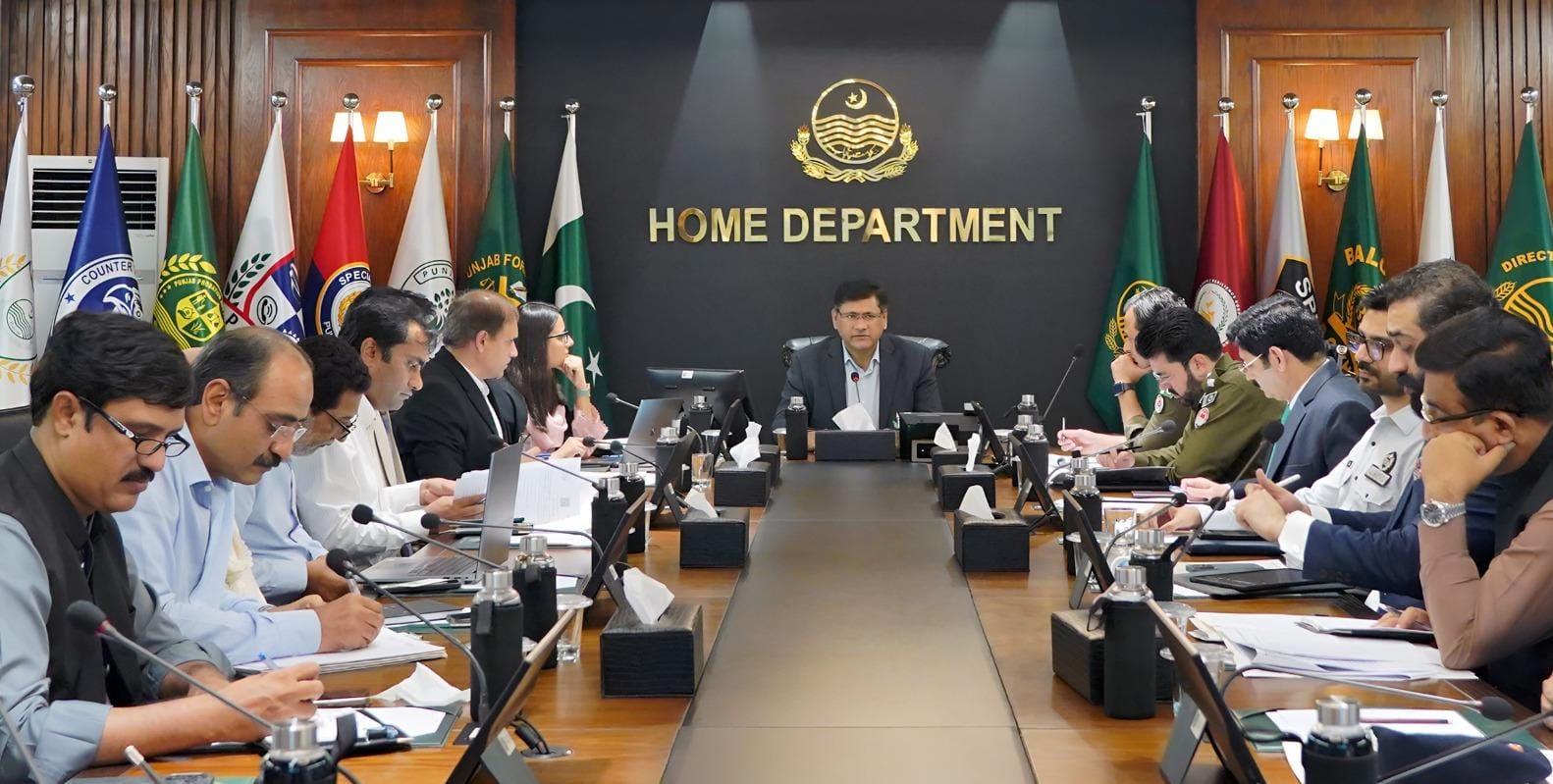
The decision came during a meeting chaired by Punjab Home Secretary Dr Ahmed Javed Qazi at the Home Department. Authorities directed relevant departments to develop a joint strategy to identify professional beggars, expose the networks operating behind them, and take action against those who force vulnerable people into begging.

The Punjab Safe Cities Authority and traffic police have received special assignments to help identify and dismantle the begging mafia’s network. Officials will use modern technology, surveillance tools and human intelligence to locate key hotspots and track repeat offenders.

Dr Qazi stressed that authorities must take strict action against handlers who exploit children, women and elderly people for begging. He said the government had introduced legal amendments to increase penalties and fines and discourage organized begging networks.

Under the amended Punjab Vagrancy Ordinance 1958, forcing someone to beg constitutes a non-bailable offence. The home secretary directed authorities to ensure strong prosecution of arrested members of the begging mafia so that cases result in effective convictions.

The meeting also called for the creation of a centralized database of professional beggars who face repeated arrests. Officials will also maintain updated records of needy and destitute people who seek assistance at welfare homes.

Dr Qazi instructed authorities to identify begging hotspots across Lahore and conduct targeted operations at these locations. He further emphasized the need for close coordination among all relevant departments to eliminate organized begging networks.

The government also plans to strengthen welfare homes and turn them into support centers for vulnerable members of society. Officials will improve arrangements for food, healthcare and accommodation while providing education to children staying at these facilities.

The welfare homes will also offer vocational training to help deserving individuals develop skills and achieve financial independence instead of relying on begging. Dr Qazi urged civil society organizations to play an active role in supporting vulnerable communities.

The home secretary appealed to citizens to report professional begging networks to police at 15. He assured the public that the authorities would keep the identities of informants confidential.

The meeting was attended by Social Welfare Secretary Saira Umar, Special Secretary Home Zainab Khan, Director General Social Welfare Dr Shahenshah Faisal, Director General Probation and Parole Shahid Iqbal, Additional Secretary Prisons Roman Burana, Additional Secretary Judicial Abdul Rauf, Lahore Chief Traffic Officer Syed Abdul Rahim Shirazi, AIG Sarfraz Warak, Deputy Prosecutor General Dr Usman Iqbal, Civil Defence Director Tasneem Ali Khan, along with officials from the Punjab Safe Cities Authority, FIA, School Education Department and Health Department.


Similar Posts

  • | |

    Marriyum Aurangzeb says Kashmiris have chosen PML-…

    Senior Punjab Minister Marriyum Aurangzeb has said that the people of Azad Jammu and Kashmir have already made their political choice in favour of the Pakistan Muslim League-Nawaz (PML-N). In a statement, Aurangzeb said Mirpur had given its verdict in favour of the PML-N on July 24. She linked the decision to the visit of PML-N leader Nawaz Sharif and party leader Maryam Nawaz to the city. According to Aurangzeb, the response from the people of Mirpur showed their support for the PML-N leadership. She said the people had made their choice clear through their political support. Aurangzeb said the PML-N’s electoral symbol, the lion, had also received strong support. She claimed that by voting for the lion symbol, the people had formally expressed their belief that the development of Azad Jammu and Kashmir was connected with the PML-N. She said the party was committed to the progress and development of the region. Aurangzeb maintained that the public response in different areas was an indication of growing support for the PML-N. The senior provincial minister also referred to the situation in Muzaffarabad. She said the people of Muzaffarabad had already announced their decision on July 21. Aurangzeb said the political choices made in Mirpur and Muzaffarabad reflected the direction of the election campaign. She suggested that the response from voters in both areas had strengthened the PML-N’s position. She further said August 2 would be an important day for the people of Azad Jammu and Kashmir. According to her, voters would use the lion symbol to formally announce their decision through the ballot. Aurangzeb urged Kashmiris to vote for the PML-N and support its leadership. She presented the party as a force for development and progress in Azad Jammu and Kashmir. The statement comes amid the ongoing electoral activity in the region. Political parties are campaigning to win the support of voters ahead of the final voting process. Aurangzeb’s remarks underline the PML-N’s focus on development as a central theme of its campaign. She said the people’s vote would determine the future political direction of Azad Jammu and Kashmir. The minister expressed confidence that voters would reaffirm their support for the PML-N on August 2 by voting for the lion symbol.

  • | |

    HEC Chief calls for education, research to become …

    ISLAMABAD: Higher Education Commission (HEC) Chairman Dr Niaz Ahmed has called for a major shift in Pakistan’s approach to higher education and research, saying universities must become central to the country’s economic, technological and social development. Speaking about his recent nearly two-week visit to China, Dr Niaz Ahmed said Pakistan could learn valuable lessons from China’s development model, particularly its close cooperation among universities, industry, research institutions and the government. The HEC chairman visited China with a delegation of senior vice chancellors from leading Pakistani universities on the instructions of the prime minister and at the invitation of Chinese education authorities and academic institutions. During the visit, Pakistani and Chinese universities discussed joint and dual-degree programmes, faculty and student exchanges, collaborative research and greater opportunities for Pakistani students to pursue higher education in China. He said efforts were also underway to strengthen the CPEC Consortium of Universities and establish 10 Sinology Centres in Pakistan. The Higher Education Commission has been asked to nominate 10 Pakistani universities for the initiative. Dr Niaz said his meetings with Chinese universities and research organisations showed that universities there function as more than degree-awarding institutions. They are closely connected with industry and government, helping develop new technologies, solve industrial problems, support startups and prepare skilled workers for emerging economic needs. He noted that research in China is increasingly focused on turning knowledge into practical solutions, new products and economic opportunities rather than simply increasing the number of research publications. The HEC chairman said China’s rapid progress in artificial intelligence, robotics, automation and digital technology was particularly striking. These technologies, he observed, have moved beyond laboratories and are now being used in factories, transportation, hotels and urban services. He also highlighted China’s rapidly expanding electric vehicle industry, saying the transformation demonstrated the importance of developing technology rather than simply consuming it. According to him, countries that build their own technological capabilities will be better positioned to compete in the future. Dr Niaz attributed China’s progress not only to investment and technology but also to discipline, punctuality, hard work and a clear national vision. He said the country’s experience demonstrated how coordinated efforts by government institutions, universities, industries and citizens could produce lasting national development. Reflecting on Pakistan’s traditional focus on Western academic models, he said his visit had strengthened his belief that China offers an important Asian development experience that Pakistan should study carefully. He stressed, however, that Pakistan should adapt successful practices to its own circumstances rather than simply copy the Chinese system. The HEC chairman said Pakistani universities now needed to examine whether they were merely producing degree holders or actually developing human capital capable of contributing to the national economy. He called for curricula to be aligned with future employment needs, with greater emphasis on artificial intelligence, data science, automation and other emerging fields. Universities, he said, must also strengthen faculty capabilities and build closer relationships with industry. Dr Niaz further stressed that research should focus on solving national and industrial problems, developing technologies and creating business opportunities rather than remaining limited to academic publications. After returning from China, he said, he shared his observations with university leaders across Punjab, Sindh, Balochistan, Azad Jammu and Kashmir, Gilgit-Baltistan and the federal capital. The objective was to encourage universities to reconsider their approaches to curriculum development, research, faculty training and industry partnerships. He said Pakistan already possesses a large network of universities, talented researchers and a young population, but these strengths need to be supported by a clear national strategy and sustained investment. “The real strength of a nation lies not only in roads, buildings and factories, but also in knowledge and human capital,” Dr Niaz said, stressing that Pakistan’s journey towards developed-country status must begin in university classrooms and research laboratories and eventually translate into stronger industries, a more productive economy and greater national prosperity.

  • |

    Cambridge paper leak case: students hand over 17 papers evidence to NCCIA, but investigation still not complete

    Islamabad: The investigation into the alleged Cambridge A Level and O Level paper leaks has drawn fresh criticism after affected students claimed that they provided complete evidence, forensic details and technical assistance to the National Cyber Crime Investigation Agency (NCCIA), but the inquiry remains incomplete. Students associated with the Accountability4Cambridge movement said they made every possible effort to help NCCIA investigate the case and submitted evidence related to 17 leaked examination components. They claimed they even conducted their own forensic checks and prepared detailed records before handing them over to authorities. The students said their main demand was a quick investigation because their future depends on the final results. They wanted the matter resolved before results were announced so that affected students could receive relief if unfair practices had affected their grades. However, according to the students, NCCIA has still not completed its investigation. They claimed that the investigation officer assigned to the case has gone on training, causing further delay. The Accountability4Cambridge representatives said they submitted a complete evidence package to NCCIA, including 44 exhibits with verification details. They said the material was prepared carefully to help investigators identify where the papers were leaked and who was involved. The students said they tracked the movement of leaked papers and provided information about possible sources, online groups and communication channels where the leaked material was shared. Their evidence included details about WhatsApp numbers, Telegram groups and payment methods allegedly used to purchase the leaked papers. The students submitted the evidence directly to NCCIA’s forensic department and expected progress within days, but they were later informed that the assigned official was unavailable because he had gone for training. The controversy started after students alleged that Cambridge examination papers reached some candidates before the official exams, creating an unfair advantage for those who accessed them early. According to Accountability4Cambridge, around 17 examination components were leaked during the June 2026 examination series. They said Cambridge International acknowledged four of these components, while the remaining cases were still disputed. Students argued that a leaked paper could damage the grades of honest candidates because grade boundaries may change when some students score unusually high marks after seeing questions in advance. They said a student who worked honestly could lose university opportunities if their grades dropped because of unfair competition. The students also raised concerns about delays in the official response. The Senate Standing Committee on Federal Education had directed NCCIA to provide findings by July 21, 2026, but the deadline passed without a final report being submitted. The group said only an informal indication was given that findings would come later, while students continued waiting for answers. During their efforts, students met with various institutions, including the IBCC, Senate committees and NCCIA officials, and prepared documentation to support their claims. They said the evidence was not based only on screenshots but included detailed verification methods such as timestamps, recordings and technical information to support the authenticity of the leaked material. The students said they wanted authorities to identify the people responsible and ensure accountability instead of allowing the matter to continue without a clear conclusion. They also demanded stronger action from Cambridge, including transparency regarding how the leaks happened, where they originated and what action was taken against those involved. The students further demanded reforms in the examination system, including better protection of papers, separate arrangements for Pakistan and measures to prevent future leaks. They warned that the issue concerned not only marks but also the future of thousands of students who depend on Cambridge results for university admissions in Pakistan and abroad.

  • | |

    Brad Pitt gets candid about family struggles and s…

    Brad Pitt is opening up about a difficult chapter in his personal life, including his family struggles and a major change in his relationship with alcohol. In a candid new interview with Esquire, the Oscar-winning actor revealed that he had maintained seven years of sobriety before eventually returning to drinking. Pitt explained that he now approaches alcohol in a much more limited and controlled way than he did in the past. (Los Angeles Times⁠) Pitt reflects on seven years of sobriety Pitt’s decision to stop drinking became an important part of his personal journey following the breakdown of his marriage to Angelina Jolie. He previously spoke publicly about joining Alcoholics Anonymous and credited the support he received from others in recovery with helping him change his lifestyle. After seven years without alcohol, however, Pitt said he eventually returned to drinking. He acknowledged that he had become overconfident at times but stressed that his current approach is very different from his past relationship with alcohol. (People.com⁠) The revelation marks a notable change for the actor, who had previously discussed sobriety as an important part of rebuilding his life. Rather than presenting the experience as a simple success-or-failure story, Pitt’s comments show how personal struggles can continue to evolve over time. Family challenges remain emotional Alongside his discussion of sobriety, Pitt reflected on the emotional impact of ongoing family difficulties. The actor has faced years of complicated circumstances surrounding his separation from Jolie and his relationship with their children. Pitt’s mother, Jane Pitt, also died in August 2025, adding another major loss to an already difficult period. In the Esquire interview, he discussed returning to Missouri and remembering his mother with his father, William Pitt. (EW.com⁠) Despite these challenges, Pitt continues to describe himself as an optimistic person. His reflections suggest that he is trying to process grief, family difficulties and personal changes while continuing to move forward. A more honest chapter for Pitt The new interview gives fans a rare glimpse into the personal side of one of Hollywood’s biggest stars. Pitt’s comments about sobriety and family show a willingness to discuss experiences that are often kept private. As he continues his successful film career, the actor appears focused on accepting life’s difficult moments while maintaining perspective. His latest reflections offer a more personal look at the man behind the Hollywood image and the complicated journey he has experienced in recent years.

  • | |

    Pakistani journalist Murtaza Ali Shah assaulted du…

    Pakistani journalist Murtaza Ali Shah was assaulted and injured while covering a protest march in central London. According to reports, Shah was attacked while reporting on a march organised by supporters of the banned Joint Awami Action Committee (JAAC), which began at Hyde Park and proceeded towards the Pakistan High Commission. A large number of British Kashmiris gathered at Hyde Park before the march to express concern over the deteriorating situation in Azad Kashmir. Protesters called for an end to violence, the restoration of fundamental rights, and the resumption of dialogue. Eyewitnesses and videos showed that Shah came under attack as the march approached the Pakistan High Commission. While reporting from the scene, he was allegedly kicked and punched from both the front and behind by at least three individuals. A crowd quickly surrounded the journalist, escalating tensions until Metropolitan Police officers, protest organisers, and other participants intervened to prevent the situation from worsening. Police later escorted Shah away from the crowd and ensured his safety. According to reports, when Shah returned to the Pakistan High Commission to continue his reporting, members of the same group allegedly attempted to harass him again.

  • | |

    Crackdown intensifies: Illegal quack clinics seale…

    FAISALABAD: The Health Department has intensified its campaign against illegal medical practitioners in Faisalabad, with authorities sealing several unauthorized clinics during a targeted operation in Madina Town. The operation was carried out under the supervision of Dr. Rizwan Chishti, who is leading anti-quackery efforts in Lyallpur and Iqbal Towns, following directives issued by the Secretary Health Punjab and the Chief Health Officer. Acting on intelligence provided by the District Health Officer and other relevant agencies, health officials raided multiple locations suspected of operating without legal authorization. During the operation, a number of illegally established clinics run by unqualified practitioners were sealed on the spot. Officials confirmed that the cases have been referred to the Punjab Healthcare Commission, which will initiate legal proceedings against those found responsible. Health authorities said the anti-quackery campaign has been expanded across all towns in Faisalabad, with screening and enforcement activities being carried out on a wider scale. They warned that strict legal action will be taken against individuals involved in unauthorized medical practice as well as anyone attempting to unlawfully reopen or de-seal clinics closed by the department. Officials reiterated the government’s commitment to protecting public health by eliminating illegal healthcare practices and ensuring that only licensed professionals are allowed to provide medical services.

Leave a Reply

Your email address will not be published. Required fields are marked *