shehbaz hails efforts
| |

PM Shehbaz hails efforts to unite muslim countries

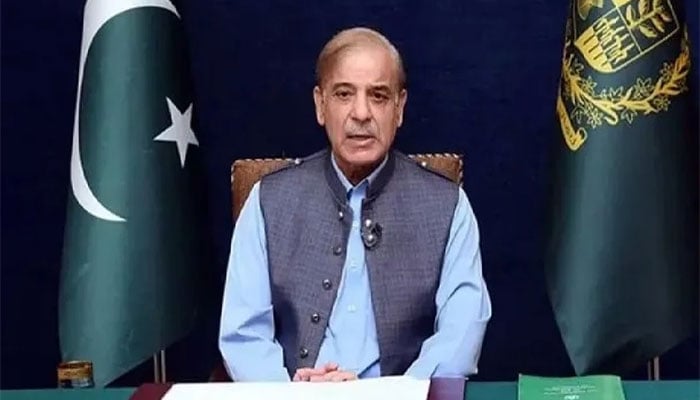
Prime Minister Shehbaz Sharif has said hostile forces made every possible effort to create divisions among Muslim countries in the region but failed to achieve their objective.

Addressing the National Seerat-un-Nabi ﷺ Conference, the prime minister credited Field Marshal Syed Asim Munir with helping thwart attempts to create discord among Muslim nations. He said peace and stability remained essential for the Muslim world and praised efforts aimed at countering elements seeking to spread hatred and division.

Shehbaz Sharif also highlighted Pakistan’s close and historic ties with Saudi Arabia and Türkiye. He said the three countries had strengthened their cooperation through the historic Makkah Defence Agreement, describing the development as an important step toward closer strategic coordination.

The prime minister praised Saudi Arabia and Türkiye for standing by Pakistan during difficult times as well as periods of prosperity. He particularly appreciated Saudi Crown Prince Mohammed bin Salman’s support for Pakistan, saying the Saudi leadership had stood with the country like an “iron wall.”

Recalling Pakistan’s recent conflict with India, Shehbaz Sharif said the entire nation had remained united in the face of the challenge. He stressed that national unity and solidarity played a crucial role in safeguarding the country’s interests.

The prime minister also called for greater efforts to eliminate sectarianism and promote harmony among Muslims. He urged religious scholars and clerics to spread the teachings of Prophet Muhammad ﷺ, particularly his messages of love, tolerance, compassion and brotherhood.

Shehbaz Sharif said mosques, pulpits and religious gatherings should become platforms for promoting peace and mutual respect rather than division. He emphasized that following the Prophet’s ﷺ teachings could help strengthen unity within the Muslim community and counter attempts to create hatred and discord among Muslims.

Similar Posts

  • | | | |

    PTI seeks immediate hospital transfer for Imran Kh…

    The Pakistan Tehreek-e-Insaf (PTI) has demanded the immediate transfer of party founder Imran Khan to a hospital after a medical report highlighted concerns over his blood pressure and anxiety. The demand came after a report from Adiala Jail authorities was submitted to the Supreme Court. The report contains details of Imran Khan’s latest medical condition and recommendations for his care. PTI leaders held a press conference on Monday and expressed concern over the former prime minister’s health. They called for him to be moved to a hospital where he could receive specialised medical treatment. PTI Chairman Barrister Gohar Ali Khan said Imran Khan’s elevated blood pressure was a serious concern. He demanded that the former prime minister receive the best available medical care. Gohar said Imran Khan should also be given access to his personal doctors. He demanded that his family members and lawyers should be allowed to meet him. The PTI chairman said access to Imran Khan had remained restricted for months. He claimed that party representatives had repeatedly approached the courts seeking permission for meetings. According to Gohar, the PTI had approached the high court around 25 times and the Supreme Court around 15 times over the issue. He described meetings with family members, doctors and lawyers as Imran Khan’s fundamental legal right. He urged the judiciary to address the matter and ensure that the former prime minister received appropriate medical attention. Gohar said the party’s concerns would not end until Imran Khan was provided proper medical treatment and regular access to his family and legal team. He also criticised what he described as a prolonged dispute over access to the PTI founder. Gohar said the situation had continued since October and called for an end to what he termed a “cat and mouse game”. The PTI’s demands came shortly before the Supreme Court was scheduled to hear matters concerning Imran Khan. The jail report had recommended increasing family interaction to help manage his anxiety and blood pressure. It also contained details of his medical examinations and treatment. PTI leaders argued that the reported health concerns should be treated seriously and that hospitalisation would ensure closer medical supervision. The party has also continued to call for access to Imran Khan’s personal physicians, saying they should be allowed to assess his condition independently. The issue of Imran Khan’s health has become a major political and legal point of contention. PTI leaders have repeatedly raised concerns over his medical care and restrictions on meetings.

  • |

    Pakistan’s health system requires lasting reform

    By Raja Ashraf A country’s healthcare system is judged not only by the number of hospitals it has but also by whether people can access timely, affordable, and quality medical care. In Pakistan, public confidence in the health sector has weakened due to persistent challenges, including shortages of healthcare professionals, rising medicine prices, under-resourced hospitals, and the continued presence of unqualified medical practitioners. These issues require comprehensive and long-term reforms rather than short-term policy responses Healthcare is a fundamental right closely linked to Article 9 of Pakistan’s Constitution, which guarantees the right to life. The Supreme Court has interpreted this provision to include access to essential healthcare services. Pakistan is also a signatory to the International Covenant on Economic, Social and Cultural Rights, which commits the country to progressively ensuring the highest attainable standard of physical and mental health for its citizens. One of the most pressing concerns is the shortage of qualified doctors in rural and underserved regions. Although medical institutions produce thousands of graduates every year, many public health facilities outside major cities continue to face vacant positions. As a result, many communities struggle to obtain even basic healthcare services and are often forced to travel long distances for treatment. The migration of doctors, nurses, and other healthcare professionals to foreign countries has further weakened the healthcare system. Better salaries, improved working conditions, career opportunities, and greater security abroad encourage many skilled professionals to leave Pakistan, creating significant gaps in public hospitals and specialized medical services. The pharmaceutical sector also faces increasing challenges. Some multinational pharmaceutical companies have reduced their presence in Pakistan, raising concerns about future medicine availability and investor confidence. While local pharmaceutical manufacturers continue to meet much of the country’s demand, policymakers must create a stable regulatory and economic environment that supports both domestic production and responsible international investment. The rising cost of medicines has become another major burden for families already affected by inflation. Patients suffering from chronic illnesses such as diabetes, hypertension, and cardiovascular diseases often require lifelong treatment, making affordability a growing concern. At the same time, the continued circulation of counterfeit and substandard medicines highlights weaknesses in regulation and quality control, despite improvements in oversight by regulatory authorities. Public hospitals also frequently experience shortages of essential medicines and emergency supplies, forcing patients to purchase drugs from private pharmacies. This increases treatment costs and can delay critical medical care during emergencies. Ensuring uninterrupted medicine supplies in government hospitals should remain a national priority. Another persistent issue is the presence of unqualified medical practitioners, commonly known as quacks, particularly in areas where licensed healthcare providers are scarce. Tackling this problem requires stronger enforcement of existing laws alongside improved access to qualified medical professionals. Pakistan’s healthcare challenges extend beyond these issues to include inadequate public health funding, ageing hospital infrastructure, weak primary healthcare services, limited mental health facilities, and uneven implementation of health policies across provinces. Addressing these problems requires a comprehensive national strategy focused on increasing healthcare investment, improving working conditions for medical professionals, strengthening medicine regulation, modernizing pharmaceutical oversight, expanding preventive care, and reinforcing primary healthcare services. Investing in healthcare is not merely a public expense—it is an investment in human capital, economic growth, and national development. Pakistan possesses skilled healthcare professionals, reputable medical institutions, and a capable pharmaceutical industry. With sound policymaking, stronger governance, and sustained investment, these strengths can be transformed into a healthcare system that guarantees every citizen safe, affordable, and quality healthcare. The need for reform is no longer in question; the real challenge is ensuring that action is not delayed any further.

  • |

    Students protest Cambridge exam leaks

    ISLAMABAD: Accountability4Cambridge has called for a student protest against Cambridge Assessment International Education (CAIE) over alleged examination paper leaks during the 2026 examination cycle, saying the incidents have raised serious concerns about fairness and the credibility of Cambridge examinations. The student group said reports of leaked papers emerged in 2024 and increased in 2025, but Cambridge failed to provide sufficient public explanations or demonstrate that it had effectively strengthened its examination security system. According to Accountability4Cambridge, leaked material from several major papers circulated before scheduled examination times in 2026. The group compiled evidence from 17 alleged cases, including screen recordings showing time-zone information that it says established that the material was available before the relevant examinations. Cambridge recognised four cases and took action, but the students say the remaining evidence was not adequately addressed. The group raised the issue before the Senate Standing Committee on Federal Education and Professional Training on May 18 and again on June 16. Following the meetings, a sub-committee comprising IBCC, Cambridge, Accountability4Cambridge, the British Council, the Ministry of Education and NCCIA was formed. During a July 13 meeting, the students presented the 17 recordings and asked Cambridge to respond. After Cambridge questioned the reliability of the videos, Accountability4Cambridge sought forensic verification from the National Cyber Crime Investigation Agency (NCCIA). The group said NCCIA’s report, received on July 29, found no evidence of tampering in the submitted recordings. Accountability4Cambridge subsequently requested another sub-committee meeting to present the forensic findings. The meeting was initially scheduled for August 7 but was postponed to August 12 after Cambridge said it was unavailable. The students have also criticised Cambridge’s decision to use S1 paper marks instead of assessed marks. They argue that using compromised papers for grading could unfairly benefit students who accessed leaked material while disadvantaging those who did not. Accountability4Cambridge is demanding reversal of the S1 marking decision, lower grade thresholds for Computer Science and Mathematics, recognition of additional leaks supported by forensic evidence, publication of a detailed investigation report and a transparent mechanism for handling compromised examinations. The group has also urged schools to demand greater accountability from Cambridge. Founder Samaak Iqbal Malik said the dispute concerns the integrity of the entire examination system rather than a few individual papers. The organisation has announced a student demonstration outside the IBCC office in G-10, Islamabad, at 1pm on Wednesday, August 12, calling for immediate action before the controversy further affects students’ academic futures.

  • | |

    PDMA warns of heavy rain, landslide risk in KP

    PESHAWAR: The Provincial Disaster Management Authority (PDMA) has issued a weather alert forecasting rain across several parts of Khyber Pakhtunkhwa from July 24 to July 27, warning of possible landslides, strong winds and lightning. According to the PDMA, districts including Chitral, Upper and Lower Dir, Swat, Shangla, Battagram, Mansehra and Abbottabad are at risk of landslides due to the expected rainfall. Authorities have advised residents in mountainous areas to remain cautious and avoid unnecessary travel during the forecast period. The authority also warned that strong winds and lightning could damage standing crops and weak structures. Farmers have been urged to take precautionary measures to protect their crops, while residents have been advised to secure vulnerable buildings and outdoor installations. PDMA said electricity poles, signboards and solar panels may also be damaged by strong winds. Citizens have been urged to stay away from unstable structures and avoid taking shelter under trees or near electricity infrastructure during thunderstorms. The authority has directed all district administrations to implement precautionary measures in vulnerable areas before the expected weather system arrives. Emergency response teams have also been asked to remain on alert to deal with any weather-related incidents. In addition, district authorities have been instructed to maintain continuous monitoring of rivers, streams and seasonal waterways to ensure timely action in case of rising water levels or flash flooding. PDMA has advised the public to follow official weather updates, exercise caution during the rainy spell and immediately report any emergency situation to the relevant authorities.

  • | |

    KP CM directs comprehensive review of hospital saf…

    PESHAWAR: Khyber Pakhtunkhwa Chief Minister Sohail Afridi and Chief Secretary Shahab Ali Shah contacted the provincial Health Secretary and directed him to conduct a comprehensive review of security and safety arrangements at hospitals across the province. During the discussion, it was also decided to establish monitoring teams to inspect and assess safety measures at hospitals. The teams will be tasked with checking whether hospitals are adequately prepared to deal with emergencies and whether the required safety protocols are being properly implemented. According to sources in Peshawar, the monitoring teams will include officials from several departments, including Civil Defence, the Health Department, Rescue services, the Provincial Disaster Management Authority (PDMA), and other relevant departments. The involvement of multiple departments is aimed at ensuring a coordinated assessment of hospital safety arrangements. Sources said the monitoring teams will particularly examine fire safety arrangements and other precautionary measures at hospitals. The teams will assess whether hospitals have adequate arrangements to prevent and respond to fire incidents and other emergencies. The move comes as the provincial government focuses on strengthening safety standards in healthcare facilities and ensuring that hospitals are properly equipped to deal with any untoward incident. The Health Department has also called a meeting to discuss safety arrangements at hospitals across Khyber Pakhtunkhwa. According to sources, the meeting will review the preparations in place to deal with any untoward incident or emergency situation at healthcare facilities. Officials will also examine existing safety procedures and identify areas where improvements may be required. The meeting is expected to focus on ensuring that hospitals follow appropriate safety protocols and that relevant departments are prepared to respond quickly in case of an emergency. Khyber Pakhtunkhwa Health Secretary Fayyaz Ali Shah said that standard operating procedures (SOPs) would be developed for all hospitals across the province. He stressed the importance of ensuring proper safety arrangements at healthcare facilities and said that negligence regarding fire safety measures would not be tolerated. The Health Secretary further made it clear that hospital administrations would be expected to comply with the safety requirements and take all necessary precautions to protect patients, attendants, doctors, nurses and other hospital staff. The provincial government’s decision to establish monitoring teams is expected to provide a mechanism for regularly assessing safety arrangements and identifying shortcomings at hospitals. The teams will inspect facilities and report on the condition of fire safety systems and other emergency preparedness measures. The inclusion of Civil Defence, Rescue, PDMA and other departments in the monitoring process is also intended to improve coordination between institutions responsible for emergency response and disaster management. The government has directed the Health Department to ensure that safety standards are implemented effectively across all hospitals in the province. The development of province-wide SOPs is expected to provide hospitals with clear guidelines regarding fire prevention, emergency preparedness and response procedures. Officials have reiterated that no negligence will be tolerated when it comes to fire safety arrangements in hospitals. The upcoming inspections and departmental meeting will help determine whether existing measures are sufficient and what additional steps may be required to improve safety. The initiative reflects the provincial government’s efforts to strengthen emergency preparedness and ensure safer healthcare facilities throughout Khyber Pakhtunkhwa.

  • | |

    ‘Mera Sooba, Mera Nizam’: Mian Aamir M…

    LAHORE: Chairman Punjab Group of Colleges chairman Mian Aamir Mahmood has launched a nationwide awareness campaign under the slogan “Mera Sooba, Mera Nizam” — My Province, My System. Addressing the inaugural ceremony of the campaign at *Expo Center Lahore*, he said that the slogan is *”not just a slogan but the core point of a nationwide movement”* aimed at administrative reforms and better governance in Pakistan. Key Points of the Campaign Mian Aamir Mahmood said that instead of changing rulers, *Pakistan needs to change its system*. He argued that the creation of *new provinces and smaller administrative units* will reduce government expenses and bring governance closer to the people. He stated that countries around the world increase administrative units with population growth. *”The idea that new provinces will increase expenses is wrong. In fact, costs will go down, and governance will improve,”* he said. Highlighting provincial disparities, he added that *Punjab gives billions to Balochistan every year*, yet faces hatred. He said the *people of Punjab are ready for smaller provinces and that *Balochistan’s 8 divisions and Sindh’s new provinces* would become the richest administrative units with more local control. Focus on Youth and Local Government The Chairman emphasised that the youth want better governance and that *a strong local government system* must be part of every new province. He cited examples of *Turkey, France, and India*, where leaders emerged from local government structures. He also pointed to issues in education and development, noting that *25.1 million children are out of school* and that development has been limited to capital cities like Karachi, Lahore and Islamabad. “Our real slogan is the welfare of the people of Pakistan. 250 million Pakistanis want to move forward. The government must reach people’s doorsteps,”* he said. The campaign *#MeraSoobaMeraNizam* was also promoted at the event, with speakers including *Rector Superior University Prof. Dr. Sumaira Rehman* and *Owais Rauf* expressing support for the initiative.

Leave a Reply

Your email address will not be published. Required fields are marked *