iran considers allowing
| | |

Iran considers allowing European nations to clear …

Iran is reportedly considering allowing European countries to participate in clearing naval mines from the Strait of Hormuz, marking a potential shift in its long-standing position as diplomatic efforts continue to restore safe navigation through one of the world’s most strategically important waterways.

According to multiple diplomatic sources, Iranian officials are evaluating the possibility of permitting a European-led mine-clearing operation aimed at reopening commercial shipping lanes affected by months of heightened regional tensions. If approved, the move could help restore confidence in maritime trade and improve the flow of global energy supplies.

Sources familiar with the discussions said the proposed policy change is intended to facilitate the safe passage of commercial vessels and oil tankers through the Strait of Hormuz, a critical route for international oil and liquefied natural gas exports. The waterway has remained under increased scrutiny due to ongoing security concerns and the reported presence of naval mines.

Diplomatic officials indicated that Iran has attached several conditions to any potential European involvement. These reportedly include guarantees for the safety of European naval vessels, the existence of a ceasefire or a significant reduction in regional hostilities, approval from Iran’s Islamic Revolutionary Guard Corps (IRGC), and assurances that the mission would be limited strictly to humanitarian and commercial navigation rather than broader military operations.

While the conditions have not yet been finalized, sources said negotiations are progressing in a constructive direction. No formal agreement has been announced, and discussions among the involved parties remain ongoing.

The reported flexibility represents a notable departure from Iran’s previous public position, which has consistently opposed the involvement of foreign military or naval forces in security operations within the Strait of Hormuz. Diplomats, however, say recent closed-door talks suggest Tehran may be willing to reconsider its stance under specific circumstances.

Oman is also believed to be playing a key diplomatic role in facilitating communication between Iran and Western countries. Iranian Foreign Ministry spokesperson Esmaeil Baghaei has previously stated that Tehran and Oman had reached an understanding on the geographical parameters of maritime routes, providing a basis for continued negotiations.

The Strait of Hormuz is one of the world’s most vital energy corridors, carrying a significant share of globally traded crude oil and liquefied natural gas. Any improvement in security and navigation through the waterway could reduce shipping insurance costs, stabilize global energy markets, and support the uninterrupted movement of commercial vessels.

Although negotiations are still underway, the reported discussions highlight growing diplomatic efforts to reduce regional tensions and ensure the safe resumption of international maritime trade.
Similar Posts

  • | |

    Rain triggers flooding, power outages in twin citi…

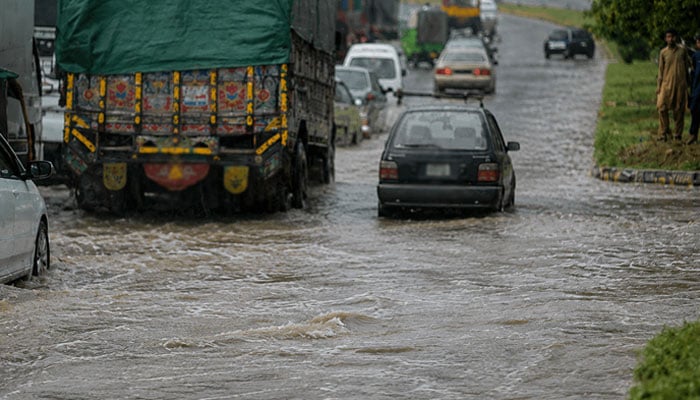
    Heavy rain, strong winds and thunderstorms lashed Rawalpindi and Islamabad on Saturday. The downpour disrupted routine life in several parts of the two cities. Several areas of Islamabad faced waterlogging after the heavy rainfall. Underpasses in the G-6 sector were filled with rainwater. The accumulation of water caused difficulties for motorists and pedestrians. The situation was also reported to be severe in Chatta Bakhtawar. Roads and streets were submerged under rainwater. Several streets gave the appearance of ponds. Rainwater also entered residential houses in the area, creating problems for residents. The heavy rain also affected electricity supply in different parts of Rawalpindi and Islamabad. Several areas experienced power disruptions as the weather conditions deteriorated. Rawalpindi authorities declared a rain emergency following the heavy downpour. The Water and Sanitation Agency (WASA) activated its teams to deal with the situation. Staff members were deployed to affected areas. Heavy machinery was also moved to different locations. The equipment was being used to remove accumulated rainwater and keep major roads and routes clear. The Pakistan Meteorological Department has forecast more rain in several parts of the country. Islamabad, Punjab, Khyber Pakhtunkhwa, northeastern Balochistan, Gilgit-Baltistan and Kashmir are expected to receive rain. The Met Office has warned that some areas may receive heavy rainfall. The intense rain could increase the risk of flooding in streams and rain-fed waterways. Authorities have also been advised to remain alert in vulnerable areas. Urban flooding may cause further disruption if heavy rain continues. Meanwhile, the water situation in the Indus River has also become a concern. Medium-level flooding has been reported at Kalabagh. Water inflow at Kalabagh was recorded at around 397,000 cusecs. The rising water level has increased pressure on river management authorities. Low-level flooding has also been reported at several major water reservoirs and barrages. These include Tarbela Dam, Chashma Barrage, Taunsa, Guddu and Sukkur Barrage. Despite the flooding at these locations, the overall situation in the country’s other rivers remains normal. The Flood Forecasting Division in Lahore said there was no major flood situation in the remaining rivers.

  • | |

    Tabish Hashmi called out on using Kashmir for publicity

    Tabish Hashmi has built his public profile on warmth, humour and a reputation for speaking his mind. His show Hasna Mana Hai made him a household name, and his film debut in Aag Lagay Basti Mein widened that profile further. But a sequence of events over the past few days has placed him at the centre of a controversy that cuts deeper than most he has faced, because it touches on something Pakistani audiences take very seriously: the sincerity of public voices when they speak on Kashmir. The sequence began when Hashmi posted on his Instagram announcing that Hasna Mana Hai had come to an end. The announcement landed at a moment of heightened public emotion, coinciding directly with his video in support of Kashmiri protesters who were demonstrating against what they described as unrest and violence in the region. The timing created an obvious and powerful impression in the minds of many followers: that his show had been shut down as a consequence of his stand on Kashmir. The response was immediate. Hashmi received an outpouring of solidarity and support from social media, with many people praising him for paying a professional price for speaking up. Then came the reveal. It turned out that Hasna Mana Hai had not been cancelled at all. The show’s set was simply being redesigned and renovated. The announcement of the show’s end was a marketing exercise to generate excitement around the new set reveal, and the Kashmir video had been used in proximity to that announcement in a way that allowed the association to form organically in the public mind without being explicitly stated. Content creator and commentator Ali Arif was among the most visible voices to call out what had happened. In a video addressing the controversy, he went through the sequence of events and pointed out precisely what Hashmi had done: posted a video about Kashmir, allowed the public to connect it to his show’s apparent end, absorbed the sympathy and support that followed, and then revealed the whole thing was a set change. He criticised Hashmi specifically for not clarifying the situation while the solidarity was pouring in, arguing that the failure to correct the impression was itself the problem. The public reaction was sharp and widely shared. “This is what is wrong with this nation. Using a tragedy for your gain,” wrote one person. Another said simply, “Such a sad state of affairs.” A third was even more pointed: “He made a mockery of taking a stand.” The controversy has prompted a genuine conversation about the ethics of celebrity activism in Pakistan, particularly when serious political or humanitarian situations are in the vicinity of promotional content. Whether the proximity of the Kashmir video and the show announcement was deliberate or poor timing, the result has been a significant erosion of goodwill from an audience that had, until this week, been squarely in Hashmi’s corner.

  • |

    Private sector gets record Rs1.138 trillion loans in FY2025-26

    Pakistan’s private sector secured bank financing worth Rs1.138 trillion during the fiscal year 2025-26, marking the highest level of private-sector credit in the last four years, according to Adviser to the Finance Minister Khurram Shahzad. In a statement, Shahzad said the sharp increase in lending reflects improving economic conditions, stronger business confidence, and the government’s efforts to encourage investment and industrial growth. He noted that private-sector credit expanded by approximately 15 percent during the fiscal year compared to the previous year. The adviser highlighted that greater access to financing has played a key role in supporting business expansion and productive economic activities across the country. He added that around 89 percent of the newly disbursed loans were directed toward major productive sectors, including manufacturing, wholesale and retail trade, and agriculture. According to Shahzad, the manufacturing sector alone received fresh financing of Rs657 billion, enabling industries to expand production capacity, modernize operations, and meet growing market demand. He said the significant flow of funds into manufacturing demonstrates renewed confidence in Pakistan’s industrial sector. He further stated that increased financial support for the trade and agriculture sectors has contributed to higher production, stronger commercial activity, and improved investment by private businesses. Enhanced credit availability, he said, is helping enterprises expand operations, create employment opportunities, and strengthen overall economic performance. Shahzad described the record lending as a positive indicator of the country’s economic recovery, saying that rising private-sector borrowing reflects improving investor sentiment and greater confidence in Pakistan’s financial system. He added that sustained access to bank financing would remain essential for maintaining economic momentum, boosting productivity, and supporting long-term, sustainable growth.

  • |

    President Zelenskiy reassigns Rustem Umerov to head foreign intelligence in ongoing administration reshuffle

    Ukrainian President Volodymyr Zelenskiy has appointed Rustem Umerov, former Defence Minister and head of the National Security and Defence Council, as the country’s new chief of foreign intelligence. Despite taking on the intelligence portfolio, Umerov will retain his role leading Ukraine’s peace delegation in negotiations aimed at ending the conflict with Russia. The personnel shift is part of a broader cabinet restructuring initiated in July that saw former Interior Minister Ihor Klymenko named to head the Security Council, while former Defence Minister Mykhailo Fedorov and top military commander Oleksandr Syrskiy were relieved of their positions. The decision to remove Fedorov, an advocate for digital and drone warfare, sparked public criticism and street demonstrations calling for his reinstatement. While critics argue the reshuffle repeatedly shifts a small circle of close political allies between senior posts, government officials maintain the structural changes are designed to optimize national defense preparations ahead of anticipated winter strikes on energy infrastructure.

  • | | | |

    Trump warns Oman over Strait of Hormuz

    US President Donald Trump has warned Oman that Washington could launch an attack if Muscat interferes with US efforts in the Strait of Hormuz, according to comments he made in an interview with US media. Trump said the United States would take military action if Oman obstructed American operations in the strategically important waterway. His remarks mark another escalation in Washington’s warnings toward Oman, following a similar threat he reportedly made in May. The US president also said his administration had established a direct, behind-the-scenes communication channel with Iran’s Islamic Revolutionary Guard Corps (IRGC). He did not provide further details about the nature or purpose of those contacts. Trump also sought to underline the scale of America’s military capabilities, saying the United States still has extensive weapons stockpiles. He claimed that the amount of weaponry the US has used so far represents only a small fraction of its available reserves. “We have a lot of weapons left,” Trump said, while indicating that Washington still possesses large quantities of medium-range weapons. The Strait of Hormuz remains a critical global energy route, making any potential military confrontation in the area a major concern for international markets and regional security. Any disruption to shipping through the strait could affect global oil supplies and trigger wider economic and geopolitical repercussions.

Leave a Reply

Your email address will not be published. Required fields are marked *