trump warns oman
| | | |

Trump warns Oman over Strait of Hormuz

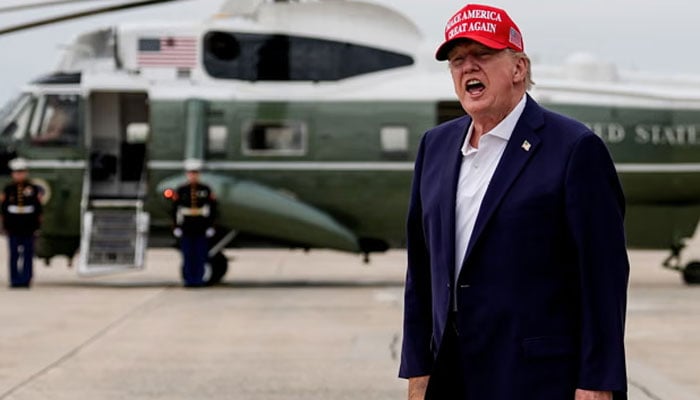
US President Donald Trump has warned Oman that Washington could launch an attack if Muscat interferes with US efforts in the Strait of Hormuz, according to comments he made in an interview with US media.

Trump said the United States would take military action if Oman obstructed American operations in the strategically important waterway. His remarks mark another escalation in Washington’s warnings toward Oman, following a similar threat he reportedly made in May.

The US president also said his administration had established a direct, behind-the-scenes communication channel with Iran’s Islamic Revolutionary Guard Corps (IRGC). He did not provide further details about the nature or purpose of those contacts.

Trump also sought to underline the scale of America’s military capabilities, saying the United States still has extensive weapons stockpiles. He claimed that the amount of weaponry the US has used so far represents only a small fraction of its available reserves.

“We have a lot of weapons left,” Trump said, while indicating that Washington still possesses large quantities of medium-range weapons.

The Strait of Hormuz remains a critical global energy route, making any potential military confrontation in the area a major concern for international markets and regional security. Any disruption to shipping through the strait could affect global oil supplies and trigger wider economic and geopolitical repercussions.

Similar Posts

  • |

    Indian court acquits ex-wrestling chief in harassment case

    A court in New Delhi has acquitted former Wrestling Federation of India (WFI) chief Brij Bhushan Sharan Singh in a high-profile sexual harassment and stalking case filed by several women wrestlers, bringing an end to one of India’s most closely watched legal proceedings involving the sports community. Singh, 69, a former member of parliament from the ruling Bharatiya Janata Party (BJP), had faced allegations from a group of prominent female wrestlers who accused him of sexual harassment, inappropriate conduct and demanding sexual favours. He consistently denied all allegations throughout the investigation and trial. The case attracted nationwide attention in 2023 after leading Indian wrestlers, including world champion Vinesh Phogat and Olympic bronze medallist Sakshi Malik, launched weeks-long protests demanding Singh’s removal from the Wrestling Federation of India and legal action against him. The demonstrations sparked widespread debate over athlete safety, accountability and the treatment of women in Indian sports. According to Singh’s legal team, the court cleared him of all charges after finding inconsistencies in witness testimonies and contradictions in key aspects of the prosecution’s case. Following the verdict, his supporters celebrated outside the court by showering him with flower petals, bursting firecrackers and chanting slogans. Reacting to the ruling, Singh welcomed the decision and maintained that he had always been confident of his innocence. He described the judgment as a complete vindication of his position. Despite the acquittal, wrestler Vinesh Phogat said the legal battle was not over. She announced that the athletes would challenge the verdict before a higher court, insisting they would continue seeking justice. Phogat said it had taken immense courage for the wrestlers to file complaints against a politically influential figure and vowed to pursue the case through all available legal channels. The controversy first erupted in 2023 when protesting wrestlers accused authorities of delaying action despite their complaints. Images of athletes being detained while marching towards the Indian Parliament drew widespread attention and intensified public scrutiny of the case.

  • | | |

    South Korean energy firm seeks PM Shehbaz’s …

    A South Korean state-owned energy company has appealed directly to Prime Minister Shehbaz Sharif, claiming that prolonged regulatory delays have placed its planned $1 billion investment in Pakistan’s hydropower sector at serious risk. In a letter addressed to the prime minister, Korea South-East Power Co. Ltd. (KOEN) said it had spent nearly a decade developing two run-of-the-river hydropower projects on the Swat River in Khyber Pakhtunkhwa but remains unable to move forward because of unresolved regulatory approvals. The company, a subsidiary of Korea Electric Power Corporation (KEPCO), is developing the 229-megawatt Asrit Kedam and 238-megawatt Kalam Asrit hydropower projects. Together, the projects represent an investment of approximately $1 billion, with the company already investing around $25 million in feasibility studies, surveys, and other preparatory work. According to KOEN, the projects have met all major government requirements since development began in 2016. The company signed a memorandum of understanding with the Khyber Pakhtunkhwa government, obtained letters of intent from the Pakhtunkhwa Energy Development Organization (PEDO), completed feasibility studies, secured a power generation licence from the National Electric Power Regulatory Authority (Nepra), and maintained all required financial guarantees. Despite fulfilling these requirements, KOEN said the tariff determination for the projects has remained pending for nearly three years. The company noted that Nepra conducted a public hearing on its tariff petition in July 2023, but a final decision has yet to be issued. The company said it repeatedly approached Nepra and later appealed to the Nepra Appellate Tribunal, which directed the regulator to decide the tariff matter. However, KOEN claims that the tribunal’s order has still not been implemented. Adding to its concerns, the company said both hydropower projects have been excluded from the draft Indicative Generation Capacity Expansion Plan (IGCEP) 2025–35. KOEN warned that if the revised plan is approved without the projects, its proposed investment could remain stalled indefinitely. In its appeal, the company urged the prime minister to intervene and ensure a timely tariff determination while allowing the projects to continue under Pakistan’s Power Generation Policy 2015, the framework under which the investment was originally made. KOEN also stated that it understands Pakistan’s current surplus electricity generation and is willing to align the commercial operation of the projects with the country’s future energy requirements rather than adding unnecessary capacity. The issue comes as Pakistan and South Korea continue discussions aimed at strengthening bilateral trade and investment ties through a proposed Comprehensive Economic Partnership Agreement (CEPA). Analysts say resolving regulatory bottlenecks will be crucial for maintaining investor confidence and attracting future foreign direct investment into Pakistan’s energy sector.

  • | |

    India approves first dengue vaccine

    India has approved the use of its first dengue vaccine, marking a significant step in the country’s efforts to tackle a disease that affects millions of people each year. According to India’s Ministry of Health, authorities approved the Japanese pharmaceutical company Takeda’s dengue vaccine, Qdenga, on July 21. The Central Drugs Standard Control Organisation (CDSCO) has cleared the vaccine for people between the ages of 4 and 60. Health officials say the vaccine could help protect children, teenagers, and adults from dengue, a mosquito-borne viral infection that can sometimes develop into a severe and potentially life-threatening illness. The vaccination schedule consists of two doses administered three months apart. Takeda developed the vaccine in partnership with Indian pharmaceutical company Biological E, which is working with the Japanese firm to support its production in India. According to media reports, Qdenga offers protection against all four major dengue virus serotypes. Regulators in 42 countries have already approved the vaccine, while more than 24 million doses have reportedly been administered worldwide. So far, health authorities have not identified any major safety concerns linked to its use. The approval comes as India continues to face a substantial dengue burden. More than one million dengue cases have reportedly been recorded across the country since 2021, with around 1,500 deaths linked to the disease during the same period. Dengue spreads primarily through the bite of infected Aedes mosquitoes and remains a major public health concern in tropical and subtropical regions. India’s approval of Qdenga could provide health authorities with another tool to reduce the impact of dengue, particularly during periods when mosquito populations rise and infections increase.

  • |

    India Temple stampede leaves 7 dead, dozens injure…

    NEW DELHI: A crowded morning of worship turned tragic at the Ashok Dham Temple in India’s Bihar state on Monday after a stampede-like incident killed at least seven devotees and injured more than a dozen others. The incident occurred in Lakhisarai district as thousands of worshippers gathered at the temple on the third Monday of the Hindu month of Sawan. Local reports said the crowd surged suddenly, creating panic outside the shrine. Officials said the arrival of two trains between around 6:30am and 6:45am sharply increased the number of people near the temple. The sudden rush reportedly caused a barricade to break, leaving people falling over one another. Initial reports also suggested that an electrical pole or wire may have fallen, triggering panic among worshippers. Authorities have yet to establish the exact sequence of events, and an investigation is underway. Emergency teams and district officials rushed to the scene after the incident. Several injured people were taken to nearby hospitals for treatment, while authorities worked to restore order and manage the remaining crowds. The tragedy has renewed concerns about crowd-control arrangements at major religious gatherings in India, where large numbers of devotees often converge at temples during important festivals. Officials said rescue and relief operations were continuing, while authorities were monitoring the situation around the temple. The incident comes as religious sites across the region experience heavy attendance during the Sawan season, highlighting the importance of effective crowd management, emergency access and safe movement routes.

  • |

    Abu Dhabi Police warn residents about rise in salary day online scams

    Abu Dhabi Police have warned residents to stay alert as cybercriminals increase online fraud attempts around monthly salary payment periods. Officials said scammers often take advantage of the time when many people receive their salaries by using fake offers and deceptive schemes to steal money, banking details, and personal information. According to the police, fraudsters are creating fake promotions, counterfeit websites, and misleading online advertisements designed to appear genuine. They urged residents to deal only with trusted companies and verified service providers and to be cautious of offers that seem unusually attractive or promise unrealistic benefits. Authorities identified several scams that have recently become more common. These include fake advertisements for villas, holiday homes, and chalets, fraudulent residency visa services, counterfeit job offers, and fake recruitment agencies claiming to provide employment opportunities. Police also warned about unauthorized insurance plans and false advertisements offering vehicles allegedly seized by Abu Dhabi Customs. Scammers are also targeting buyers with fake listings for vehicle registration plates and luxury watches sold at heavily discounted prices. In addition, authorities highlighted fraudulent investment schemes that promise exceptionally high returns in a short period, a tactic commonly used to convince victims to hand over their savings. Police said criminals are increasingly using fake websites that imitate government departments and well known organizations to trick people into revealing sensitive information. Other scams involve persuading victims to install remote access software on their phones or computers, allowing fraudsters to gain access to personal data and banking accounts. Residents were also warned about requests for advance payments for products or services that do not exist. These include fake training courses, certificates, event tickets, and online shopping offers where the promised goods are never delivered after payment is made. Abu Dhabi Police strongly advised the public never to share banking information, passwords, or one time passwords with anyone, regardless of the reason given. Officials stressed that banks and government agencies do not ask customers to disclose such confidential information through phone calls, text messages, or online links. Authorities also encouraged residents to verify the identity of sellers and service providers before transferring money or making advance payments. They recommended accessing government services only through official websites and authorized mobile applications instead of clicking on links found through search engines or social media advertisements. Anyone who suspects they have encountered a scam or comes across suspicious online activity is urged to report it immediately through Abu Dhabi Police’s Aman service. Prompt reporting allows investigators to respond more quickly, prevent additional victims from being targeted, and strengthen efforts to combat cybercrime across the community. Police emphasized that staying cautious, verifying information before making payments, and protecting personal banking details are the most effective ways to avoid falling victim to online fraud, particularly during salary periods when scammers are most active.

  • | |

    US unveils toughest-ever sanctions push against Ir…

    WASHINGTON: The United States is preparing what Treasury Secretary Scott Bessent described as the toughest sanctions campaign ever imposed on Iran, as Washington seeks to intensify economic pressure on Tehran while potentially reducing the need for further major military action. The announcement came after President Donald Trump warned that countries supporting Iran could face severe economic penalties. Trump said the United States was launching an unprecedented campaign of “economic warfare and isolation” against Iran and threatened consequences for foreign governments, financial institutions and businesses that provide assistance to Tehran. Bessent said the planned measures would target activities linked to Iran’s economy, including oil smuggling, financial transfers, exchange houses, ship registries and front companies. He indicated that maximum economic pressure could reduce the likelihood of a large-scale resumption of military operations. Iran strongly condemned the US strategy, accusing Washington of committing “economic terrorism” and “crimes against humanity.” Its Foreign Ministry argued that sanctions imposed on Iran have harmed the basic rights and livelihoods of ordinary citizens and said those responsible should face legal consequences. The escalating tensions have also affected global energy markets. Oil prices climbed to their highest level in more than three weeks following Washington’s latest threats, amid concerns over disruptions to Middle Eastern oil supplies after months of conflict. Bessent said the administration would provide further details at a press conference on Monday, describing the strategy as a combination of economic sanctions and a US blockade. The announcement signals a major escalation in Washington’s economic campaign against Tehran as both sides remain locked in a deepening confrontation. Moreover, US President Donald Trump has announced a major new economic offensive against Iran. He described the move as the most crushing economic operation ever taken against a country. Trump said the United States would launch an unprecedented campaign to put further economic pressure on Tehran. He also warned countries and entities that continue to support Iran that they could face severe economic consequences. The US president said the campaign was aimed at isolating Iran and cutting off its remaining economic lifelines. He described the policy as economic warfare on an extraordinary scale. Trump warned that any country allowing its financial institutions, businesses, airports or government bodies to provide support to Iran would also face consequences. He specifically pointed to activities such as oil smuggling, cash transfers, exchange houses, shipping networks and front companies. However, Trump did not provide full details of the new measures. He also did not name any specific country that could be targeted for helping Iran. The announcement marks a further escalation in Washington’s pressure campaign against Tehran. The United States has already imposed extensive sanctions on Iran and has been seeking to restrict its access to international markets, foreign currency and oil revenues. Iran is already facing serious economic difficulties. The ongoing conflict, sanctions and disruptions to trade have placed additional pressure on the country’s economy. Reuters reported that Iran has been dealing with high inflation, a weakening currency and declining economic activity. Trump’s latest announcement comes as efforts to resolve the conflict through negotiations remain stalled. The United States has continued to demand major concessions from Iran, while Tehran has maintained its own demands for an end to the blockade and military pressure. The economic campaign could also affect countries and companies that maintain commercial links with Iran. Washington has previously considered measures aimed at countries involved in Iranian trade, particularly activities connected to oil and financial transactions. The development has raised concerns about further pressure on Iran’s economy and the wider regional situation. The conflict has already disrupted trade and shipping through the Strait of Hormuz, a major route for global energy supplies. Meanwhile, Iranian Foreign Minister Abbas Araghchi held a telephone conversation with Field Marshal Syed Asim Munir. During the call, they discussed efforts to find a political and diplomatic solution to the ongoing issues. The contact comes as diplomatic efforts continue alongside growing economic and military pressure. Pakistan has repeatedly emphasized dialogue and diplomacy as the preferred way to address regional tensions

Leave a Reply

Your email address will not be published. Required fields are marked *