climate chief urges
| | |

UN climate chief urges speed as COP31 confronts fossil fuel divide

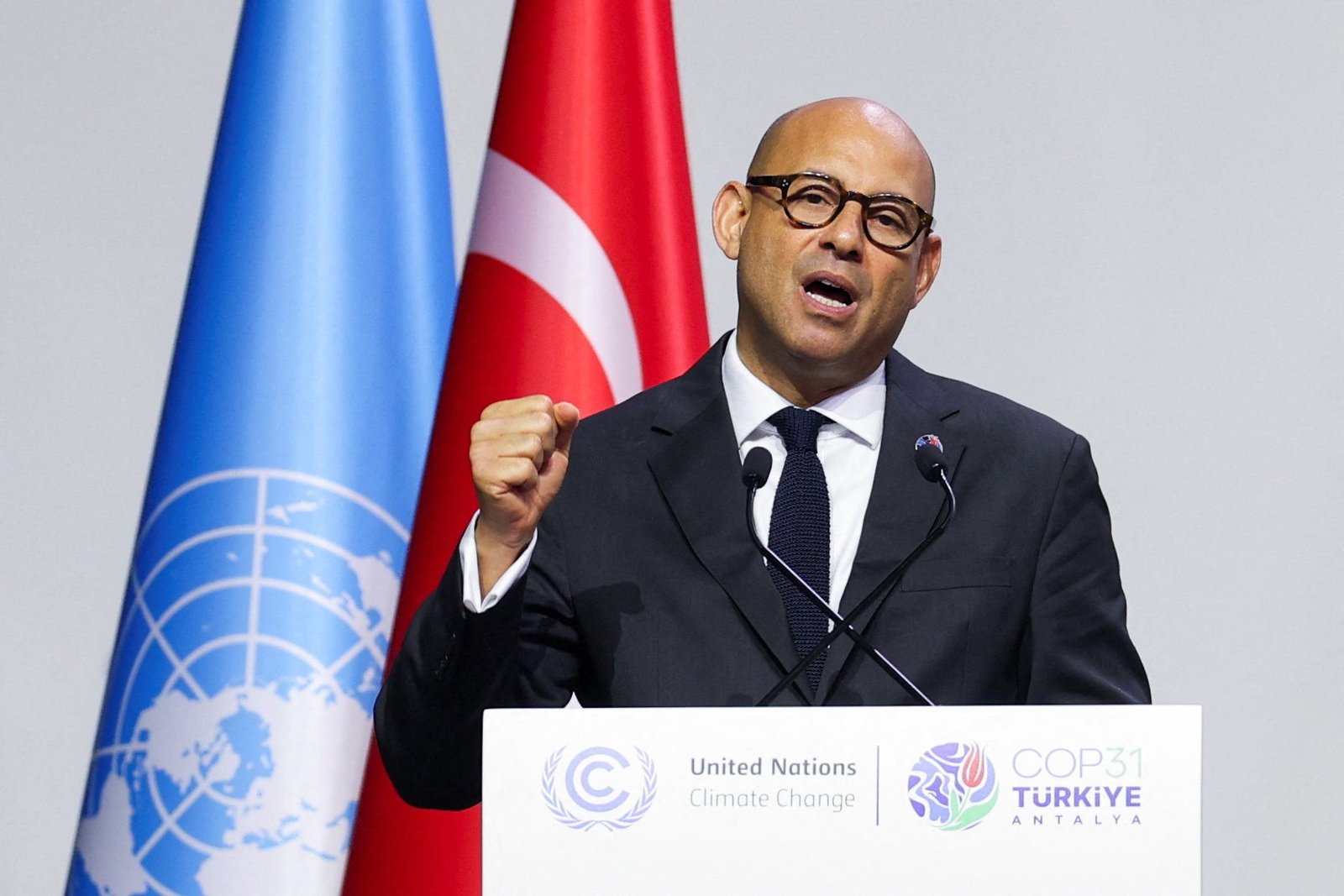
ANTALYA, Turkey – The UN’s top climate official urged negotiators at the COP31 conference in Turkey on Saturday, November 14, to move swiftly towards a deal and “avoid tactical delays” as the summit heads into its second and final week.

The annual UN climate conference faces new challenges this year as a slew of crises from war to inflation push global warming down the list of priorities for world governments.

“Each country has a view. Every country has a voice. Getting agreement on every word, every sentence is tough but vital work,” Simon Stiell told the summit. “There is no collective success without compromise from every party.”

“As we head into the second week, I urge parties to move swiftly to the hardest issues and to avoid tactical delays.”

Big fossil fuel producers and consumers at the talks are resisting any deal that would specify firm new targets or a shift away from oil, gas and coal, observers said, posing a challenge for summit host Turkey and lead negotiator Australia to land the kind of ambitious agreement climate advocates say is needed to address global warming.

A UN report last month found the world is already on course to exceed the 1.5 degrees Celsius (2.7 degrees Fahrenheit) warming threshold, a limit scientists say should prevent the worst effects of climate change.

Australia’s COP31 President of Negotiations Chris Bowen said he expected a first draft of a deal text to emerge early next week.

Turkey’s electrification plan

Turkey is striving to place a proposal to expand global electrification at the center of an eventual deal, saying the plan will lead to faster emissions cuts by speeding the shift away from fossil fuel-powered cars, boilers, furnaces and other equipment.

The proposal does not require the increased electricity use to come from renewable sources, however, disappointing observers and delegations that want countries to more clearly map out their transition away from fossil fuels.

Major oil producers such as Saudi Arabia and Russia have traditionally resisted language constraining fossil fuels, while large developing economies such as India have opposed measures they say could limit their development and energy choices, a dynamic that has compromised the outcomes of past deals.

The world’s biggest oil consumer, the United States, meanwhile, has skipped the talks for the second year in a row under President Donald Trump, who has called global warming a hoax and promoted continued use of fossil fuels.

Asked how he viewed the progress in talks so far, Stiell said: “All I can say at this stage is engagement has been constructive. We know where those natural tensions lie.” – Rappler.com
Similar Posts

  • | | |

    Iran says US military weaker as Hormuz crisis deep…

    TEHRAN: Iran has intensified its rhetoric against the United States as attacks on commercial shipping and stalled peace efforts deepen uncertainty over the future of the war, with Tehran warning that the strategically vital Strait of Hormuz will remain closed unless Washington accepts its conditions. Mohammad Reza Naqdi, an adviser to the commander of Iran’s Islamic Revolutionary Guard Corps, said in an interview with PBS that the US military had proved “weaker than what we perceived” during the five-month conflict. Naqdi said Iran had gained valuable battlefield experience during the war and claimed Tehran would continue to emerge victorious. “The longer this war lasts, the more experience we gain,” he said, arguing that Iranian forces had learned how to confront the US military through direct experience. His comments came as maritime traffic through the Strait of Hormuz dropped sharply. Shipping data showed only eight vessels were tracked through the waterway on Tuesday, below a 10-day average of about 12 and the lowest daily figure since August 5. Before the conflict, the strait typically handled around 130 to 140 vessels a day. The slowdown has heightened fears over global energy supplies because Hormuz is a crucial route for oil and liquefied natural gas shipments. The International Maritime Organization has previously warned of serious risks to vessels and seafarers operating in the area. Shipping attacks raise fresh alarm Tensions also spread to other maritime chokepoints. Four crew members were reportedly killed in a suspected Houthi attack on a cargo vessel in the Bab el-Mandeb Strait, while two Yemeni rescuers were also killed, according to reports cited in the source material. The US military separately said an MH-60 helicopter fired two Hellfire missiles at a Panama-flagged cargo ship after the vessel allegedly ignored warnings linked to a blockade of Iranian ports. Maritime sources said the incident occurred off Pakistan in the Gulf of Oman. The attacks have added to concerns that the conflict could disrupt shipping routes connecting the Gulf with the Red Sea and beyond. Iran sets conditions for reopening Hormuz Iranian security official Mohsen Rezaei said the Strait of Hormuz would not reopen unless Washington agreed to Tehran’s demands, including the release of frozen Iranian assets and an end to conflicts across the region. Iran’s parliament is also preparing legislation that would restrict military and commercial vessels from countries Tehran considers hostile from entering the Gulf without Iranian authorisation. The proposed law is intended to strengthen Iran’s control over the strategically important waterway. US President Donald Trump, meanwhile, has continued to combine threats with suggestions that negotiations could eventually produce a settlement. He has claimed the United States has control over the Strait and warned Iran against further escalation. Oil markets have already reacted to the uncertainty. Brent crude rose 1.4 per cent to $88.91 a barrel, while US crude gained 1.3pc to $83.20. Pakistan seeks diplomatic space Amid the worsening security situation, Pakistan has continued diplomatic engagement with Tehran. Interior Minister Mohsin Naqvi visited Iran and met President Masoud Pezeshkian, with both sides stressing the importance of strengthening bilateral political, economic, trade, cultural and security ties. Pezeshkian praised Pakistan’s commitment to closer relations and said Tehran was ready to expand cooperation with Islamabad. Naqvi said his visit was aimed at following up on understandings reached between the two countries and accelerating implementation of existing agreements. With military rhetoric rising, shipping routes under pressure and negotiations at an apparent impasse, the Strait of Hormuz remains at the centre of a crisis whose consequences could extend far beyond the Middle East.

  • |

    Healthy diet out of reach for one in three people globally, UN report reveals

    One in three people worldwide, approximately 2.69 billion individuals, cannot afford a healthy, nutrient-rich diet, according to a joint report by five United Nations agencies. The State of Food Security and Nutrition in the World 2026 calculates the global average cost of a healthy diet at 4.28 purchasing power parity (PPP) dollars per day. This figure significantly exceeds the international extreme poverty line of $3 PPP per person, placing diverse, nutrient-dense foods such as fruits, vegetables, dairy, and lean meats out of economic reach for billions. Public health experts note that historic agricultural subsidies have heavily favoured starchy staples over nutrient-dense options, driving a global surge in adult obesity rates from 12.1 per cent in 2012 to 16.2 per cent in 2024. While global hunger declined for a third consecutive year in 2025, affecting 7.8 per cent of the world’s population compared to 8.1 per cent in 2024, regional disparities remain severe. Africa has become home to the highest absolute number of hungry people for the first time, with roughly 309 million affected. Across the continent, 66.6 per cent of the population was unable to afford a healthy diet in 2025, more than double the rates observed in Asia or Latin America. UN officials warn that ongoing disruptions to maritime trade, alongside potential climate shocks, threaten to reverse recent progress and jeopardise international targets to eliminate global hunger by 2030.

  • | |

    Pentagon faces shortage of missile defense interceptors

    The US Department of Defense is facing a growing shortage of missile defense interceptors after months of sustained military operations in the Middle East, raising concerns among American defense planners about the Pentagon’s ability to maintain its current pace of operations and protect US forces in the event of another major conflict. According to a report by Fox News, data compiled by the Center for Strategic and International Studies (CSIS) indicates that US stocks of Patriot air defense interceptors have fallen sharply. Before the recent escalation in regional conflicts, the United States reportedly held around 2,300 Patriot interceptors. That figure has now dropped to fewer than 827. The Pentagon has also seen a significant reduction in its stockpile of interceptors used by the Terminal High Altitude Area Defense (THAAD) system. CSIS data cited in the report shows that the number of THAAD interceptors has declined from approximately 452 to fewer than 278. The decline in these critical missile defense stocks has prompted questions about the US military’s ability to respond to multiple threats at the same time. Defense planners are particularly concerned about the possibility of a new crisis emerging in another strategic region, such as the Indo-Pacific, while American forces remain engaged in the Middle East. CSIS has warned that rebuilding depleted interceptor inventories could take at least three years. The lengthy replenishment timeline reflects the difficulty of rapidly expanding production of sophisticated missile defense systems, which require specialized components, advanced manufacturing capabilities and extensive testing. The shortage could create additional pressure on US military leaders as they balance the need to defend American troops and military installations overseas with the requirement to maintain sufficient reserves for future conflicts. To address the growing gap, the Pentagon has included $18.2 billion in its broader $67 billion emergency funding request for fiscal year 2026. The proposed funds would support the replenishment of Patriot interceptors, Tomahawk cruise missiles used by the US Navy and additional interceptors for the THAAD missile defense system. The Pentagon’s spending plans also highlight a broader effort to rebuild weapons inventories that have come under pressure from sustained military operations and rising global security demands. US defense officials have increasingly focused on expanding domestic production capacity and ensuring that the military can replace weapons at a faster rate. According to the report, nearly half of the weapons included in the Army’s preliminary fiscal year 2027 budget requests fall into the relatively lower-cost category, with each weapon costing $600,000 or less. The approach reflects efforts to strengthen stockpiles of systems that the military can procure in larger quantities while continuing to invest in more advanced and expensive defense technologies. The interceptor shortage underscores a wider challenge for the United States as it seeks to prepare for potential conflicts on multiple fronts. While missile defense remains a key component of US military strategy, the depletion of interceptor stocks could limit Washington’s flexibility if it faces simultaneous threats in the Middle East, Europe or the Indo-Pacific. Defense analysts say the issue also highlights the importance of maintaining adequate reserves during prolonged conflicts. Replenishing stocks may take years, meaning decisions about the use of missile defense interceptors could become increasingly important as the Pentagon seeks to protect US personnel and strategic assets while preserving its ability to respond to future crises.

  • | |

    Oil prices climb as Hormuz tensions rekindle suppl…

    Global oil prices moved higher on Friday as renewed uncertainty surrounding the Strait of Hormuz fueled concerns over potential disruptions to one of the world’s most critical energy shipping routes. Brent crude futures rose 80 cents, or nearly 1%, to $83.29 per barrel, while US West Texas Intermediate (WTI) crude gained 64 cents to reach $77.93 per barrel. The increase followed a sharp rally in the previous session, when prices surged by more than $3 after reports that Iran was considering new restrictions on maritime traffic through the strategic waterway. Market sentiment shifted after Iranian officials proposed measures that could prohibit US and Israeli-linked vessels from transiting the Strait of Hormuz, while imposing significant financial penalties on ships from countries deemed hostile. The proposal, reportedly being reviewed by Iran’s parliament, has raised fresh concerns about the future of global energy supplies. Analysts said the latest developments indicate that tensions between Iran and the United States remain unresolved, despite recent hopes of diplomatic progress. They noted that the market is now pricing in the possibility of a tightly managed transit system rather than a return to unrestricted shipping through the strait. Reports also suggest that Iran is seeking transit fees ranging from 5% to 7% of cargo values, while Oman has proposed lower charges. However, industry experts believe any agreement would face significant hurdles because of US sanctions and insurance restrictions affecting international shipping. Although crude benchmarks are still on track to post weekly losses after earlier declines driven by optimism over a possible breakthrough in the regional conflict, the renewed geopolitical uncertainty has restored upward pressure on prices. Adding to market jitters, Yemen’s Houthi movement claimed missile and drone attacks targeting Saudi positions in Marib and Hadramout, further highlighting the fragile security situation in the region. Meanwhile, US President Donald Trump expressed optimism that the conflict could end soon, but investors remain cautious as uncertainty continues to dominate the global oil market.

  • |

    Italy faces growing childhood obesity crisis as diets change

    Italy is confronting a growing childhood obesity problem as traditional Mediterranean eating habits are increasingly replaced by calorie-heavy and highly processed foods. The issue is particularly serious in southern Italy. In parts of the Campania region, more than 40% of children aged eight and nine are reported to be overweight. Naples and surrounding communities have become major areas of concern for health professionals. Doctors say they are seeing increasingly younger patients with severe obesity. At a hospital in Naples, specialists who once mainly treated adults are now treating teenagers with serious weight-related problems. In severe cases, patients may require bariatric surgery to reduce the size of the stomach. However, doctors say some teenagers are now arriving at weights that make such procedures too risky. Some are first given medical treatment to help control appetite and lose enough weight to undergo surgery safely. Health experts point to major changes in Italian eating habits as one factor behind the trend. The traditional Mediterranean diet, built around vegetables, legumes, whole grains, olive oil and fish, is becoming less common. Instead, children are increasingly exposed to processed snacks, sugary drinks, refined carbohydrates and calorie-dense foods. Experts say the problem is not necessarily one particular meal but the cumulative effect of frequent snacking and poor diet quality. Doctors also say many parents struggle to recognise when their children are overweight. In some communities, a heavier child may traditionally be viewed as healthy or well-fed, making it harder for families to identify a potential health problem early. Physical activity can also be difficult for some children. Many schools operate in historic buildings that were not designed to provide adequate space for modern sports and exercise. Authorities are now attempting to address the problem through schools and community programmes. A regional initiative in Campania plans to involve more than 17,000 students across 25 schools in nutrition education and healthy lifestyle programmes, with families also receiving guidance. Italy has also taken a broader approach to obesity. In 2025, it became the first country to introduce a national law recognising obesity as a chronic, progressive and relapsing disease. Campania is also being used to test new approaches, including a controlled “fast-mimicking” diet for overweight adolescents. Researchers hope the programme could improve metabolic health, although some paediatric specialists have raised concerns about the limited evidence and possible psychological effects of restrictive diets on young people. Health experts stress that tackling childhood obesity will require more than simply telling children to eat less or exercise more. Families, schools, healthcare providers and policymakers all have a role in changing the environment around young people.

Leave a Reply

Your email address will not be published. Required fields are marked *