pentagon faces shortage
| |

Pentagon faces shortage of missile defense interceptors

The US Department of Defense is facing a growing shortage of missile defense interceptors after months of sustained military operations in the Middle East, raising concerns among American defense planners about the Pentagon’s ability to maintain its current pace of operations and protect US forces in the event of another major conflict.

According to a report by Fox News, data compiled by the Center for Strategic and International Studies (CSIS) indicates that US stocks of Patriot air defense interceptors have fallen sharply. Before the recent escalation in regional conflicts, the United States reportedly held around 2,300 Patriot interceptors. That figure has now dropped to fewer than 827.

The Pentagon has also seen a significant reduction in its stockpile of interceptors used by the Terminal High Altitude Area Defense (THAAD) system. CSIS data cited in the report shows that the number of THAAD interceptors has declined from approximately 452 to fewer than 278.

The decline in these critical missile defense stocks has prompted questions about the US military’s ability to respond to multiple threats at the same time. Defense planners are particularly concerned about the possibility of a new crisis emerging in another strategic region, such as the Indo-Pacific, while American forces remain engaged in the Middle East.

CSIS has warned that rebuilding depleted interceptor inventories could take at least three years. The lengthy replenishment timeline reflects the difficulty of rapidly expanding production of sophisticated missile defense systems, which require specialized components, advanced manufacturing capabilities and extensive testing.

The shortage could create additional pressure on US military leaders as they balance the need to defend American troops and military installations overseas with the requirement to maintain sufficient reserves for future conflicts.

To address the growing gap, the Pentagon has included $18.2 billion in its broader $67 billion emergency funding request for fiscal year 2026. The proposed funds would support the replenishment of Patriot interceptors, Tomahawk cruise missiles used by the US Navy and additional interceptors for the THAAD missile defense system.

The Pentagon’s spending plans also highlight a broader effort to rebuild weapons inventories that have come under pressure from sustained military operations and rising global security demands. US defense officials have increasingly focused on expanding domestic production capacity and ensuring that the military can replace weapons at a faster rate.

According to the report, nearly half of the weapons included in the Army’s preliminary fiscal year 2027 budget requests fall into the relatively lower-cost category, with each weapon costing $600,000 or less. The approach reflects efforts to strengthen stockpiles of systems that the military can procure in larger quantities while continuing to invest in more advanced and expensive defense technologies.

The interceptor shortage underscores a wider challenge for the United States as it seeks to prepare for potential conflicts on multiple fronts. While missile defense remains a key component of US military strategy, the depletion of interceptor stocks could limit Washington’s flexibility if it faces simultaneous threats in the Middle East, Europe or the Indo-Pacific.

Defense analysts say the issue also highlights the importance of maintaining adequate reserves during prolonged conflicts. Replenishing stocks may take years, meaning decisions about the use of missile defense interceptors could become increasingly important as the Pentagon seeks to protect US personnel and strategic assets while preserving its ability to respond to future crises.

Similar Posts

  • |

    Indian officer suspended after firing rifle during student protest

    Indian authorities have suspended a police officer after he fired an AK-47 rifle into the air while attempting to disperse student protesters in the eastern state of Bihar. The incident has intensified criticism of the government’s handling of nationwide demonstrations that recently led to the resignation of Education Minister Dharmendra Pradhan. The confrontation took place on Saturday in the city of Siwan, where students were protesting against alleged irregularities in national examinations and broader concerns about unemployment. Videos shared on social media showed a police officer in riot gear running toward a crowd of protesters before pointing his assault rifle into the air and firing at least three rounds. Police later confirmed that the footage was authentic. Senior Bihar police official Nilesh Kumar said no one was injured during the incident. He explained that the suspended officer belonged to an intelligence unit that normally deals with dangerous criminals and had been issued the rifle as part of his official duties. However, Kumar said the weapon was used inappropriately because the protesters were students and did not pose a threat that justified such action. He said the officer’s conduct could not be defended under any circumstances and confirmed that disciplinary proceedings had begun. According to Kumar, further action will be taken following an investigation into the incident. The protests began after question papers for a national medical college entrance examination were leaked in May. More than two million students had taken the exam before authorities were forced to order a retest because of the security breach. The controversy sparked widespread anger among young people who accused the government of failing to protect the integrity of the examination process. As demonstrations grew larger, students also began raising concerns about rising unemployment and fears that artificial intelligence could reduce future job opportunities, especially in India’s information technology and outsourcing sectors. These issues helped expand the movement beyond the examination scandal, drawing support from students across different parts of the country. Public pressure eventually led to the resignation of Education Minister Dharmendra Pradhan, who stepped down after nearly five weeks of protests. Despite the resignation, demonstrations have continued as students demand broader reforms and greater accountability from the government. The police response has faced increasing criticism. Officers have been accused of using excessive force against demonstrators, including beating students with batons and firing tear gas during a large march toward India’s parliament in New Delhi earlier this month. Human rights advocates and opposition leaders argue that authorities have responded too aggressively to mostly peaceful protests. Speaking in parliament, Congress Party president Mallikarjun Kharge condemned the police action and described it as one of the most serious attacks on democratic rights in recent years. He said reports that an assault rifle had been used against student protesters in Bihar were deeply troubling and called for those responsible to be held accountable. Parliamentary proceedings were repeatedly disrupted as opposition lawmakers raised the issue and demanded answers from the government. Ministers did not immediately respond before both houses were adjourned amid heated exchanges. The controversy also drew attention from India’s judiciary. Supreme Court Justice Ujjal Bhuyan expressed concern about what he described as the shrinking space for people to express different opinions in the country. In a public speech, he said the right to voice opinions and participate in peaceful demonstrations is a fundamental freedom guaranteed to every citizen. His remarks were seen as an unusual intervention by a sitting judge and added to growing calls for restraint in the handling of public protests.

  • | | |

    Kuwait’s foreign minister arrives in Pakistan on…

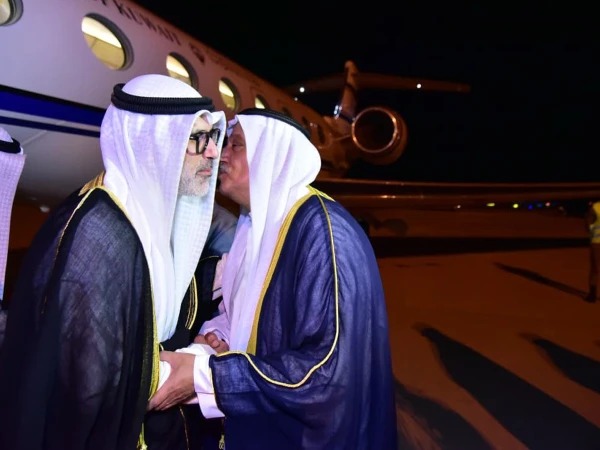
    Kuwait’s Foreign Minister, Sheikh Jarrah Jaber Al-Ahmad Al-Sabah, arrived in Islamabad on Tuesday for an official visit to Pakistan at the invitation of Deputy Prime Minister and Foreign Minister Ishaq Dar. The visit highlights the longstanding friendship and growing diplomatic cooperation between the two countries. According to Pakistan’s Ministry of Foreign Affairs, the Kuwaiti foreign minister received a warm welcome upon his arrival at Islamabad International Airport. Additional Secretary for the Middle East, Zahid Hussain, welcomed the distinguished guest on behalf of the Pakistani government. During the visit, senior officials from both countries are expected to hold high-level discussions on a wide range of bilateral, regional, and international issues of mutual interest. The talks will focus on strengthening political cooperation, expanding economic partnerships, enhancing trade and investment opportunities, and promoting collaboration in various sectors. The Foreign Office stated that the visit reflects the deep-rooted brotherly relations between Pakistan and Kuwait, built on a shared history, mutual trust, and close cooperation over the years. Both nations have maintained friendly diplomatic ties and regularly work together on regional and international platforms. Pakistan and Kuwait enjoy strong cooperation in labor, energy, investment, and defense, while a large Pakistani expatriate community continues to contribute significantly to Kuwait’s economy. The leadership of both countries has repeatedly expressed a commitment to further strengthening these ties through increased engagement and high-level exchanges. Officials believe the visit will provide an opportunity to review the progress made in bilateral relations and identify new areas for collaboration. Discussions are also expected to cover regional developments in the Middle East and South Asia, as well as other international issues of common concern. The official visit underscores the shared commitment of Pakistan and Kuwait to enhancing diplomatic relations, promoting economic cooperation, and expanding strategic partnerships. It also reaffirms both countries’ desire to deepen engagement through regular dialogue and continued collaboration for mutual benefit. The outcomes of the meetings are expected to contribute to stronger Pakistan-Kuwait relations and pave the way for future initiatives aimed at boosting trade, investment, and regional cooperation.

  • |

    Syria condemns Israeli airstrikes as ‘flagrant violation’

    Syria has strongly condemned Israeli airstrikes on the Abu al-Duhur Military Airbase in Idlib province, calling the attack a serious violation of its sovereignty. The Syrian Foreign Ministry said the strikes were an unjustified act of aggression. It warned that continued Israeli attacks could further destabilise the region. According to Syrian state media, Israeli aircraft carried out several strikes on the abandoned military airbase early Tuesday. The attacks targeted the runway and caused damage to the facility’s infrastructure. No casualties were reported in the strikes. The Syrian Foreign Ministry said the attacks were particularly concerning as Damascus was seeking to maintain stability and avoid further escalation in the region. It accused Israel of undermining those efforts and increasing tensions through repeated military operations inside Syrian territory. The ministry said Israeli attacks had continued since December 2024. It argued that the repeated strikes threatened Syria’s territorial integrity and regional security. The Abu al-Duhur airbase is located in the eastern countryside of Idlib in northern Syria. The facility has been largely inactive, but its strategic military infrastructure has remained a target during Israel’s operations in Syria. Israel has carried out numerous strikes in Syria in recent years. Its operations have previously targeted weapons depots, missile facilities and military positions linked to Iranian forces and Hezbollah. The latest strikes also drew concern from Washington. US envoy to Syria Tom Barrack said the United States was “deeply concerned” about the Israeli operation. He described the strikes as an unnecessary escalation that would not contribute to regional stability. Barrack said Syria’s current government had not adopted what he called a predatory approach or maintained proxy forces. He added that Damascus had repeatedly indicated a preference for reducing tensions with Israel. The US envoy said Washington remained willing to support diplomatic efforts between the two sides. He stressed that dialogue should be prioritised over military escalation. The latest developments come amid continued instability in Syria following the fall of the Bashar al-Assad government. Israel has expanded its military activity in Syria since then, citing security concerns. Damascus has repeatedly condemned Israeli military operations and called for respect for Syrian sovereignty.

  • | |

    Did a Japanese man really spend Rs220 crore to become a dog?

    A viral claim suggesting that a Japanese millionaire spent Rs220 crore on surgeries to transform himself into a dog has been debunked, with available information indicating that the story is based on a highly realistic costume rather than any medical procedure. The claim recently gained traction on social media alongside a video showing a man appearing to move and behave like a dog. Posts circulating online alleged that a 26-year-old Japanese millionaire, reportedly identified as “Jaso”, had undergone expensive surgeries to permanently alter his body and acquire a canine appearance. However, there is no credible evidence that the man underwent such surgeries or spent anything close to Rs220 crore on a physical transformation. The viral story appears to have originated from a genuine case involving a Japanese man known online as “Toco”. He attracted international attention after fulfilling his long-held dream of experiencing life as a dog. Toco commissioned Japanese modelling and sculpting company Zeppet to design an extremely realistic Collie costume. The outfit was specially created to resemble the appearance of a real dog and reportedly cost around 2 million Japanese yen, equivalent to approximately Rs11–12 lakh. The costume was designed with considerable attention to detail, allowing Toco to convincingly appear as a Collie when wearing it. Videos and photographs of him using the costume subsequently spread widely across social media. The transformation, however, was entirely temporary. Toco did not undergo surgery, alter his body permanently or medically transform himself into an animal. Instead, he uses the elaborate costume as part of a personal hobby and to fulfil a childhood fascination with experiencing life from an animal’s perspective. The dramatic Rs220-crore figure appears to have been added or distorted as the original story circulated online. The huge difference between the reported cost of the costume and the alleged surgical expenditure highlights how the original account was exaggerated on social media. The viral video may therefore give viewers the impression that a person has physically transformed into a dog, but the available details point to a sophisticated costume rather than surgery or permanent physical modification.

  • | |

    Qalibaf accuses Trump of using “Theater Diplomacy” on Iran

      Iranian Parliament Speaker and the country’s chief negotiator, Mohammad Bagher Qalibaf, has accused U.S. President Donald Trump of engaging in what he described as “theater diplomacy,” saying Washington continues to send mixed signals by alternating between military threats and calls for negotiations. In a statement posted on social media platform X, Qalibaf criticized Trump’s recent rhetoric, saying the U.S. administration repeatedly announces the possibility of major military action before stepping back and expressing interest in diplomatic talks. “First they say a major attack is coming, then they say they want negotiations. This cycle of theater diplomacy continues,” Qalibaf wrote. He argued that Washington keeps shifting its position between military pressure and diplomatic engagement, creating uncertainty rather than building trust. According to Qalibaf, the repeated use of threats, broken promises, and what he called “false narratives” has failed to pressure Iran into changing its stance. “The strategy of intimidation has not worked,” he said. “It is time to accept the realities, honor commitments, and replace political theater with serious and responsible diplomacy.” Qalibaf’s remarks came after President Trump claimed that he had canceled plans for a large-scale military strike against Iran. Trump said Iran and several countries in the region had urged the United States to avoid military action, adding that diplomatic progress was within reach. The U.S. president also claimed that ongoing negotiations could lead to a temporary agreement involving the United States, Iran, and Oman. He said such a deal would reopen the Strait of Hormuz without delay and eliminate what he described as the Iranian nuclear threat. The exchange highlights the sharp differences between Tehran and Washington as both sides continue to send conflicting messages about diplomacy and the possibility of easing tensions in the region. While U.S. officials speak of negotiations and a potential agreement, Iranian leaders remain skeptical, arguing that meaningful progress will require the United States to move beyond threats and fulfill its commitments.

  • | | |

    Quaid-i-Azam’s statue unveiled at Pakistan Embas…

    WASHINGTON: A statue of Pakistan’s founder, Quaid-i-Azam Mohammad Ali Jinnah, has been unveiled at the Pakistan Embassy in Washington as part of the country’s Independence Day celebrations. Pakistan’s Ambassador to the United States Rizwan Saeed Sheikh inaugurated the statue during a ceremony attended by members of the Pakistani-American community, diplomats and media representatives. The statue was donated by the Quaid-i-Azam Foundation of Houston and will remain permanently installed at the embassy. The unveiling comes as Pakistan prepares to commemorate Jinnah’s 150th birth anniversary later this year, adding historical significance to the Independence Day event. Addressing the gathering, Ambassador Sheikh paid tribute to Jinnah’s constitutional struggle and leadership, saying his efforts transformed the vision of Pakistan into reality. He urged Pakistanis, particularly those living abroad, to follow the founder’s guiding principles of “Unity, Faith and Discipline.” The ceremony opened with the hoisting of Pakistan’s national flag and the national anthem, followed by Quranic recitation and the reading of messages from Pakistan’s president, prime minister and deputy prime minister. The ambassador also highlighted Pakistan’s growing importance in its relationship with the United States. His remarks came alongside a message from US Secretary of State Marco Rubio, who noted cooperation between the two countries in areas including regional mediation, critical minerals, energy, counterterrorism, cultural heritage, trade and investment. Pakistan’s role in regional diplomacy has gained particular attention amid efforts to ease tensions between the United States and Iran, with Islamabad seeking to use its ties with both countries to encourage dialogue. The event also featured an investiture ceremony for Waqar Ali Khan, who received the President’s Award for Pride of Performance in recognition of his long-standing contribution as a community leader and cultural ambassador in the United States.

Leave a Reply

Your email address will not be published. Required fields are marked *