wildfires washington state
|

Wildfires in Washington state destroy over 700 buildings, force 64,000 to flee

WASHINGTON, USA – Wildfires raging on the outskirts of Spokane, Washington, for a third day have destroyed at least 700 buildings and forced tens of thousands of people to flee their homes in and around the state’s second-most populous city, officials said on Monday, August 4.

The cluster of three blazes ranked as the top firefighting priority in the US as a whole, including the drought-parched Pacific Northwest, where dozens of major wildfires have been burning for weeks, degrading air quality across a wide region.

The Spokane-area fires have scorched more than 3,200 hectares since erupting on Saturday, August 1, on the northern fringe of the city, home to about 230,000 residents west of the Rocky Mountain foothills near the Idaho border.

Video footage from the fire zone showed a kilometers-long column of smoke creeping through treetops as airplane tankers swooped overhead, dropping scarlet-colored fire-retardant slurries onto the blaze.

Enormous palls of smoke billowed into the sky north of the city, as flames devoured forest land 10 km from Spokane’s downtown. Elsewhere, suburban homes lay in smoking ruins among charred trees. Other video showed fires burning along wooded ridge lines above adjacent dwellings.

As of Monday, some 64,000 people were under immediate evacuation orders, up from 4,000 a day earlier, according to Benjamin Cossel, a spokesperson for the incident command center.

At least 700 structures have gone up in flames, mostly in residential areas, and aerial infrared surveys showed that possibly another 400 buildings, including homes, had been damaged or destroyed, Cossel said.

The cause of the blazes was under investigation.

Bracing for fatalities

“There are just so many Washingtonians who have literally lost everything in a very, very short period of time,” Governor Bob Ferguson said at an afternoon press briefing. “In a matter of hours, their lives changed in deeply dramatic and fundamental ways.”

No injuries or fatalities have been reported so far, Cossel told Reuters, adding, “There’s a high probability that will change in the coming days” as flames subside and search teams are able to reach devastated communities still inaccessible due to extreme fire activity.

An unspecified number of people have been reported missing as flames spread out of wooded areas into neighborhoods and commercially developed areas, “turning from a wildfire to an urban conflagration,” he said.

“We are still assessing the potential for lives to be lost,” Spokane Mayor Lisa Brown said at the news conference.

Body-mounted camera footage showed firefighters rushing from house to house in one wooded neighborhood, dousing fires that sprang up around homes.

Roughly 1,100 firefighters were battling the Spokane blazes as of Monday, Cossel said, a fraction of the more than 29,200 personnel assigned to wildfires nationwide, most heavily concentrated in Oregon, Washington state and Idaho, according to the National Interagency Fire Center in Boise.

The agency reported more than 100 large new wildfires on Sunday across 15 states, the bulk of them in the Northwest, stretching resources thin across the region.

The Spokane cluster was one of 15 major fires burning in Washington state alone, with more than 250,000 acres ablaze, according to state Public Lands Commissioner Dave Upthegrove.

“This is an extraordinary wildfire season in the Pacific Northwest,” he told reporters.

‘Explosive’ fire behavior

North of the US-Canadian border, flames continued to rage across British Columbia, where record drought conditions have led to what officials over the weekend called “explosive” fire behavior in the southern part of that province.

Aerial firefighting assets in Spokane were so far limited to four fixed-wing tanker aircraft, with no water-dropping helicopters currently available, Cossel said.

Fire managers hoped their crews could make greater headway during a narrow window of cooler, less windy weather expected to prevail on Monday and Tuesday, before extremely high temperatures, low humidity and gusty conditions are forecast to return at midweek, Cossel said.

Even though fire activity in some spots has eased in comparison with Sunday, authorities were reluctant to lift evacuations in most of the fire zone.

“The worst thing in the world is to let people go home only to have to evacuate them again 24 to 48 hours later,” Cossel said.

As of Monday, firefighters had gained zero containment around any of the three Spokane-area blazes, officials said.

The Interagency Fire Center has documented a total of 44,722 wildfires year to date nationwide, the highest number for this time of the year in at least a decade, with nearly 5.2 million acres consumed, the most from January to early August since 2022.

The conditions driving the increase in wildfire activity in North America, Europe and elsewhere in recent years, especially periods of prolonged drought and extreme heat, are largely a function of human-caused climate change, according to scientists. – Rappler.com


Similar Posts

  • |

    Trump’s generic drug tariff plan puts US-India pharma ties to test

    A newly announced tariff schedule introduced by President Donald Trump targeting generic pharmaceutical imports is expected to significantly affect the deep trade relationship between the United States and India, which serves as the principal supplier of generic medicines to the American market. Indian drug manufacturers currently supply roughly half of all generic pharmaceuticals consumed in the United States, with the American market generating close to a third of India’s overall pharmaceutical export earnings. The scale of this commercial exposure means the newly outlined tariff timeline, despite featuring a two-year grace period, has immediately drawn close scrutiny from Indian pharmaceutical firms and market analysts due to the critical role US sales play in corporate revenues. The policy introduces additional uncertainty to a bilateral trade dynamic already strained by recent tariff disputes, raising the stakes for Indian manufacturers as they decide whether to commit capital toward expanding domestic manufacturing inside the United States or absorb steep import duties in the future. Trump outlined a phased tariff framework for generic medications entering the United States. Under this timeline, generic drug imports will continue to enter duty-free under a zero per cent tariff until August 1, 2028, marking a two-year transition window from the policy’s effective date. Following this grace period, a 100 per cent tariff will apply for one year, after which the import levy will rise to 200 per cent. Trump framed the escalated duties as a penal mechanism designed to compel foreign pharmaceutical companies to construct manufacturing facilities on American soil within the allotted timeframe, rather than remaining reliant on overseas production plants. He explicitly distinguished this new generic drug framework from the administration’s policy on branded and patented pharmaceuticals, stating that existing regulations for branded drugs would remain unchanged due to their ongoing success. Reports citing White House details indicate that the new generic tariffs will be executed under Section 232 trade authority, matching the legal foundation used for the administration’s earlier tariffs placed on branded pharmaceuticals in April. Trump also highlighted what he described as an unprecedented surge in new domestic pharmaceutical plant construction currently underway across the United States, presenting the new tariff schedule as a measure to reinforce an existing shift toward onshore manufacturing. The policy holds major implications for the broader American healthcare system and global exporters because generic medications account for nearly 90 per cent of all prescriptions filled in the United States. This action follows previous interventions in the pharmaceutical sector, including the 100 per cent tariff placed on branded drugs starting in October 2025, alongside a most-favoured-nation pricing push. That pricing policy led more than a dozen major pharmaceutical corporations, including Pfizer, Eli Lilly, and Novo Nordisk, to conclude agreements to reduce US drug prices in exchange for multi-year exemptions from import duties. For Indian drugmakers, the two-year transition window provides initial breathing room but lacks long-term security. Indian generic manufacturers now face the choice of allocating capital to construct or expand production facilities within the United States before the 2028 deadline, or facing severe cost disadvantages once the punitive tariffs take effect. Industry analysts expect to monitor whether major Indian drug companies will announce accelerated manufacturing investments in the United States over the coming months as the sector formulates its response.

  • | |

    Shein turns to China as Hong Kong IPO nears

    Fast-fashion giant Shein is preparing to make its stock market debut in Hong Kong after years of efforts to list in the United States and Britain, marking a significant shift in how the company presents its relationship with China. The company is expected to raise around $1.7 billion through its Hong Kong initial public offering, with a valuation of about $26.5 billion. That figure is considerably below the company’s valuation in 2022. Shein had previously sought to establish itself as a global company. It moved its headquarters to Singapore in 2021 and promoted plans to expand manufacturing and operations in countries including Brazil, Türkiye and parts of Europe. However, its attempts to secure a Western listing faced regulatory and political obstacles. Chinese authorities were also reportedly involved in blocking earlier efforts to list in New York and London. After shifting its focus to Hong Kong in 2025, Shein founder Sky Xu increased his engagement with Chinese officials and became more involved in regulatory and capital-market discussions inside the country, according to people familiar with the matter. Xu also made a rare public appearance at a business forum in Guangdong earlier this year, where he announced plans for Shein to invest $1.5 billion in the province. He said the company would deepen its presence in Guangdong and develop its smart supply-chain system while contributing to the region’s fashion industry. Shein also opened a research and development centre in Nanjing, the eastern Chinese city where the company was founded in 2012. These moves helped reinforce the company’s economic links with China at a time when Beijing has been paying close attention to companies with major overseas operations. Officials in Guangdong also reportedly highlighted Shein’s contribution to employment and domestic economic activity when engaging with central authorities. The company has sought to emphasise that its main business is overseas rather than in China. Shein does not market its extremely low-priced products to Chinese consumers, allowing it to distance itself from the intense competition among domestic e-commerce platforms. Shein has instead argued that its international operations benefit China by generating foreign currency and supporting Chinese manufacturing and supply chains. The company’s Hong Kong prospectus describes China as the foundation of its global logistics and fulfilment network. Nearly 80 per cent of Shein’s workforce is based in mainland China. The shift comes after growing difficulties in Western markets. In the United States, lawmakers raised concerns over Shein’s supply chains and called for stronger assurances that its products were not linked to forced labour. The company has also faced scrutiny in Europe over competition, product safety and items offered through its online marketplace. At the same time, changes to low-value import rules in the US and Europe have created additional challenges for Shein’s business model, which relies heavily on inexpensive shipments directly to consumers. Analysts say the company’s experience demonstrates how geopolitical tensions are increasingly influencing corporate decisions and stock-market listings.

  • | |

    FIFA bans Argentina players following World Cup final clash with Spain

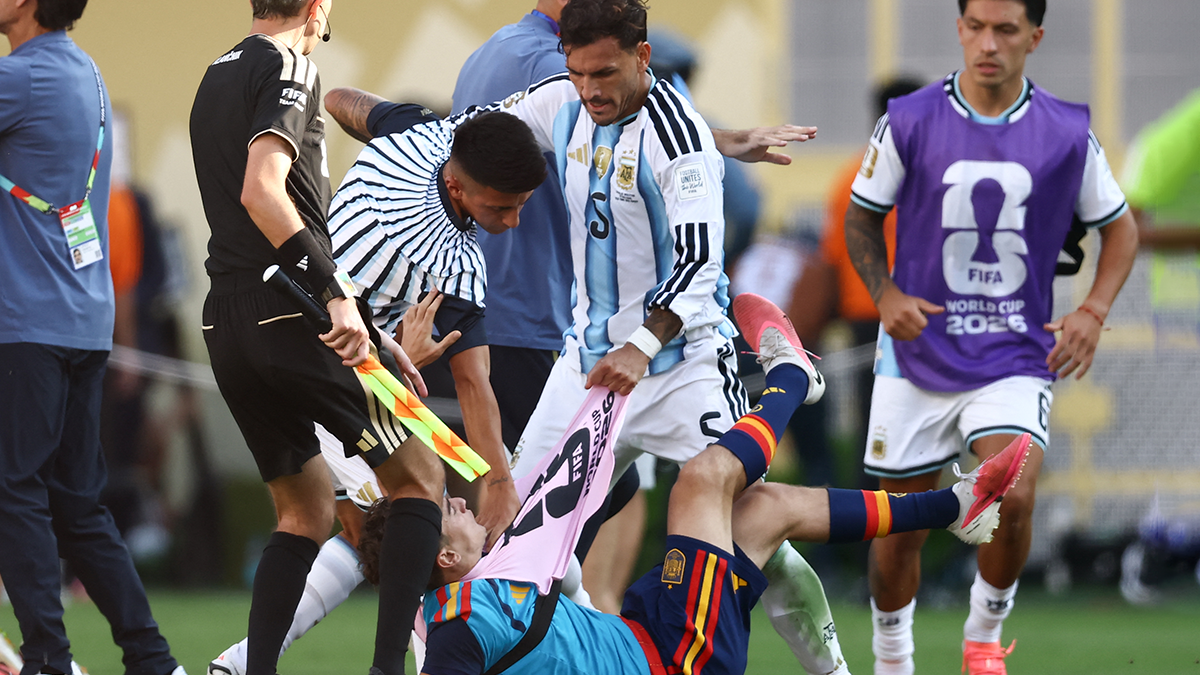
      FIFA has imposed lengthy suspensions and heavy fines on several Argentina players following a heated confrontation with Spain players after the World Cup final, the world football governing body announced on Friday. Argentina have also been ordered to play their next two home international matches behind closed doors. However, FIFA has suspended one of those two matches, meaning the full punishment will only be enforced if the team commits another disciplinary offence during the relevant period. The most severe punishment has been handed to Argentina midfielder Leandro Paredes. The Boca Juniors player has been suspended for 10 international matches and fined $90,000 for his involvement in the post-match altercations. Paredes was accused of grabbing Spain defender Eric Garcia by the throat during the confrontation. He was also involved in an incident with Spain midfielder Gavi, whom he wrestled to the ground while holding the substitute player’s bib. His actions contributed to the escalation of tensions following the final. Spain defeated Argentina 1-0 in the World Cup final at MetLife Stadium in New Jersey on July 19, securing the title after a closely contested encounter. The post-match celebrations, however, were overshadowed by clashes involving members of both teams. Argentina defender Nahuel Molina has also received a significant punishment. He has been banned for seven international matches and fined $90,000 for his role in the incidents. His teammate Thiago Almada received a comparatively lighter sanction, with FIFA suspending him for one international match and imposing a $30,000 fine. Spain midfielder Gavi has also been punished for his involvement in the confrontation and received a similar one-match suspension and financial penalty. The disciplinary action against Argentina extends beyond individual players. The Argentine Football Association (AFA) has been fined approximately $321,000 for several violations of FIFA’s disciplinary regulations. These include using a sporting event to make demonstrations of a non-sporting nature, team misconduct, and discriminatory chants and gestures by supporters. The controversy also relates to an incident during Argentina’s World Cup semi-final against England. After Argentina secured a 2-1 victory in a tense encounter, several players displayed a banner carrying the message, “The Falklands are Argentine.” The gesture referred to the disputed Falkland Islands, known as the Islas Malvinas in Argentina. The Falklands War began in 1982 after Argentine forces invaded the British-controlled territory in the South Atlantic. Then-British Prime Minister Margaret Thatcher ordered a military task force to retake the islands. The 74-day conflict, which lasted from April to June 1982, resulted in the deaths of 655 Argentine and 255 British servicemen, while three islanders were also killed. The AFA has rejected the disciplinary measures and confirmed that it plans to appeal the suspensions and fines imposed by FIFA. The appeal could determine whether the punishments remain unchanged or are reduced following further review.

  • | |

    Gen Z group behind India’s cockroach protest…

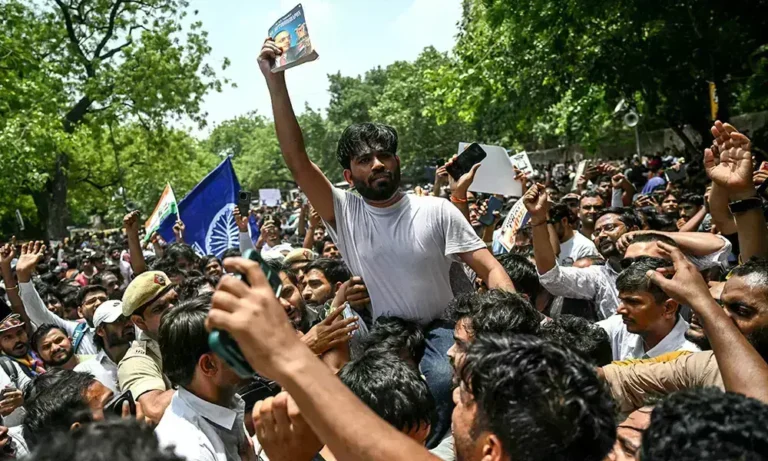
    The Cockroach Janta Party, the youth movement that forced a top Indian minister to quit, says it has no plans yet to contest elections despite its growing influence among young voters. Abhijeet Dipke, the founder of the group, told a foreign news agency on Tuesday that the organization intends to stay focused on grassroots mobilization rather than rush into formal politics. The statement comes weeks after protests led by Dipke swept through Delhi and spread to other parts of the country, ultimately pressuring Prime Minister Narendra Modi’s education minister to step down. Speaking from his family home in Maharashtra, Dipke said the group wants to first understand what young Indians actually want before deciding its next move. He announced that supporters would gather for a two day meeting starting Wednesday to map out priorities for the movement going forward. “The purpose will be to form the agenda for the Cockroach Janta Party and discuss how we can take this social movement forward,” Dipke said, as well wishers arrived at his home carrying flowers and gifts. Dipke made clear that entering electoral politics is not on the table for now, though he left the door open for the future. He said he would only consider building a formal party if a clear majority of supporters pushed for it, and that any decision to contest elections would come later, guided by public sentiment rather than a fixed timeline. He argued that Indian politics does not currently need another party competing for power. Instead, he said, the country requires a broader public campaign aimed at restoring faith in institutions that have lost credibility among ordinary citizens. Dipke said the group’s immediate priority is to give voice to the frustrations of India’s youth, many of whom, in his view, no longer trust the country’s political class, judiciary or press. He emphasized the importance of listening directly to young people before setting any formal agenda, saying it was necessary to understand their actual concerns rather than assume them. Dipke made these comments while still recovering from typhoid, which he contracted during the weeks he spent camped out during the Delhi demonstrations. A hero’s welcome at home Following the 36 day protest, Dipke traveled back to his hometown of Chhatrapati Sambhajinagar, where hundreds of supporters lined up outside his home to greet him, many carrying flowers in celebration of the movement’s success. Dipke’s rise to prominence has been rapid. After returning to India in June from his studies in the United States, he became a household name almost overnight when his call to protest against leaked medical entrance exam papers pulled tens of thousands of young demonstrators onto the streets of the capital. The pressure campaign achieved a significant result on July 25, when Education Minister Dharmendra Pradhan resigned from his post. Authorities had attempted to disperse the crowds using tear gas and baton charges, but the demonstrations continued regardless. In the aftermath, the government announced tougher legal penalties for those involved in leaking exam papers and formed a committee to reassess the broader examination system. The stakes attached to these entrance exams are enormous for India’s youth. Millions of students spend years preparing for them, viewing a strong result as their surest route to stable, well paying careers and financial security for their families. Wary of political traps Dipke explained that he is avoiding a formal political launch partly out of concern that the government could use investigations or legal pressure to undermine the party’s leadership if it formalized too quickly. He also said he has no intention of aligning the movement with any existing political party, even as opposition figures in India have tried to capitalize on the rare momentum the protests created against Modi’s government. Some of that caution appears to draw on regional experience. In neighboring Bangladesh, a youth led party that emerged after mass protests ousted long time leader Sheikh Hasina in 2024 went on to perform poorly in this year’s elections, a result that may be shaping how Dipke approaches the question of formal politics in India. Political observers say the true test of whether young Indians’ frustration translates into votes will come in elections scheduled for next year in Uttar Pradesh, India’s most populous state, along with Punjab and Modi’s home state of Gujarat. A bigger risk for the ruling Bharatiya Janata Party could emerge in the 2029 general election if the Cockroach Janta Party evolves into a formal political force by then. Political analyst Amitabh Tiwari said the movement is unlikely to cause major damage to the BJP in upcoming state elections but could grow into a more serious factor by the time of the next general election. He added that if the group builds a party structure, continues championing youth causes and sustains its current momentum, it stands a real chance of attracting broader support. Security concerns following the protests remain high. More than a dozen police officers have been stationed outside Dipke’s family home after he received threats on social media once his profile surged following the initial call to protest in May, a period in which the Cockroach Janta Party’s Instagram following grew to 22 million within days. Dipke said his greatest worry is not for his own safety but for that of his parents. He expressed relief at being back home and said he trusts that government provided security will keep his family safe in the coming weeks. The episode adds to a growing pattern across South Asia, where youth led movements have increasingly forced political concessions from long entrenched governments, even when those movements stop short of transforming into electoral parties themselves.

  • | |

    US imposes tariffs on Pakistan and more than 60 trading partners

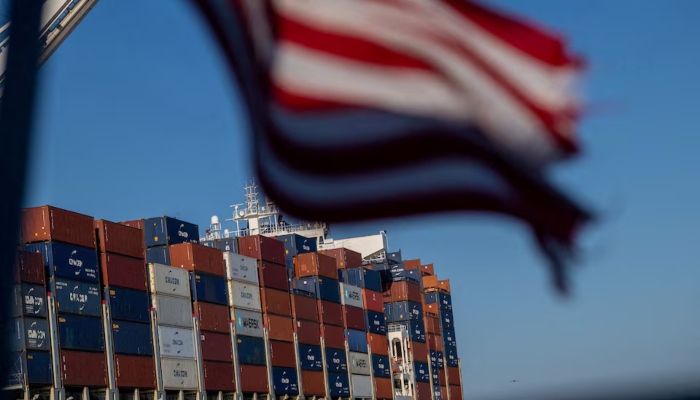
    The United States has introduced a new round of tariffs on imports from more than 60 trading partners, including Pakistan, as part of a broader effort to strengthen measures against goods allegedly linked to forced labour. The new duties officially came into effect on July 24 and are expected to affect trade between the United States and a large number of countries. Under the latest policy, Pakistan has been placed in the group of countries whose exports to the United States will face a 10% tariff. The same tariff rate has also been imposed on imports from countries including India, Bangladesh, the United Kingdom, Canada, Argentina, Cambodia, Ecuador, El Salvador, Guatemala, Honduras, Indonesia, Jordan, Malaysia, Mexico, Sri Lanka and Trinidad and Tobago. Another group of 38 countries will face a 12.5% tariff on goods exported to the US under the same policy. The US administration said the decision was taken because these countries had failed to effectively prevent the import or production of goods allegedly made through forced labour. According to American officials, stronger enforcement of labour laws and better monitoring of supply chains are needed to stop products made under forced labour conditions from entering international markets. The new measures are part of President Donald Trump’s trade agenda, which focuses on using tariffs to address trade and labour-related concerns. The administration has introduced the tariffs under Section 301 of the US Trade Act, a legal provision that allows the United States to take trade action against countries it believes are engaging in unfair trade practices. The latest action follows a major legal setback earlier this year. In February 2026, the US Supreme Court blocked the implementation of an earlier tariff package introduced by the Trump administration. That policy had proposed additional duties ranging from 10% to 50% on imports from several countries. Following the court’s decision, the administration adopted a different legal mechanism to introduce the current tariffs. The decision has drawn criticism from several US trading partners. Australia and Brazil have described the new tariffs as unfair and said they will continue diplomatic efforts to have the measures withdrawn. Norway also rejected the allegations behind the tariffs, saying the decision was based on unsubstantiated claims. Despite the broad scope of the new policy, several important products have been excluded. The tariffs do not apply to imports of crude oil, natural gas, selected agricultural commodities and fertilisers. Goods that are already subject to separate Section 232 national security tariffs, including steel, aluminium, automobiles and copper, are also exempt from the latest duties.

Leave a Reply

Your email address will not be published. Required fields are marked *