timeline trump went
|

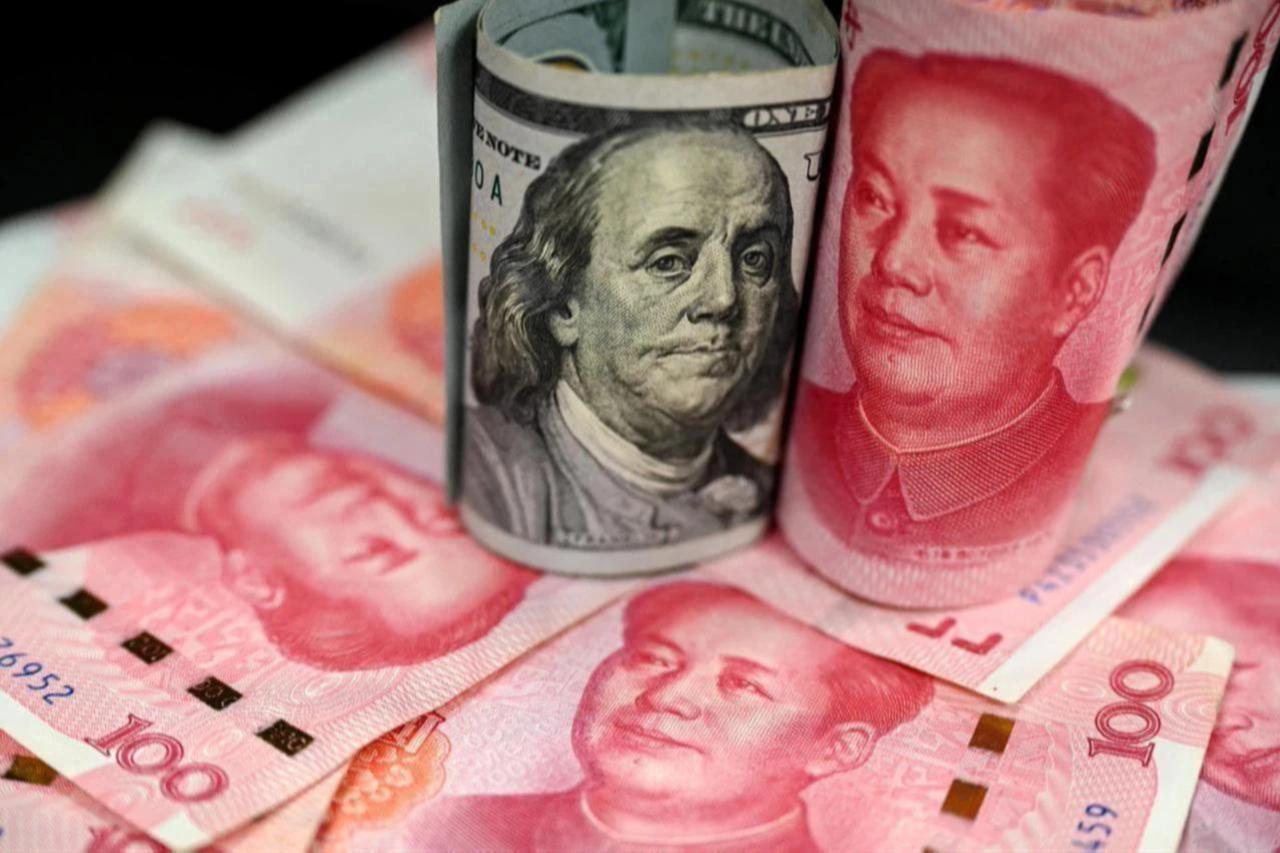
TIMELINE: How Trump and Xi went from tariff war to trade truce

BEIJING, China – Chinese leader Xi Jinping is set to meet US President Donald Trump at the White House on Thursday, September 24, for talks aimed at keeping a fragile trade truce that is due to expire in November on track.

Here is a look back at key moments in the US-China trade war:

February 2025 – In one of his first moves since returning to office, Trump imposes a 10% duty on Chinese goods over fentanyl and immigration concerns. China responds with levies on US coal, LNG, crude oil and autos, and curbs exports of five metals key to defense and clean energy.

March 2025 – The US doubles fentanyl-related tariffs on China to 20%. China retaliates with 10%-15% levies on US agriculture, hitting $21 billion in exports.

April 2025 – Trump unveils sweeping “Liberation Day” tariffs, including 34% on China, effective April 9. China retaliates with matching tariffs, and both sides escalate rapidly: US tariffs rise to 84% then 125%; China’s climb to 84% then 125%. Beijing also curbs rare-earth exports and warns citizens against US travel.

May 2025 – Talks in Geneva conclude with a 90-day pause, cutting US tariffs on Chinese goods to 30% from 145%, while China cuts its tariffs to 10% from 125%. The pause is extended for another 90 days in August.

October 2025 – China widens rare-earth export controls. Trump responds with an additional 100% tariff and export controls on critical software, while threatening curbs on Boeing parts.

October 2025 – Later that month, Trump and Xi strike a trade truce after talks in South Korea. Trump agrees to trim tariffs in exchange for Beijing cracking down on fentanyl precursors, resuming soybean purchases and pausing rare-earth export controls.

February 2026 – The US Supreme Court rules against Trump’s emergency tariffs, striking down the China fentanyl tariffs and the reciprocal tariff regime. Trump responds with a temporary 10% global duty under a different statute.

May 2026 – Trump visits Beijing for a summit with Xi. The two sides announce plans to create new Boards of Trade and Investment, while China agrees to purchases of Boeing jets and US farm products.

July 2026 – The US imposes new 12.5% tariffs on goods from 60 trading partners, including China, over allegations those countries failed to curb imports made by forced labour.

September 2026 – Trump is set to host Xi at the White House on September 24. While both sides have tempered expectations for major breakthroughs, investors and analysts are watching for signs of an extension of the trade truce.

– Rappler.com
Similar Posts

  • |

    Tipu Usman seeks closer media engagement to strengthen Pakistan’s UK diaspora outreach

    LONDON: Pakistan’s High Commissioner to the United Kingdom, Tipu Usman, has called for closer engagement with Pakistani media in the UK to strengthen outreach to the Pakistani diaspora and ensure the community remains informed about initiatives and reforms aimed at facilitating overseas Pakistanis. The High Commissioner made the remarks during an introductory meeting with representatives of Pakistani media houses working in London. Tipu Usman appreciated the positive role played by Pakistani media in the UK during Marka-e-Haq, particularly its contribution to keeping the Pakistani diaspora informed about important national developments and issues affecting the community. He said the Pakistan High Commission in London remained committed to working closely with Pakistani media representatives to enhance outreach and effectively communicate initiatives and reforms that would facilitate members of the Pakistani diaspora across the UK. The High Commissioner stressed the importance of effective communication and engagement with the Pakistani community, saying the media could play an important role in ensuring that information about government initiatives and services reaches overseas Pakistanis in a timely and effective manner. The representatives of Pakistani media houses welcomed Tipu Usman on assuming his responsibilities as Pakistan’s High Commissioner to the UK and conveyed their best wishes for his tenure. During the interactive session, media representatives shared various suggestions aimed at improving the High Commission’s outreach to the Pakistani diaspora and strengthening efforts for the welfare of the Pakistani community residing across the United Kingdom. The participants discussed the importance of maintaining regular engagement between the High Commission and Pakistani media to improve communication with the community and provide greater awareness of initiatives, services and reforms relevant to overseas Pakistanis. The meeting provided an opportunity for an open exchange of views on ways to further strengthen coordination between the Pakistan High Commission, Pakistani media and the wider Pakistani diaspora in the UK. The High Commissioner welcomed the suggestions put forward by the media representatives and reaffirmed the High Commission’s readiness to work collaboratively with the media for more effective engagement with the Pakistani community across Britain.

  • | | |

    Quaid-i-Azam’s statue unveiled at Pakistan Embas…

    WASHINGTON: A statue of Pakistan’s founder, Quaid-i-Azam Mohammad Ali Jinnah, has been unveiled at the Pakistan Embassy in Washington as part of the country’s Independence Day celebrations. Pakistan’s Ambassador to the United States Rizwan Saeed Sheikh inaugurated the statue during a ceremony attended by members of the Pakistani-American community, diplomats and media representatives. The statue was donated by the Quaid-i-Azam Foundation of Houston and will remain permanently installed at the embassy. The unveiling comes as Pakistan prepares to commemorate Jinnah’s 150th birth anniversary later this year, adding historical significance to the Independence Day event. Addressing the gathering, Ambassador Sheikh paid tribute to Jinnah’s constitutional struggle and leadership, saying his efforts transformed the vision of Pakistan into reality. He urged Pakistanis, particularly those living abroad, to follow the founder’s guiding principles of “Unity, Faith and Discipline.” The ceremony opened with the hoisting of Pakistan’s national flag and the national anthem, followed by Quranic recitation and the reading of messages from Pakistan’s president, prime minister and deputy prime minister. The ambassador also highlighted Pakistan’s growing importance in its relationship with the United States. His remarks came alongside a message from US Secretary of State Marco Rubio, who noted cooperation between the two countries in areas including regional mediation, critical minerals, energy, counterterrorism, cultural heritage, trade and investment. Pakistan’s role in regional diplomacy has gained particular attention amid efforts to ease tensions between the United States and Iran, with Islamabad seeking to use its ties with both countries to encourage dialogue. The event also featured an investiture ceremony for Waqar Ali Khan, who received the President’s Award for Pride of Performance in recognition of his long-standing contribution as a community leader and cultural ambassador in the United States.

  • | | |

    Urmila Matondkar’s ex-husband Mohsin Akhtar shar…

    Mohsin Akhtar, the former husband of veteran Bollywood actress Urmila Matondkar, has shared a fresh collection of romantic photographs with his new wife, Nida Bhatt, giving fans another glimpse into their wedding celebrations. The 43-year-old businessman and model posted photographs from his walima ceremony several months after announcing his marriage to Nida. Alongside the pictures, Mohsin shared an emotional message expressing his love and appreciation for his new wife. In his heartfelt post, Mohsin described Nida as much more than his wife, calling her his “home” and “peace.” He also promised to stand by her, value her and continue loving her throughout every chapter of their journey together. The new photographs offer glimpses of the couple celebrating their marriage with family and friends. Mohsin had previously shared pictures from his wedding with Nida in June, officially revealing details of his new marriage to his followers. His latest social media post has attracted attention largely because of his previous high-profile marriage to Urmila Matondkar, one of Bollywood’s well-known actresses. Before marrying Nida, Mohsin was married to Urmila. The couple tied the knot on February 4, 2016, in an intimate ceremony attended by close friends and family members. Their relationship attracted considerable attention at the time, partly because of their age difference and their interfaith marriage. Mohsin, who comes from a Kashmiri business background and has worked as a model, is around 10 years younger than Urmila. Following their separation, both have continued with their respective lives and careers. Mohsin’s latest posts now focus on his new relationship and marriage, with his affectionate message to Nida offering a glimpse into his current personal life. The newly shared wedding photographs have given fans a closer look at the celebrations surrounding Mohsin and Nida’s marriage. His romantic caption has also drawn attention, particularly his description of his wife as his source of comfort and happiness. While Urmila Matondkar remains a prominent name in Indian cinema, Mohsin Akhtar’s latest social media update has shifted the spotlight toward his new chapter in life. The couple’s wedding pictures are continuing to attract interest online as fans react to the romantic moments and Mohsin’s emotional message for his new bride.

  • |

    Chinese teenager temporarily loses hearing   

    A Chinese teenager temporarily lost his hearing after spending four hours listening closely to the loud buzzing sounds of cicadas during a camping trip. The unusual incident highlights that although natural sounds are generally considered harmless, prolonged exposure to certain sounds in nature can sometimes affect human health. The 18-year-old teenager, identified by his surname Wang, was camping in a forest in Ningbo, Zhejiang Province, China, when he began listening to the continuous sounds of hundreds of cicadas. The insects, which are known for their loud and distinctive calls, continued making noise for several hours. Wang noticed that the sound of the cicadas became particularly loud around noon. Despite this, he remained in the forest until the evening. After spending several hours exposed to the loud buzzing, he began experiencing ringing in his ears. He also felt that his ears were blocked or unusually full. As the cicadas gradually became quieter toward the evening, Wang realized that something was wrong with his hearing. He could no longer hear the sounds of birds singing around him, and he was unable to hear notification sounds from his mobile phone. Concerned that he might have suffered permanent hearing loss, he immediately went to a hospital for medical attention. Doctors at the hospital examined both of Wang’s ears and found signs of swelling. He was given medication and advised to stay away from loud noises for at least 14 days. Fortunately, his condition improved with treatment and rest. After approximately two weeks, Wang’s hearing returned to normal. Senior ENT specialist Dr. Li Jie from the hospital affiliated with Ningbo University No. 1 Hospital explained that many people mistakenly believe sounds produced by nature cannot harm the ears. According to him, natural sounds can also become harmful when people are exposed to them at high levels or for extended periods. Cicadas are considered among the noisiest insects in the world. However, a single cicada normally does not pose a serious threat to human hearing because its sound rarely exceeds 70 decibels. The situation can be different when hundreds or even thousands of cicadas call at the same time. A large group of cicadas can collectively produce sound levels exceeding 85 decibels. Exposure to sounds at or above this level for extended periods can increase the risk of hearing damage. The risk becomes greater when the exposure continues for several hours without adequate breaks. Wang’s experience serves as a reminder that people should not assume every natural sound is automatically safe. Whether the sound comes from insects, animals, machinery, music or other sources, prolonged exposure to loud noise can place significant stress on the ears. Experts generally recommend moving away from extremely loud environments, taking regular breaks from noise and seeking medical attention if symptoms such as persistent ringing, blocked ears or sudden hearing loss occur. In Wang’s case, timely medical treatment and avoiding loud sounds helped him recover fully. The incident also demonstrates the importance of protecting hearing during outdoor activities. While camping and spending time in nature can be enjoyable and relaxing, people should remain aware of their surroundings and avoid prolonged exposure to unusually loud sounds.

  • |

    Russia condemns EU’s 21st sanctions, warns of consequences

    Russia has sharply criticized the European Union after the bloc approved its 21st package of sanctions, saying the new measures will damage European economies more than Russia and further increase tensions between Moscow and Brussels. In a statement released by Russia’s Permanent Mission to the European Union, officials said the approval process for the latest sanctions exposed growing divisions within the EU. According to Moscow, many member states were reluctant to support additional restrictions because of the economic burden they are already facing. Russia claimed the lengthy negotiations reflected increasing concern among European governments over the impact of sanctions on businesses, energy supplies and overall economic growth. The Russian mission accused the European Union of continuing a policy of confrontation despite rising economic challenges across Europe. It said EU leaders were ignoring the financial costs of sanctions while pursuing what Moscow described as a political campaign against Russia. The statement also referred to comments by EU High Representative for Foreign Affairs Kaja Kallas, who indicated that further sanctions could be introduced in the future. According to Russia, discussions on new sanctions have become a political ritual aimed at showing unity among EU member states rather than achieving practical results. Moscow argued that the restrictions have failed to weaken Russia in the way European leaders had expected. Instead, it claimed that European citizens and businesses are paying the price through higher energy costs, inflation and slower economic growth. The statement further argued that Europe’s economic difficulties have been intensified by the EU’s decision to reduce imports of Russian energy, continued financial and military support for Ukraine, and instability in global energy markets caused by ongoing tensions in the Middle East. Russian officials also pointed to a recent assessment by the European Central Bank, which highlighted geopolitical conflicts and energy market uncertainty as major risks to the European economy. Moscow said this assessment supports its argument that continued sanctions are creating additional pressure on European countries. Using a road journey as a comparison, the Russian mission said the European Union was following a path that could lead its economy into serious difficulties. It argued that EU policymakers should reconsider their current strategy instead of introducing more restrictions that, in Russia’s view, have produced limited results while increasing costs for Europe. The statement concluded by reaffirming that Russia considers the EU sanctions to be illegal unilateral measures. Moscow warned that any additional restrictions imposed by the European Union would receive what it described as an effective and appropriate response from Russia.

Leave a Reply

Your email address will not be published. Required fields are marked *