iran oman discuss
| | |

Iran and Oman discuss temporary shipping corridor …

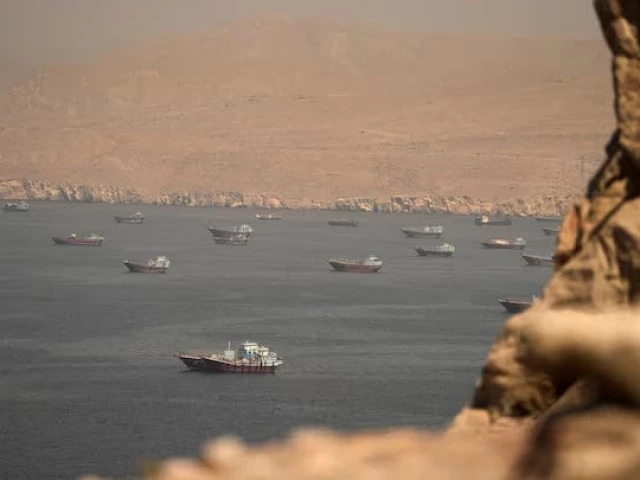
Iran and Oman are discussing a proposal to establish a temporary joint shipping corridor through the Strait of Hormuz one of the world’s most important routes for oil and gas shipments.

The proposal was discussed during a meeting in Tehran between Omani Foreign Minister Badr Al-Busaidi and Iranian Foreign Minister Abbas Araghchi. A joint statement described their talks as constructive and said both sides discussed developments surrounding the strategic waterway.

The discussions come as tensions remain high between Iran and the United States. US President Donald Trump said Tuesday that mines had been removed or destroyed in international waters around the Strait of Hormuz. He warned that any vessel found placing new mines would face immediate military action.

Trump also said the United States was closely monitoring the waterway and maintained a zero-tolerance policy toward further mine placement.

The Strait of Hormuz is a crucial global energy route with roughly one-fifth of the world’s crude oil and liquefied natural gas flows passing through it before the conflict. Shipping activity has fallen sharply during the current crisis, with only two commodity vessels reportedly using the waterway on Monday.

Iran has also communicated its position on the strait through Pakistan. Iranian officials reportedly want provisions of an earlier Islamabad memorandum to be implemented including arrangements requiring safe passage for commercial shipping and consultation with Oman over the waterway’s future management.

Meanwhile, Washington has expanded economic pressure on Tehran. US Treasury Secretary Scott Bessent announced additional sanctions targeting Iranian individuals entities and vessels warning that countries continuing to support Iran’s economy could face consequences.

China has criticized the new US measures saying unilateral sanctions could disrupt global economic and financial stability. Beijing is a major buyer of Iranian oil and has urged Washington and Tehran to return to negotiations.

The United States has also warned that military action against Iran remains possible. Defence Secretary Pete Hegseth said Washington would use military force if necessary and did not rule out further strikes around Iran or the Strait of Hormuz.

Iran, meanwhile, has promised to respond to the expanded sanctions and warned that threats to its infrastructure could trigger attacks against US interests and regional energy routes.

The diplomatic discussions involving Iran, Oman and Pakistan could therefore become important for restoring commercial shipping through the Strait of Hormuz. However, continued military threats, sanctions and tensions between Tehran and Washington remain major obstacles to a lasting agreement.

Similar Posts

  • | |

    15.91% spike exposes federal spending challenge

    Controlling the rise in federal government administrative expenses has become a major challenge. Despite repeated claims of reducing expenditure and implementing austerity measures, the cost of running federal government affairs has increased by 15.91 per cent. The rise has raised concerns over the government’s efforts to control its administrative spending. The increase comes despite measures announced by the government to reduce unnecessary expenditure and promote financial discipline. According to the available details, spending on running government affairs has exceeded both the official target and the revised estimates. This means that actual administrative expenditure has remained higher than the levels projected by the government. The increase in spending also highlights the difficulties faced by the federal government in keeping its administrative costs under control. The government has been under pressure to reduce non-development expenditure and improve the efficiency of public spending. Authorities have introduced various austerity measures in an attempt to limit government expenditure. These measures were aimed at reducing unnecessary costs and ensuring better management of public resources. However, the latest increase indicates that controlling administrative spending remains a significant challenge. The higher-than-target expenditure could also put additional pressure on the government’s overall fiscal position. The development comes at a time when the federal government is seeking to maintain fiscal discipline and reduce unnecessary spending. Higher administrative costs could make it more difficult to achieve these objectives. The government is expected to face continued pressure to review its spending patterns and identify areas where expenditure can be reduced

  • | |

    4.8-magnitude earthquake jolts Zhob, Chaman

    QUETTA: Earthquake tremors were felt in Zhob and Chaman districts of Balochistan, triggering panic among residents. According to the Seismological Centre, the earthquake had a magnitude of 4.8 on the Richter scale. Its depth was recorded at 15 kilometres below the Earth’s surface. The epicentre of the earthquake was located around 122 kilometres northeast of Zhob, according to the seismic monitoring authorities. The tremors were felt in several areas, causing fear and anxiety among local residents. Many people rushed out of their homes as a precautionary measure. Residents were seen reciting the Kalma Tayyaba while gathering in open areas to avoid any possible danger from the earthquake. The sudden tremors caused concern among citizens, particularly because of the possibility of aftershocks. People remained cautious and stayed outside their homes for some time. Authorities and local administration remained alert following the earthquake. Emergency services were also monitoring the situation in the affected districts. So far, no casualties or property damage have been reported as a result of the earthquake. Officials are continuing to assess the situation and monitor for any further seismic activity. Earthquakes are relatively common in parts of Balochistan because of the region’s geological setting. Authorities generally advise residents to remain calm during tremors and move to safer open areas after leaving buildings if necessary.

  • |

    ICC removes Karim Khan over sex abuse allegations

    The International Criminal Court (ICC) has officially removed Chief Prosecutor Karim Khan after member states voted in favour of his dismissal over allegations of sexual misconduct. The decision marks a significant leadership change at the world’s top war crimes court, which has been under growing international scrutiny in recent years. The vote was taken by the Assembly of States Parties, the governing body of the ICC, following months of discussions over the allegations against the British lawyer. Khan had already stepped aside from his duties in June after an oversight process recommended further action. Karim Khan has consistently denied all allegations. His legal team said the decision to remove him was politically motivated and argued that he was not given a fair opportunity to defend himself during the proceedings. His lawyers maintained that an independent judicial panel had not found sufficient evidence to establish misconduct under the court’s legal framework. They claimed the final decision ignored those findings and raised concerns about the independence and credibility of the removal process. The development comes at a sensitive time for the ICC. Khan attracted global attention in 2024 after seeking arrest warrants for Israeli Prime Minister Benjamin Netanyahu and former Defence Minister Yoav Gallant over alleged war crimes and crimes against humanity linked to the conflict in Gaza. The move sparked strong reactions from Israel and the United States. Following the warrants, the administration of US President Donald Trump imposed sanctions on Khan and several other ICC officials, increasing pressure on the court. Legal representatives for Khan argued that the prosecutor was removed while facing international political pressure and economic sanctions, suggesting that the circumstances surrounding the vote could affect the court’s independence. The ICC announced that Deputy Prosecutors Nazhat Shameem Khan and Mame Mandiaye Niang will jointly lead the Office of the Prosecutor until a new chief prosecutor is elected. The court said the process to select Khan’s successor will begin soon, but member states are not expected to elect a permanent replacement before next year. The ICC also clarified that Karim Khan’s removal will not affect existing investigations or previously issued arrest warrants. The warrants issued in 2024 against Israeli officials remain legally valid because only ICC judges have the authority to cancel or withdraw them. The court reaffirmed its commitment to conducting independent and impartial investigations despite the leadership change. It said its work to investigate alleged war crimes, crimes against humanity and genocide in different parts of the world will continue without interruption.

  • | |

    LHC CJ orders 2-month deadline for long-pending tr…

    Chief Justice Lahore High Court (LHC) Justice Aalia Neelum has taken a major step to expedite the trials of accused persons who have remained in custody for more than three years, directing that their cases be decided within two months. On the directions of Chief Justice Aalia Neelum, letters have been issued to the Sessions Judges of 28 districts across Punjab, directing them to ensure the speedy disposal of cases involving under-trial prisoners who have been in detention for more than three years. The Sessions Judges have been instructed to place such cases on a fast-track basis and hear them on a priority basis so that decisions are delivered within the stipulated period of two months. The Chief Justice directed that all Sessions Judges in Punjab would be bound to ensure the disposal of these cases within the prescribed timeframe. The district judiciary has also been directed to accelerate proceedings in cases involving long-incarcerated under-trial accused and avoid unnecessary adjournments that could further prolong their detention. The Lahore High Court has also sought implementation reports regarding cases in which accused persons have remained behind bars for more than three years, in order to monitor progress and ensure compliance with the directions. The initiative aims to facilitate the timely provision of justice to prisoners whose trials have remained pending for prolonged periods. The directions are also intended to address unnecessary delays in criminal proceedings and reduce the backlog of long-pending cases. The Chief Justice’s directive underscores the need for the district judiciary to prioritize cases involving under-trial prisoners and ensure that prolonged detention does not continue merely because of delays in the disposal of their trials. The Sessions Courts across Punjab have accordingly been asked to take immediate measures to speed up proceedings and submit reports regarding compliance with the Lahore High Court’s directions.

  • | |

    ‘I’ll lead from the front’: Sohail Afridi vo…

    Khyber Pakhtunkhwa Chief Minister Sohail Afridi has announced a major march towards Islamabad on September 27, saying he will personally lead the protest demanding the release of PTI founder Imran Khan. Addressing a public gathering in Bannu on Sunday, Afridi urged supporters not to be afraid and said more than two million people would take part in the planned demonstration. “I will be at the front of the march for Imran Khan’s release,” Afridi said, assuring supporters that he would stand with them throughout the protest. He called on people to remain determined and claimed that a large turnout would make it difficult for authorities to stop the protesters. He also said that those who use oppression are often afraid when confronted by a large public movement. The chief minister also criticised the federal government, alleging that the people of Khyber Pakhtunkhwa had repeatedly been used as “scapegoats” in the past. He accused the authorities of treating the province as an experimental ground and said his administration was independent in making decisions. Speaking about law and order, Afridi said maintaining peace was a shared responsibility. He assured police personnel that his government stood firmly behind them and was providing funds for modern weapons and improvements to police infrastructure. Afridi also compared the current security situation with the period between 2018 and 2022, when Imran Khan was prime minister. He claimed that there had been peace and stability across the region during that period and said terrorism had not been a major threat. According to Afridi, violence and terrorism have returned to the province, with southern districts, particularly Bannu, among the worst affected areas. He held the federal government and those he alleged were responsible for bringing it to power accountable for the deteriorating security situation.

  • | |

    Sindh orders immediate reduction in public transpo…

    The Sindh government has ordered an immediate reduction in public transport fares following a significant decrease in the price of high-speed diesel. According to local media reports, the Sindh Transport Department has directed transporters to pass the full benefit of the Rs32.63 per litre reduction in diesel prices on to passengers. The directive covers buses, minibuses, coaches, vans and other public service vehicles operating across the province. Transport authorities have also instructed operators to clearly display updated fare lists at vehicles and bus terminals. The move is aimed at ensuring that passengers receive the benefit of lower fuel prices and that transporters do not continue charging fares based on previous diesel rates. Officials have further been directed to conduct daily road inspections and check public transport vehicles to monitor compliance with the new instructions. Transporters found charging passengers excessive fares could face strict action. According to the Transport Department, penalties for violations may include fines, suspension of route permits and cancellation of vehicle fitness certificates. Authorities have also been instructed to submit daily implementation reports to the Sindh Transport Department. The directive comes after the price of high-speed diesel was reduced by Rs32.63 per litre, bringing its new price to Rs363.06 per litre. The reduction is expected to lower operating costs for public transport operators and has prompted authorities to seek a corresponding reduction in passenger fares. Public transport fares are an important issue for millions of commuters, particularly low-income workers, students and daily wage earners who rely heavily on buses, minibuses and other shared transport services. The Sindh government’s decision is therefore likely to attract considerable attention from passengers who have been waiting for transport fares to reflect changes in fuel prices. The enforcement mechanism will be crucial in determining whether commuters actually receive the benefit of the diesel price reduction. Daily inspections and penalties could help prevent transport operators from charging fares above the officially approved rates. Authorities have emphasized that transporters must comply with the new instructions and ensure that revised fares are clearly communicated to passengers. The latest move represents an effort by the provincial government to link public transport fares in Sindh with changes in fuel prices and provide immediate relief to commuters following the reduction in diesel costs.

Leave a Reply

Your email address will not be published. Required fields are marked *