says china trade
|

US says China trade truce extended as Trump welcomes Xi

WASHINGTON, USA – US President Donald Trump welcomed Chinese President Xi Jinping to Washington on Wednesday, September 23, for a three-day visit that will test relations between the superpowers as tensions simmer over trade, technology, Taiwan and Iran.

Xi’s first trip to the US in nearly three years was not expected to deliver major breakthroughs, but Washington and Beijing could extend their 11-month trade truce.

Treasury Secretary Scott Bessent said they had reached a deal on an extension, as Trump greeted Xi personally at Joint Base Andrews in Maryland after his arrival, underscoring the visit’s importance.

China’s embassy in Washington had no immediate comment.

Must Read

TIMELINE: How Trump and Xi went from tariff war to trade truce


TIMELINE: How Trump and Xi went from tariff war to trade truce

At the arrival ceremony, the leaders and their wives shook hands, spoke for a few minutes and stood for pictures as a military band played, cannons blasted and a B-1 military bomber flew overhead.

The welcome marked the first time in 11 years that a US president has greeted a foreign leader at Joint Base Andrews, according to C-SPAN, which tracks presidential events. The last such reception was for Pope Francis in 2015 during Barack Obama’s presidency.

“China and the United States should be partners, not rivals,” Xi said in a written statement released by the Chinese embassy that made no reference to a trade deal.

Positive signals on trade

A trade deal, even a limited one, could soothe global markets shaken by a 2025 tariff war that led to triple-digit levies between the world’s two biggest economies. Bessent told Fox News’ “Special Report” that the deal would extend the truce through January 10. It had been set to expire on November 10.

Deep differences remain. The two countries are at odds on issues including export controls on rare-earth minerals and computer chips, China’s ties with Iran and US support for Taiwan.

The meeting comes at a difficult moment for Trump, who faces public discontent with his war on Iran. Xi, while also facing challenges at home, arrives in a seemingly stronger position, with his country’s trade engine roaring. Some Republicans regard Beijing as an existential threat and are wary of Trump’s friendly outreach to China’s ruling Communist Party.

People familiar with the plans said Xi was likely to raise Beijing’s claim to Taiwan, a topic Washington would prefer to avoid, while Trump was likely to maintain firm export controls over Xi’s objections. It was unclear whether Beijing would help Trump break a stalemate in the conflict with Iran.

But talks set for Thursday could nonetheless yield deals to lower tariffs in specific sectors, cooperate on drug trafficking and expand military-to-military dialogue. Trump is expected to seek the release of some Americans and others detained in China, according to the people.

The two countries could also agree to talk more on AI, where they are in fierce competition despite growing dangers.

The leaders themselves may not feel they need to compromise, analysts said.

“The president very much believes that over time the US economy is going to grow, the US will get stronger,” said Edgard Kagan, a former White House official now with Washington’s Center for Strategic and International Studies. “I think when Xi Jinping sits down with Donald Trump, he very much believes the US is in hurtling decline, and that time is on China’s side.”

State dinner with AI chiefs

Additional fanfare during the trip is due to include a state dinner with tech luminaries, a White House military ceremony and a visit to the National Archives where the original Declaration of Independence and Constitution are housed.

The state dinner on Thursday is expected to bring together chiefs of companies important in both markets like Apple’s Tim Cook, Nvidia’s Jensen Huang and OpenAI’s Sam Altman.

Despite their deep disagreements, both countries pressed ahead with the summit, which, analysts said, seeks to project stability between the world’s biggest factory and its biggest consumer.

As in their prior two meetings since 2025, the leaders are planning a highly scripted spectacle. Instead of a joint press conference at the end, the countries are expected to issue dueling announcements highlighting what each side hopes to convey to domestic audiences.

For Trump, the trip caps a week of diplomacy that began with a two-day stay in New York for the United Nations General Assembly. Nearly seven months of war with Iran have spiked energy prices in the US, and the president’s Republican Party faces tough prospects in November’s congressional elections.

Xi has overseen a surge in China’s trade but faces weak household spending and a property-market downturn. Sweeping corruption crackdowns in the military have helped cement Xi’s power but also raised questions about the People’s Liberation Army’s readiness.

Another meeting between Trump and Xi is seen as likely this year, potentially at November’s Asia-Pacific Economic Cooperation summit in China or the Group of 20 meetings in the US in December. – Rappler.com

Similar Posts

  • | | |

    Pakistan highlights mediatory role in US-Iran conf…

    Pakistan’s Permanent Representative to the United Nations, Ambassador Asim Iftikhar Ahmad, has highlighted Pakistan’s mediatory efforts in the US-Iran conflict, saying the country remains committed to promoting peace and stability amid growing global tensions. Speaking at an Independence Day ceremony at Pakistan House in New York, Ahmad said Pakistan continued to seek peaceful solutions to conflicts and reaffirmed its commitment to sovereignty, security and socio-economic development. He paid tribute to Quaid-e-Azam Muhammad Ali Jinnah, describing him as a visionary leader who played a historic role in creating Pakistan. Reflecting on the country’s journey since 1947, he praised the resilience and achievements of Pakistanis despite major challenges. Ahmad also praised the armed forces for defending the country and protecting its people, particularly during the May 2025 conflict with India. He highlighted the contributions of Pakistanis around the world, including innovators, athletes and artists, and recognised the work of Saima Saleem and Aleena Majeed at Pakistan’s UN mission. The ambassador said Pakistan had overcome major economic and structural challenges over the decades and continued to show resilience in the face of adversity.

  • | | |

    Iran, Oman move toward temporary Hormuz shipping c…

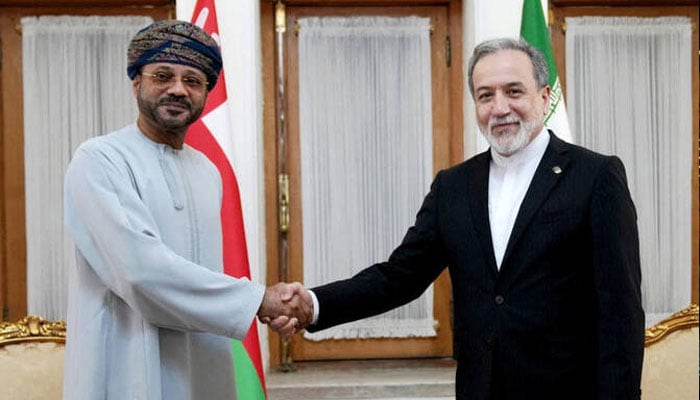
    TEHRAN: Iran and Oman have agreed on a framework for establishing a temporary maritime corridor through the strategically vital Strait of Hormuz, in a move aimed at restoring safer shipping and reducing risks in one of the world’s most important waterways. The understanding emerged during talks between Iranian Foreign Minister Abbas Araghchi and his Omani counterpart, Sayyid Badr bin Hamad Al Busaidi, in Tehran on Tuesday. The two sides discussed measures to resume safe navigation while protecting the sovereignty and maritime rights of both countries. According to a joint statement, the proposed framework includes the creation of a joint temporary navigational corridor and a coordinated project to clear possible mines from the waterway. The initiative is intended to provide a practical mechanism for ships to move through the strait while longer-term arrangements are negotiated. The Strait of Hormuz has remained heavily disrupted since the outbreak of the wider Iran war in February. Before the conflict, the waterway handled roughly one-fifth of global oil and liquefied natural gas shipments, making any prolonged disruption a major concern for energy markets and international shipping. The latest agreement, however, is being viewed as an interim measure rather than a final settlement. Iranian and Omani officials are expected to continue technical discussions on establishing a permanent navigational corridor, managing vessel traffic and sharing information about maritime movements. The two countries also intend to examine future arrangements for administering the strait and providing navigation and security services. They have stressed that any long-term mechanism should take into account the rights and interests of other Gulf states bordering the waterway. Iranian officials have also indicated that further technical negotiations could continue over the coming weeks. The proposed arrangement is particularly significant because the strait connects the energy-rich Persian Gulf with the Gulf of Oman and the wider Arabian Sea. Araghchi said discussions with regional partners had focused on diplomatic and regional solutions, while emphasizing continued technical-level contacts over navigation and the future management of the waterway. For Oman, which has traditionally played a mediating role in regional disputes, the initiative offers another opportunity to promote dialogue and maritime stability. For Iran, reopening a controlled shipping route could ease economic pressure while maintaining its position on sovereignty and security in the strait. The success of the temporary corridor will ultimately depend on security conditions, mine-clearing efforts and agreement over how commercial vessels will be guided. Still, the latest Iran-Oman talks provide a potentially important opening for restoring maritime traffic and creating a pathway toward a more permanent solution.

  • | |

    Gaza holds funeral for 112 victims recovered nearl…

    Funeral prayers have been held in Gaza for 112 Palestinians whose bodies were recovered nearly three years after the destruction of residential buildings in the Al-Sabra neighborhood during the 2023 Gaza conflict. The remains were retrieved from beneath the rubble following an extended rescue operation, bringing long-awaited closure to many grieving families. According to local civil defense authorities, the bodies were recovered after approximately 136 hours of continuous search and rescue efforts at the site of collapsed residential buildings in Gaza City. The operation was carried out under challenging conditions, including damaged infrastructure, limited heavy machinery, and shortages of fuel. The funeral procession drew large crowds as mourners carried flag-draped coffins to the cemetery. Family members and residents gathered to pay their final respects, with many expressing the pain of waiting years before they could bury their loved ones. Several families reportedly lost multiple relatives in the same incident, making the ceremony particularly emotional. Civil defense officials stated that many of those recovered belonged to the Abu Sharia family, while around 40 children were among the victims identified. Authorities also warned that an estimated 157 additional bodies may still remain trapped beneath the rubble, highlighting the scale of the destruction and the ongoing recovery challenge. The buildings collapsed during an Israeli airstrike on November 22, 2023, in the Al-Sabra area of Gaza City. According to Palestinian authorities, more than 300 people were killed in the attack. Due to the intensity of the bombardment and the limited rescue capabilities at the time, only a small number of bodies were initially recovered, leaving many victims buried beneath the debris. Israeli authorities have previously stated that military operations in Gaza target armed groups and military infrastructure, while emphasizing that measures are taken to reduce civilian casualties. The humanitarian impact of the conflict, however, has been widely documented by international organizations, which have repeatedly called for greater protection of civilians. Meanwhile, Türkiye, Egypt, and Qatar have expressed concern over reported violations of the Gaza ceasefire and urged all parties to fully implement the terms of the agreement. The three countries stressed the importance of protecting civilians, hospitals, and medical facilities in accordance with international humanitarian law. Rescue workers continue to search through destroyed neighborhoods, warning that thousands of people may still be missing beneath collapsed structures across Gaza. They say recovery efforts remain slow because of damaged infrastructure, equipment shortages, and difficult working conditions. The latest mass funeral serves as a solemn reminder of the lasting human cost of the conflict and the enduring grief faced by affected families.

  • |

    Lavrov rules out immediate Ukraine ceasefire

    Russian Foreign Minister Sergei Lavrov has ruled out the possibility of an immediate ceasefire in Ukraine, arguing that any truce must form part of a long-term and sustainable settlement rather than serve as a temporary pause in the conflict. In an interview with Russian state television, Lavrov said Moscow would continue to take stronger measures against Western support that, according to Russia, strengthens Ukraine’s military capabilities. He accused Western countries of prolonging the war by providing Kyiv with military and other forms of assistance. Lavrov maintained that Russia would only consider a ceasefire if it could lead to a lasting political solution. He said an immediate halt to fighting would not address what Moscow considers the underlying causes of the conflict and could allow Ukraine to strengthen its forces and resume hostilities later. The Russian foreign minister also accused the United States of involvement in attacks against Russia. His remarks came as Moscow seeks clarification from the US State Department over alleged American intelligence cooperation with Ukraine. Despite the escalating rhetoric, Lavrov said Russia had not rejected dialogue with representatives of US President Donald Trump. He indicated that Moscow remained open to discussions with Trump’s envoys, suggesting that diplomatic channels between Washington and Moscow remain available. Lavrov’s comments highlight the difficult path toward a ceasefire as Russia and Ukraine continue to disagree over the conditions for ending the war. Moscow has repeatedly called for a settlement that addresses its security demands, while Kyiv and its Western allies have pushed for a durable peace that preserves Ukraine’s sovereignty and security.

  • | |

    Fuego volcano forces evacuations in Guatemala as l…

    Guatemalan authorities have ordered residents in at least two villages to evacuate after the Fuego volcano erupted, sending lava and ash shooting into the air. Fuego, regarded as one of the most active volcanoes in the Western Hemisphere, began erupting on Monday. The country’s volcanic monitoring agency reported that pyroclastic flows, fast moving currents made up of hot gas, volcanic ash and rock fragments, continued rushing down the volcano’s south eastern slope into early Tuesday. Guatemala’s disaster management agency, known as Conred, raised a nationwide orange alert, the second highest level on its warning scale, and cautioned residents to remain prepared as further eruptions could generate additional pyroclastic flows and large ash clouds. The agency advised people living nearby to keep their doors and windows shut, and officials canceled classes at schools located close to the volcano. Fuego sits roughly 16 kilometers, or about 10 miles, west of Antigua, a city that draws large numbers of tourists each year for its well preserved colonial era architecture and status as a UNESCO World Heritage Site. The volcano itself has also become a popular destination for hikers in recent years, drawing visitors who trek its slopes for views of the surrounding region. Conred urged both tourists and local residents to avoid approaching the volcano or lingering in areas considered at risk, particularly along its slopes, as the situation continues to develop. The eruption has revived memories of a far deadlier event in 2018, when a sudden eruption of Fuego killed more than 200 people. Many of the victims were overtaken by fast moving pyroclastic flows that swept down the Las Lajas ravine with little warning, a disaster that remains one of the deadliest volcanic events in the country’s recent history. Fuego’s frequent activity has long made it one of Central America’s most closely monitored volcanoes, with authorities maintaining routine surveillance given its proximity to populated areas and popular tourist destinations.

  • | |

    Japan’s 7.1 quake injures 50, cuts power to 40,0…

    A powerful 7.1-magnitude earthquake jolted Japan’s southern Kumamoto prefecture on Tuesday, leaving at least 50 people injured, disrupting transport and cutting electricity to around 40,000 homes as authorities warned residents to remain alert for aftershocks. The earthquake struck Kyushu, Japan’s southwestern main island, at a depth of about 10 kilometres, according to the Japan Meteorological Agency (JMA). The tremor reached the highest level of 7 on Japan’s seismic intensity scale in parts of Kumamoto, underlining the strength of the shaking. The powerful tremor damaged roads, bridges and buildings, while transport services across the affected region were thrown into disruption. Rail services, including high-speed trains, were suspended, while Kumamoto airport also temporarily closed its runway. The earthquake also triggered an emergency response across Kyushu. Authorities urged more than 150,000 residents to evacuate as officials assessed damage and monitored the situation. Reports said a fire and explosion occurred at a shopping mall, while a goods train was derailed during the chaos. For residents, the immediate concern was not only the first powerful jolt but the possibility of more shaking. Japanese authorities issued warnings over potential aftershocks and landslides, urging people in affected areas to remain cautious and follow official instructions. A tsunami warning was also issued after the earthquake, with authorities warning of waves of up to one metre along parts of the Ariake and Yatsushiro seas. The warning was later lifted after no significant tsunami activity was observed. Despite the widespread disruption, there were no reports of irregularities at nuclear power plants in the affected region, providing some relief as authorities continued their assessment. The earthquake has also drawn attention because Kumamoto has experienced devastating seismic activity before. The region was badly hit by a major earthquake sequence in 2016, which caused extensive destruction and hundreds of deaths. Japan is among the world’s most earthquake-prone countries, making disaster preparedness a central part of everyday life. Yet the latest tremor again demonstrated how quickly a powerful earthquake can disrupt communities, transport networks and essential services. With rescue and assessment operations continuing, authorities are now focused on helping those injured, restoring electricity and transport, and preparing residents for potentially dangerous aftershocks.

Leave a Reply

Your email address will not be published. Required fields are marked *