
lavrov rules out
|

Lavrov rules out immediate Ukraine ceasefire

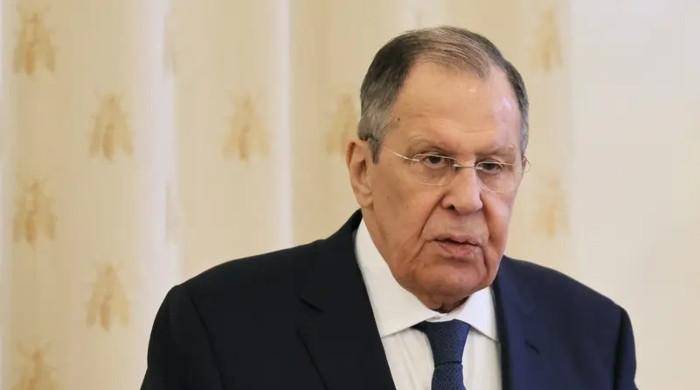
Russian Foreign Minister Sergei Lavrov has ruled out the possibility of an immediate ceasefire in Ukraine, arguing that any truce must form part of a long-term and sustainable settlement rather than serve as a temporary pause in the conflict.

In an interview with Russian state television, Lavrov said Moscow would continue to take stronger measures against Western support that, according to Russia, strengthens Ukraine’s military capabilities. He accused Western countries of prolonging the war by providing Kyiv with military and other forms of assistance.

Lavrov maintained that Russia would only consider a ceasefire if it could lead to a lasting political solution. He said an immediate halt to fighting would not address what Moscow considers the underlying causes of the conflict and could allow Ukraine to strengthen its forces and resume hostilities later.

The Russian foreign minister also accused the United States of involvement in attacks against Russia. His remarks came as Moscow seeks clarification from the US State Department over alleged American intelligence cooperation with Ukraine.

Despite the escalating rhetoric, Lavrov said Russia had not rejected dialogue with representatives of US President Donald Trump. He indicated that Moscow remained open to discussions with Trump’s envoys, suggesting that diplomatic channels between Washington and Moscow remain available.

Lavrov’s comments highlight the difficult path toward a ceasefire as Russia and Ukraine continue to disagree over the conditions for ending the war. Moscow has repeatedly called for a settlement that addresses its security demands, while Kyiv and its Western allies have pushed for a durable peace that preserves Ukraine’s sovereignty and security.

Similar Posts

  • | |

    Saudi Crown Prince urges Trump to avoid escalation…

    Saudi Crown Prince Mohammed bin Salman has spoken by phone with US President Donald Trump, reportedly expressing concern over Washington’s plans for major military strikes against Iran. According to international media reports, the Saudi crown prince urged the US president to take steps to reduce tensions in the region and avoid further military action against Iran. The call comes amid growing fears that an escalation between Washington and Tehran could destabilize the wider Middle East and threaten regional security. During the conversation, Mohammed bin Salman reportedly emphasized the importance of pursuing diplomatic channels and finding ways to de-escalate the situation. Saudi Arabia has maintained close ties with the United States while also seeking to avoid a broader regional conflict that could affect the security and stability of Gulf countries. Reports indicate that Qatar, the United Arab Emirates, Türkiye, and Pakistan are also encouraging Washington to reduce tensions and seek a diplomatic solution. The countries have reportedly expressed concerns that any major escalation could have serious consequences for the region and potentially disrupt trade, energy supplies, and maritime routes. Meanwhile, diplomatic contacts appear to be continuing on multiple fronts. Qatari mediators have reportedly been in communication with Iran’s foreign minister, US special envoy Steve Witkoff, and Omani officials as efforts to prevent further escalation gather momentum. The diplomatic activity comes as concerns remain high over the security of the Strait of Hormuz, one of the world’s most strategically important maritime routes. A significant portion of global oil shipments passes through the waterway, making any disruption a major concern for international energy markets. Separately, a US-based website has claimed that negotiators have made some progress toward reaching an agreement aimed at reopening the Strait of Hormuz. However, details of the reported progress remain unclear, and there has been no confirmed announcement of a final agreement from the parties involved. The latest diplomatic efforts suggest that regional and international actors are increasingly pushing for negotiations to prevent the situation from developing into a wider conflict. Any breakthrough in talks could help ease tensions and reduce the risk of further military confrontation in the region.

  • | | |

    Iran says Pakistan ties gaining greater importance

    TEHRAN: Iran has described its relationship with Pakistan as increasingly important, saying Islamabad has played a significant role as a mediator since the outbreak of the regional conflict. Iranian Foreign Ministry spokesperson Esmaeil Baghaei said the two neighbouring countries were maintaining close diplomatic contacts. He also confirmed that Iranian Foreign Minister Abbas Araghchi and Parliament Speaker Mohammad Bagher Ghalibaf had been invited to visit Islamabad. Baghaei said the two officials would travel to Pakistan at a suitable time. He did not announce a specific date for the visit. He described reciprocal visits between the two countries as a natural part of their growing bilateral relationship. The Iranian official also played down concerns that the recently signed defence agreement between Pakistan, Saudi Arabia and Turkiye was aimed at Tehran. Pakistan, Saudi Arabia and Turkiye signed the Makkah Joint Defence Agreement on August 7. The agreement seeks to strengthen collective defence cooperation and provides for a joint response if any member comes under attack. Baghaei said Tehran did not consider the agreement a direct threat to Iran. He said regional countries were increasingly seeking security arrangements based on their own regional realities rather than relying entirely on external powers. He maintained that regional cooperation could contribute to stability if such arrangements remained inclusive and focused on preventing conflict. Baghaei also said Iran was not prepared to resume direct negotiations with the United States while Tehran believed Washington was violating an interim agreement. The Iranian government has also linked the reopening of the Strait of Hormuz to a number of demands. These include compensation for damage caused during the conflict and an end to the US naval blockade of Iranian ports. Meanwhile, Iran and Oman are continuing discussions on arrangements for commercial shipping through the Strait of Hormuz. Baghaei said the talks were progressing in a constructive manner. He said the two sides had reached an understanding on a proposed map for shipping traffic and were working on several technical details. According to the Iranian official, the proposed arrangement would establish mechanisms for safer maritime movement. It would also address environmental protection and maritime crimes. He stressed that the discussions with Oman were focused on ensuring safe international shipping and were separate from broader political disputes. Baghaei nevertheless reiterated that Tehran would not allow the full reopening of the strategic waterway unless its conditions concerning Washington were addressed. In a separate development, Iran has appointed former Islamic Revolutionary Guard Corps commander Mohsen Rezaei to a senior position in the Supreme National Security Council. Rezaei has replaced Mohammad Baqer Zolqadr as secretary of the body responsible for coordinating Iran’s security and foreign policy. No official reason was immediately given for the change. It also remains unclear whether the appointment will lead to any major shift in Iran’s security policy. Rezaei, 71, commanded the Revolutionary Guards from 1981 to 1997. He later served for more than two decades as secretary of Iran’s Expediency Discernment Council and also held the position of vice president for economic affairs. Iran’s Supreme National Security Council brings together senior military, intelligence and government officials. It is formally chaired by the president, while the supreme leader retains ultimate authority over major state matters. A separate decree appointed Rezaei as the supreme leader’s representative on the council. Zolqadr was instead named as a political adviser. The developments come as Iran faces heightened regional tensions and continues efforts to manage its relations with neighbouring countries and major international powers.

  • | | |

    Iran rejects 60-day deadline in US MoU, blames Was…

    TEHRAN: Iran has rejected claims that a 60-day deadline had expired under its memorandum of understanding (MoU) with the United States, saying the agreement never imposed a fixed deadline on Tehran and that its decisions would be guided by national interests and security. Iranian Foreign Ministry spokesman Esmaeil Baqaei made the remarks during a press briefing on Monday as the period referenced in discussions between Tehran and Washington came to an end. “There is no such thing as a 60-day deadline in the text of the MoU,” Baqaei said, according to Iran’s semi-official ISNA news agency. He stressed that Iran would not formulate its policies under pressure, ultimatums or externally imposed time limits. According to Baqaei, the agreement provided a 60-day window for negotiations focused on two key issues — sanctions relief and Iran’s nuclear programme. He said the period could have been extended if the two sides failed to reach an outcome. However, Tehran argues that the understanding became irrelevant after what it described as widespread US violations of the agreement. Baqaei said no talks were ultimately launched under the framework because of Washington’s alleged actions. The MoU was signed on June 18 following weeks of diplomatic efforts aimed at easing the wider Middle East conflict and reopening the strategically important Strait of Hormuz. The waterway is a major route for global energy shipments, making any disruption there a concern for international markets. Tensions later escalated, with Iran accusing the United States of breaching the understanding. Hostilities resumed on July 7, when Iranian forces attacked commercial shipping in the Strait of Hormuz, including a Qatari liquefied natural gas tanker. The United States subsequently carried out several waves of strikes against Iranian military targets. The conflict also expanded beyond the Gulf, with Yemen’s Houthi rebels imposing a naval blockade affecting Saudi Arabia and adding pressure on another vital regional shipping route. Missing pilots Baqaei also raised the issue of three Iranian pilots whose fate remains disputed. Tehran says the pilots went missing during an operation targeting the US Al Udeid Air Base in Qatar in March. Iran now considers the missing men prisoners until their fate is clarified. Qatar, however, denies holding them and says it previously invited Iranian officials to receive details about search-and-rescue operations. Oil spill dispute The Iranian spokesman also blamed US military operations for environmental damage in Gulf waters and called for Washington to be held responsible. Iran recently demanded compensation over an oil slick that reached Qeshm Island, affecting beaches and mangrove areas. Tehran has blamed a foreign vessel for the spill, while outside reports have raised questions over the circumstances surrounding the incident. With diplomacy stalled and tensions continuing around the Strait of Hormuz, Iran’s latest statement signals that Tehran is unwilling to accept Washington’s interpretation of the MoU or negotiate under a deadline.

  • | | |

    China reaffirms support for independent Palestinia…

    China has reaffirmed its steadfast support for the establishment of an independent Palestinian state, while pledging to continue providing humanitarian and development assistance to the Palestinian people. Speaking to the media, Chinese Ambassador to Palestine Sun Xin said Beijing remains firmly committed to strengthening its ties with Palestine and advancing bilateral cooperation. He noted that China is eager to deepen its strategic partnership with Palestine and further expand collaboration in the years ahead. The ambassador said his meetings with Palestinian leaders gave him a firsthand understanding of the immense hardships and suffering faced by Palestinians. He stressed that China remains concerned about the humanitarian situation and is committed to supporting efforts that contribute to relief, reconstruction, and long-term development. Sun Xin also highlighted that this year marks the third anniversary of the strategic partnership between China and Palestine, describing it as an important milestone in the two sides’ growing relationship. He reiterated that China will continue to stand by the Palestinian people through humanitarian assistance and development initiatives while maintaining its support for an independent Palestinian state.

  • | | |

    West nile virus cases rise in Israel as two people…

    A mosquito-borne disease has resurfaced in Israel, with 13 people reportedly diagnosed with West Nile fever this year and two deaths recorded. According to reports, Israel’s Ministry of Health has confirmed the presence of mosquitoes carrying the West Nile virus in several areas where cases have been identified. The disease is primarily transmitted to humans through the bite of infected mosquitoes. Israel’s Ministry of Environmental Protection said mosquitoes carrying the virus were detected in the Menashe Regional Council, Ramat Hasharon and Eilat. Health officials explained that West Nile virus is generally transmitted through mosquitoes that become infected after feeding on birds carrying the virus. The infected mosquitoes can subsequently transmit the virus to humans through bites. Professor Sigal Sadeski, head of the Public Health Division, said that West Nile fever is mild in most cases and many infected people may not develop noticeable symptoms. However, the infection can become serious in some patients. Health experts warn that the virus can affect the nervous system and, in severe cases, lead to complications such as encephalitis or meningitis. The risk of severe illness is reportedly higher among people over the age of 60 and those who already have underlying health conditions. Investigation Underway Israeli authorities have launched epidemiological investigations to determine how and where the affected individuals were exposed to infected mosquitoes. Officials are also examining whether cases reported in different locations are connected and are attempting to identify areas where infected mosquitoes may have come into contact with people. The discovery of infected mosquitoes has also increased the importance of mosquito surveillance and control measures in the affected areas. Environmental authorities are expected to monitor mosquito populations and take steps aimed at reducing the risk of further transmission. Previous Outbreak in 2024 Israel also experienced a significant outbreak of West Nile virus in 2024. According to an Israeli report submitted to the World Organisation for Animal Health, 916 human cases had been confirmed by September 2024, with 71 deaths reported. The latest cases have renewed concerns about the seasonal spread of West Nile virus and the potential risks posed by infected mosquitoes. While most infections are mild or may cause no obvious symptoms, severe neurological complications can occur in a small proportion of patients. Health authorities are therefore continuing surveillance and investigating the latest infections to better understand the spread of the virus. The current outbreak highlights the importance of mosquito-control measures, particularly during periods when mosquito activity is high. Authorities are expected to continue monitoring affected areas and investigating possible sources of transmission.

  • |

    Trump aide impersonator texts UK PM, sparking security scare

    A security mystery has emerged after an individual posing as White House Chief of Staff Susie Wiles reportedly exchanged text messages with UK Prime Minister Andy Burnham. The communications have raised concerns in both Britain and the United States. Officials are examining how the impersonator was able to establish contact with the British prime minister. According to reports, Burnham received a limited number of messages from the individual while he was campaigning for office. The communication reportedly continued for a short period after he became prime minister. Sources familiar with the matter said the messages were ultimately considered to be of no significant consequence. However, the incident triggered concerns because the impersonator claimed to represent a senior White House official. The matter was serious enough for the British embassy in Washington to raise the issue directly with the White House. British officials initially considered the possibility that the real Susie Wiles’ phone, contact information or communications may have been compromised. Authorities therefore examined whether the incident involved a wider security breach. The identity of the person behind the impersonation remains unclear. The incident has highlighted the growing risks posed by sophisticated impersonation scams. High-profile political figures are increasingly being targeted by individuals who attempt to gain their trust by pretending to be senior officials or influential public figures. Similar incidents have previously involved prominent American politicians and business leaders. In such cases, scammers have used false identities and digital communications to establish contact with their targets. The latest case has attracted particular attention because of the positions held by the people involved. Wiles is a senior figure within the White House, while Burnham is the UK prime minister. Despite the security concerns, there is currently no indication that sensitive information was exchanged during the messages. Sources described the content of the communications as having no significant impact. Downing Street has declined to discuss the specific details of the incident. British officials have maintained that national security matters are not normally discussed publicly. The White House has also declined to comment on the reported communications or the identity of the impersonator. The incident nevertheless raises questions about how the individual obtained access to Burnham and successfully presented themselves as a senior White House official. Officials are expected to examine the communication trail and other available evidence to determine how the impersonation occurred. The case also highlights the challenges faced by governments in verifying digital identities. Text messages and other online communications can make it easier for individuals to impersonate senior officials, particularly when they use convincing names, photographs or other identifying details. For now, the mystery surrounding the impersonator’s identity remains unresolved. Authorities have not publicly identified the person responsible or confirmed whether the incident was part of a broader campaign.

Leave a Reply

Your email address will not be published. Required fields are marked *