zelensky alleges russia
|

Zelensky alleges Russia shared satellite intelligence with Iran to target US bases

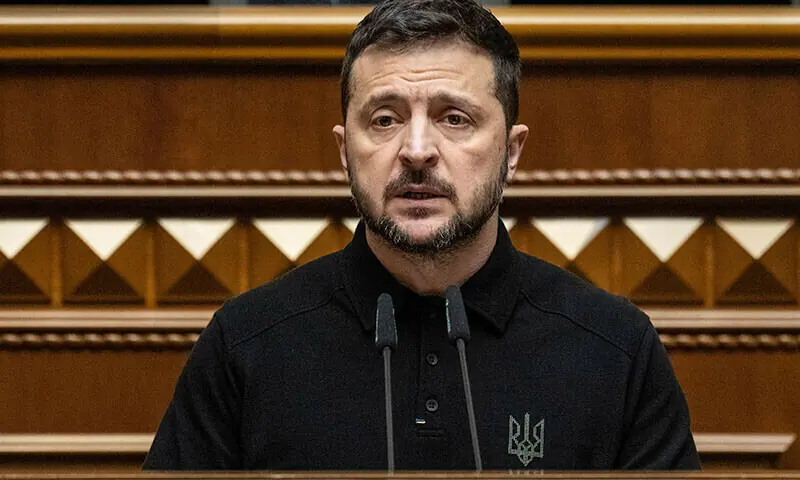
Ukrainian President Volodymyr Zelensky has accused Russia of helping Iran identify US military positions in the Gulf by providing satellite intelligence, adding another layer of tension to the already strained relationship between Moscow, Tehran, and Kyiv. His remarks come as Ukraine and Iran exchange fresh accusations following an attack on an Iranian vessel in the Caspian Sea.

In a statement shared on social media, Zelensky claimed that Ukraine had observed increased Russian satellite monitoring of Gulf countries and American military installations since the beginning of July. According to him, the satellite images were later used by Iran, with a noticeable connection between the timing of the surveillance and Iranian attacks. He alleged that the imagery was gathered before strikes to assist with planning and then again afterward to evaluate the extent of the damage. While Zelensky did not release evidence to support the claim, he insisted the pattern was clear and significant.

The allegations surfaced shortly after Ukraine announced a series of long range military operations in the Caspian Sea. Zelensky said Ukrainian forces had successfully struck vessels carrying military cargo linked to Iran as well as a warship. Ukrainian intelligence later stated that drones had targeted sanctioned cargo ships allegedly involved in transporting military equipment between Iran and Russia. The operation marked one of Kyiv’s most direct actions against assets connected to Tehran and reflected Ukraine’s growing willingness to challenge countries it believes are supporting Russia’s war effort.

Iran reacted strongly to the reported strikes. The Iranian Foreign Ministry summoned Ukraine’s senior diplomat in Tehran to protest what it described as a hostile and unlawful attack. Iranian officials said one sailor was killed and several others were injured when a commercial vessel exploded following the strike. The ministry rejected any suggestion that Iran had played a role in the war between Russia and Ukraine and insisted the country had remained outside the conflict.

Iranian Foreign Minister Abbas Araghchi also condemned the attack, describing it as a serious violation of the United Nations Charter. He claimed the operation had been carried out to advance Israeli interests and accused Kyiv of trying to draw Europe deeper into the regional conflict. Araghchi said he had discussed the matter with European Union foreign policy chief Kaja Kallas and Russian Foreign Minister Sergei Lavrov, warning that Iran would not allow the incident to pass without a response.

Zelensky’s latest accusations regarding Russian support for Iran are not entirely new. Earlier reports citing US officials claimed that Moscow had shared intelligence with Tehran about American military positions in the Middle East during the recent conflict involving Iran and the United States. Those reports also suggested that China could have played a supporting role, although no public evidence has confirmed those claims.

The issue has also created mixed messages within the US government. During a congressional hearing, US Defence Secretary Pete Hegseth acknowledged that Russia and China were helping Iran in different ways. He said there was clear cooperation among American rivals but declined to discuss the full extent of that support, arguing that the details should remain classified for security reasons.

Only days later, however, President Donald Trump publicly disagreed with that assessment. Writing on his Truth Social platform, Trump said he did not believe Russia or China had assisted Iran. He stated that both Russian President Vladimir Putin and Chinese President Xi Jinping had assured him they were not involved in supporting Iranian military operations.

Despite those conflicting views, Zelensky maintained that Russian satellite activity offered direct evidence of cooperation. He specifically pointed to satellite surveillance conducted on July 19 and 20, claiming Russian satellites closely monitored four air bases used by the United States in Bahrain, Jordan, and Kuwait. According to the Ukrainian leader, the timing of those observations raised serious concerns about Russia’s role in helping Iran monitor American military assets in the region.

Similar Posts

  • | |

    Talal Chaudhry hits back at Bilawal over AJK polls

    Islamabad: Minister of State for Interior Talal Chaudhry has criticized PPP Chairman Bilawal Bhutto Zardari over his reaction to the Azad Jammu and Kashmir elections, saying political leaders should accept electoral outcomes with grace instead of complaining after defeat. Speaking at the PML-N’s election review meeting for Poonch Division, Chaudhry said the party’s victories in the first two phases of the AJK local elections reflect the confidence Kashmiris have in the performance of the federal and Punjab governments. He claimed voters supported the PML-N because of its governance and development record, adding that people across Pakistan aspire to the same level of progress achieved in Punjab. The meeting was attended by district and constituency coordinators, along with PML-N candidates from Poonch Division, where party leaders also reviewed campaign preparations and polling strategy for the third phase of the elections.

  • | |

    Heavy rains trigger NDMA flood warning for multipl…

    The National Disaster Management Authority (NDMA) has issued a nationwide flood alert, warning that rising river levels and continued monsoon rainfall could lead to flooding in several parts of Pakistan through Sunday. The authority has urged citizens to remain vigilant and avoid unnecessary travel to flood-prone areas. According to the NDMA, the Indus River is currently experiencing moderate flooding at Guddu, while low flood conditions persist at Kalabagh, Chashma, and Sukkur. The Chenab River is also expected to witness moderate to high water flows at Marala, with low to moderate flows forecast at Khanki and Qadirabad. The authority further stated that the Jhelum, Ravi, and Kabul rivers, along with their tributaries, are expected to experience low to moderate flows. However, water levels in streams and tributaries connected to the Jhelum, Chenab, and Ravi rivers are likely to increase significantly due to ongoing rainfall. Hill torrents in Dera Ghazi Khan and Rajanpur are also expected to experience heavy water flows, raising the risk of flash flooding. Similar conditions are forecast for rain-fed streams and nullahs in central and southern districts of Khyber Pakhtunkhwa and northern Balochistan. The NDMA warned that districts including Mohmand, Bajaur, Buner, Mardan, Kurram, South Waziristan, Shangla, and Peshawar in Khyber Pakhtunkhwa could experience flooding in streams and nullahs. In northern Balochistan, the Nari, Bolan, Kangri, and Lehri rivers are also at risk of flash flooding. Urban flooding is expected in several Punjab districts, including Rawalpindi, Jhelum, Gujranwala, Sargodha, Mandi Bahauddin, Sialkot, Gujrat, Narowal, Lahore, Okara, Sahiwal, and Faisalabad. Similar conditions may affect Sindh districts such as Sukkur, Hyderabad, Shaheed Benazirabad, Thatta, Badin, Sanghar, Khairpur, Mirpurkhas, Umerkot, Tando Muhammad Khan, Tando Allahyar, Tharparkar, and Nawabshah. Cities including Peshawar, Nowshera, Charsadda, and Mardan may also experience urban flooding. The NDMA has advised the public to avoid crossing flooded roads, rivers, and streams, particularly in mountainous areas where landslides, debris flows, and flash floods are more likely during the monsoon season. Travelers are encouraged to carry emergency supplies, including drinking water, dry food, a flashlight, a first-aid kit, a power bank, and emergency contact numbers. Citizens have also been urged to stay informed through the official Pak NDMA Disaster Alert mobile application and follow instructions issued by local authorities to ensure their safety during the ongoing monsoon season.

  • |

    European wildfire crisis claims three firefighters in Greece amidst scorching heatwaves

    Three Greek firefighters have lost their lives whilst tackling aggressive wildfires on the island of Crete and the southern mainland, as an unprecedented surge of summer heatwaves continues to fuel devastating blazes across southern Europe. The relentless arc of fires, stretching from the Atlantic coast to the eastern Mediterranean, has forced over three hundred and thirty thousand people to evacuate their homes and hotels. Firefighting services across the continent remain pushed to their absolute limits as high temperatures, prolonged drought, and powerful wind gusts exacerbate the risk of fresh outbreaks and reignite previously stabilised zones. In Spain, Prime Minister Pedro Sánchez announced that the national government had taken over disaster management after a massive wildfire near Madrid reached an unprecedented operational emergency level before ground crews managed to stabilise its perimeter. Meanwhile, French emergency services in the Gironde region continue to battle historical forest fires that have scorched over forty-four thousand hectares of land and injured more than a hundred firefighters. As the European Union coordinates extensive international aid, deploying aircraft, specialised vehicles, and emergency personnel from member states including Poland, Romania, and Portugal, climate experts and EU officials warn that rising global temperatures are making European fire seasons longer, hotter, and increasingly difficult to contain.

  • | |

    Court extends Gul Plaza probe till Aug 9

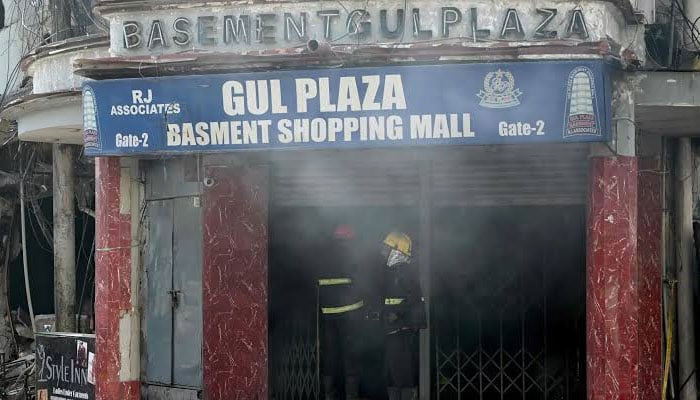
    KARACHI: A judicial magistrate in Karachi has granted investigators additional time to complete the investigation into the Gul Plaza tragedy case. The court extended the deadline until August 9 and directed the investigating officer to submit a complete report at the next hearing. During the proceedings, the investigating officer informed the court that the inquiry was still in progress and requested more time to finalize the investigation. He said responses from several government departments had been collected, but information from some key institutions was still awaited. The court was told that six government departments had already submitted their replies to investigators. However, responses from the Sindh Building Control Authority (SBCA) and the Water Corporation had not yet been received, preventing the investigation from being completed. The investigating officer requested that the court allow additional time so that all pending replies could be included in the final investigation report. The court accepted the request and granted an extension until August 9. The magistrate directed the investigating officer to complete all remaining inquiries before the next hearing and submit a comprehensive report covering all aspects of the case. The court stressed the importance of ensuring that the investigation is thorough and based on complete information from all relevant departments. The Gul Plaza tragedy case has remained under investigation as authorities continue collecting evidence and official records from various institutions. Investigators are examining the role of different departments and reviewing all available documents before reaching their final conclusions.

  • |

    Infantino’s future in doubt after FIFA rights controversy

    FIFA president Gianni Infantino is facing growing criticism after abandoning a controversial proposal to sell a stake in the commercial rights of the FIFA World Cup, a move that has raised questions about his leadership and decision-making within world football’s governing body. The proposal sparked strong opposition from several football organizations, particularly regional confederations and professional leagues, who argued that such a major commercial decision should not have been pursued without broader consultation. Critics believe the plan exposed concerns over transparency and governance at FIFA. Claudius Schaefer, the chairman of the organization representing 53 professional men’s and women’s football leagues across Europe and the chief executive of the Swiss Football League, said the handling of the proposal had seriously damaged confidence in FIFA’s leadership. According to Schaefer, the situation would have significant consequences in most organizations, especially when a senior executive advances a major business initiative without informing or involving key governing bodies. He suggested that the controversy has left Infantino’s position under increased scrutiny. The proposal was officially withdrawn after widespread resistance from football stakeholders. The decision came following criticism from various regional football confederations, with UEFA and CONCACAF publicly expressing that they had lost confidence in Infantino’s leadership after the episode. Schaefer argued that the failed proposal reflected a broader concern about FIFA’s priorities. He said the organization appeared increasingly focused on generating greater commercial revenue rather than protecting the long-term interests of football competitions, players, clubs, and domestic leagues. He also warned that expanding commercial opportunities could encourage FIFA to create even larger tournaments and increase the number of international matches. Such developments, he said, would place additional pressure on an already crowded football calendar. Professional leagues have repeatedly voiced concerns over fixture congestion, arguing that players are being asked to participate in too many matches throughout the season. Domestic competitions, they say, often bear the consequences when international tournaments continue to expand. Schaefer emphasized that national leagues remain the foundation of professional football and should not be weakened by decisions aimed primarily at increasing commercial returns. He argued that any future reforms to international competitions must balance financial objectives with the welfare of players and the health of domestic football. Another major point of criticism centered on FIFA’s decision-making process. Schaefer claimed that even members of the FIFA Council—the organization’s highest decision-making body—were reportedly unaware of the proposal before it became public. He described this lack of consultation as surprising and said it raised serious concerns about governance within FIFA. The controversy has intensified calls for greater transparency and accountability in football administration. Many stakeholders believe decisions involving the commercial future of the World Cup should involve extensive discussion with FIFA’s governing bodies, member associations, leagues, and other key partners before being considered. Although FIFA has now withdrawn the proposal, the fallout continues to fuel debate over leadership, governance, and the future direction of world football. With criticism coming from influential football organizations across different regions, pressure remains on Infantino to rebuild trust and demonstrate a more inclusive approach to decision-making on matters affecting the global game.

Leave a Reply

Your email address will not be published. Required fields are marked *