meta settlement falls
| | |

Meta settlement falls short on teen mental health protections, whistleblower says

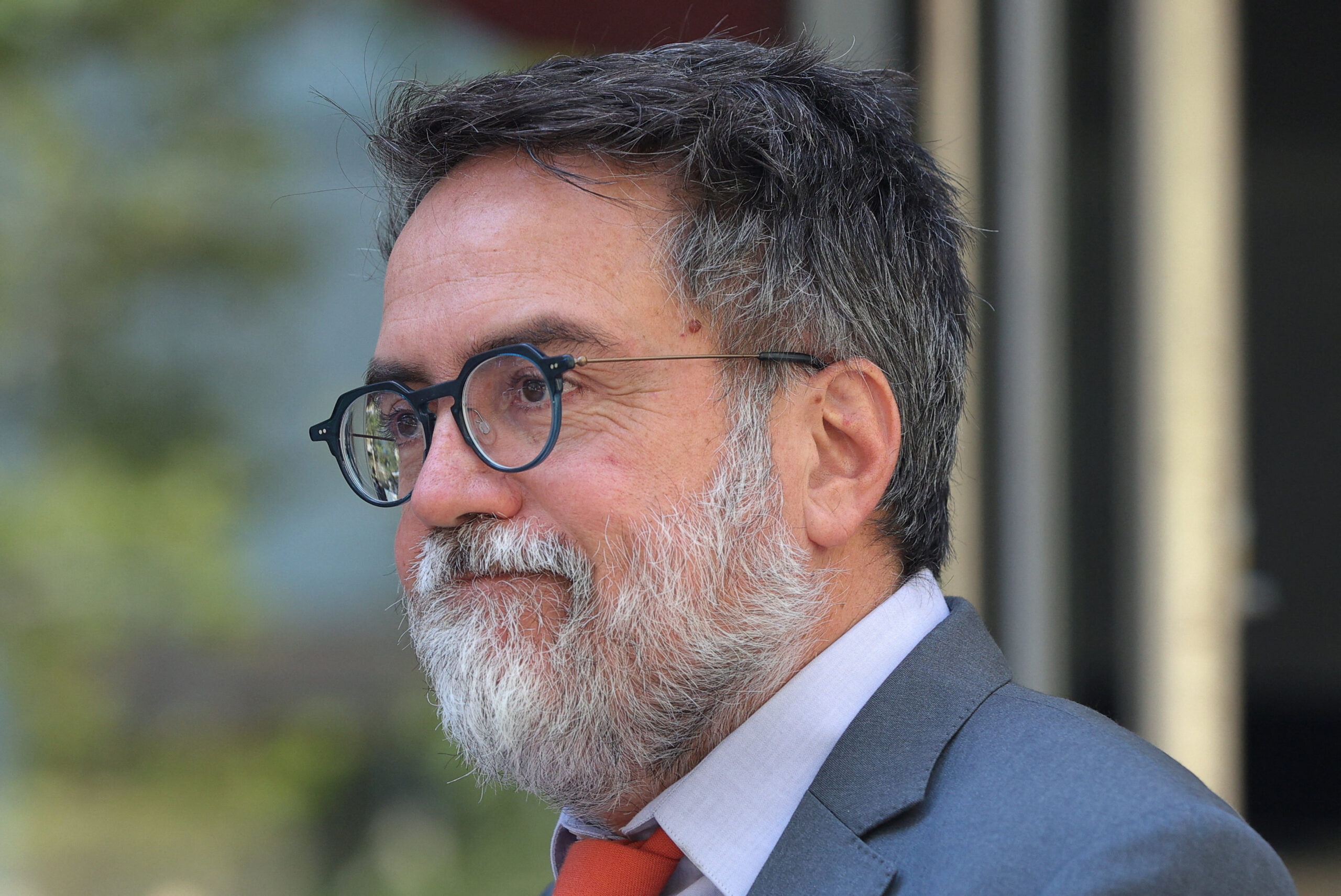
A whistleblower whose testimony helped build a child safety case against Meta Platforms META.O said on Wednesday that the firm’s settlement with a coalition of US states does not meaningfully address harms from social media that he described in court.

Former Meta safety engineer Arturo Bejar told a judge and eight jurors last week that the firm had knowingly underreported the frequency with which teens were harmed on its platforms, pushed them toward content that made them feel bad about themselves and failed to correctly adjudicate reports of child predation.

On Wednesday, the states announced they and Meta had settled the case, with California Attorney General Rob Bonta declaring that the settlement “will make social media less dangerous for our kids.” However, Bejar said the proposed settlement does not meaningfully address the problems he was asked to testify about.

“This agreement could simply codify much of the ‘safety theater’ that Meta has been doing in recent years,” he said. “Instagram will be used a little less, but it will not be any safer.”

In announcing the settlement, Meta said it is “building on our longstanding efforts to empower parents and support teens.”

“We’re grateful for Mr. Bejar’s advocacy and for his testimony in our case,” Bonta said in a statement. “We agree that there is more to be done by legislatures and industry, but believe that the settlement we announced yesterday institutes real and enforceable change, real transparency, and real protections for children and teens across the country.”

Inconsequential remedies

The settlement involves Meta paying states up to $18 billion over the next decade and remedies such as limiting how teenagers use its Facebook and Instagram social media platforms.

In some instances, remedies secured by the attorneys general are measures that leaked documents showed Meta previously considered and rejected after determining them to be relatively inconsequential on both user well-being and business grounds.

For example, Meta has agreed to hide likes and reaction counts on posts to prevent young users from comparing their posts’ performance with those of peers.

Such an effort to address “negative social comparison” dates back to 2019, when Meta considered adopting the measure to address its researchers’ concerns that social media might be harming teenagers’ mental health.

Must Read

LIST: What’s changing for Facebook, Instagram in the wake of US settlement


LIST: What’s changing for Facebook, Instagram in the wake of US settlement

Meta’s tests on the effects of hiding like counts, known as “Project Daisy,” found that the change had at most a modest impact on users’ experience.

“We didn’t observe movements in overall well-being measures,” Facebook employees wrote in a 2020 slide presentation to Mark Zuckerberg.

The effects on Meta’s business were similarly slight, with tests showing that daily user count would likely fall by around 0.09% if the change was adopted.

Meta ultimately allowed users to hide like counts as an opt-in feature.

Mixed reaction

Youth safety concerns about Meta’s products have been raised for years, with some of the most concerning material emerging from internal Meta research leaked by employees or obtained via legal discovery.

Broadly, Meta’s researchers have internally flagged algorithms’ tendency to recommend high doses of fitness and beauty content to teens with existing self-esteem issues and the intentional design of features that keep young users scrolling longer than they would independently choose. (READ: Teens a ‘top priority’: Documents show Facebook, platforms’ efforts to hook young users)

Other concerns focused on shortfalls in Meta’s handling of user reports and moderation of inappropriate content. Bejar, for example, oversaw work at Meta that concluded that users had bad experiences on Meta’s platforms at rates greater than the company’s official prevalence estimates.

Such allegations were central to the states’ case against Meta, but they are addressed only glancingly in the settlement. Instead, the remedies cited by the attorneys general focus on greater parental controls, time limits and boosting efforts to detect minors misrepresenting themselves as adults.

Meta’s ability to identify and remove underage users is itself far from guaranteed as users self-report their ages. In Australia, where the government banned social media use by teenagers under age 16, regulators have found that eight in 10 young teens remain on social media, prompting authorities to consider additional enforcement.

Reaction from teen mental health experts to the settlement was mixed. Dr. Jane Conron, a clinical psychologist at Northwestern University’s Feinberg School of Medicine, said the settlement only requires Meta to offer a non-algorithmically curated social media feed to teens on an opt-in basis, a feature she predicted would go largely unused.

However, the settlement’s requirement that Meta cap the number of hours teens spend on Instagram and Facebook each day could be meaningful for some users, she said.

Some of her young patients are so “emotionally overwhelmed by leaving the app” that they cry when their parents attempt to restrict how much time they spend on it, Conron said. A built-in usage limit “will help,” she said, adding that she believes the settlement might also change the conversation around social media between teens and their parents.

While the deal did not require Meta to acknowledge fault or accept the claim that it built harmful products, Conron saw its existence as significant.

“I see changes because people will realize the gravity of the problem,” she said. – Rappler.com

Must Read

Meta pledges to share data over imminent threats, says Hontiveros


Meta pledges to share data over imminent threats, says Hontiveros

Similar Posts

  • |

    Iran set to receive Chinese air-defence missiles

    Iran is expected to receive a shipment of Chinese-made shoulder-fired air-defence systems within weeks, according to sources familiar with the reported agreement. The deal involves between 300 and 400 man-portable air-defence systems (MANPADS). The systems reportedly include China’s QW-12 and FN-16 missiles. The agreement is estimated to be worth between $60 million and $70 million. If completed, it would represent one of Iran’s most significant known efforts to strengthen its short-range air-defence capabilities since the country’s recent conflict with the United States and Israel. Three sources familiar with the agreement told Reuters that the deal has already been signed. They spoke anonymously because of the sensitivity of the reported military arrangement. The agreement was reportedly made through Zhongqing Baoshang International Investment, a Hong Kong-based company described by the sources as an intermediary between Iranian interests and the Chinese supplier. Iran has been seeking to rebuild and strengthen its military capabilities after months of fighting. During the conflict, US and Israeli strikes reportedly targeted facilities associated with Iran’s missile, drone and air-defence programmes. Tehran responded with missile and drone attacks. The fighting also exposed difficulties in protecting fixed military installations and strategic infrastructure from advanced aircraft and precision-guided weapons. The reported acquisition of hundreds of MANPADS could provide Iran with a more mobile layer of defence. Unlike large fixed air-defence systems, portable systems can be operated by small teams and moved quickly between locations. The QW-12 and FN-16 are shoulder-fired, infrared-guided surface-to-air missile systems. They are designed to engage low-flying targets, including aircraft, helicopters and drones. Their mobility could allow Iranian forces to deploy them around military facilities, energy infrastructure and other sensitive locations. Defence analysts consider the QW-12 less advanced than some newer Chinese systems. However, they say such weapons can still offer useful short-range protection against drones and low-flying aircraft. The reported delivery route has also drawn attention. According to the sources, the initial shipments are expected to travel by air from Urumqi in western China before passing through Pakistan and reaching Iran. The sources did not clarify whether the equipment would subsequently be transported into Iran by road or by air. Pakistan has rejected any suggestion that it is involved in supplying Chinese air-defence weapons to Iran. The Inter-Services Public Relations (ISPR) described reports of Pakistan’s involvement in the transfer as false and fabricated. A Pakistani Foreign Ministry spokesperson did not immediately respond to requests for comment. China has also denied the reported deal. Its Foreign Ministry described the reports as groundless and said Beijing’s position has consistently focused on promoting peace and ending conflict. Iran’s Foreign Ministry did not immediately respond to requests for comment on the reported agreement. The sources also cautioned that the reported deal could still change. Delivery schedules, quantities and other implementation arrangements may be altered before the weapons reach Iran. Security officials and defence experts have indicated that Iran has been exploring different options to acquire Chinese military equipment. A European security source said authorities were aware of several proposed contracts involving QW-series MANPADS. These reportedly included the QW-12, QW-18 and QW-19 systems. A separate Middle Eastern security source said Iran had sought QW-12 and QW-18 missiles but was not aware of a completed agreement. Iran has invested heavily in domestic missiles, drones and radar systems over the past two decades. However, international sanctions and restrictions have continued to limit its access to foreign defence equipment. The reported purchase highlights Tehran’s continued effort to combine domestic weapons production with foreign military supplies. Two Western intelligence sources and an Iranian official also said Iran had explored land routes for transporting Chinese military equipment and dual-use components. Such routes could potentially provide a more discreet method of moving sensitive supplies and reduce the risk of disruption. The reported agreement comes as military ties between China and Iran appear to be attracting greater attention. A separate agreement involving Chinese anti-ship cruise missiles was also reportedly under discussion. However, it remains unclear whether that deal was ultimately completed.

  • |

    ‘Remove Mamdani’: New York protests erupt

    Hundreds of protesters gathered in New York City calling for Mayor Zohran Mamdani to resign or be removed from office. Demonstrators gathered near Gracie Mansion and voiced strong opposition to the mayor. Chants including “Remove Mamdani” and “Mamdani has to go” were heard during the protest. The demonstration came amid heightened tensions following a recent stabbing on Manhattan’s Upper West Side that is being investigated as a possible hate crime. One of the victims was a Jewish man, while another victim was Asian. Both survived the attacks. Critics of Mamdani have accused his administration of failing to do enough to protect Jewish New Yorkers. Protest organisers have also objected to his positions on Israel and broader foreign-policy issues. The protest reflects the growing political divisions surrounding Mamdani’s administration. His policies and views on international affairs have drawn strong support from some groups while facing intense criticism from others. Mamdani has previously defended the right to peaceful demonstrations, including protests directed against him. He has said that peaceful protest is a fundamental democratic right, while stressing that threats, violence and hate speech are unacceptable.

  • |

    Mohsen Rezaei takes Iran’s top security post

    Iran has appointed veteran Revolutionary Guards commander Mohsen Rezaei as secretary of the Supreme National Security Council (SNSC), placing a prominent security figure in a senior position at a sensitive time for the country. Rezaei, 71, replaces Mohammad Baqer Zolqadr as secretary of the council. Zolqadr has instead been appointed as a political adviser to Supreme Leader Ayatollah Mojtaba Khamenei. The SNSC plays a central role in coordinating Iran’s national security and foreign policy. It is formally chaired by President Masoud Pezeshkian and includes senior military, intelligence and government officials. Rezaei brings decades of military and political experience to the position. He joined the Islamic Revolutionary Guard Corps (IRGC) after the 1979 Islamic Revolution and became its commander in 1981, when he was only 27. He remained at the helm of the IRGC for 16 years. Much of his tenure coincided with the Iran-Iraq war from 1980 to 1988. During that period, he oversaw the development of the organisation’s land, naval and air capabilities. After leaving the IRGC command, Rezaei remained an influential figure within Iran’s political and security establishment. He later served for more than two decades as secretary of the Expediency Discernment Council. He also entered electoral politics and repeatedly sought the presidency of Iran. From 2021 to 2023, he served as vice president for economic affairs under former President Ebrahim Raisi. Rezaei holds a doctorate in economics from the University of Tehran, although much of his career has been focused on military, security and political affairs. His relationship with Supreme Leader Mojtaba Khamenei is another significant factor behind his new appointment. Rezaei was named a military adviser to Khamenei after the latter assumed the supreme leadership earlier this year. Khamenei also issued a decree appointing Rezaei as his representative on the SNSC. The decree highlighted Rezaei’s extensive military experience, particularly his role during the Iran-Iraq war. During the ongoing conflict involving Iran, the United States and Israel, Rezaei has frequently made public statements on security and foreign policy issues. He has expressed strong opposition to concessions in negotiations with Washington and has repeatedly taken a hard-line position on Iran’s security interests. His appointment therefore places an experienced IRGC commander at the centre of Iran’s national security decision-making structure. Rezaei’s political journey began even before the Islamic Revolution. As a teenager, he became involved in opposition activities against Iran’s Pahlavi monarchy. He was arrested by SAVAK, the Shah’s security service, in 1973.

  • |

    India passes bill prescribing three-year Jail term 

      India has passed a controversial bill that introduces penalties for insulting or disrupting the singing of Vande Mataram, the country’s national song. Under the proposed legislation, anyone found guilty of obstructing the performance of Vande Mataram or showing disrespect toward it could face up to three years in prison. The bill has triggered widespread political debate, with opposition parties and minority groups expressing concern that it undermines India’s secular principles and religious freedoms. The bill was presented by India’s Minister of State for Home Affairs, Nityanand Rai. Once it receives the approval of the President, it will officially become law. According to Rai, the legislation is not aimed at targeting any individual, religion, or political ideology. Instead, he argued that it is intended to safeguard the dignity of the nation and strengthen a shared sense of national identity and unity among Indian citizens. However, the bill has faced strong opposition from several political parties, including the Indian National Congress and other opposition groups. Critics argue that the legislation violates the secular character of the Indian Constitution and threatens the constitutional right to freedom of religion. Opposition leaders have warned that compelling citizens to participate in or show reverence toward Vande Mataram could create unnecessary religious and social tensions in a country known for its cultural and religious diversity. Opposition parties also pointed out that there was no need to enforce the entire version of Vande Mataram through legislation. They noted that during the framing of the Indian Constitution, the Constituent Assembly had recognized only the first two stanzas of the song for official purposes. In their view, extending legal protection to the entire composition goes beyond the historical constitutional understanding and could lead to disputes over interpretation and implementation. All India Majlis-e-Ittehadul Muslimeen (AIMIM) President and Member of Parliament Asaduddin Owaisi strongly criticized the bill, describing it as a violation of the constitutional guarantee of religious freedom. He argued that Vande Mataram contains references to the worship of Hindu goddesses and deities, making it incompatible with the religious beliefs of many citizens, particularly those belonging to non-Hindu faiths. Owaisi claimed that forcing respect for the song through legal penalties amounts to imposing a particular religious belief on the entire population. He further alleged that the legislation reflects an attempt to transform India into a “Hindu Rashtra,” or Hindu nation. According to Owaisi, such measures weaken India’s constitutional commitment to secularism and equal treatment of all religious communities. He warned that laws based on religious symbolism could deepen divisions rather than promote national unity. The All India Muslim Personal Law Board also expressed serious concern over the bill’s approval. In its statement, the organization argued that using legislation to impose a specific religious concept or belief on all citizens contradicts the fundamental spirit of the Indian Constitution. The Board maintained that India’s democratic framework guarantees equal rights and religious freedom for people of all faiths and that no law should compel citizens to endorse religious practices or beliefs that conflict with their convictions. The debate surrounding the bill has highlighted the broader discussion over nationalism, constitutional values, and religious freedom in India. Supporters believe the legislation promotes national pride and respect for national symbols, while critics argue that it risks eroding the country’s secular foundations. As the bill now awaits presidential approval, it continues to generate significant political and public debate across the country.

  • | |

    One killed as fire breaks out on Indonesian ferry …

    Indonesian rescue teams pulled more than 200 people to safety on Wednesday after a ferry that departed from the resort island of Bali caught fire in waters near Lombok, officials said, as crews continued searching for any passengers still unaccounted for. By Wednesday afternoon, authorities had confirmed one Indonesian national dead among the 212 people evacuated to ports in Bali and Lombok, according to Muhammad Hariyadi, head of the local search and rescue agency. Most of those rescued were Indonesian citizens, with one Australian national also among the evacuees. The KM Putri Yasmin had departed Padangbai port in Bali bound for Lembar port when the fire broke out, Hariyadi said. Authorities have not yet determined what caused the blaze or whether the vessel was carrying more passengers than permitted. Hariyadi said rescue teams deployed multiple boats to carry out evacuations and coordinate with other vessels near the site of the incident, with more than 200 personnel involved in the response. The fire broke out in the Lombok Strait at 4:39 a.m. local time on Wednesday, Hariyadi said. Earlier in the day, Padangbai port official Heri Wiyanto told a local broadcaster that the ferry’s manifest listed only 114 passengers and 17 crew members, raising questions about whether the vessel exceeded its registered capacity. The incident comes less than a month after a separate ferry fire killed five people off the coast of Madura island, when the KM Mutiara Sentosa 2 caught fire while also carrying more passengers than its manifest indicated. Indonesia, a nation made up of roughly 17,000 islands, depends heavily on ferries for transportation between islands, since sea travel remains cheaper and more widely available than flying in many parts of the archipelago. Enforcement of maritime safety standards varies widely across the country, however, contributing to a comparatively high rate of ferry accidents in Indonesian waters.

  • |

    Germany weighs tougher rules on sick leave

    BERLIN: Germany is considering tougher rules for workers taking sick leave, but researchers warn that stricter requirements may not address the deeper reasons behind the country’s high absenteeism. German employees took an average of around 22 sick days in 2024. The figure is among the highest reported internationally. The government’s proposed changes are part of a wider effort to improve productivity. Germany is dealing with an ageing population and years of weak economic growth. Under the proposed changes, employers could require workers to provide a medical certificate from the first day of absence. Telephone-based sick notes could also be scrapped. However, researchers say the debate should focus on why workers are becoming ill rather than simply making it harder to take sick leave. Healthcare, education and social services are among the sectors reporting the highest levels of absenteeism. Workers in these fields often face heavy workloads. They also deal with staff shortages, emotional pressure and difficult working conditions. BKK data shows that women working in healthcare and social work took an average of 27 sick days in 2024. Teachers recorded around 24 days. The figures were lower in several other sectors. Workers in finance averaged about 18 days, while employees in communications recorded around 16 days. Researchers say mental health is an important part of the problem. Mental health-related cases represent a relatively small share of total sickness cases. However, they often result in much longer absences. Data from AOK shows that sick-leave days linked to mental health problems have increased by 47% since 2014. Mental health conditions are now one of the biggest causes of prolonged absence after respiratory illnesses. Experts say burnout and exhaustion can develop without reaching the level of a diagnosed mental disorder. Healthcare workers and teachers are particularly exposed to these pressures. They carry significant responsibilities while dealing with emotional and sometimes physical challenges. Teachers have reported violence and aggressive behaviour in schools. A 2024 survey found that almost half had experienced psychological or physical violence among pupils at their schools. More than one-third also reported feeling emotionally exhausted several times a week. Nursing faces similar difficulties. Germany has a shortage of healthcare workers, but studies indicate that wage growth has remained limited in some hospitals and public institutions. Researchers describe the situation as an imbalance between effort and reward. Workers face high demands but may receive relatively low pay, limited career opportunities and insufficient recognition. Studies have linked such conditions to mental health problems and long-term sickness absence. However, experts caution against blaming Germany’s absenteeism solely on workplace stress. Sick leave is affected by many factors. These include the age of the workforce, working conditions, social attitudes and differences in healthcare systems. Germany also has generous sick-pay provisions. Workers can generally receive full wages during the initial period of illness. Several other European countries, however, report even higher levels of sick leave among full-time employees. Researchers have also found little evidence of widespread abuse of sick-note rules. A study by DAK and the IGES Institute found that the sharp rise in recorded absences in 2022 was largely linked to improved electronic reporting and unusually high levels of respiratory infections and Covid-19. Sick-leave levels have since stabilised. Researchers also found no clear evidence that telephone sick notes introduced during the pandemic caused the increase. The government’s proposal has faced opposition from labour representatives. The Verdi services union has described the plan as creating a culture of distrust towards employees. Doctors have also warned that tougher certification requirements could put additional pressure on already busy medical practices. The government has defended its approach. It says employers would have the option of requiring certificates from the first day of illness while allowing companies to retain existing arrangements. The debate is therefore moving beyond the question of whether German workers take too many sick days. Researchers argue that reducing absenteeism in the long term may require better staffing, improved working conditions, stronger career prospects and greater support for workers facing emotional pressure.

Leave a Reply

Your email address will not be published. Required fields are marked *