iran says military
| | |

Iran says US military weaker as Hormuz crisis deep…

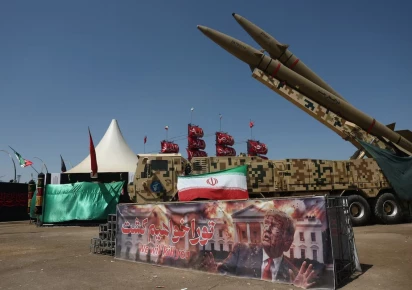
TEHRAN: Iran has intensified its rhetoric against the United States as attacks on commercial shipping and stalled peace efforts deepen uncertainty over the future of the war, with Tehran warning that the strategically vital Strait of Hormuz will remain closed unless Washington accepts its conditions.

Mohammad Reza Naqdi, an adviser to the commander of Iran’s Islamic Revolutionary Guard Corps, said in an interview with PBS that the US military had proved “weaker than what we perceived” during the five-month conflict.

Naqdi said Iran had gained valuable battlefield experience during the war and claimed Tehran would continue to emerge victorious.

“The longer this war lasts, the more experience we gain,” he said, arguing that Iranian forces had learned how to confront the US military through direct experience.

His comments came as maritime traffic through the Strait of Hormuz dropped sharply. Shipping data showed only eight vessels were tracked through the waterway on Tuesday, below a 10-day average of about 12 and the lowest daily figure since August 5. Before the conflict, the strait typically handled around 130 to 140 vessels a day.

The slowdown has heightened fears over global energy supplies because Hormuz is a crucial route for oil and liquefied natural gas shipments. The International Maritime Organization has previously warned of serious risks to vessels and seafarers operating in the area.

Shipping attacks raise fresh alarm

Tensions also spread to other maritime chokepoints. Four crew members were reportedly killed in a suspected Houthi attack on a cargo vessel in the Bab el-Mandeb Strait, while two Yemeni rescuers were also killed, according to reports cited in the source material.

The US military separately said an MH-60 helicopter fired two Hellfire missiles at a Panama-flagged cargo ship after the vessel allegedly ignored warnings linked to a blockade of Iranian ports. Maritime sources said the incident occurred off Pakistan in the Gulf of Oman.

The attacks have added to concerns that the conflict could disrupt shipping routes connecting the Gulf with the Red Sea and beyond.

Iran sets conditions for reopening Hormuz

Iranian security official Mohsen Rezaei said the Strait of Hormuz would not reopen unless Washington agreed to Tehran’s demands, including the release of frozen Iranian assets and an end to conflicts across the region.

Iran’s parliament is also preparing legislation that would restrict military and commercial vessels from countries Tehran considers hostile from entering the Gulf without Iranian authorisation. The proposed law is intended to strengthen Iran’s control over the strategically important waterway.

US President Donald Trump, meanwhile, has continued to combine threats with suggestions that negotiations could eventually produce a settlement. He has claimed the United States has control over the Strait and warned Iran against further escalation.

Oil markets have already reacted to the uncertainty. Brent crude rose 1.4 per cent to $88.91 a barrel, while US crude gained 1.3pc to $83.20.

Pakistan seeks diplomatic space

Amid the worsening security situation, Pakistan has continued diplomatic engagement with Tehran. Interior Minister Mohsin Naqvi visited Iran and met President Masoud Pezeshkian, with both sides stressing the importance of strengthening bilateral political, economic, trade, cultural and security ties.

Pezeshkian praised Pakistan’s commitment to closer relations and said Tehran was ready to expand cooperation with Islamabad.

Naqvi said his visit was aimed at following up on understandings reached between the two countries and accelerating implementation of existing agreements.

With military rhetoric rising, shipping routes under pressure and negotiations at an apparent impasse, the Strait of Hormuz remains at the centre of a crisis whose consequences could extend far beyond the Middle East.

Similar Posts

  • | | |

    Pakistan’s solar capacity reaches 38,000MW: …

    ISLAMABAD: Federal Minister for Power Awais Leghari has said Pakistan’s solar energy capacity has reached 38,000 megawatts (MW), highlighting the country’s growing shift toward renewable energy and its commitment to reducing dependence on imported fuels. Speaking at the Battery Storage Flexibility 2026 Conference, the minister said the government aims to increase the share of clean energy in Pakistan’s electricity mix to 90% by 2035. He said expanding renewable energy and developing battery storage solutions are key to strengthening the country’s energy security and lowering the import bill for conventional fuels. Leghari said the government is promoting the development of a local battery energy storage industry, encouraging domestic engineering, system integration and battery management software. He added that the Ministry of Industries is finalizing a national policy to support local battery manufacturing. The minister announced that the government is also preparing a National Battery Energy Storage Framework, which will include safety standards, grid connection guidelines and investment regulations to support the growth of the sector. According to Leghari, clean energy now accounts for 55% of Pakistan’s total electricity generation, reflecting significant progress in the country’s transition toward sustainable energy sources. He said a National Steering Committee for Battery Energy Storage Systems has already been established, while technical and regulatory working groups have also been formed to guide policy development and implementation. Leghari further revealed that pilot battery energy storage projects have been approved for electricity distribution companies. The data collected from these projects will help shape future regulatory policies and improve the country’s energy planning. The minister said Pakistan has emerged as one of the world’s fastest-growing distributed energy markets and assured investors that the government will provide a clear, transparent and long-term regulatory framework to encourage investment.

  • Twenty Road Fatalities on First ‘Dangerous Day’ of Songkran Holidays

    BANGKOK — Twenty people died and 132 were injured in 135 road accidents across Thailand on Friday, the first of the “seven dangerous days” of the Songkran holiday travel period, the Department of Disaster Prevention and Mitigation reported on Saturday. Drunk foreign driver injures 8 in Pattaya for Songkran While any loss of life remains […]

  • | |

    PMDC announces special measures for AJK students a…

      The Pakistan Medical and Dental Council (PMDC) has announced a series of special measures to ensure that students from Azad Jammu and Kashmir (AJK), who have been affected by prolonged internet disruptions, are able to participate in the Medical and Dental College Admission Test (MDCAT) without facing unnecessary obstacles. As part of these initiatives, the PMDC has established a dedicated examination center in Islamabad and has also reached a preliminary agreement to set up a regional PMDC office in Azad Kashmir. The decisions were made during a meeting between AJK Secretary of Health Brigadier Aamir Raza and Joint Admission Committee Chairman Professor Dr. Faisal Bashir with PMDC President Professor Dr. Rizwan Taj, Registrar Brigadier (Retd.) Rehan Naqvi, and Director of Admission Affairs Dr. Imdad Ali Khushk. The meeting focused on the registration challenges faced by AJK students due to the prolonged internet shutdown and explored practical solutions to ensure that no eligible candidate is deprived of the opportunity to take the MDCAT. During the meeting, the Secretary of Health of the AJK government informed PMDC officials that the ongoing internet suspension in the region had created serious difficulties for students attempting to complete their online registration for the entrance examination. He requested the council to extend every possible facility to affected students so that deserving candidates would not miss the examination because of circumstances beyond their control. Speaking on the occasion, PMDC President Professor Dr. Rizwan Taj stated that the council had already introduced several special measures to facilitate students from Azad Kashmir. He emphasized that the Government of Pakistan remains committed to ensuring equal opportunities for every eligible student seeking admission to medical and dental colleges, regardless of the challenges they face. Dr. Rizwan Taj explained that, considering the extraordinary circumstances in the region, the deadline for MDCAT registration with the regular fee had been extended twice. Initially, the deadline was extended until July 13, and later it was further extended until July 23, 2026, to provide additional time for students affected by the communication disruptions to complete their registration process. The PMDC President further said that students from Azad Kashmir had been given multiple options for submitting their registration applications. In addition to the online process, applications could be sent through WhatsApp, email, postal mail, or submitted in person. He also assured students experiencing registration difficulties that they could contact the PMDC directly, where officials would provide all possible assistance to help them complete the process successfully. To further support students, the PMDC has established a special MDCAT examination center in Islamabad specifically for candidates from Azad Kashmir. A public notice has already been issued regarding the facility, and a dedicated focal person has been appointed to guide students throughout the registration and examination process. The council hopes these measures will reduce confusion and ensure smooth coordination for affected candidates. During the meeting, PMDC President Professor Dr. Rizwan Taj and Registrar Brigadier (Retd.) Rehan Naqvi assured the Government of Azad Jammu and Kashmir of their full cooperation in addressing students’ concerns. Both sides also reached a preliminary agreement to establish a PMDC regional office in Azad Kashmir to improve access to council services for students and healthcare professionals in the region. The proposal will now be presented to the PMDC Governing Body for formal approval. At the conclusion of the meeting, the AJK Secretary of Health and the Chairman of the Joint Admission Committee appreciated the PMDC’s timely response and the special facilities provided for students affected by the internet shutdown. They expressed confidence that these initiatives would ensure that no eligible student from Azad Jammu and Kashmir would be deprived of the opportunity to appear in the MDCAT because of technical or communication-related difficulties.

  • Thailand Chokes Under Widespread Smog, 45 Provinces Exceed Safe PM2.5 Levels

    BANGKOK – Ultrafine dust blanketed much of Thailand on Monday, with unsafe levels of PM2.5 pollution recorded in Bangkok and 45 provinces over the past 24 hours, according to data released by the Geo-Informatics and Space Technology Development Agency (Gistda). The readings highlight a severe and persistent air quality crisis affecting the Central Plains, Northeast, […]

  • |

    Oil prices fall over $4 after Trump halts planned Iran strikes

    Global oil prices recorded a significant decline after US President Donald Trump announced that the United States would halt its planned military strikes on Iran, easing concerns over a potential escalation in the Middle East and reducing fears of disruptions to global energy supplies. In international trading, crude oil prices fell by more than $4 per barrel as investors reacted positively to the announcement, leading to a broad sell-off in oil futures. Brent crude, the international benchmark for oil prices, dropped by $4.08 to settle at $83.85 per barrel. Meanwhile, US West Texas Intermediate (WTI) crude declined by $4.01, bringing its price down to $80.66 per barrel. Market analysts said the sharp decline reflected improving investor confidence after the reduction in geopolitical tensions between Washington and Tehran. The possibility of avoiding direct military confrontation eased concerns about supply disruptions from one of the world’s most strategically important oil-producing regions. The Middle East plays a critical role in global energy markets, and any signs of conflict involving Iran often trigger volatility in crude oil prices. Investors closely monitor developments in the region due to the importance of key shipping routes, including the Strait of Hormuz, through which a significant portion of the world’s oil exports passes. Last month, oil prices surged by more than 20 percent after renewed US military action against Iran and reports that Tehran-backed forces targeted several oil tankers near Oman. Those incidents heightened fears of supply interruptions, driving both Brent and WTI crude to their highest levels in months. With the latest announcement from President Trump, traders have shifted their focus toward the possibility of improved regional stability. However, energy market experts caution that oil prices are likely to remain volatile, as any renewed geopolitical tensions or disruptions to oil transportation routes could quickly reverse the recent decline.

  • Thailand Confronts 40 Daily Road Deaths as Drunk Driving Crisis Persists

    BANGKOK – Thailand is facing a severe road safety crisis, with civil society groups highlighting a daily toll of approximately 40 fatalities and annual economic losses estimated at 600 billion baht. In a push for urgent reform, these organizations are advocating for stringent measures against drunk driving, including the confiscation of vehicles during the upcoming […]

Leave a Reply

Your email address will not be published. Required fields are marked *