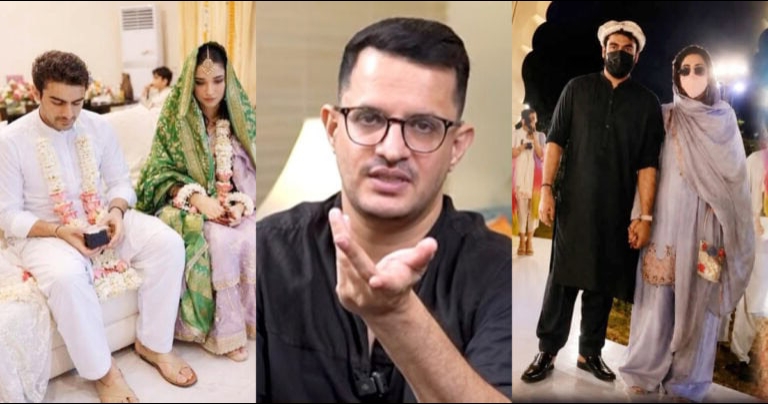
ronaldo finally marries
| | |

Ronaldo finally marries Georgina after 10 years

Football superstar Cristiano Ronaldo has married his longtime partner, model and businesswoman Georgina Rodríguez, bringing their nearly decade-long relationship to a new chapter.

The couple confirmed the marriage on August 11, 2026, through a post on Ronaldo’s Instagram account. The image showed two hands wearing wedding rings, with one hand resting over the other. The announcement quickly attracted millions of likes and widespread reactions from fans around the world.

According to Portuguese media reports, Ronaldo and Rodríguez exchanged vows in a private civil ceremony in Cascais, a coastal town near Lisbon. The couple reportedly kept the celebration away from the public eye and limited the gathering to close family members.

Their five children were present at the ceremony. Ronaldo’s eldest son, Cristiano Jr., as well as twins Eva and Mateo, Alana Martina and Bella Esmeralda, were part of the family celebration.

The wedding also carried special significance because it took place exactly one year after Rodríguez announced their engagement. On August 11, 2025, she shared a photograph of her engagement ring and confirmed that she had accepted Ronaldo’s proposal.

Ronaldo and Rodríguez first met in Madrid in 2016, when Rodríguez was working at a Gucci store. Ronaldo was playing for Real Madrid at the time. Their relationship gradually became public, and they soon emerged as one of the most recognised celebrity couples in the sporting world.

Over the years, Rodríguez has accompanied Ronaldo during major stages of his football career, including his moves from Spain to Italy, England and Saudi Arabia. At the same time, she developed her own career in modelling, fashion and entertainment.

The couple’s relationship has also been closely followed through Rodríguez’s Netflix reality series, I Am Georgina, which has offered audiences a glimpse into their family life and international lifestyle.

Their marriage announcement came shortly after false rumours circulated that the pair were preparing to marry in Madeira. On August 8, crowds of fans and photographers reportedly gathered near Funchal Cathedral after social media speculation suggested that Ronaldo and Rodríguez were holding their wedding there. The event turned out to be the wedding of another couple.

Ronaldo, 41, remains one of football’s most decorated players. He has won the Ballon d’Or five times and has represented Sporting, Manchester United, Real Madrid, Juventus and Al-Nassr, while also captaining Portugal.

The Portuguese star has scored close to 1,000 career goals and recently appeared at his sixth World Cup, further extending his record-setting international career.

Similar Posts

  • |

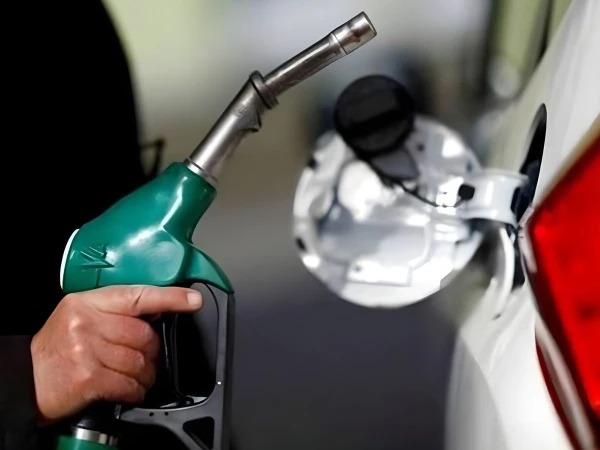
    Petrol sold Rs139, diesel Rs116 per litre above basic cost

    Consumers continue to bear a substantial burden of taxes, levies and distribution margins on petroleum products, with a significant portion of the prices of petrol and high-speed diesel (HSD) going towards government charges and other components rather than the basic fuel cost. According to official documents, petrol is currently priced at Rs327.62 per litre, while the basic cost of the product stands at Rs197.69 per litre. This means consumers are paying around Rs130 per litre in the form of petroleum levy, taxes, freight-related charges and margins. The documents indicate that the government has imposed a petroleum levy of Rs80 per litre on petrol, making it one of the largest components of the additional charges paid by consumers. In addition to the petroleum levy, petrol carries a climate support levy of Rs5 per litre and customs duty of Rs21.24 per litre. The price also includes an inland freight equalisation margin of Rs7.48 per litre. Meanwhile, oil marketing companies (OMCs) receive a margin of Rs7.87 per litre, while petroleum dealers are entitled to a margin of Rs8.64 per litre. Taken together, these taxes, levies, freight charges and commercial margins add a sizeable amount to the underlying cost of petrol, resulting in a significant difference between the basic product cost and the final price paid at filling stations. Diesel also carries substantial charges A similar situation is visible in the pricing structure of high-speed diesel. According to the documents, the basic cost of HSD has been calculated at Rs264.76 per litre, whereas its notified consumer price stands at Rs380.86 per litre. The difference of approximately Rs116 per litre represents taxes, levies and various margins included in the final price of diesel. The petroleum levy on HSD stands at Rs74.28 per litre, while a climate support levy of Rs5 per litre is also included in the price structure. Consumers are additionally paying Rs15.68 per litre in customs duty on HSD. The inland freight equalisation margin accounts for another Rs4.63 per litre. The pricing structure also provides Rs7.87 per litre as the margin for oil marketing companies and Rs8.64 per litre as the dealers’ margin. The figures highlight the significant role played by government levies and other charges in determining retail petroleum prices. While the basic cost reflects the underlying price of the petroleum product, the final amount paid by consumers also incorporates a range of taxes, levies, freight costs and margins. The petroleum levy remains one of the most prominent components of the pricing structure for both petrol and diesel. The government uses petroleum-related levies as an important source of revenue, while other components are intended to cover costs associated with transportation, marketing and retail distribution. The high level of charges has a direct impact on consumers and businesses, particularly because petrol and diesel are widely used for transportation and commercial activities. Changes in fuel prices can also influence the cost of transporting goods and passengers and may eventually affect prices across different sectors of the economy.

  • | |

    Oil surges above $83 as Strait of Hormuz tensions …

    Global oil prices continued their upward momentum on Friday, with Brent crude climbing above $83 per barrel as renewed tensions surrounding the Strait of Hormuz heightened concerns over potential disruptions to global energy supplies. Brent crude futures gained 1.1 percent to reach $83.48 per barrel, while US West Texas Intermediate (WTI) crude rose by 85 cents to $78.84 per barrel. The latest rally marks a sharp reversal from earlier this week, when crude prices had declined amid expectations that diplomatic efforts between Iran and Oman could ease regional tensions and pave the way for smoother maritime traffic through the Strait of Hormuz. However, investor sentiment shifted after reports that Iran, in coordination with Oman, proposed new restrictions on shipping through the strategic waterway. The proposal reportedly includes banning vessels belonging to countries considered hostile from passing through the strait and imposing substantial financial penalties on ships that violate the proposed regulations. The renewed uncertainty over one of the world’s most important oil transit routes has reignited fears of supply disruptions, prompting traders to push oil prices higher despite earlier forecasts predicting further declines. Analysts say developments in the Strait of Hormuz will remain a key factor influencing global energy markets in the coming days.

  • | |

    YDA Sindh pushes healthcare reform agenda

    KARACHI: The Young Doctors Association, YDA, is often seen by the public as violent, irresponsible doctors who take to the streets. But rarely does anyone see the other side of the coin. Behind the protests is a group of young doctors — the young blood of our healthcare system — fighting for their basic rights and for better patient care. Like whistleblowers in every society, they are rarely welcomed when they speak the truth. The Young Doctors Association is no exception. To the common man, YDA means protests, strikes, and chaos in hospitals. What often goes unnoticed is the reason behind it. These are young doctors, the backbone of emergency wards in Sindh, who are demanding dignity, security, and resources. In this context, Chairman of the Young Doctors Association Sindh Chapter, Dr. Farrukh Rauf paints a realistic picture of a system buckling under patient load, with too few specialists and even fewer resources to go around. From JPMC Member To Sindh Chairman YDA was formed in 2013 following an incident in which a female doctor was injured by relatives of a patient who had died. Since then, Dr. Farrukh Rauf has been associated with Young Doctors Association. He started as a member, was later elected General Secretary and then President of the JPMC unit, served as Senior Vice President of YDA Sindh, and is now serving as Chairman of the Sindh chapter. Dr. Farrukh Rauf, Chairman YDA Sindh, is a consultant orthopedic surgeon at Jinnah Postgraduate Medical Centre. He is currently the only surgeon at JPMC who performs orthopedic tumor and cancer surgeries — a super-specialty that only 4 to 5 surgeons practice across Karachi. Surgeons with his expertise in the private sector often draw salaries of over Rs. 20 lakh, but he continues to serve at a public institution out of commitment to suffering humanity. Dr. Rauf has been associated with JPMC for the last 17 years, where he also completed his post-graduation. He serves as General Secretary of the Pakistan Orthopedic Association and is an internationally certified trainer/instructor for HOPE – Hospital Preparedness for Emergencies — a certification he received from Nepal. There are only 4 to 5 such certified trainers in all of Sindh. “Condition Is Still Very Critical” Dr. Farrukh Rauf said that despite the Sindh government’s interest in the healthcare sector, the condition is still very critical, which is truly reflected in the overcrowded corridors of JPMC, Lyari and Civil Hospitals, where patients lie on floors and doctors work 36-hour shifts. On the issue of shortages at Civil, JPMC, and NICVD, Dr. Farrukh offers a mixed assessment. “There is no shortage of life-saving drugs,” he said. “Yes, ICU facility is very limited owing to patient burden. Seeing the overflow of patients, more equipment is needed.” He acknowledged the Sindh government’s efforts but stressed the scale of the problem. “Though the Minister of Health, Dr. Azra Pechuho, is addressing the concerns, however, there is a huge gap and lack of equipment for patients.” At tertiary hospitals like JPMC and Civil, where critical cases from across Sindh land every day, the mismatch between patient inflow and available ICU beds and machines remains a key pressure point for young doctors on duty. He traced the problem back to medical education itself. “The number of medical colleges has increased manifold in the last 10 years, but the standard of education has deteriorated. There is a dearth of quality doctors.” YDA’s Key Milestones According to Dr. Farrukh Rauf, Chairman YDA Sindh, the situation in government hospitals across Sindh, especially in Karachi, has improved only because of constant struggle. “Owing to YDA’s struggle and efforts, salaries of young and mid-career doctors were revised. Previously, they were lower than in all other provinces,” he said. He added that security was one of the biggest issues YDA flagged early on. “Doctors were facing serious security issues. There was no health risk allowance, which is being introduced now owing to the YDA movement.” The gains, he notes, came after years of protests at JPMC, Civil Hospital Karachi, and other tertiary centers where patient load far exceeds available staff and basic facilities. YDA Beyond Protests And Karachi The Young Doctors Association, once seen as a Karachi-centric pressure group, now claims a presence across the province. “I had established YDA units in all districts of Sindh including Umerkot, Thar, Ghotki. Now almost in twenty districts YDA is active for the rights of doctors and patients,” Dr. Farrukh said. In Karachi, the association is active in Civil, Lyari, JPMC and NICH. “We seek and welcome active participation from other government hospitals,” he added. The work has expanded beyond protests. YDA runs a welfare committee that coordinated flood relief last year, and an academic committee that offers career counseling, FCPS guidance, and surgical workshops. “We have constituted a welfare committee which offers coordinated help on disasters like floods last year. There is an academic committee which offers career counseling, how to give high-level exams, and workshops on surgical procedures,” he said. On training, Dr. Farrukh said YDA is pushing for reforms in the PGT system. “We are trying to get PGT seats equal in number to the number of graduates.” Violence And Security Gaps For Dr. Farrukh Rauf, the frustration in wards often boils over into violence against doctors. But he says the anger has a root cause. “Most of the people get provocative owing to the absence of ICU or urgent facility for their patient,” he said. “It is necessary to expand ICUs and facilities to handle the high influx of patients which overburdens doctors.” He was blunt about administrative failures too. “There are security lapses also on the part of the administration.” The Way Forward Dr. Farrukh argues the solution is not in Karachi’s tertiary hospitals alone, but in strengthening the entire pyramid. “We need a proper primary healthcare network across the province, like in developed countries,” he said. “Patients who can be treated at the UC or Tehsil level should not be coming to

  • | | |

    12 militants killed in Balochistan intelligence op…

    Pakistan’s security forces killed 12 suspected militants during two intelligence-based operations carried out in separate districts of Balochistan as part of the ongoing counterterrorism campaign, the Inter-Services Public Relations (ISPR) said on Thursday. According to the military’s media wing, the operations were conducted on August 5 and 6 in Washuk and Mastung districts under the third phase of Operation Rad-ul-Fitna, which targets militant groups allegedly backed by hostile foreign elements. The ISPR said the first operation was launched on August 5 after intelligence agencies detected the movement of six suspected militants in Washuk district. Security forces swiftly moved to the area and engaged the suspects in a targeted operation. Following an exchange of fire, all six militants were killed. A second intelligence-based operation was conducted on August 6 in Mastung district after security forces received information about the presence of armed militants. The ISPR said another six suspected militants were killed during an intense firefight. Security personnel also destroyed a militant hideout during the operation. The military stated that both operations were based on credible intelligence and were part of continuous efforts to eliminate militant networks operating in Balochistan. It added that security forces carried out the missions with precision, preventing the militants from escaping. According to the ISPR, the operations form part of Pakistan’s broader counterterrorism strategy being implemented under Azm-e-Istehkam, the national security initiative approved by the Federal Apex Committee under the National Action Plan. The military reaffirmed that Pakistan’s armed forces, together with law enforcement agencies, will continue intelligence-led operations across the country to eliminate terrorism and dismantle militant infrastructure.

  • | |

    Colombia’s death toll from earthquake climbs…

    Rescue crews continue combing through collapsed buildings across western Colombia after a powerful magnitude 7.4 earthquake struck the region on Monday, August 10, with officials confirming the death toll has risen to at least 164 people. Authorities said more than 880 people have sustained injuries, while over 3,200 remain unaccounted for as soldiers, emergency responders and local volunteers work through debris from dozens of collapsed structures. Thousands of residents have been forced from their homes since the quake struck, adding to the scale of the humanitarian response now underway. The earthquake flattened multi story buildings in cities including Pereira and Cali, and severely damaged one of the towers of a historic cathedral in Manizales. The tremor originated at an intermediate depth with its epicenter located near San José del Palmar in the western department of Chocó, causing widespread destruction across Pereira, Cali, Manizales and other communities in Colombia’s coffee growing region. Residential buildings, hospitals, schools and key infrastructure, including several regional airports, all suffered severe damage in the quake. At one city hospital, several upper floors, including sections dedicated to pediatric care, collapsed inward, trapping some patients inside and forcing hospital staff to treat roughly 600 additional patients outdoors on a street littered with debris, according to hospital director Irne Torres Castro, who spoke to a Colombian television network. That same city saw some of the earthquake’s most extensive destruction, with entire residential blocks reduced to piles of concrete and twisted metal. Video circulating online captured buildings shaking violently as residents fled into the streets, while separate footage showed a regional airport swaying dramatically during the quake as large sections of ceiling came down around people sheltering inside. Among the most widely shared images online is footage showing the Cathedral Basilica of Our Lady of the Rosary shaking and partially collapsing. The cathedral, built in the 1920s, holds the distinction of being Colombia’s tallest cathedral and ranks among the highest neo Gothic churches anywhere in the Americas. The disaster struck just days after Abelardo De La Espriella was sworn in as Colombia’s president, immediately confronting his new administration with a major crisis. The earthquake also comes with memories still fresh of a pair of devastating earthquakes that struck neighboring Venezuela in June. Colombia’s national government has declared a state of emergency and mobilized the military, police and specialized rescue units to lead recovery operations, while accepting offers of international assistance as the search for survivors continues. The disaster adds to a string of major seismic events across the region in recent months, underscoring the ongoing vulnerability of Andean nations to powerful earthquakes and the strain such disasters place on emergency infrastructure even in areas with established disaster response systems.

  • |

    Babar Azam equals Imran Khan’s historic Pakistan record

    Pakistan Test captain Babar Azam has added another major milestone to his glittering career, equalling a historic record previously held by legendary captain Imran Khan after being named Player of the Series against the West Indies. Babar shared the award with West Indies all-rounder Justin Greaves after Pakistan fought back to level the two-match Test series 1-1 with an impressive eight-wicket victory in the second Test. The right-handed batter was Pakistan’s standout performer throughout the series, scoring 193 runs in four innings at an outstanding average of 96.50, making him the leading run-scorer of the contest. His consistent contributions proved crucial as Pakistan recovered from defeat in the opening Test to finish the series on level terms. Babar began the series with 23 runs in the first innings of the opening Test before producing a composed half-century in the second innings. He then followed it with a fluent 88 in the first innings of the second Test and remained unbeaten on 24 off 30 balls in the final innings, helping Pakistan complete a comfortable chase. The shared Player of the Series honour marked the first such award of Babar’s Test career and the 10th of his international career, placing him alongside Pakistan’s greatest cricketing icons. Before this achievement, Babar had won five Player of the Series awards in T20 Internationals and four in One-Day Internationals. His latest success means he has now equalled Imran Khan and Wasim Akram, who also finished their illustrious international careers with 10 Player of the Series awards each. Former fast-bowling great Waqar Younis occupies fourth place on Pakistan’s all-time list with nine awards. The latest milestone further strengthens Babar’s legacy as one of Pakistan’s finest modern-day cricketers. Having already established himself among the country’s leading batters across formats, the 31-year-old continues to rewrite record books while leading the national Test side, proving once again that consistency and class remain the hallmarks of his career.

Leave a Reply

Your email address will not be published. Required fields are marked *