trump says taking
| |

Trump says US is taking partial control of Venezuela’s vast oil reserves

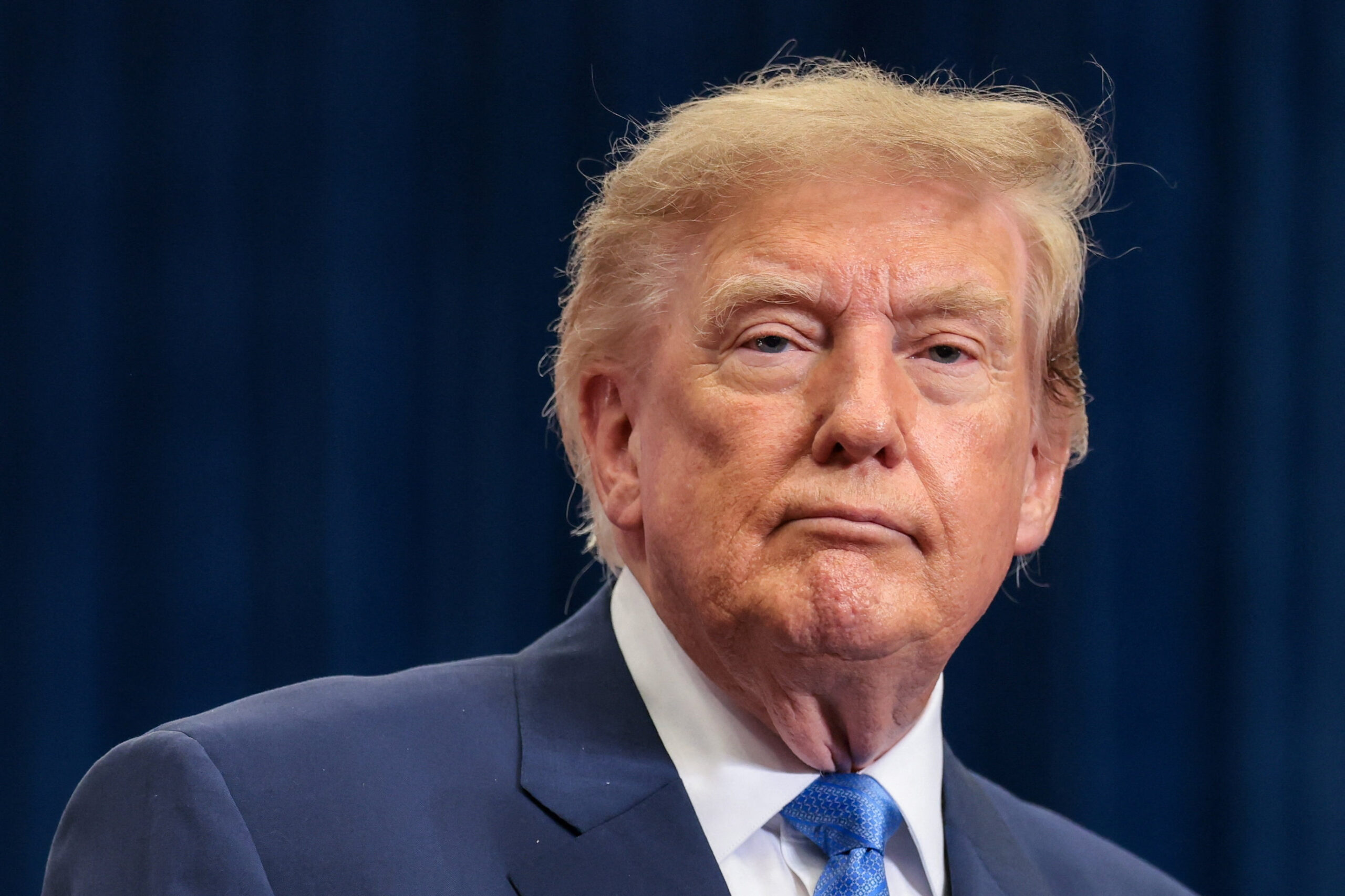
President Donald Trump on Friday announced an unprecedented US push to take control of a fifth of Venezuela’s vast oil reserves, betting that American companies can revive the OPEC nation’s battered energy industry while delivering a new source of crude to help bring down US fuel prices.

Trump provided few details about the agreement, saying only that the US had secured majority control of more than 65 billion barrels of Venezuela’s proven oil reserves through a partnership with private business.

The South American nation’s leader welcomed the agreement, saying it would boost the economy and government revenue.

The new deal would represent a dramatic expansion of the US role in Venezuela’s oil industry as the Trump administration seeks to revive the country’s production and secure more crude for US refineries. Venezuela holds the world’s largest proven oil reserves but produces only about 1.25 million barrels per day, far below its potential after years of underinvestment, mismanagement and sanctions.

Rubio calls deal a win-win

“At my direction, Secretary of State Marco Rubio, and Secretary of War Pete Hegseth, working closely with Highly Respected Interim President of Venezuela, Delcy Rodriguez, and, through a partnership with private business, have secured majority US control of more than 65 BILLION BARRELS of proven Oil Reserves in Venezuela, at no cost to the American Taxpayer,” Trump wrote on Truth Social.

The announcement followed weeks of US-Venezuelan negotiations over a deal that would give American companies long-term access to a group of Venezuelan oilfields and guarantee the resulting crude supply to the United States.

Venezuelan officials are preparing to sign agreements next week granting new oil exploration and production rights to a number of companies, particularly US firms.

Sources have told Reuters that a lease model was under consideration, with fields potentially auctioned to US producers, but the arrangement could face legal and constitutional challenges in Venezuela, where the state retains control over core oil industry activities.

Trump did not disclose the structure of the agreement, the fields or companies involved or how the United States would exercise majority control over the reserves. A list seen by Reuters shows the fields are in the Orinoco Belt and Lake Maracaibo regions.

Rubio described the agreement as a win for both countries, saying on X that it would secure stable, low-cost oil for the United States and help lower gasoline prices.

For Venezuela, Rubio said the deal would bring nearly $100 billion in private investment, support thousands of high-paying jobs and help rebuild the country’s economy.

Rodriguez, who became interim leader after the US seized President Nicolas Maduro in January, said late on Friday that the agreement would allow for a significant increase in production through the development of 17 strategic fields and result in tax revenue for the country totaling $209 billion.

“These investments will contribute not only to the recovery and modernization of our industry, but also to our country’s economic growth, the energy security of our hemisphere, and greater balance in international markets,” she said in a statement.

Analysts said they needed to see more details on the agreement’s legal and financial structure before assessing whether it could attract significant investment.

Also unclear is whether the deal will lower gasoline prices in the short term, as developing the infrastructure needed to produce, transport and refine Venezuela’s heavy crude could take years.

David Goldwyn, president of Goldwyn Global Strategies, said it was unclear whether a US government lease would have a legal basis under Venezuela’s constitution and its new hydrocarbons law, adding that there is “no precedent for having the US government enter into a lease to operate oil fields.”

Goldwyn also questioned whether the plan would address the obstacles that have deterred investment in Venezuela for years. “It is hard to see how this kind of arrangement would accelerate investment at any material scale,” he said, citing political uncertainty, an inadequate power grid, limited export capacity and government discretion over the industry.

Since removing Maduro, Washington has been trying to secure a stable flow of Venezuelan crude ​for US refineries while promoting American investment in the country’s oil industry.

The Trump administration is under pressure ahead of midterm elections in November to mollify consumer concerns over rising gasoline prices. Cheaper oil supplies and expanded output could help.

The US also has been looking for solutions to replenish its Strategic Petroleum Reserve, the nation’s oil stockpile, including the possibility of crude ⁠swaps with US ​producers.

Venezuela nationalized its oil industry in the 1970s, putting state-run PDVSA at its center. Under then-President Hugo Chavez, the government tightened control, forcing foreign producers into state-led joint ventures and later expropriating assets, including projects operated by ExxonMobil and ConocoPhillips.

Under Maduro’s rule Venezuela’s production fell sharply. – Rappler.com

Similar Posts

  • | |

    Congo tightens grip on mineral exports with ban on…

    The Democratic Republic of Congo has prohibited exports of copper concentrate and cobalt concentrate, according to a government order reviewed on Thursday, marking the latest step in an ongoing push to force more mineral processing to happen inside the country and capture a larger share of the value generated by its mining sector. News of the ban sent benchmark three month copper prices on the London Metal Exchange up by as much as 1.8 percent to $14,369.50 a metric ton, the highest level since January 29, when the metal touched an all time peak of $14,527.50. Prices stood at $14,300 as of 0930 GMT following the report. Congo holds the position of the world’s largest cobalt supplier and ranks among the top sources of copper and other minerals critical to the global energy transition. The government is using that leverage to encourage the build out of domestic processing capacity rather than allowing raw or partially processed materials to leave the country. The order, dated June 29 and signed jointly by Mines Minister Louis Kabamba Watum, Foreign Trade Minister Julien Paluku Kahongya and Economy Minister Daniel Mukoko Samba, states plainly that exporting copper and cobalt concentrates is now prohibited. The prohibition took effect immediately, though the order allows for one year export waivers to be granted under unspecified strategic circumstances. The same order also establishes a new tax structure covering economically significant mining by products, with a three month transition period built in before the new rules take full effect. Officials said the export ban aims to push mining companies toward marketing or exporting higher value processed mineral products rather than raw concentrate. This marks the fourth time Congo has restricted concentrate exports, following similar bans imposed in 2013, 2019 and 2023, each of which included waivers in cases where domestic smelting capacity could not keep pace with output. The new order formally repeals the 2023 measure and its associated exemptions, replacing it with a broader regulatory framework governing both mineral exports and taxation of significant by products recovered during processing. Congo already exports the vast majority of its copper in refined form. During the first quarter of 2026, the country shipped 696,725 tons of copper cathodes, compared with just 53,926 tons of copper concentrate containing roughly 18,863 tons of copper metal, according to official figures. Over the same period, Congo exported 51,940 tons of cobalt hydroxide containing about 17,054 tons of cobalt metal. Christian Geraud Neema, a mining analyst with the nonprofit China Global South Project, said the new ban is unlikely to significantly disrupt most mining operators since the bulk of Congo’s copper and cobalt already undergoes domestic refining before export. He said the operation most likely to feel the impact is the Kamoa Kakula venture, jointly owned by Ivanhoe Mines, China’s Zijin Mining and the Congolese government, which still exports some volume of concentrate under existing exemptions. Neither Ivanhoe nor Zijin responded immediately to requests for comment, and the Congolese chamber of mines also did not respond. The newly introduced tax regime applies broadly across mineral categories, extending to trace and ultra trace minerals recovered during the refining process. These by products will be taxed using a 55 percent valuation coefficient, with royalties applied alongside those already charged on the primary mineral being extracted. The policy fits into a broader pattern across resource rich African nations seeking to move beyond raw material exports and capture more manufacturing and processing value domestically, a shift that has gained momentum as global demand for energy transition minerals like copper and cobalt continues to grow.

  • |

    Southern and central China prepare for floods as Typhoon Noul moves inland

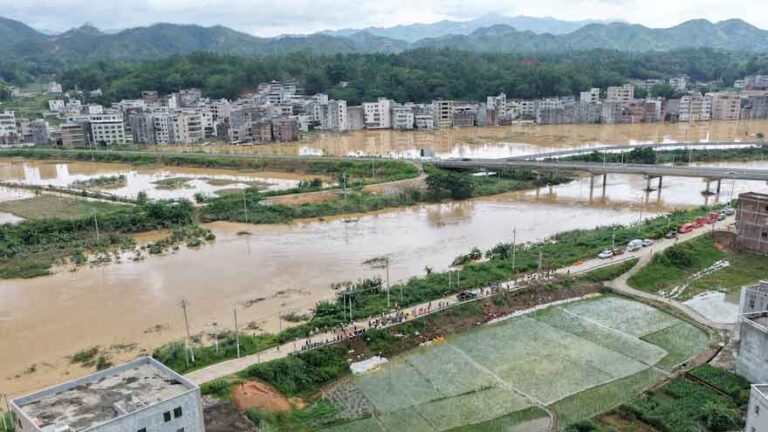
    The remnants of Typhoon Noul continued to move deeper into China on Tuesday, raising concerns over widespread flooding across several southern and central provinces. Although the storm has weakened since making landfall, weather experts warned that it could remain over inland areas longer than expected, increasing the threat of heavy rain and related disasters. China’s National Meteorological Center said intense rainfall is expected to continue until Thursday across Fujian, Guangdong, Jiangxi, Hunan, Hubei, Henan and Guangxi. The downpours are being strengthened by the southern monsoon, creating conditions that could trigger floods, landslides and other emergencies in many parts of the country. Officials are particularly concerned because the storm is moving north through mountainous regions where heavy rain can quickly destabilize slopes and send large amounts of water rushing into rivers and towns. State media warned that the combination of steep terrain and prolonged rainfall could increase the risk of landslides, mudslides and flash floods before the storm eventually weakens. Typhoon Noul rapidly gained strength before striking Guangdong province over the weekend. According to state broadcaster CCTV, it was the strongest typhoon to hit China so far this year. Even though the storm has now lost much of its original power, authorities believe the danger is far from over because its remaining rain bands continue to bring significant rainfall over a wide area. The Chinese government has stepped up emergency preparations as the country faces the overlap of typhoon season and its annual flood season. Emergency management and housing authorities have instructed local governments to strengthen flood prevention efforts, inspect roads, bridges, reservoirs and other important infrastructure, and move rescue teams and emergency supplies into areas considered most vulnerable. Officials have also ordered safety inspections at industries that could face additional risks during severe weather, including mining operations and factories dealing with hazardous chemicals and fireworks. China experiences most of its typhoons between July and September, with August usually being the busiest period. Every year, powerful storms threaten coastal provinces before moving inland, where they often bring days of heavy rainfall that can cause serious damage far from the coastline. Other parts of the country are also facing weather related challenges. Provinces including Gansu, Sichuan and Yunnan have been placed on high alert after repeated periods of heavy rain increased the likelihood of geological disasters. In Gansu, authorities issued their highest level warning for landslides and mudslides late Monday after rocks and large boulders fell from mountain slopes onto roads in several areas, creating dangerous conditions for residents and travelers. Meanwhile, rescue efforts are continuing in Chongqing following a deadly mountain collapse earlier this month. On July 17, part of a mountainside gave way and crashed onto buildings in a riverside township. Search teams are still looking for around 50 people who remain missing as authorities continue recovery operations in the affected area. The latest severe weather is expected to make those efforts even more challenging while increasing the risk of further disasters in already vulnerable regions.

  • | |

    Ukraine targets mid-2027 for prototype of new Euro…

    Ukraine is pushing to have a working prototype of a European anti-ballistic missile system, codenamed Freyja, ready by the middle of next year, as Kyiv presses its allies to accelerate development of a weapon capable of intercepting Russian ballistic missiles. Davyd Aloian, deputy secretary of Ukraine’s National Security and Defence Council and the official overseeing the Freyja project, said an international steering committee responsible for estimating research and development costs is set to meet for the first time soon. The project was formally launched two weeks ago at a summit in Paris, where leaders from ten European nations, including Ukrainian President Volodymyr Zelenskiy, joined roughly a dozen defense manufacturers to establish the anti-ballistic coalition. Aloian said the tight timeline reflects an ambitious target. He described the goal as producing a minimum viable product within the first half of next year, meaning a prototype capable of demonstrating early practical results. Ukraine currently relies heavily on American made Patriot systems, which remain the only weapon in its arsenal able to reliably shoot down Russia’s ballistic missiles, capable of traveling at multiple times the speed of sound. Deliveries of Patriot systems have been hampered by shifting political circumstances, limited stockpiles and lengthy manufacturing timelines. Russia has intensified ballistic missile strikes this month on Kyiv and the southern port city of Odesa, launching dozens of missiles that Ukraine was largely unable to intercept due to a shortage of interceptor missiles. Ukraine has offered to contribute a launcher and an interceptor missile to the Freyja project, which Zelenskiy said this month essentially needs testing at this stage. He has said he hopes to see the system operational within a year. Kyiv is counting on its allies to supply key technology, including modern radar systems, sensors and expertise in missile guidance and control electronics. Defense companies that have joined the initiative so far include Eurosam, maker of the SAMP-T interceptor, along with Leonardo, Thales and Saab. Ukrainian missile and drone manufacturer Fire Point, known for developing the Flamingo cruise missile, has said it will serve as the lead industrial partner on the project and recently struck a deal with German firm Hensoldt to supply radar technology. The Freyja system is designed as a lower cost alternative to the Patriot, a system many European nations also depend on. Other existing air defense platforms, including the Franco Italian SAMP/T and Germany’s IRIS-T, have not yet demonstrated the ability to down ballistic missiles. Zelenskiy has compared the Freyja coalition to a Lego set, describing it as a system built by combining components supplied by different defense industry leaders. Aloian said manufacturers have been asked to build a framework that allows interchangeable parts from different countries. He explained that the system’s open architecture means individual nations can select their preferred components, whether that means Denmark opting for a Danish made Weibel radar or Sweden choosing Saab’s technology. Organizers are also considering setting up a dedicated body, potentially structured as a fund, to manage contributions and ensure the project receives stable financing over time. Aloian said involving private companies directly alongside governments should help cut through bureaucratic delays, adding that the coalition is meant to function as a practical effort rather than a political one. The push for a homegrown European missile defense capability reflects a broader shift underway across the continent, as governments reassess their reliance on American weapons systems amid growing pressure to build independent defense industrial capacity in the face of a prolonged war on Europe’s eastern border.

  • |

    Archbishop of Canterbury commits to £100m fund over Church of England’s historical role in transatlantic slave trade

    The Archbishop of Canterbury, Dame Sarah Mullally, has renewed the Church of England’s commitment to a controversial £100m fund for reparative justice during a pastoral visit to Cape Coast Castle in Ghana. Speaking from the historic site where enslaved Africans were held before being trafficked to the Americas, Mullally stated that touring the castle’s dungeons and chapel reinforced the institution’s need to take active steps to support communities still experiencing the legacy of the slave trade. The £100m investment and research fund was established following an audit of the Church’s historic endowment, which revealed extensive financial links to slave-trafficking operations, alongside missionary ownership of plantations in the Caribbean. Despite facing vocal opposition from critics who question the fund’s legal grounds and historical accuracy, Mullally reaffirmed that repentance requires concrete action. Ghanaian Foreign Minister Samuel Okudzeto Ablakwa praised her stance, arguing that acknowledging past institutional complicity is essential for genuine reconciliation.

  • |

    Thousands return home in Spain as new heatwave heightens wildfire threat

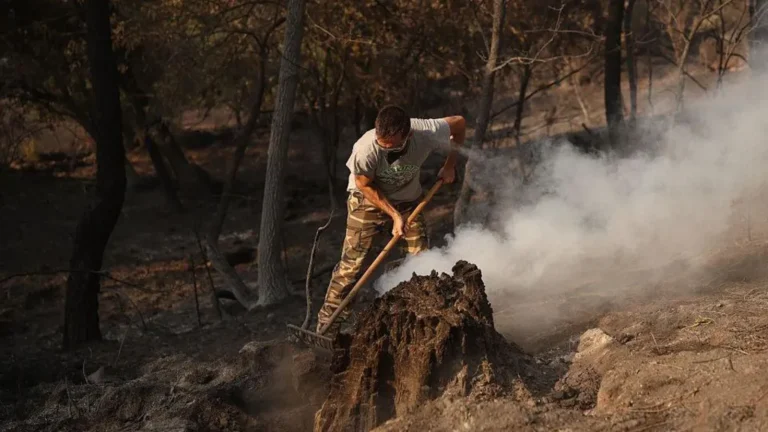
    Thousands of residents have been allowed to return to their homes after authorities eased evacuation orders in several parts of Spain affected by devastating wildfires. However, officials are warning that a new heatwave expected to hit the country could reignite existing fires and create fresh emergencies as firefighters continue battling dangerous conditions. Restrictions have been lifted in areas across Toledo, Madrid, Ávila and Castellón, allowing many displaced families to go back home after days of uncertainty. In the Madrid region alone, around 24,000 people have been permitted to return, while lockdown measures affecting another 20,000 residents have also been removed. Despite the progress, several fires remain active. One of the biggest concerns is the wildfire near Burgohondo, about 150 kilometers west of Madrid, which has already burned more than 43,000 hectares of land. Authorities say it is now considered the largest wildfire ever recorded in Spain. Across the country, more than 207,000 hectares have been destroyed by wildfires so far this year. Spanish Prime Minister Pedro Sánchez said the coming hours would be critical as firefighters work to bring the remaining blazes under control. He noted that conditions had improved but warned that rising temperatures, low humidity and strong winds could quickly reverse the progress made in recent days. Emergency crews remain on high alert as Spain prepares for its fourth major heatwave of the summer. Fire officials said the Burgohondo blaze had not spread overnight, but they remain concerned that extreme weather could cause new flare ups. Firefighters are focusing on securing a perimeter stretching about 180 kilometers to prevent the flames from spreading into nearby communities and forests. Among those returning home are residents of the towns of Navas del Rey and Chapinería, who had been evacuated earlier in the week. Many families have found damaged homes, destroyed property and lost livelihoods. Chapinería Mayor Lucía Moya said the community faces a long recovery, with many residents needing support to rebuild their lives after the disaster. Some evacuees are still unable to return. Around 300 people displaced from the nearby Tiétar Valley continue to stay in temporary accommodation provided by local authorities. Officials have pledged to maintain support services until it is safe for everyone to go home. While no deaths have been reported in the fires near Madrid or Castellón, authorities confirmed that a woman injured in an earlier wildfire in Almería has died in hospital. The Almería fires, which occurred earlier this month, claimed the lives of 14 people, including citizens of the United Kingdom, Belgium, the United States, France and Spain. Wildfires are also creating challenges elsewhere in Europe. In neighboring France, firefighters continue to monitor large blazes in the Gironde region, where several flare ups have occurred despite efforts to stabilize the fires. Authorities have warned that temperatures could reach 41 degrees Celsius, with dry winds increasing the risk of further outbreaks. Special protection measures have also been introduced around defense and aerospace facilities located in the affected area. Portugal and Greece are facing similar threats. Emergency crews in northern Portugal are working to contain an active wildfire near Valpaços while protecting nearby infrastructure, including a water treatment plant and a gas storage facility. In Greece, firefighters are responding to blazes on the island of Paros and in the southern mainland region of Trifylia. Scientists continue to warn that climate change is contributing to longer and more intense heatwaves across Europe. Rising temperatures, prolonged dry conditions and stronger winds have increased the frequency and severity of wildfires, making firefighting operations more difficult and placing greater pressure on communities across the continent. Authorities are urging residents in high risk areas to remain cautious as extreme weather conditions are expected to continue in the coming days.

  • |

    Sweden probes online links after deadly school attack

    Swedish police are investigating whether an 18-year-old man accused of attacking students at a high school in Fagersta had links to online communities associated with school violence. The attack took place on Friday in the central Swedish town, where the suspect allegedly used a sword to attack students. One teenage girl was killed, while two teenage boys suffered serious injuries. The victim’s parents confirmed her death to a local newspaper. Police arrested the suspect following the attack. Investigators are also examining a TikTok account that uploaded a photograph of a sword shortly before the incident. According to police, the account may have belonged to the suspect. The photograph was reportedly taken inside a restroom at the school. The account was created about a month ago and was removed after the attack. Investigators are examining material that allegedly referred to previous mass-violence incidents in Sweden and the 2011 Norway attacks carried out by far-right extremist Anders Behring Breivik. The account also reportedly mentioned a 2015 school attack in Trollhättan, Sweden, in which a masked attacker killed a teaching assistant and two students before being shot dead by police. Authorities are now examining whether online communities may have influenced or encouraged the suspect before the Fagersta attack. Prosecutors have ordered the suspect to remain in custody while investigators pursue murder and multiple attempted-murder allegations. Prosecutor Ann-Sofie Trossing said the investigation was at an intensive stage, with police conducting interviews and collecting evidence. She declined to provide further details because of the ongoing inquiry.

Leave a Reply

Your email address will not be published. Required fields are marked *