oil prices climb
| |

Oil prices climb as Hormuz tensions rekindle suppl…

Global oil prices moved higher on Friday as renewed uncertainty surrounding the Strait of Hormuz fueled concerns over potential disruptions to one of the world’s most critical energy shipping routes.

Brent crude futures rose 80 cents, or nearly 1%, to $83.29 per barrel, while US West Texas Intermediate (WTI) crude gained 64 cents to reach $77.93 per barrel. The increase followed a sharp rally in the previous session, when prices surged by more than $3 after reports that Iran was considering new restrictions on maritime traffic through the strategic waterway.

Market sentiment shifted after Iranian officials proposed measures that could prohibit US and Israeli-linked vessels from transiting the Strait of Hormuz, while imposing significant financial penalties on ships from countries deemed hostile. The proposal, reportedly being reviewed by Iran’s parliament, has raised fresh concerns about the future of global energy supplies.

Analysts said the latest developments indicate that tensions between Iran and the United States remain unresolved, despite recent hopes of diplomatic progress. They noted that the market is now pricing in the possibility of a tightly managed transit system rather than a return to unrestricted shipping through the strait.

Reports also suggest that Iran is seeking transit fees ranging from 5% to 7% of cargo values, while Oman has proposed lower charges. However, industry experts believe any agreement would face significant hurdles because of US sanctions and insurance restrictions affecting international shipping.

Although crude benchmarks are still on track to post weekly losses after earlier declines driven by optimism over a possible breakthrough in the regional conflict, the renewed geopolitical uncertainty has restored upward pressure on prices.

Adding to market jitters, Yemen’s Houthi movement claimed missile and drone attacks targeting Saudi positions in Marib and Hadramout, further highlighting the fragile security situation in the region.

Meanwhile, US President Donald Trump expressed optimism that the conflict could end soon, but investors remain cautious as uncertainty continues to dominate the global oil market.

Similar Posts

  • |

    Messi, Ronaldo face security scares at World Cup

    The 2026 FIFA World Cup may have ended with Spain lifting the trophy, but a reported police dossier has brought fresh attention to the security threats that allegedly shadowed some of football’s biggest stars during the tournament. According to a report based on an alleged leaked police document, Lionel Messi was repeatedly targeted with threats during Argentina’s campaign, while Cristiano Ronaldo and several other high-profile figures also faced security concerns. The World Cup, jointly hosted by the United States, Mexico and Canada, was already one of the largest sporting events ever staged. Spain eventually defeated Argentina 1-0 in the final to claim the title. However, behind the packed stadiums and celebrations, security agencies were reportedly dealing with a series of alarming incidents. One alleged threat emerged before Argentina’s match against Jordan. According to the report, a caller contacted authorities at Dallas airport and threatened an attack at the stadium, allegedly claiming that grenades and rifles would be used. Another disturbing incident was reportedly recorded before Argentina’s game against Egypt, when a threat targeting Messi was posted on social media. Security concerns escalated during the match after authorities received information suggesting that explosives could have been placed inside stadium waste bins. Bomb-disposal specialists and trained detection dogs were reportedly deployed to search the area. No explosives were found, according to the report. The security concerns were not limited to Messi. Portuguese superstar Cristiano Ronaldo was also reportedly the subject of attempts to obtain information about his accommodation. In another alleged incident, a suspicious individual reportedly managed to reach his hotel while posing as a fan. The pressure extended to match officials and other players. French referee François Letexier reportedly received thousands of threatening messages following decisions made during the Argentina-Egypt match. Players including Alexander Sørloth and Jae-hun Campaz were also allegedly subjected to death threats after missing important opportunities during matches. The reported security breaches prompted authorities to strengthen protection around key World Cup locations. At one media centre in England, security measures reportedly included multiple protective layers, concrete barriers, anti-sniper screens and a no-fly zone. The revelations offer a stark reminder that the spectacle of a World Cup comes with enormous security challenges. While millions of fans experienced football, entertainment and celebration, security teams were simultaneously working behind the scenes to protect players, officials and spectators from potential threats. The security allegations above are presented as reported claims from the supplied report and alleged leaked dossier; they should not be treated as independently established facts unless confirmed by authorities.

  • |

    KP cabinet approves tax exemptions for merged districts, Malakand

    PESHAWAR: The Khyber Pakhtunkhwa government has approved a package of measures aimed at providing tax relief to businesses and industries operating in the province’s merged tribal districts and Malakand Division, while also expanding welfare and education initiatives. According to Khyber Pakhtunkhwa Information Minister Shafiullah Jan, the provincial cabinet has endorsed exemptions from certain provincial taxes for service providers and industries operating in areas previously covered by the Federally Administered Tribal Areas (FATA), Provincially Administered Tribal Areas (PATA) and Malakand Division. Under the decision, service providers operating in the former FATA, PATA and Malakand areas will be exempted from provincial sales tax on services. Industries established in these regions will also receive relief from withholding sales tax. The government said the tax measures were intended to encourage investment, facilitate businesses and support economic activity in areas that have historically faced developmental and infrastructure challenges. Ehsaas Nawaz funding increased The cabinet also approved a significant increase in the financial allocation for the Ehsaas Nawaz programme. According to the information minister, the programme’s funding has been raised from Rs3 billion to Rs5 billion. The increase is expected to provide additional financial support under the government’s welfare initiatives and expand the programme’s reach among deserving segments of the population. Ashra Rahmat Lil-Aalameen programme approved The provincial cabinet also approved arrangements for observing Ashra Rahmat Lil-Aalameen (PBUH) across Khyber Pakhtunkhwa. The celebrations will formally begin from the first day of Rabi-ul-Awwal, with the cabinet approving a schedule for programmes to be organised across the province. The initiative is expected to include a range of activities aimed at highlighting the teachings, life and message of the Holy Prophet Muhammad (PBUH). Education sector measures Several decisions concerning education were also approved during the cabinet meeting. The provincial government sanctioned funds for schools and colleges in various districts to address educational requirements and improve facilities. The cabinet also approved a system for providing textbooks according to the semester system up to Grade 5. In another major education-related decision, the cabinet approved the provision of 100 percent free textbooks for students from Grade 9 to Grade 12. The measures are aimed at reducing the financial burden on students and their families while improving access to educational resources, particularly for students enrolled in government institutions. Public-private partnership legislation The cabinet further approved the Khyber Pakhtunkhwa Public Private Partnership Authority Bill 2026 for enactment. The proposed legislation is intended to establish a formal framework for public-private partnerships in the province and facilitate greater participation of the private sector in development projects. The government believes stronger public-private cooperation can help mobilise investment, improve service delivery and accelerate infrastructure development across Khyber Pakhtunkhwa.

  • | |

    Pakistan’s HIV crisis deepens as child infection…

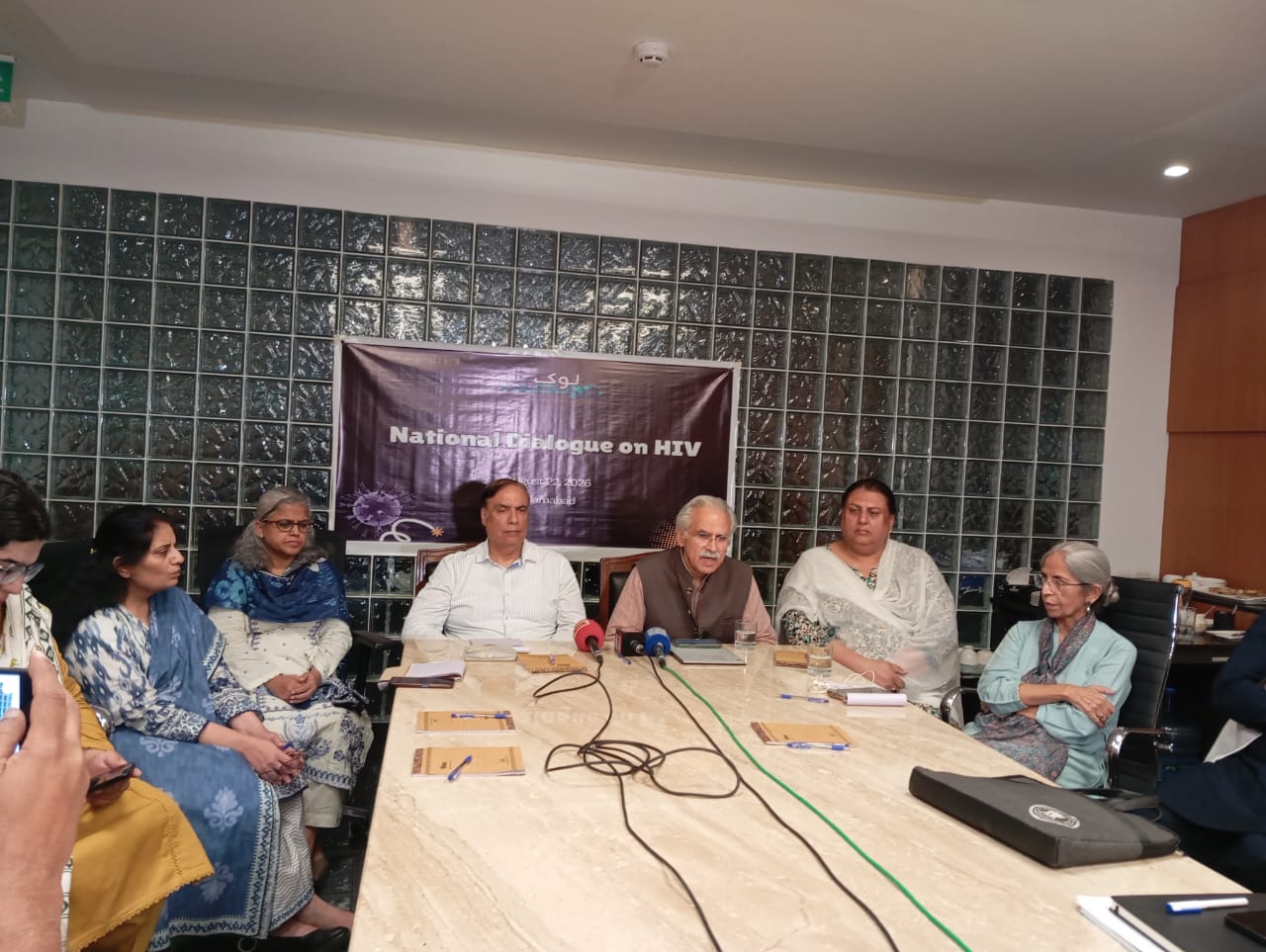
      Islamabad: Pakistan is facing a growing HIV crisis, with an estimated 369,000 people living with the virus while only about 84,400 cases are formally registered, according to a government Task Force report. Health experts and concerned citizens have warned that the real situation may be much worse because the country still lacks reliable and complete disease data. The warning came during a National Dialogue on HIV and AIDS organised by Lok Sehat, where doctors, public health experts, medical organisations, civil society groups and representatives of communities affected by HIV discussed the growing problem. Lok Sehat Convener Dr Zafar Mirza said the government must stop trying to control the disease by controlling or hiding data. He demanded that reliable information about HIV and other blood-borne diseases should be made available and that the government should take greater financial responsibility for HIV, tuberculosis, and malaria instead of depending heavily on international donors. The issue has become more serious because HIV infections are increasingly being reported among children and people outside the groups traditionally considered at higher risk. The Task Force report estimates that 369,000 people are living with HIV in Pakistan, but only around 84,400 cases are formally registered and about 60,789 people are receiving antiretroviral treatment. The report says the recent appearance of HIV among children in low-risk rural communities points to serious weaknesses in infection control, blood safety, healthcare regulation, and medical management. The situation in Taunsa Tehsil of Dera Ghazi Khan has raised particular concern. The Task Force report says 127 children were confirmed to have HIV during a five-month period between December 2024 and April 2025. Around 79 percent of those children were below five years of age, with the median age only three years. Investigations largely ruled out transmission from mothers because nearly all mothers of the infected children tested negative for HIV. The report identified unsafe blood transfusions and contaminated injection practices as major drivers of the Taunsa outbreak. It also found problems involving blood donor screening, unregulated healthcare providers, reuse of disposable syringes, excessive use of injections, poor sterilisation and weak infection prevention systems. Dr Zafar Mirza said repeated use of syringes and needles was a major suspected route of HIV transmission among people receiving healthcare. He called for proper training of healthcare workers and public awareness so patients and families understand the importance of using new syringes and needles. He also urged doctors to avoid unnecessary injections when oral medicines are medically suitable. The problem is not limited to one area. Former National AIDS Control Programme and IHRA chief Dr Quaid Saeed said 13 HIV outbreaks had been reported in Pakistan during the last 18 years, but only two, including the outbreaks in Jalalpur Jattan and Ratodero, had been extensively investigated. He called for proper investigations into every outbreak. The Task Force report also says the Ratodero outbreak in Sindh in 2019 affected more than 1,000 people, most of them children under 12. Investigations linked the outbreak to contaminated syringes, unsafe injections, unregulated blood transfusions, quackery and serious weaknesses in infection prevention and control. Experts also raised concerns about the treatment of people living with HIV. Dr Zafar Mirza said stigma remains a serious problem, including within parts of the medical profession. He said there had been cases where doctors refused to treat patients after learning that they had HIV. He stressed that HIV does not spread through ordinary contact such as shaking hands or being near an infected person. He called for stronger public awareness through television, newspapers and social media to correct false beliefs and reduce discrimination against patients. In Islamabad, infectious diseases expert Dr. Naseem Akhtar said many of the HIV cases seen at her centre involved people who inject drugs, deportees, transgender persons, men who have sex with men, and female sex workers. She said some cases had also been found among children. Dr Asma Naseem said the situation in Karachi was also worrying, particularly because of a rise in HIV cases among children. She said children with HIV were being brought to the Sindh Institute of Urology and Transplantation with kidney failure, describing the trend as highly concerning. The experts said weak regulation of healthcare facilities was another major part of the problem. Dr. Zafar Mirza called for stronger healthcare commissions, blood transfusion authorities, and other regulators, along with better funding, trained staff, and modern technology. The government Task Force has recommended nationwide surveillance of syringes, stronger regulation of medical devices, and a phased move towards auto-disable syringes. It has also proposed tougher action against unsafe medical practices. Another major recommendation is the creation of a national real-time HIV surveillance dashboard. The system would collect information from treatment centres, blood transfusion centres, provincial disease surveillance units and other health facilities so that new cases could be reported quickly at the national level. The Task Force has also proposed stronger testing and care for children, including early infant diagnosis, trained counsellors and paediatric HIV specialists in areas facing outbreaks. It has recommended social protection for children living with HIV, including support for medicines, nutrition, education, transport and psychological care. The proposed reforms also include stronger laws, mandatory reporting of HIV cases and outbreaks, better sharing of health data between provinces and agencies, and accountability for public and private healthcare providers where negligence contributes to disease transmission. The government report says a high-level National HIV Technical Working Group is also proposed, with experts including Maj. Gen. (R) Dr. Azhar Mehmood Kayani, Dr. Zafar Mirza, Dr. Abdul Wali Khan, Dr. Amjad Mahmood, Dr. Adnan Khan, Dr. Huma Qureshi, Dr. Hasan Abbas Zaheer, Brig. Dr. Nuzhat Mushahid, Dr. Saira Afzal, Dr. Fatima Mir, Dr. Saba Jamal, Dr. Rana Jawad Asghar and Dr. Khalid Rehman. Dr Zafar Mirza also raised concern over Pakistan’s dependence on international funding. During the briefing, he said that around 90 percent of spending on HIV, tuberculosis and malaria over the previous five years had come through the Global Fund. He argued that Pakistan should gradually take full


  • |

    Ertugrul star Celal Al confirms upcoming Pakistan visit for fans

    Turkish actor Celal Al, best known for portraying Abdur Rahman Alp in the globally popular historical drama Diriliş: Ertuğrul, has announced that he will soon visit Pakistan once again. The actor shared the exciting news through a heartfelt message on his Instagram Story, expressing his affection for his Pakistani fans and hinting at several surprises during his upcoming trip. In his message, Celal Al addressed his followers in Pakistan with warmth and gratitude, saying that he misses them dearly and looks forward to meeting them again. He revealed that he would soon be returning to Pakistan and promised to bring many surprises for his supporters. Asking fans if they were ready for the special reunion, the actor’s announcement quickly generated excitement among those who have followed his career for years. He concluded his message with the phrases “Dil Dil Pakistan” and “Jan Jan Türkiye,” reflecting the close cultural bond and friendship between the two countries. His words were warmly received by fans, many of whom expressed their eagerness to welcome him back. According to Celal Al, the visit is linked to his collaboration with a well-known Turkish brand. However, he did not disclose the name of the company or provide details about the partnership. He also refrained from announcing the exact dates of his Pakistan tour, leaving fans curious about the upcoming visit. Celal Al became a household name in Pakistan after Diriliş: Ertuğrul gained extraordinary popularity during the COVID-19 pandemic. The historical series attracted millions of Pakistani viewers, and his portrayal of the brave and loyal warrior Abdur Rahman Alp earned him widespread admiration. His previous visits to Pakistan also received an overwhelming response, with fans gathering in large numbers to meet the actor. Beyond Diriliş: Ertuğrul, Celal Al has built an impressive career in Turkish cinema and television. He appeared in the 2012 historical film Fetih 1453, which depicted the conquest of Constantinople. He has also served as a co-producer of the award-winning short film Zemberek, showcasing his contributions behind the camera as well. Apart from acting, Celal Al is actively involved in humanitarian work. He has participated in various charitable and relief initiatives, working with organizations such as the Turkish Red Crescent and other international aid groups. His commitment to social welfare, combined with his successful acting career, has helped him earn admiration not only in Türkiye but also among audiences around the world, particularly in Pakistan, where he continues to enjoy a loyal and passionate fan following.

  • |

    Kourtney Kardashian calls Kylie Jenner her ‘magical little fairy’ in birthday post

    Kourtney Kardashian could not help gushing over her little sister on her big day. The Lemme founder posted on Instagram on August 11 to celebrate Kylie Jenner turning 29, tying the tribute to an old childhood nickname involving Tinker Bell The post featured a throwback photo of the sisters from Kylie’s teenage years, snapped at what looks like a sports event. In the picture, Kylie is dressed casually in a white lace tank top and green pants, while Kourtney wears denim with a graphic tee layered under a blue jacket. Kourtney’s caption played on the fairy theme, marking the moment Kylie supposedly “earned” her magical nickname, and closed with a simple birthday shoutout to her sister. Kim Kardashian joined in too, posting her own set of throwback photos from their Keeping Up with the Kardashians years. One image showed a young Kylie in a yellow dress sitting on Kim’s lap. Kim’s caption was full of affection, calling her sister a princess and pouring on the love. The wave of birthday posts followed an early celebration Kylie threw for herself over the weekend. The party ran with a Princess Kitty theme, and every guest, Kylie included, showed up in pink dresses topped with tiaras and boas.

Leave a Reply

Your email address will not be published. Required fields are marked *