pakistans hiv crisis
| |

Pakistan’s HIV crisis deepens as child infection…


Islamabad: Pakistan is facing a growing HIV crisis, with an estimated 369,000 people living with the virus while only about 84,400 cases are formally registered, according to a government Task Force report. Health experts and concerned citizens have warned that the real situation may be much worse because the country still lacks reliable and complete disease data.

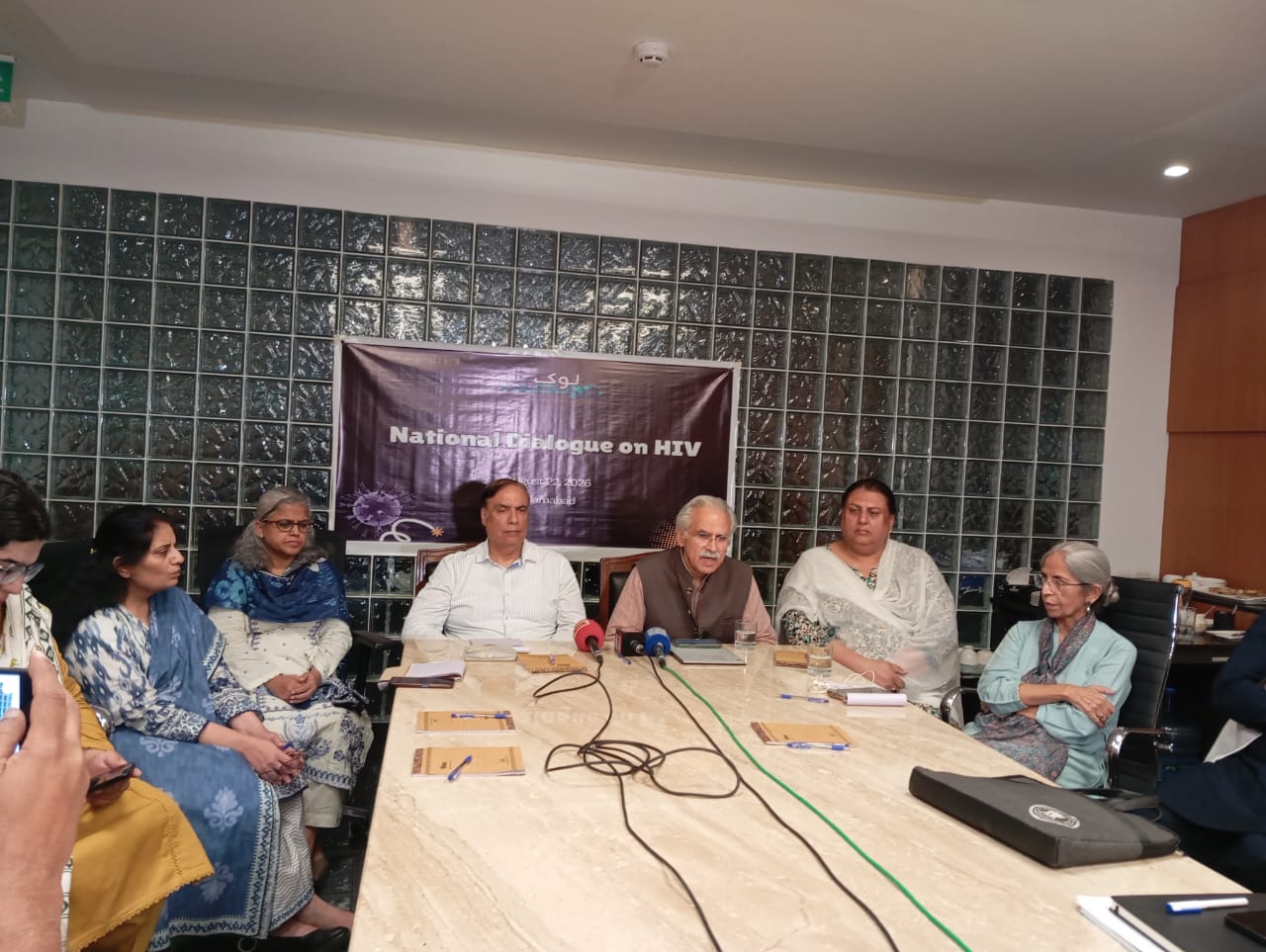
The warning came during a National Dialogue on HIV and AIDS organised by Lok Sehat, where doctors, public health experts, medical organisations, civil society groups and representatives of communities affected by HIV discussed the growing problem.

Lok Sehat Convener Dr Zafar Mirza said the government must stop trying to control the disease by controlling or hiding data. He demanded that reliable information about HIV and other blood-borne diseases should be made available and that the government should take greater financial responsibility for HIV, tuberculosis, and malaria instead of depending heavily on international donors.

The issue has become more serious because HIV infections are increasingly being reported among children and people outside the groups traditionally considered at higher risk.

The Task Force report estimates that 369,000 people are living with HIV in Pakistan, but only around 84,400 cases are formally registered and about 60,789 people are receiving antiretroviral treatment. The report says the recent appearance of HIV among children in low-risk rural communities points to serious weaknesses in infection control, blood safety, healthcare regulation, and medical management.

The situation in Taunsa Tehsil of Dera Ghazi Khan has raised particular concern. The Task Force report says 127 children were confirmed to have HIV during a five-month period between December 2024 and April 2025. Around 79 percent of those children were below five years of age, with the median age only three years. Investigations largely ruled out transmission from mothers because nearly all mothers of the infected children tested negative for HIV.

The report identified unsafe blood transfusions and contaminated injection practices as major drivers of the Taunsa outbreak. It also found problems involving blood donor screening, unregulated healthcare providers, reuse of disposable syringes, excessive use of injections, poor sterilisation and weak infection prevention systems.

Dr Zafar Mirza said repeated use of syringes and needles was a major suspected route of HIV transmission among people receiving healthcare. He called for proper training of healthcare workers and public awareness so patients and families understand the importance of using new syringes and needles. He also urged doctors to avoid unnecessary injections when oral medicines are medically suitable.

The problem is not limited to one area. Former National AIDS Control Programme and IHRA chief Dr Quaid Saeed said 13 HIV outbreaks had been reported in Pakistan during the last 18 years, but only two, including the outbreaks in Jalalpur Jattan and Ratodero, had been extensively investigated. He called for proper investigations into every outbreak.

The Task Force report also says the Ratodero outbreak in Sindh in 2019 affected more than 1,000 people, most of them children under 12. Investigations linked the outbreak to contaminated syringes, unsafe injections, unregulated blood transfusions, quackery and serious weaknesses in infection prevention and control.

Experts also raised concerns about the treatment of people living with HIV. Dr Zafar Mirza said stigma remains a serious problem, including within parts of the medical profession. He said there had been cases where doctors refused to treat patients after learning that they had HIV.

He stressed that HIV does not spread through ordinary contact such as shaking hands or being near an infected person. He called for stronger public awareness through television, newspapers and social media to correct false beliefs and reduce discrimination against patients.

In Islamabad, infectious diseases expert Dr. Naseem Akhtar said many of the HIV cases seen at her centre involved people who inject drugs, deportees, transgender persons, men who have sex with men, and female sex workers. She said some cases had also been found among children.

Dr Asma Naseem said the situation in Karachi was also worrying, particularly because of a rise in HIV cases among children. She said children with HIV were being brought to the Sindh Institute of Urology and Transplantation with kidney failure, describing the trend as highly concerning.

The experts said weak regulation of healthcare facilities was another major part of the problem. Dr. Zafar Mirza called for stronger healthcare commissions, blood transfusion authorities, and other regulators, along with better funding, trained staff, and modern technology.

The government Task Force has recommended nationwide surveillance of syringes, stronger regulation of medical devices, and a phased move towards auto-disable syringes. It has also proposed tougher action against unsafe medical practices.

Another major recommendation is the creation of a national real-time HIV surveillance dashboard. The system would collect information from treatment centres, blood transfusion centres, provincial disease surveillance units and other health facilities so that new cases could be reported quickly at the national level.

The Task Force has also proposed stronger testing and care for children, including early infant diagnosis, trained counsellors and paediatric HIV specialists in areas facing outbreaks. It has recommended social protection for children living with HIV, including support for medicines, nutrition, education, transport and psychological care.

The proposed reforms also include stronger laws, mandatory reporting of HIV cases and outbreaks, better sharing of health data between provinces and agencies, and accountability for public and private healthcare providers where negligence contributes to disease transmission.

The government report says a high-level National HIV Technical Working Group is also proposed, with experts including Maj. Gen. (R) Dr. Azhar Mehmood Kayani, Dr. Zafar Mirza, Dr. Abdul Wali Khan, Dr. Amjad Mahmood, Dr. Adnan Khan, Dr. Huma Qureshi, Dr. Hasan Abbas Zaheer, Brig. Dr. Nuzhat Mushahid, Dr. Saira Afzal, Dr. Fatima Mir, Dr. Saba Jamal, Dr. Rana Jawad Asghar and Dr. Khalid Rehman.

Dr Zafar Mirza also raised concern over Pakistan’s dependence on international funding. During the briefing, he said that around 90 percent of spending on HIV, tuberculosis and malaria over the previous five years had come through the Global Fund. He argued that Pakistan should gradually take full financial responsibility for these programmes rather than treating donor support as a permanent solution.

The national dialogue was attended by representatives of the Pakistan Medical Association, Pakistan Paediatric Association, Pakistan Islamic Medical Association, Medical Microbiology and Infectious Diseases Society of Pakistan, Society of Obstetrics and Gynaecology of Pakistan, Association of People Living with HIV in Pakistan, Indus Hospital and Health Network, Nai Zindagi Trust, Wajood Society, Bridge Foundation, Dareecha Male Health Society and UNAIDS.

The experts said Pakistan now needs more than statements and meetings. They called for safe injections, properly screened blood, stronger hospital safety rules, reliable disease data, regular investigations of outbreaks, better regulation of clinics and sustained government funding.

The Task Force recommendations make clear that the HIV problem is not only about treating patients. It is also about making sure that people who go to a hospital or clinic for treatment do not face preventable risks because of unsafe medical practices, weak monitoring or poor regulation.

Similar Posts

  • | |

    Brittany Cartwright speaks out on Jax Taylor’s new romance

    LOS ANGELES: Reality television star Brittany Cartwright has shared her thoughts on former husband Jax Taylor’s new relationship, saying she is now focused on protecting her peace and raising their son following their separation. In a recent interview, Cartwright addressed Taylor’s reported romance with their former publicist, Lori Krebs. While commenting on the relationship, she said she does not wish harm on anyone but suggested the pair may not be happy together. The television personality also criticised her former husband, claiming he relies heavily on others for support. She further questioned the public role played by Krebs, saying she had never seen a publicist seek so much attention. Cartwright said she has more to say about the situation but is choosing the right time to speak publicly. She explained that her priority remains her personal well-being and the welfare of her young son. Speaking on her podcast, she said she intends to share her side of the story when she feels ready. Until then, she wants to focus on her family and maintain a peaceful environment for her child. The reality star added that many people already have an idea of what has happened, but she prefers not to discuss further details at this stage. Cartwright and Taylor ended their five-year marriage in February 2024 after a long relationship that was widely followed by fans of reality television. The former couple share a five-year-old son and have continued to co-parent following their separation.

  • | |

    Australian court rejects Indian appeal in Basmati …

      An Australian court has dismissed an appeal filed by the Agricultural and Processed Food Products Export Development Authority (APEDA) in the Basmati word mark case, marking a significant legal development for Pakistan’s rice exporters. According to the Ministry of Commerce, the Australian court’s decision has reaffirmed Pakistan’s principled position that the term “Basmati” cannot be treated as the exclusive property of India. The ruling is being viewed by Pakistani authorities as an important legal success in protecting the rights of the country’s Basmati rice producers and exporters. The Australian court has also ordered the Indian institution APEDA to pay the legal costs associated with the proceedings. The decision follows a legal dispute over the use and registration of the word “Basmati” in Australia. APEDA had applied to register the word “Basmati” as a certification trademark. The application was challenged, leading to legal proceedings concerning whether the term could be claimed exclusively for Indian rice products. Pakistan has consistently maintained that Basmati rice is also produced in Pakistan and that Pakistani exporters should have equal rights to use the name. The Ministry of Commerce said Australian authorities had already acknowledged that Basmati rice is produced in Pakistan, strengthening Islamabad’s position in the dispute. The latest court decision has therefore been welcomed by Pakistani officials as confirmation of the country’s longstanding stance on the geographical and commercial identity of Basmati rice. The Ministry of Commerce stated that the ruling represents an important legal victory for Pakistan because it supports the principle that Pakistani exporters should not be deprived of the right to use the term Basmati for rice produced in the country. Federal Minister for Commerce Jam Kamal congratulated the Ministry of Commerce team on what he described as Pakistan’s legal success in the case. He appreciated the efforts of the officials and legal representatives involved in defending Pakistan’s position before the Australian authorities. The dispute is significant because Basmati rice is an important agricultural and export commodity for both Pakistan and India. The term has considerable commercial value in international markets because consumers associate Basmati with a distinctive variety of aromatic long-grain rice. Pakistan is among the countries known for producing and exporting Basmati rice, particularly from areas in Punjab. The country has sought greater recognition of its rights over the Basmati name in international markets, arguing that the rice is a shared agricultural heritage of the region and is produced on both sides of the border. APEDA’s attempt to register “Basmati” as a certification trademark had raised concerns in Pakistan because exclusive registration could potentially affect Pakistani exporters’ ability to market their products using the internationally recognized name. The Australian court’s rejection of APEDA’s appeal is consequently being seen by Pakistan as an important development in safeguarding its exporters’ commercial interests. The order requiring APEDA to pay legal costs also adds to the significance of the decision for Pakistan. The Ministry of Commerce has emphasized that the ruling strengthens Pakistan’s position in international legal and commercial forums. Pakistani authorities are expected to continue protecting the interests of local rice growers and exporters and ensuring that they retain the right to market their Basmati rice under its recognized name. The decision could also contribute to broader efforts to strengthen Pakistan’s agricultural exports and promote its Basmati rice in international markets.

  • | |

    Petrol pump owners call off strike after successfu…

      A nationwide strike planned by Pakistan’s petrol pump owners and fuel dealers has been postponed after successful negotiations with the government. Following the talks, both the Petrol Pump Owners Association and the Petroleum Dealers Association withdrew their strike calls after receiving assurances that their key concerns, particularly regarding profit margins, would be addressed. The Petrol Pump Owners Association had initially announced that the strike would begin at 12:00 midnight, while the Petroleum Dealers Association planned to suspend operations from 6:00 a.m.However, after reaching an understanding with government representatives, both organizations decided to call off the protest, ensuring that fuel supplies would continue without disruption. Speaking after the meeting, Federal Minister for Petroleum Ali Pervaiz Malik thanked the All Pakistan Petrol Pump Owners Association and various petroleum dealers’ organizations for their willingness to engage in dialogue. He appreciated their decision to postpone the strike in the interest of the public and emphasized the importance of resolving issues through consultation rather than confrontation. The minister acknowledged that the country has been facing economic and regional challenges, particularly since developments in the region earlier this year. He noted that the prevailing situation has created uncertainty and concerns for both businesses and the public. According to Ali Pervaiz Malik, Prime Minister Shehbaz Sharif is fully aware of the hardships being faced by citizens and remains committed to minimizing the impact of economic pressures on the people. He further stated that the government has already provided subsidies worth several hundred billion rupees to protect consumers from rising fuel costs. The minister said a targeted subsidy mechanism has been developed to ensure that relief reaches those who need it the most. He also praised oil refineries and petroleum sector stakeholders for their continued cooperation and support during challenging times. Addressing the dealers’ primary demand, Ali Pervaiz Malik confirmed that the issue of increasing petroleum dealers’ profit margins would be resolved through mutual consultation. He announced that a summary regarding the proposed increase in dealer margins would soon be presented to the federal cabinet for approval. The government, he added, is committed to finding a fair solution that balances the interests of both consumers and fuel retailers. The petroleum minister also revealed that the recently introduced daily fuel pricing system would be reviewed after a two-week trial period. During this time, the government will closely monitor its implementation in consultation with petroleum organizations before making any long-term decisions. He emphasized that all stakeholders would continue working together to improve the system and address any operational concerns. Meanwhile, Nadeem Khan, Secretary Information of the Petrol Pump Owners Association, confirmed that the government had assured dealers that their commission and profit margin issues would be resolved. He expressed optimism that the matter would be settled within the next two weeks, allowing dealers to continue operating under more sustainable financial conditions. Nadeem Khan said the associations had decided to postpone their protest based on the government’s commitments. He expressed hope that the authorities would honor their promises and implement the agreed measures within the announced timeframe. He also welcomed the decision to review the daily fuel pricing mechanism on a trial basis, saying it would provide an opportunity to evaluate its impact before any permanent implementation. The successful negotiations have prevented a nationwide disruption in fuel supplies, offering relief to motorists, businesses, and the general public. Both the government and petroleum sector representatives expressed confidence that continued dialogue and cooperation would help resolve outstanding issues while ensuring a stable fuel supply across the country.

  • |

    Carlos Brathwaite applauds Babar Azam’s captaincy

    Former West Indies all-rounder Carlos Brathwaite has praised Pakistan captain Babar Azam for his outstanding leadership, describing his captaincy as a tactical masterclass during the ongoing Test against the Caribbean side. Speaking during his analysis of the match, Brathwaite highlighted Babar’s calm decision-making and ability to read the game under pressure. He said the Pakistan skipper showed excellent awareness by slowing the pace of play at key moments and making smart field changes that unsettled the West Indies batters. According to Brathwaite, one of Babar’s best tactical moves was the field placement against experienced batter Roston Chase. The carefully designed field forced Chase to rethink his natural game and prevented him from scoring freely. “Babar’s field settings kept Roston Chase under constant pressure,” Brathwaite noted. “He had to keep adjusting his approach, and eventually that pressure led to a mistake.” The former all-rounder added that Babar’s leadership reflected a high standard of captaincy, saying every move appeared to be planned according to the match situation rather than following a fixed strategy. Brathwaite believes the Pakistan captain demonstrated maturity, patience and tactical intelligence, qualities that helped his team remain competitive during crucial stages of the contest. Meanwhile, the Test match remains finely balanced. West Indies reached 103-6 in their second innings and currently hold a lead of 60 runs, setting up an intriguing finish over the remaining sessions. Pakistan will now look to capitalize on any opportunity to wrap up the innings quickly, while the West Indies hope to extend their advantage with the lower order. Brathwaite’s glowing assessment has once again placed the spotlight on Babar Azam’s leadership, with many cricket fans praising the Pakistan captain for his strategic approach and composure in high-pressure situations.

  • | | |

    Four injured after house roof collapses in Lahore

    Four members of the same family were injured after the roof of a house collapsed in Lahore’s Shalimar area on Sunday. Rescue teams responded quickly to the incident, rescuing the victims from the debris and transporting them to nearby hospitals for medical treatment. The accident occurred in Pathan Colony, located near Ghausia Chowk on Shalimar Road. According to Rescue 1122 officials, emergency responders reached the scene shortly after receiving reports of the collapse. Rescue personnel carried out a search operation, safely removing the injured individuals from beneath the rubble before shifting them to hospitals. Authorities said the house had a traditional roof made of mud and T-R girders, which collapsed unexpectedly. The exact cause of the incident has not yet been confirmed, and officials are expected to investigate whether the collapse was caused by structural weakness, aging construction, or other factors. The injured victims have been identified as three-year-old Rajab, 35-year-old Zainab, 35-year-old Shahid, and 20-year-old Mujahid. Rescue 1122 confirmed that all four belong to the same family. Two of the injured were taken to Kot Khawaja Saeed Hospital for treatment, while the remaining victims also received immediate medical care. Fortunately, rescue officials stated that all four injured individuals are in stable condition and are out of danger. Medical staff continue to monitor their recovery, and no fatalities have been reported. After completing a thorough search of the damaged building, Rescue 1122 confirmed that no additional people were trapped under the debris. The rescue operation was officially concluded once authorities ensured the site was clear. Building collapses remain a concern in parts of Pakistan where older structures and traditional construction methods are still common. Experts have frequently emphasized the importance of regular structural inspections and timely maintenance, particularly for buildings constructed with aging materials. They also encourage homeowners to seek professional assessments if signs of cracks, weakened roofs, or structural damage become visible. The latest incident highlights the importance of emergency preparedness and the rapid response of rescue services. Prompt action by Rescue 1122 helped prevent further casualties and ensured that the injured received immediate medical attention. Local authorities are expected to assess the condition of the damaged property and determine whether additional safety measures are required to prevent similar incidents in the future.

  • | |

    Congo tightens grip on mineral exports with ban on…

    The Democratic Republic of Congo has prohibited exports of copper concentrate and cobalt concentrate, according to a government order reviewed on Thursday, marking the latest step in an ongoing push to force more mineral processing to happen inside the country and capture a larger share of the value generated by its mining sector. News of the ban sent benchmark three month copper prices on the London Metal Exchange up by as much as 1.8 percent to $14,369.50 a metric ton, the highest level since January 29, when the metal touched an all time peak of $14,527.50. Prices stood at $14,300 as of 0930 GMT following the report. Congo holds the position of the world’s largest cobalt supplier and ranks among the top sources of copper and other minerals critical to the global energy transition. The government is using that leverage to encourage the build out of domestic processing capacity rather than allowing raw or partially processed materials to leave the country. The order, dated June 29 and signed jointly by Mines Minister Louis Kabamba Watum, Foreign Trade Minister Julien Paluku Kahongya and Economy Minister Daniel Mukoko Samba, states plainly that exporting copper and cobalt concentrates is now prohibited. The prohibition took effect immediately, though the order allows for one year export waivers to be granted under unspecified strategic circumstances. The same order also establishes a new tax structure covering economically significant mining by products, with a three month transition period built in before the new rules take full effect. Officials said the export ban aims to push mining companies toward marketing or exporting higher value processed mineral products rather than raw concentrate. This marks the fourth time Congo has restricted concentrate exports, following similar bans imposed in 2013, 2019 and 2023, each of which included waivers in cases where domestic smelting capacity could not keep pace with output. The new order formally repeals the 2023 measure and its associated exemptions, replacing it with a broader regulatory framework governing both mineral exports and taxation of significant by products recovered during processing. Congo already exports the vast majority of its copper in refined form. During the first quarter of 2026, the country shipped 696,725 tons of copper cathodes, compared with just 53,926 tons of copper concentrate containing roughly 18,863 tons of copper metal, according to official figures. Over the same period, Congo exported 51,940 tons of cobalt hydroxide containing about 17,054 tons of cobalt metal. Christian Geraud Neema, a mining analyst with the nonprofit China Global South Project, said the new ban is unlikely to significantly disrupt most mining operators since the bulk of Congo’s copper and cobalt already undergoes domestic refining before export. He said the operation most likely to feel the impact is the Kamoa Kakula venture, jointly owned by Ivanhoe Mines, China’s Zijin Mining and the Congolese government, which still exports some volume of concentrate under existing exemptions. Neither Ivanhoe nor Zijin responded immediately to requests for comment, and the Congolese chamber of mines also did not respond. The newly introduced tax regime applies broadly across mineral categories, extending to trace and ultra trace minerals recovered during the refining process. These by products will be taxed using a 55 percent valuation coefficient, with royalties applied alongside those already charged on the primary mineral being extracted. The policy fits into a broader pattern across resource rich African nations seeking to move beyond raw material exports and capture more manufacturing and processing value domestically, a shift that has gained momentum as global demand for energy transition minerals like copper and cobalt continues to grow.

Leave a Reply

Your email address will not be published. Required fields are marked *