trump administration seeks
|

Trump administration seeks to restrict internships for international students

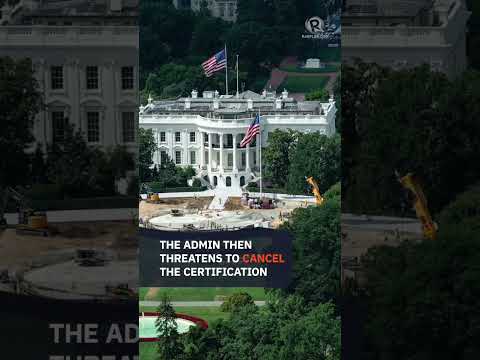
WASHINGTON, USA — President Donald Trump‘s administration has issued a memo for universities that seeks to restrict issuance of certain internship work authorizations for international students as the federal government warned that colleges not complying with the regulations may lose certification to enroll foreign students.

The federal memo dated August 24 said the Student and Exchange Visitor Program, which is part of the US Immigration and Customs Enforcement agency, has “observed a rise in Curricular Practical Training (CPT) authorizations that appear to violate regulatory requirements which permit CPT only where the training is an integral part of an established curriculum.”

Trump administration seeks to restrict internships for international students

“Failure to comply with SEVP regulations may result in an institution losing certification to enroll foreign students,” the memo said.

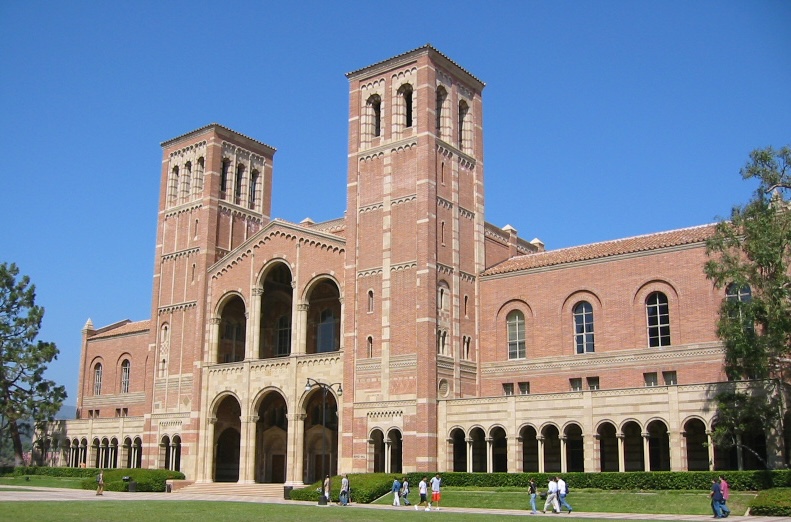
It resulted in some schools, including the University of California, Los Angeles and the University of California, Berkeley, pausing certain applications for work authorizations for international students.

“UCLA has paused certain Curricular Practical Training authorizations while it reviews recent federal guidance and determines next steps,” a UCLA spokesperson said.

UC Berkeley’s international office said the August 24 memo was “more narrow in focus, more direct, and includes content that is more restrictive in nature.” The federal government had also issued an earlier memo in mid-August.

UC Berkeley’s international office said it is unlikely that it will process certain work authorization applications “in the near future” and urged those international students to plan accordingly.

It said it will continue processing “degree-requirement” CPT as normal and would resume processing “Doctoral Dissertation and Master’s Thesis Research CPT.” The office said it would consult legal experts to develop new processes aligning with new federal requirements.

“Nothing about these regulations has changed,” the Department of Homeland Security, ICE’s parent, said in a statement. “However, schools and employers should consider themselves on notice: under President Trump, abuse of this generous system will no longer be tolerated.”

Trump has targeted universities with probes and funding threats over issues like pro-Palestinian protests against US ally Israel’s assault on Gaza, diversity initiatives, climate programs, and transgender policies. Rights advocates have raised free speech, academic freedom, and due process concerns.

Separately, the US Justice Department alleged on Thursday admissions practices at the George Washington University School of Medicine and Health Services favored Black and Hispanic applicants, citing findings of a probe as the Trump administration continued its diversity crackdown.

“We are disappointed by the DOJ’s conclusions, which we believe are incorrect,” the university said, saying the admissions policies were in compliance with law and not discriminatory.

The Justice Department has alleged similar bias at other schools, saying the department aims for settlement talks. If those efforts fail, the department will file suit, it said.

Trump’s administration has also revoked visas of student protesters over pro-Palestinian protests that it casts as antisemitic and sympathetic to extremists.

Protesters, including some Jewish groups, say opposition to Israel’s assault on Gaza and its occupation of Palestinian territories is not antisemitic and advocacy for Palestinian rights is not the same as supporting extremism. – Rappler.com


Similar Posts

  • | |

    Canada’s pushback against Trump tests bounda…

    Two days before trade negotiations between the United States and Canada collapsed dramatically over the weekend, Vice President JD Vance told an audience at a private fundraiser that Canadian Prime Minister Mark Carney was, in his words, a very sweet guy. According to a private audio recording obtained by a Canadian news outlet, Vance went on to describe Carney as someone who talks tough and claims he can out tough Donald Trump, before ultimately backing down on major issues, a pattern Vance called hilarious. Those remarks, which drew significant attention across Canada, may not have directly caused Carney’s negotiating team to walk away from the table, but they certainly did not help matters. Carney’s decision abruptly ended talks over a new trade agreement and triggered a fresh round of tariffs between two countries that conduct more than 872 billion dollars in annual bilateral trade. The deepening rift, paired with Vance’s comments, offers the latest example of an American administration willing to apply pressure against both allies and adversaries alike, underscoring how such tactics can produce unpredictable consequences on the world stage. If Trump anticipated that Canada would eventually yield to American pressure, following a pattern seen among other US allies over the past year and a half, that assumption may prove mistaken, and the fallout could shape the remainder of his presidency. Tension between Washington and Ottawa did not begin this weekend. It traces back to the first Trump administration and the negotiations that produced the USMCA, the agreement that replaced the original 1990s era North American Free Trade Agreement. Personal friction between Trump and former Canadian Prime Minister Justin Trudeau complicated those earlier talks. As Trump prepared to return to office in late 2024, he mockingly referred to Trudeau as governor and to Canada as America’s 51st state. Behind those remarks sat a broader worldview in which the United States positions itself as the dominant power within its own hemisphere, entitled to shape political, military and economic outcomes across the region, Canada included. Administration officials have argued that Canada contributes too little to regional defense spending while benefiting disproportionately from trade with its southern neighbor. Within Trump’s framework, where economic and national security are treated as inseparable, Canada and Mexico, two of America’s largest trading partners, emerged as early targets. Drew DeLong, head of corporate statecraft at the Kearney Foresight think tank, said officials across the State, Treasury and Commerce departments frequently repeat the phrase that economic security equals national security. By early this year, as North American trade talks moved forward unevenly, Trump’s focus shifted away from Canada toward military interventions in Venezuela and later the Middle East. Even so, the central thread running through Trump’s foreign policy approach has remained consistent, treating the United States as a dominant power capable of imposing its will for national advantage. That power has limits, however, and Trump’s second term has repeatedly tested where those limits lie. Despite the obvious differences between an active conflict with Iran and a trade dispute with Canada, the underlying dynamics share similarities. In both cases, the United States confronts a counterpart with far less overall power but still capable of retaliation. Iran has leaned on its ability to threaten US allies and disrupt global commerce through chokepoints like the Strait of Hormuz. Canada, meanwhile, has begun testing its own capacity to inflict economic pressure, with this week’s targeted tariffs marking an initial step. Future Canadian measures could include limiting American access to Canadian energy and critical minerals, alongside consumer boycotts targeting US products. DeLong said that as the broader global landscape shifts toward economic security concerns, countries increasingly search for chokepoints and leverage across global supply chains, adding that such opportunities exist for nations willing to look for them. For now, clear paths toward resolution remain limited. Trump has escalated his public rhetoric, repeatedly accusing Canada of ripping off the United States, while Ontario Premier Doug Ford responded sharply, telling the American president to kiss his ass. Imran Bayoumi, deputy director of the GeoStrategy Initiative at the Atlantic Council, said that pushing allies and partners away tends to incentivize them to seek new relationships rather than comply with American demands. Room still exists for tensions to ease. Canada’s new tariffs take effect in two weeks, while the most significant American countermeasure, a 50 percent tariff on Canadian built vehicles and auto parts, will not take effect until early 2027. Escalation cycles in economic or military conflicts can be difficult to reverse, but the several month gap before the next round of US tariffs gives both sides room to potentially resume negotiations, which had shown signs of progress before talks collapsed Friday night. A more immediate deadline looms in November’s US midterm elections. Democratic gains in Congress could limit Trump’s authority significantly, while unexpected Republican success could strengthen his position further. Ottawa currently appears to be betting on the former scenario, calculating that concern over midterm losses in industrial swing states like Michigan and Ohio will pressure Trump to soften his stance before voters head to the polls. Bayoumi said he does not see the kind of internal political division within Canada that the Trump administration may have anticipated, adding that Carney has considerable political room to negotiate a favorable outcome for Canada rather than settle for less. Carney has also raised another possibility publicly since Trump returned to office, suggesting Canada may continue drifting away from the United States altogether and deliberately widen the distance between the two nations. Carney has said Canada cannot depend on traditional alliances now that the rules of engagement have fundamentally shifted. While geographic proximity guarantees the two countries will remain connected in some form, the deeply integrated economic relationship built over recent decades may be approaching its end. This stands in contrast to Mexico, which appears to be pursuing closer economic integration with the United States rather than distancing itself. Meanwhile, other global trading partners, including US allies across Europe and Asia, are closely watching Canada’s assertive stance

  • | | | | |

    Trump claims Iran war could end soon, Hormuz to re…

    WASHINGTON: US President Donald Trump has claimed that the war with Iran could come to an end soon, while negotiations are reportedly continuing over the future of the conflict and the reopening of the strategically vital Strait of Hormuz. Trump said the United States, Iran and Oman were close to reaching a temporary agreement aimed at reopening the key maritime passage. His remarks offered a potentially hopeful signal after weeks of heightened tensions and disruption in the region. The US president also dismissed reports that the conflict had significantly depleted American weapons stocks, insisting there was no truth to such claims. Trump further rejected reports of disagreements or growing tensions with US Defence Secretary Pete Hegseth, playing down speculation about friction within his administration over the handling of the war. However, the picture on the diplomatic front remains uncertain. Arab media reports have claimed that efforts to broker a ceasefire between the United States, Israel and Iran have stalled, highlighting the difficulties surrounding a possible breakthrough. At the same time, Iranian authorities have reportedly tightened internal security measures across the country, particularly in Tehran, as uncertainty over the conflict continues. The Strait of Hormuz remains central to the crisis because of its importance to global energy supplies and international shipping. Any agreement that restores normal traffic through the waterway could ease pressure on regional markets and provide a significant boost to wider diplomatic efforts. For now, Trump’s prediction of a quick end to the war contrasts with reports suggesting that major obstacles still remain before a lasting ceasefire can be secured.

  • | |

    Belgium’s largest wildfire in decades double…

    A wildfire officials describe as the largest in Belgium’s recent history more than doubled in size within 24 hours, local authorities said Sunday, as hundreds of firefighters entered a third day battling flames tearing through the country’s largest nature reserve. The blaze has forced the evacuation of two villages near Hautes Fagnes, a protected reserve close to Belgium’s eastern border with Germany. Local farmers have hauled water tankers toward the park to assist firefighting crews, while water bombing aircraft and helicopters sent from Sweden and the Netherlands have joined the effort from the air. The Belgian fire is one of several burning across Europe this weekend. At least two people died in forest fires on a Greek island off the coast of Athens on Sunday, part of a broader pattern of blazes spreading across the continent. Belgian officials said intense heat combined with the reserve’s difficult terrain, a mix of bog like wetlands, moorland and forest, has made the fire especially hard to contain. According to figures reported by a French news agency citing local officials, the fire grew from 80 hectares, or about 200 acres, on Friday to 850 hectares by Saturday morning, before expanding further to 3,000 hectares by early Sunday. Belgian Interior Minister Bernard Quintin said two fronts of the fire, one advancing toward Jalhay and the other toward Monschau, have now been brought under control. Authorities said conditions remain difficult overall and that they continue to rely heavily on aerial support to bring the fire under control, though no homes have been damaged so far. Two water bombing aircraft arrived from Sweden on Sunday afternoon to reinforce four helicopters, two Belgian and two Dutch, already working the fire. Nicolas Yernaux, a spokesman for regional authorities in Wallonia, said Saturday that the blaze ranks as the largest the country has seen in recent history. He said firefighters have allowed portions of the heathland to burn because those areas are extremely difficult to reach. Rescue teams have been unable to access the location where the fire started, leaving its cause unknown for now. Additional forest fires have broken out in Croatia, Spain and Serbia since Friday, following a summer of extreme heat that has left large parts of Europe either burning or scorched brown. In southwestern France, local officials in the Landes region said a separate wildfire forced the evacuation of 650 residents on Saturday. That fire first broke out Thursday and reignited Saturday, prompting authorities to deploy more than 500 firefighters to bring it under control. The EU’s climate monitoring service, Copernicus, has confirmed that western Europe just experienced its hottest June to July period on record, a finding that aligns with the wave of wildfires now spreading across multiple countries on the continent.

  • |

    Pakistan High Commission London launches direct digital property transfer service for British Pakistanis

    In a major step to improve consular services for overseas Pakistanis, the Pakistan High Commission in London has launched a digital property transfer facility, enabling British Pakistanis to transfer property in Punjab without travelling to Pakistan. Introduced in line with Prime Minister Shehbaz Sharif’s directives to enhance services for the Pakistani diaspora, the initiative allows overseas Pakistanis to complete the property transfer process directly at the High Commission after verifying their identity. Under the new system, applicants are no longer required to issue a Power of Attorney or appoint an agent to handle property transfers on their behalf, reducing the risk of fraud and unnecessary legal expenses. The digital property transfer process is designed to be transparent, secure, efficient and cost-effective, offering overseas Pakistanis a streamlined alternative to the traditional method of property transactions. The service is part of a collaboration between the Punjab Land Records Authority (PLRA) and Pakistan’s Ministry of Foreign Affairs, bringing digital land record services closer to the Pakistani community in the United Kingdom. Officials said the initiative reflects the government’s commitment to modernising public services and facilitating overseas Pakistanis by allowing them to manage property matters from London without the need to travel to Pakistan.

  • |

    Rahul Gandhi slams India’s education system, calls it expensive and corruption-ridden

      India’s Leader of the Opposition in the Lok Sabha and senior Congress leader Rahul Gandhi has strongly criticized the country’s education system, describing it as deeply flawed, expensive, and plagued by irregularities. His remarks came while expressing solidarity with students who have been protesting over issues related to entrance examinations and alleged paper leaks. Speaking on the growing concerns surrounding India’s education sector, Rahul Gandhi said he fully supports the feelings, frustrations, and struggles of students. He stated that the anger displayed by young people is understandable, considering the hardships they have been facing in recent years. According to him, the treatment meted out to students has naturally led to widespread dissatisfaction and protests. Rahul Gandhi argued that India’s education system is not only affected by corruption and alleged manipulation but has also become financially unbearable for ordinary families. He said that the cost of appearing in entrance examinations has increased significantly, placing an enormous financial burden on parents and students. He criticized what he described as an education system that forces families to spend huge amounts of money merely to compete for admission to educational institutions. The Congress leader claimed that charging such high fees for entrance examinations amounts to exploiting families who are already making financial sacrifices to secure a better future for their children. He said many parents invest their savings and borrow money in the hope that their children will receive quality education and fair opportunities. However, according to him, the current system fails to reward those sacrifices. Rahul Gandhi further alleged that after collecting large sums of money from students and their families, authorities often announce that examination papers have been leaked or compromised. He said such incidents destroy the trust of students who spend months, and in many cases years, preparing for highly competitive entrance examinations. The cancellation of exams or questions surrounding their credibility not only wastes students’ time but also causes severe emotional stress and uncertainty about their future. He maintained that repeated incidents of paper leaks and examination irregularities have created frustration among young people across the country. In his view, students have every right to raise their voices and demand accountability from the authorities responsible for conducting these examinations. Gandhi said the protests taking place on the streets reflect the genuine concerns of India’s youth rather than being acts of unnecessary agitation. According to Rahul Gandhi, the government should focus on creating a transparent, affordable, and reliable education system that ensures equal opportunities for all students, regardless of their financial background. He emphasized that education should empower young people instead of becoming a source of anxiety, financial hardship, and disappointment. His comments come at a time when debates over examination management, paper leak allegations, and the rising cost of education continue to dominate public discussion in India. Student groups and opposition parties have repeatedly demanded stronger safeguards to prevent examination irregularities and greater accountability from the authorities. Rahul Gandhi concluded by reiterating his support for students, saying their concerns are legitimate and deserve immediate attention. He stressed that the future of the country depends on its youth and that protecting the integrity of the education system should be a national priority.

  • |

    Typhoon Dolphin hits Japan’s Okinawa as China prepares for landfall

    Typhoon Dolphin has struck Japan’s southern Okinawa prefecture, injuring five people and causing power outages across approximately 14,000 properties. Major Japanese carriers ANA and Japan Airlines cancelled flights to the region as maximum sustained wind speeds reached 162 kph, with gusts hitting 216 kph. China has issued high-level alerts along its eastern coast, halting port operations and suspending 162 ferry routes in Zhejiang province ahead of expected landfall between Sunday and Monday. Airports and maritime hubs across eastern China, including Ningbo Lishe International Airport and Shanghai’s Yangshan port, have suspended operations or cleared vessels from harbors. In Taiwan, authorities reported the cancellation of 63 international flights, whilst Taipei rejected maritime traffic control directives issued by Beijing for the Taiwan Strait as baseless.

Leave a Reply

Your email address will not be published. Required fields are marked *