karachi traffic plan
| |

Karachi traffic plan issued for 8 Rabi-ul-Awwal pr…

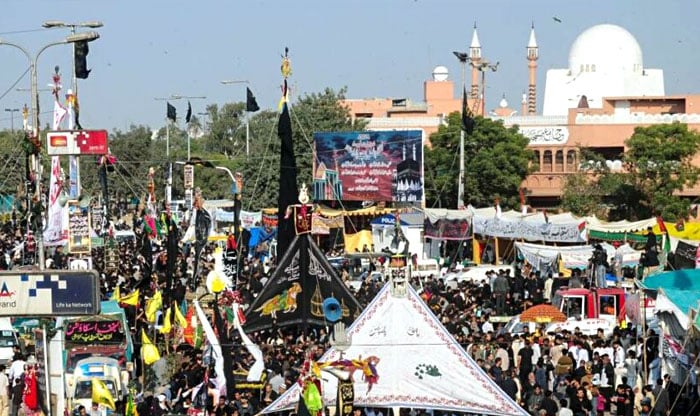
Karachi Traffic Police have announced a special traffic management plan for processions scheduled to take place across the city on August 22 in connection with 8 Rabi-ul-Awwal.

According to the traffic police spokesperson, processions will leave from Nishtar Park and several other locations in Karachi. Authorities have made special arrangements to keep traffic moving and minimize disruption along the procession routes.

Traffic police said vehicle entry passes for the processions will be available from August 17 to 20. Applicants must submit the vehicle’s registration card, their CNIC, and two recent photographs to obtain a pass.

Drivers must also carry the original vehicle registration card and CNIC with them during the procession. Those seeking vehicle passes can contact the designated central office for further information and registration.

The traffic police will introduce alternative traffic routes and make diversions at different points during the processions. Additional personnel will also be deployed to manage traffic and guide motorists.

Citizens have been advised to avoid unnecessary travel on procession routes and follow instructions from traffic police officials. Authorities have urged motorists to cooperate with traffic management teams to ensure smooth movement and reduce inconvenience for commuters across the city.

Similar Posts

  • | | |

    Pakistan ‘not a hard state’, says DG I…

    Lieutenant General Ahmed Sharif Chaudhry, Director General of Inter-Services Public Relations (ISPR), said on Friday that Pakistan cannot yet be described as a “hard state,” stressing that the country’s laws must apply equally to all citizens without discrimination or elitism. Speaking at a press conference focused on the security situation in Balochistan, the military spokesperson said the briefing aimed to address concerns about the province and explain the broader national security landscape. He clarified that the term “hard state” does not refer to military rule but to a system where the rule of law is upheld uniformly, every citizen is treated equally, and all issues are resolved through legal and constitutional mechanisms. The DG ISPR urged citizens to balance demands for rights with their constitutional responsibilities. Referring to Article 5 of the Constitution, he said loyalty to the state and obedience to the Constitution and the law are fundamental obligations of every Pakistani. He added that national identity should take precedence over provincial or ethnic affiliations, emphasizing that every citizen’s foremost identity should be Pakistani. Highlighting the country’s counterterrorism efforts, Lt Gen Chaudhry said security forces have conducted 40,348 intelligence-based operations (IBOs) across Pakistan so far this year, averaging around 194 operations daily, with a significant number taking place in Balochistan. According to the military spokesperson, security forces have eliminated 2,084 terrorists during 2026, averaging nearly 10 militants killed each day. He said 3,145 terrorist incidents have been recorded this year, while 819 people have lost their lives, including 303 Pakistan Army personnel, 194 members of law enforcement agencies, and 322 civilians. He also revealed that 28 suicide bombings have occurred this year, claiming that most of the attackers were Afghan nationals. He said Afghan citizens, along with individuals linked to Afghan security forces, were among those killed or arrested during counterterrorism operations. Comparing recent years, the DG ISPR said security forces killed 2,597 terrorists throughout 2025, while the total for 2026 has already reached 2,084. He noted that the effectiveness of counterterrorism operations has improved over time, with security forces now inflicting heavier losses on militant groups. Responding to questions about the increase in terrorist incidents, Lt Gen Chaudhry said militant groups affiliated with the Taliban have intensified their activities because Pakistan has adopted a firm stance against them. He added that the rise in reported incidents also reflects the growing number of proactive intelligence-based operations, which lead to more engagements between security forces and terrorists. He reaffirmed that Pakistan’s security forces remain committed to eliminating terrorism and maintaining stability across the country, particularly in Balochistan.

  • | |

    IHC seeks govt response over Arshad Chaiwala’s p…

    The Islamabad High Court (IHC) has sought responses from the federal government and the Directorate General of Immigration and Passports over the reported non-renewal of the passport of Arshad Khan, popularly known as “Arshad Chaiwala.” Justice Umair Majid Malik heard the petition filed by Arshad Khan, with Barrister Umar Ejaz Gilani representing him in court. The petitioner’s counsel told the court that Arshad Khan is an entrepreneur who has promoted Pakistani culture internationally. According to the counsel, the National Database and Registration Authority (NADRA) verification board has already cleared Arshad Khan’s identity. His Computerised National Identity Card (CNIC) is also active. The court was informed that Arshad had applied for renewal of his passport on August 20, 2025. However, despite the passage of nearly a year, the renewed document had allegedly not been issued. The lawyer said Arshad had repeatedly contacted the office of the interior secretary to resolve the matter but had not received a satisfactory response. He also informed the court that a legal notice had been served on the interior secretary. Despite the notice, no response was reportedly received. Arshad has asked the high court to direct the authorities to issue his renewed passport without further delay. His petition also seeks a declaration that the continued failure to issue the passport is unlawful and violates his fundamental rights. During the hearing, Justice Umair Majid Malik observed that the court would first obtain the position of the relevant government authorities before examining the matter further. The IHC subsequently issued notices to the Director General Immigration and Passports and the federal government through the interior secretary.

  • | |

    What led Perez Hilton to contact Britney Spears an…

    Perez Hilton reportedly reached out to several celebrities to make amends for his past treatment of them before his recent mental health crisis. Among those he contacted were Britney Spears and Khloé Kardashian, two stars who had been the subject of his celebrity coverage during his years as one of Hollywood’s most controversial gossip bloggers. The revelations came from an interview with Sean Hannity that was recorded on July 14 and released on August 6, just days after Hilton was hospitalized following a distressing TikTok livestream. Hilton discussed his efforts to repair relationships and take responsibility for his past behavior. (Page Six⁠) Hilton wanted to make amends During the interview, Hilton explained that he had privately contacted a number of people he believed he had wronged. His outreach to Spears and Kardashian was part of what he described as a personal effort to confront his past. Hilton said he had reached out to Spears through an intermediary. While he indicated that Spears did not directly respond to him, he appeared to accept that she was not obligated to do so. His experience with Khloé Kardashian was different. Hilton said he contacted Kardashian privately and received a kind response from her. He also acknowledged that some people he contacted did not respond, adding that he understood and respected their decision. (Page Six⁠) A change in Hilton’s approach The outreach appears to be connected to Hilton’s broader reflection on his career. During the interview, he acknowledged that his earlier approach to celebrity coverage could be cruel and invasive. Hilton became famous for mocking celebrities’ appearances, commenting on their private lives and pushing boundaries in his coverage. In recent years, however, he has spoken more openly about changing his approach. He told Hannity that he realized he could still be entertaining without being unnecessarily harsh. He also discussed the idea of “counsel culture,” a concept associated with encouraging people to learn from their mistakes rather than permanently defining them by those mistakes. (Page Six⁠) Hilton’s hospitalization On August 4, Hilton was hospitalized in Miami after authorities responded to reports concerning a serious mental health crisis during a TikTok livestream. His family later confirmed that he was receiving medical care and was able to communicate. They asked the public to respect his privacy while he recovers. (People.com⁠) The timing of Hilton’s reconciliation efforts has drawn attention because they came shortly before the incident. However, there is no confirmed evidence that his conversations with Spears or Kardashian caused or directly influenced what happened. Instead, his comments suggest that Hilton had already been reflecting on his past and attempting to repair relationships. His outreach to former targets shows a public figure confronting the consequences of his earlier work while trying to move forward in a different direction. For now, Hilton’s family says the focus remains on his recovery and well-being.

  • US Secretary of State Marco Rubio Sends Songkran Greetings to Thailand

    BANGKOK — United States Secretary of State Marco Rubio has issued an official greeting to the people of Thailand, marking the commencement of the Songkran Festival and the Thai New Year with a pledge of closer ties and a reaffirmation of the enduring alliance between the two nations. Thai PM Anutin Wishes Nation a Happy […]

  • | |

    UEFA welcomes FIFA investment plan withdrawal

    UEFA has welcomed FIFA’s decision to abandon its controversial private investment proposal, calling the move “a victory for the whole game” while declaring that it has lost confidence in FIFA president Gianni Infantino’s leadership. The governing body for European football made the remarks after FIFA officially scrapped plans to sell stakes in its competitions following widespread opposition from football associations around the world. On August 1, FIFA president Gianni Infantino confirmed that the proposal to bring private investors into FIFA tournaments had been withdrawn after facing intense backlash and threats of a boycott. The plan had sparked strong criticism from UEFA, which argued that football’s global competitions should not be treated as commercial assets. Before the proposal was abandoned, UEFA had firmly opposed the idea, stating: “Football is not FIFA’s to sell.” Following FIFA’s decision to withdraw the proposal, UEFA issued another strongly worded statement welcoming the outcome while criticising Infantino’s leadership. The statement read: “The current FIFA leadership has not only lost UEFA’s confidence but also that of many other members of the football family.” UEFA also reminded members of the promises Infantino made when he first sought election as FIFA president in 2016. Quoting his campaign pledge, the organisation said: “When Gianni Infantino asked for the trust and the votes of FIFA’s member associations to elect him as their president in 2016, he said: ‘Of course we have to be transparent.’” The European governing body accused Infantino of failing to live up to that commitment, claiming he had handled FIFA’s finances without sufficient transparency and had treated the organisation’s money as though it belonged to him personally. The controversy began on July 29, when Infantino reportedly offered each of FIFA’s 211 member associations$40 million in exchange for supporting a proposal that would allow private investment in FIFA competitions, including the men’s and women’s World Cups. UEFA responded swiftly by announcing it would boycott future World Cups if the proposal moved forward. The Asian Football Confederation (AFC) also declared that it “stands in solidarity” with UEFA and Concacaf, adding further pressure on FIFA to reconsider the plan. The criticism did not stop there. FIFA chief operating officer Kevin Lamour reportedly admitted that the organisation’s own administration had been “deceived” about the investment project. Meanwhile, FIFA senior adviser on global strategy and governance Carlos Cordeiro resigned over the proposal, describing it as: “A bad deal for football” He also warned that it would: “Mortgage football’s future.” The episode has created fresh uncertainty around Infantino’s leadership ahead of FIFA’s next presidential election. Infantino, who was first elected FIFA president in 2016 after defeating AFC president Sheikh Salman al-Khalifa by 115 votes to 88, is expected to seek another term. FIFA’s next president will be confirmed at the organisation’s 77th Congress in Morocco next March, with candidates required to submit their nominations by November 18. 

  • |

    The dual catalyst of changing climate and human

    France is confronting unprecedented environmental devastation as wildfires swept across the nation’s forests and countryside. The fire burned over 300,000 acres. A level of destruction not witnessed in the country since the aftermath of the Second World War. The communities assess ruined homes, scorched ecosystems and degraded air quality. The French public and authorities are left with an urgent question: what is driving these catastrophic blazes? A Perfect Storm of Climate Conditions At the root of the crisis is a changing global climate driven by greenhouse gas emissions. Rising regional temperatures, combined with prolonged dry spells, have transformed expansive tracts of woodland into dry tinderbox environments. In these prolonged heatwaves, humidity drops sharply, rendering vegetation prone to rapid ignition. Under such extreme drought, even a minor spark can ignite an uncontrollable inferno within minutes. Environmental scientists emphasize that while climate conditions establish the background vulnerability, they do not act alone. Heat and drought create the ideal environment for fires to spread, but the vast majority require an initial ignition source. The Human Factor: Negligence, Accidents and Arson Official records in France reveal a shocking pattern. Approximately nine out of every ten wildfires originate from human activity.  Public concern often focuses on intentional acts of arson. However, investigators note that deliberate fire-setting accounts for only a fraction of total blazes. The overwhelming majority stem from everyday human negligence or accidents. Common accidental triggers include: Discarded Cigarettes: Unextinguished butts tossed from vehicles or thrown onto dry brush. Fire investigators refer to the rule of 30 conditions where ambient temperatures exceed 30°C (86°F), humidity drops below 30%, wind speeds stay below 30 km/h. A remaining cigarette segment retains at least 30% of its length. Under severe drought, these thresholds lower drastically, making ignition almost immediate. Infrastructure and Equipment: Sparks generated by heavy machinery, ongoing construction projects, or faulty electrical equipment operating near dry grass. Recreational Fires: Unattended outdoor barbecues and small campfires in or around forested boundaries. In response to the scale of destruction, the French Interior Ministry has taken aggressive legal action, detaining over 400 individuals suspected of initiating blazes either through reckless behavior or intentional acts. Among those apprehended are scores of minors, as well as individuals facing immediate judicial sentencing for setting fires in protected woodland zones. Mental health professionals and legal experts point out that intentional fire-starters typically fall into distinct categories, including careless individuals, opportunistic actors seeking financial gain (such as insurance payouts), pyromaniacs, or individuals seeking recognition during emergency responses. Looking Ahead: Reconstruction and Forest Adaptation The unprecedented severity of the blazes has sparked intense public debate over state readiness and resource allocation. Critics question whether preventive measures and response mechanisms were adequate for a summer marked by continuous heatwaves. Addressing the national crisis, French President Emmanuel Macron emphasized the necessity of adapting national forestry policy to match evolving climate realities. Rebuilding efforts will require replanting woodlands with more fire-resistant tree species rather than simply restoring vulnerable pine monocultures. As emergency crews continue to monitor remaining hotspots and brace for subsequent heatwaves, France faces a long-term strategy shift: balancing immediate enforcement against negligence with broad ecological adaptation.

Leave a Reply

Your email address will not be published. Required fields are marked *