pakistan 8216not hard
| | |

Pakistan ‘not a hard state’, says DG I…

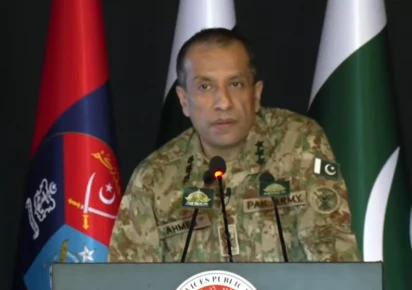
Lieutenant General Ahmed Sharif Chaudhry, Director General of Inter-Services Public Relations (ISPR), said on Friday that Pakistan cannot yet be described as a “hard state,” stressing that the country’s laws must apply equally to all citizens without discrimination or elitism.

Speaking at a press conference focused on the security situation in Balochistan, the military spokesperson said the briefing aimed to address concerns about the province and explain the broader national security landscape.

He clarified that the term “hard state” does not refer to military rule but to a system where the rule of law is upheld uniformly, every citizen is treated equally, and all issues are resolved through legal and constitutional mechanisms.

The DG ISPR urged citizens to balance demands for rights with their constitutional responsibilities. Referring to Article 5 of the Constitution, he said loyalty to the state and obedience to the Constitution and the law are fundamental obligations of every Pakistani. He added that national identity should take precedence over provincial or ethnic affiliations, emphasizing that every citizen’s foremost identity should be Pakistani.

Highlighting the country’s counterterrorism efforts, Lt Gen Chaudhry said security forces have conducted 40,348 intelligence-based operations (IBOs) across Pakistan so far this year, averaging around 194 operations daily, with a significant number taking place in Balochistan.

According to the military spokesperson, security forces have eliminated 2,084 terrorists during 2026, averaging nearly 10 militants killed each day. He said 3,145 terrorist incidents have been recorded this year, while 819 people have lost their lives, including 303 Pakistan Army personnel, 194 members of law enforcement agencies, and 322 civilians.

He also revealed that 28 suicide bombings have occurred this year, claiming that most of the attackers were Afghan nationals. He said Afghan citizens, along with individuals linked to Afghan security forces, were among those killed or arrested during counterterrorism operations.

Comparing recent years, the DG ISPR said security forces killed 2,597 terrorists throughout 2025, while the total for 2026 has already reached 2,084. He noted that the effectiveness of counterterrorism operations has improved over time, with security forces now inflicting heavier losses on militant groups.

Responding to questions about the increase in terrorist incidents, Lt Gen Chaudhry said militant groups affiliated with the Taliban have intensified their activities because Pakistan has adopted a firm stance against them. He added that the rise in reported incidents also reflects the growing number of proactive intelligence-based operations, which lead to more engagements between security forces and terrorists.

He reaffirmed that Pakistan’s security forces remain committed to eliminating terrorism and maintaining stability across the country, particularly in Balochistan.

Similar Posts

  • | |

    Oil prices climb as Hormuz tensions rekindle suppl…

    Global oil prices moved higher on Friday as renewed uncertainty surrounding the Strait of Hormuz fueled concerns over potential disruptions to one of the world’s most critical energy shipping routes. Brent crude futures rose 80 cents, or nearly 1%, to $83.29 per barrel, while US West Texas Intermediate (WTI) crude gained 64 cents to reach $77.93 per barrel. The increase followed a sharp rally in the previous session, when prices surged by more than $3 after reports that Iran was considering new restrictions on maritime traffic through the strategic waterway. Market sentiment shifted after Iranian officials proposed measures that could prohibit US and Israeli-linked vessels from transiting the Strait of Hormuz, while imposing significant financial penalties on ships from countries deemed hostile. The proposal, reportedly being reviewed by Iran’s parliament, has raised fresh concerns about the future of global energy supplies. Analysts said the latest developments indicate that tensions between Iran and the United States remain unresolved, despite recent hopes of diplomatic progress. They noted that the market is now pricing in the possibility of a tightly managed transit system rather than a return to unrestricted shipping through the strait. Reports also suggest that Iran is seeking transit fees ranging from 5% to 7% of cargo values, while Oman has proposed lower charges. However, industry experts believe any agreement would face significant hurdles because of US sanctions and insurance restrictions affecting international shipping. Although crude benchmarks are still on track to post weekly losses after earlier declines driven by optimism over a possible breakthrough in the regional conflict, the renewed geopolitical uncertainty has restored upward pressure on prices. Adding to market jitters, Yemen’s Houthi movement claimed missile and drone attacks targeting Saudi positions in Marib and Hadramout, further highlighting the fragile security situation in the region. Meanwhile, US President Donald Trump expressed optimism that the conflict could end soon, but investors remain cautious as uncertainty continues to dominate the global oil market.

  • |

    Iran appoints former IRGC commander Mohsen Rezaei as national security chief

    Iran has appointed former Islamic Revolutionary Guard Corps (IRGC) commander Mohsen Rezaei as secretary of the Supreme National Security Council (SNSC), placing a prominent hardliner at the center of the country’s defense and foreign policy establishment. Rezaei replaces Mohammad Baqer Zolqadr, who held the post briefly following the death of previous secretary Ali Larijani during an air strike in the ongoing conflict with the US and Israel. Supreme Leader Mojtaba Khamenei issued a decree appointing Rezaei as his direct representative on the council alongside Saeed Jalili, citing Rezaei’s extensive military experience during the Iran-Iraq War. The leadership shuffle comes as Iran negotiates conditional proposals to reopen shipping lanes through the Strait of Hormuz amid ongoing military and diplomatic friction. Rezaei, 71, commanded the IRGC from 1981 to 1997 and later served as secretary of the Expediency Discernment Council and vice president for economic affairs under President Ebrahim Raisi. Zolqadr, whom officials shifted to a political advisory role under the Supreme Leader, had previously outlined strict preconditions for diplomatic progress, including an immediate end to US military threats and an easing of economic sanctions.

  • | |

    Over 4,000 cops to secure AJK elections in Rawalpi…

    More than 4,000 police personnel will be deployed in Rawalpindi division to ensure security during the Azad Jammu and Kashmir (AJK) Legislative Assembly elections on August 2. Police officials have prepared a detailed security plan for polling in four constituencies of the division, including Attock, Jhelum, Chakwal and Murree. A total of 4,029 police officers will be assigned duties at 175 polling stations. The polling stations have been divided into three categories according to their security requirements. Category A includes highly sensitive stations, Category B covers sensitive locations, while Category C consists of normal polling stations. Rawalpindi Regional Police Officer Babar Sarfraz Alpa said providing voters with a safe and peaceful environment is the top priority. He added that all available resources would be used to ensure free and transparent elections. He said strict monitoring would be carried out at sensitive polling stations. Additional patrolling and surveillance measures would remain active throughout the polling process. Police officials will also monitor suspicious activities, illegal weapons and any violations of the election code of conduct. Legal action will be taken against individuals involved in disrupting the electoral process. In Rawalpindi district, more than 3,100 police personnel and 200 traffic police officials will be deployed at 100 polling stations. These stations are located in different areas, including Rawalpindi city, Taxila, Wah Cantt, Gujar Khan, Kallar Syedan and Kahuta. Among the 100 polling stations, 18 have been declared highly sensitive, 45 sensitive and 37 normal. Security arrangements have also been made for the safe transportation of polling materials. City Police Officer Hassan Mushtaq Sukhera said the police would ensure implementation of the Election Commission’s rules and maintain law and order until the completion of the election process. The AJK elections are being conducted in phases due to security concerns. Authorities have increased security measures after previous election-related tensions and allegations of irregularities.

  • | | |

    Four terrorists killed in foiled South Waziristan …

    Security forces have thwarted a suspected suicide attack on a security check post in South Waziristan, killing four terrorists, according to the military’s media wing. The Inter-Services Public Relations (ISPR) said terrorists attempted to target a security forces’ post on Saturday using a vehicle packed with explosives. The vehicle was intercepted before it could reach the check post. Security personnel destroyed the explosive-laden vehicle outside the post’s perimeter, killing the suicide bomber inside. The failed attack caused no damage to the check post, according to the military. The ISPR said three other attackers attempted to escape and took shelter in a nearby compound. Security forces subsequently launched a targeted clearance operation and killed all three terrorists. No security personnel were reported killed or injured during the operation. Following the engagement, security forces launched a sanitisation operation in the area to search for any remaining militants and ensure the area was secure. The military said the operation demonstrated the preparedness and professional response of security personnel against terrorist threats. It added that counterterrorism efforts would continue under the government’s broader security strategy. President Asif Ali Zardari praised the security forces for responding quickly and preventing the attack. He said security and law enforcement agencies would continue their operations against terrorism with determination. Interior Minister Mohsin Naqvi also commended the personnel involved in the operation. He said the nation was proud of the security forces and their continued efforts to counter terrorism. The latest incident comes amid heightened security concerns in Khyber-Pakhtunkhwa and Balochistan, where militant attacks have increased in recent years. Security forces have continued targeted operations in several areas to disrupt militant networks and prevent attacks on security personnel and civilians. The South Waziristan operation comes shortly after a deadly attack in Tank district in which several security personnel and a government official were killed. Another attack in Kohat also claimed the lives of government officials after militants ambushed a vehicle at a joint check post.

  • | |

    Investigators obtain mobile data and forensic repo…

      Investigators have obtained the mobile phone data records and forensic report related to the death of Mir Raza Ali as the investigation into the mysterious case continues. According to officials involved in the inquiry, digital evidence collected from his mobile phone has provided important leads, although authorities say it is still too early to reach a final conclusion about the circumstances surrounding his death. According to the investigation team, Mir Raza Ali sent a message to one of his friends on the night of July 28. The content of this communication is being examined as part of the broader investigation to determine his state of mind and the events leading up to his death. Officials also stated that Mir Raza Ali’s complete medical report has not yet been received. His family has expressed dissatisfaction with the preliminary medical report, saying it does not fully address their concerns. The initial report identified the cause of death as a gunshot wound, but investigators emphasize that further medical findings are awaited before drawing any definitive conclusions. The family has alleged that Mir Raza Ali’s body bore signs of physical assault and burn marks, raising questions about whether additional injuries may have been inflicted before his death. Investigators have said that if the family requests a second medical examination or another post-mortem review, the authorities are prepared to facilitate it in order to ensure transparency and address all concerns. As part of the investigation, officials have recorded statements from 15 individuals including the online taxi driver who was reportedly connected to the case and the person who first informed authorities about the body. These statements are being cross-checked with forensic findings, digital evidence, and other available information to establish a clear timeline of events. Investigators stressed that they are carefully examining every aspect of the case to determine whether Mir Raza Ali’s death was a suicide or a homicide. They said no possibility has been ruled out, and all available evidence is being analyzed thoroughly before reaching a final conclusion. Mobile phone data has also revealed that Mir Raza Ali had contacted a friend requesting a loan of Rs. 30 million (3 crore). According to investigators, he reportedly told his friend that he was facing serious difficulties and was in urgent need of money. This information has prompted investigators to explore whether financial stress may have played a role in the events leading up to his death. Further examination of Mir Raza Ali’s mobile records suggests that he owed money to multiple individuals. Authorities are now reviewing his financial dealings, communications, and personal relationships to understand whether these debts could have contributed to the incident or whether they point toward another motive. Investigators also disclosed that Mir Raza Ali’s fiancée sent him continuous messages between 3:10 a.m. and 3:50 a.m. on the night in question. However, according to the mobile data, Mir Raza Ali did not respond to any of her messages. Officials are examining the timing of these communications alongside other digital evidence to reconstruct the sequence of events before his death. The investigation remains ongoing, with authorities awaiting the final medical report and additional forensic analysis. Officials have reiterated that all evidence—including witness statements, forensic findings, mobile phone records, and financial information—will be carefully reviewed before determining the exact cause and manner of Mir Raza Ali’s death. They have assured the public that the inquiry will be conducted impartially and that every possible angle will be investigated to ensure the truth is established.

  • | |

    Govt not serious about political dialogue, says R…

    Islamabad: Leader of the Opposition in the Senate, Raja Nasir Abbas, has accused the government of lacking genuine commitment to political engagement, saying it is not serious about holding meaningful talks to resolve the country’s ongoing political challenges. Speaking to private media, Abbas said the opposition has consistently advocated dialogue and political engagement as the best way to address national issues. He stressed that the opposition remains ready for constructive negotiations and urged the government to take practical steps toward initiating the process. Referring to recent efforts aimed at opening communication channels, Abbas said senior politician Mahmood Khan Achakzai had proposed a meeting in Parliament’s Constitution Room and had even suggested that discussions could take place at the residence of government representative Rana Sanaullah if needed. According to Abbas, these proposals reflected the opposition’s willingness to find common ground. Currently in Iraq to attend Arbaeen commemorations, Abbas said he is prepared to return to Pakistan immediately if meaningful negotiations are scheduled. He reiterated that the opposition is willing to meet the prime minister and the government’s negotiating team at any time to pursue a political settlement. Meanwhile, Pakistan Tehreek-e-Tahaffuz-e-Ayeen spokesperson Akhunzada Hussain Yousafzai also questioned the government’s intentions, arguing that recent actions contradict its public calls for dialogue. He said that if the government were genuinely interested in negotiations, it would not have registered terrorism-related cases against opposition members. Yousafzai maintained that successful negotiations require a positive political environment, alleging that government actions have instead deepened tensions. He further claimed that meaningful talks would have included facilitating meetings between opposition leaders and jailed PTI founder Imran Khan at Adiala Jail, adding that even family members have reportedly faced restrictions on meeting him. The latest statements highlight the continuing deadlock between the government and the opposition, with both sides publicly expressing support for dialogue while accusing each other of creating obstacles to meaningful political negotiations.

Leave a Reply

Your email address will not be published. Required fields are marked *