
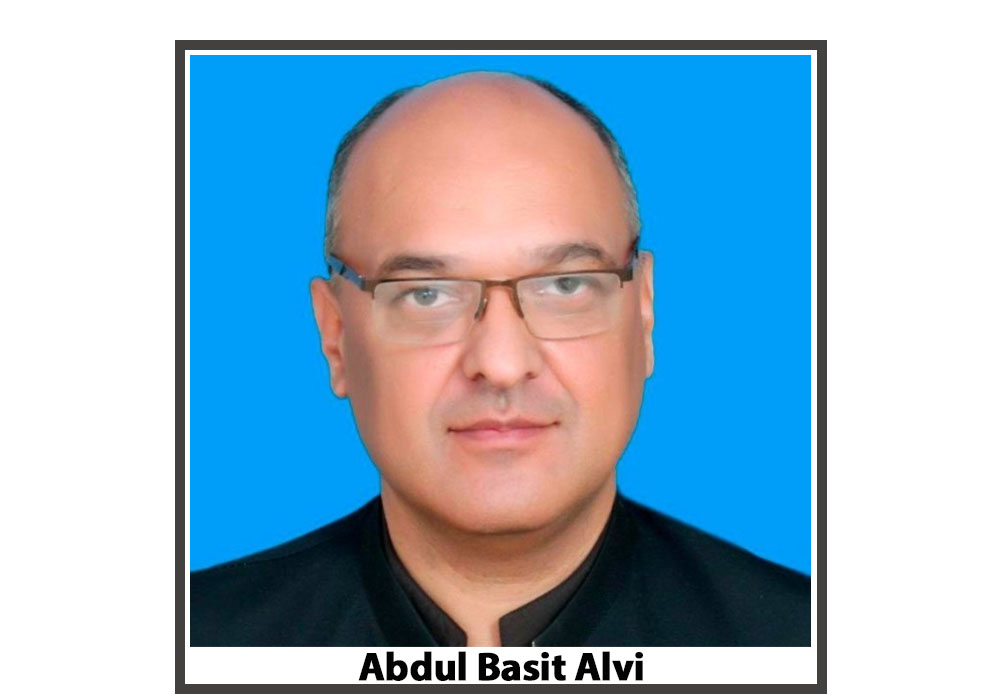
pakistan8217s rise leaves

Pakistan’s Rise Leaves India Isolated: A Set…

As the fourth week of the US–Israel military campaign against Iran unfolded in March 2026, a major geopolitical shift reshaped South Asia and the Middle East. For years, India’s rise under Narendra Modi had dominated regional diplomacy while Pakistan faced marginalization and economic struggles. However, the outbreak of war in West Asia created an opportunity for Pakistan to leverage its geography and relationships to regain global relevance. Within weeks, Pakistan mounted a proactive and unified diplomatic effort led by Prime Minister Shehbaz Sharif and military chief Field Marshal Asim Munir, reversing its isolation and, according to observers, redirecting diplomatic pressure toward India. This “peace offensive” highlighted Pakistan’s strategic agility and exposed perceived weaknesses in India’s foreign policy, marking a striking turnaround in regional influence.

This resurgence began after the US and Israel launched their offensive against Iran on February 28, 2026, forcing countries into difficult alignments. Pakistan instead positioned itself as a neutral stabilizer, maintaining ties with both the United States and Iran while emphasizing its stake in de-escalation due to its shared border with Iran. A rare civil-military unity drove this strategy: Sharif engaged the Muslim world and framed mediation as a moral duty, including direct outreach to Iran’s president, while Munir used high-level connections in Washington to open backchannel communications. His rapport with US leadership enabled message exchanges between American and Iranian officials, helping establish a temporary de-escalation and cementing Pakistan’s role as a key diplomatic intermediary.

The effectiveness of this two-pronged approach became evident when President Trump announced a conditional pause on plans to “obliterate” Iranian energy infrastructure. In his announcement on the Truth Social platform, Trump cited “VERY GOOD AND PRODUCTIVE” conversations, a tacit acknowledgment of the behind-the-scenes efforts being made by Pakistan. Building on this momentum, Prime Minister Shehbaz Sharif made a formal, public offer on March 24, 2026, stating that Pakistan “stands ready and honoured to be the host to facilitate meaningful and conclusive talks” between the United States and Iran. In an extraordinary diplomatic signal that underscored the shift in Washington’s attitude toward Islamabad, President Trump reposted Sharif’s offer on his Truth Social account. This repost was widely interpreted by analysts and officials in Islamabad as Washington’s de facto endorsement of Pakistan’s emerging role as a credible and neutral mediator, capable of hosting what would be a historic breakthrough in one of the world’s most volatile conflicts. While the White House cautioned that such talks remained speculative, the very fact that Pakistan was being discussed as a potential venue—and that its leadership was publicly coordinating with Turkey and Egypt to secure a fragile pause in hostilities—represented a monumental diplomatic victory for a nation that had spent years trying to shake off its image as an international pariah.

The strategic ramifications of Pakistan’s diplomatic surge extend far beyond the immediate conflict in West Asia, striking directly at the heart of India’s long-standing foreign policy objectives under Prime Minister Modi. For years, a central pillar of India’s global strategy was the policy of isolating Pakistan, portraying it as a sponsor of terrorism and an unstable, economically faltering state. By deepening India’s strategic partnerships with Western powers, including the United States, Israel, and the Gulf monarchies, New Delhi sought to limit Islamabad’s diplomatic space and marginalize its influence on the world stage. However, Pakistan’s performance as the lead mediator in the US-Iran conflict has fundamentally challenged this narrative. By demonstrating that it possesses “strategic synergy” and can act as a “responsible nuclear power” and a stabilizing force, Pakistan has proven itself to be an “indispensable actor” in a crisis where a larger power like India cannot provide the same utility. This development has been described by scholars like Vali Nasr as a calculated and highly effective move to prove that Pakistan is more than a “problem child,” capable of “walking the talk” on global peace.

This reversal has been so stark that it has prompted open criticism of the Modi government from within India itself. Congress leader Jairam Ramesh, a prominent voice in the Indian opposition, issued a series of scathing statements on March 24, 2026, acknowledging that Pakistan’s diplomatic engagement and narrative management had been “markedly superior to that of the Modi Govt”. Ramesh went further, stating that the international media reports identifying Pakistan as a potential intermediary represented a “severe setback and rebuff to India”. He directly attributed this disadvantage to the “self-styled Vishwaguru” (world leader) foreign policy of Prime Minister Modi, arguing that despite India’s military successes, its diplomatic space in the region had shrunk over the previous year. A key point of criticism was Modi’s “ill-advised” visit to Israel just days before the US-Israel strikes on Iran, a move that Ramesh and other analysts argued fatally compromised any claim India might have had to neutrality in the conflict. In contrast, Pakistan, despite being a close US ally, was able to maintain a balanced posture, leveraging its ties with both Washington and Tehran to become the preferred interlocutor. The once-celebrated “hug diplomacy” of Prime Minister Modi, which sought to build deep personal relationships with global leaders, was now being characterized by critics as “brutally exposed,” unable to compete with the practical, geostrategic value that Pakistan was able to offer in a moment of acute crisis.

The architect of Pakistan’s success in securing such favorable access to the US administration is widely acknowledged to be Field Marshal Asim Munir, whose efforts to rebuild ties with Washington began long before the war with Iran erupted. Throughout 2025, Munir engaged in a methodical campaign to reverse the diplomatic isolation that Pakistan experienced during the Biden administration. A pivotal moment came when Pakistan nominated President Trump for the Nobel Peace Prize, citing his role in de-escalating tensions between India and Pakistan. This shrewd move, which played to Trump’s well-known desire for the prestigious award, was rewarded with an invitation for Munir to a one-on-one White House lunch—a privilege rarely granted to a foreign military leader who was not also a head of state. Furthermore, Pakistan aligned itself with Trump’s economic and political interests by embracing cryptocurrency and signing agreements with the Trump family’s World Liberty Financial company, a move that further solidified the personal rapport between the military leadership and the US President. This careful cultivation of the Trump administration gave Munir and his team the direct line to Washington that proved invaluable when the Iran crisis erupted. While India, still navigating its own complex relationship with the US—strained by issues such as the Pannun case and differing views on the Ukraine war—found itself unable to match Pakistan’s access at the highest levels, Islamabad was able to leverage its newfound influence to position itself as a vital partner.

The contrast between the diplomatic fortunes of Pakistan and India in this period could not be more pronounced. While Pakistan was basking in the spotlight as a potential peacemaker and hosting high-level backchannel discussions, India found itself on the sidelines of a conflict that directly impacts its energy security and the safety of its vast diaspora in the Gulf region. The perception of isolation that had long plagued Pakistan now appeared to be shifting toward India, which was criticized for being unable to influence the trajectory of the conflict despite its growing economic and military power. The strategic geometry of the region had been altered, not by India’s rise, but by Pakistan’s ability to use its specific geographic and historical assets to solve a problem for the United States. As the Financial Times and other publications detailed Pakistan’s central role in relaying communications between Washington and Tehran, the international community began to reassess Islamabad’s strategic utility. The nation that was once viewed primarily through the lens of its rivalry with India was now being seen as a crucial gateway for stability in the Middle East, a role that India could not play due to its close alignment with Israel and its lack of a border with Iran.

Of course, this diplomatic gambit carries substantial risks for Pakistan. The pause in strikes is conditional, and the country walks a dangerous tightrope; if the backchannel fails and the US proceeds with its threat to destroy Iran’s power grid, Pakistan’s mediation efforts could be rendered moot, leaving it vulnerable to the very instability it is trying to prevent. Iran, for its part, continues to publicly deny direct negotiations to maintain its domestic political posture, even as it privately reviews messages sent through the Pakistani conduit. Analysts caution that despite the flurry of activity, the deep-seated mistrust between Washington and Tehran means a breakthrough remains uncertain. However, regardless of the eventual outcome of the US-Iran war, Pakistan has already achieved its primary objective: it has successfully rebranded itself on the global stage. By positioning itself as a necessary intermediary, Pakistan has demonstrated that it is a nation with agency, capable of independent and effective diplomacy, and not merely the sum of its rivalries with India.

The narrative of Pakistan’s diplomatic isolation, so carefully constructed by India over the past decade, has been turned on its head by the events of March 2026. Through a combination of shrewd strategic calculation, unified civilian-military leadership, and the cultivation of unique, indispensable relationships with both Washington and Tehran, Pakistan has not only escaped the diplomatic shadow cast by India but has illuminated its own path as a key regional stabilizer. Prime Minister Shehbaz Sharif’s articulation of a unified Muslim response, combined with Field Marshal Asim Munir’s unparalleled backchannel access to the Trump administration, created a one-two punch that forced the world to pay attention to Islamabad’s voice. The resulting success in facilitating a pause in the US-Iran war and the offer to host peace talks represent a historic high for Pakistani diplomacy. In doing so, the country has inflicted a severe blow to the Modi government’s global standing, with critics within India itself lamenting the “superior” narrative management of its arch-rival. While the path forward remains fraught with peril, the immediate outcome is undeniable: the policy of isolating Pakistan has been ruined, and the isolation that was meant for Islamabad has, in a stunning reversal of fortune, been redirected and now shadows India’s diplomatic ambitions.
Similar Posts

  • Nelson Mandela: The Statesman Who Transformed the …

    By Ali Hamza Alvi, Final Year Law Student, SLC, Superior University and Muhammad Imran, Staff Member, SAHSOL-LUMS Some individuals attain prominence because they occupy positions of authority; others earn an enduring place in history because they transform the destiny of humanity. Nelson Rolihlahla Mandela unquestionably belongs to the latter category. His greatness did not arise merely from his election as the first democratically elected President of South Africa; rather, it was forged through his unwavering commitment to justice, equality, human dignity, and reconciliation. Even during the darkest chapters of his life, Mandela remained steadfast in his conviction that freedom and human rights were worth every sacrifice. Nelson Mandela was born on 18 July 1918 in the rural village of Mvezo in South Africa’s Eastern Cape. He was raised in a society deeply scarred by racial discrimination, where the colour of one’s skin determined virtually every aspect of life. Under the oppressive system of apartheid, Black South Africans were systematically deprived of their political, social, and economic rights. They were denied equal access to education, employment, healthcare, and public services, while racial segregation was enforced through an elaborate framework of discriminatory laws. Witnessing these profound injustices from an early age inspired Mandela to dedicate his life to dismantling institutionalised racial oppression and establishing a society founded upon equality and human dignity. Recognising the transformative power of law, Mandela pursued legal studies with the conviction that the law should function as an instrument of justice rather than a mechanism of oppression. As a practising lawyer, he represented countless individuals who had been denied their fundamental rights solely because of their race. These experiences reinforced his belief that genuine justice could exist only where every individual stood equal before the law, irrespective of race, ethnicity, religion, or social background. His legal career became not merely a profession but a platform for challenging systemic injustice and advocating constitutional equality. Mandela’s opposition to apartheid inevitably brought him into direct conflict with the South African government. His relentless campaign against racial discrimination and political repression led the authorities to regard him as a dangerous opponent of the existing order. In 1962, he was arrested, and following the historic Rivonia Trial, he was sentenced to life imprisonment. Confined for twenty-seven years, much of that time on Robben Island under exceptionally harsh conditions, Mandela endured one of the longest incarcerations of any political prisoner in modern history. Yet imprisonment neither diminished his resolve nor extinguished his hope. Instead, it strengthened his moral character and reinforced his unwavering belief that justice would ultimately prevail. Life behind prison walls subjected Mandela to severe physical hardship and profound emotional suffering. He was compelled to perform exhausting manual labour, endured restrictive prison conditions, and remained separated from his family and loved ones for decades. Despite these immense personal sacrifices, he refused to succumb to bitterness or hatred. Mandela understood that resentment imprisons the human spirit just as effectively as physical confinement. Instead, he embraced forgiveness as a transformative force capable of healing divided societies. His profound insight that reconciliation, rather than revenge, offers the surest path to lasting peace would later become the defining philosophy of his public life. Following sustained international pressure, widespread domestic resistance, and growing recognition that apartheid was morally and politically indefensible, Nelson Mandela was released from prison in 1990. His liberation marked not merely the end of his personal imprisonment but the beginning of a new era for South Africa. Across the world, millions celebrated his release as a triumph of justice over oppression. Many anticipated that Mandela would seek retribution against those responsible for his decades of imprisonment. Instead, he astonished the international community by advocating reconciliation, peaceful dialogue, and national unity. He firmly believed that South Africa could achieve genuine freedom only by replacing hatred with mutual respect and by building a future founded upon forgiveness rather than vengeance. In 1994, South Africa conducted its first democratic elections based on universal adult suffrage, culminating in Nelson Mandela’s election as the nation’s first Black President. His inauguration represented far more than a political transition; it symbolised the moral triumph of democracy over racial tyranny and the realisation of aspirations long denied to millions of South Africans. As President, Mandela dedicated himself to fostering national reconciliation, strengthening democratic institutions, and promoting equality before the law. His administration sought to heal the wounds of the past by encouraging cooperation among citizens of every race, culture, and community, thereby laying the foundations for a constitutional democracy committed to human rights and the rule of law. Among Mandela’s most remarkable qualities was his extraordinary humility. Despite occupying the highest office in the nation, he remained approachable, gracious, and deeply respectful of others. He believed that authentic leadership is measured not by personal power or privilege but by one’s willingness to serve humanity with integrity and compassion. His conduct demonstrated that strength need not be accompanied by arrogance and that true authority is exercised through wisdom, empathy, and moral example rather than coercion. Today, Nelson Mandela stands as one of the most revered figures in modern history. His legacy transcends the geographical boundaries of South Africa and continues to inspire people across every continent. He demonstrated that courage is not the absence of fear but the determination to uphold justice despite fear; that forgiveness is not a sign of weakness but the highest expression of moral strength; and that enduring social transformation is achieved not through hatred or violence but through reconciliation, equality, and respect for human dignity. His life remains compelling evidence that a single individual, guided by unwavering principles, extraordinary perseverance, and profound compassion, possesses the power to alter the course of history and leave an indelible legacy for generations to come. Nelson Mandela’s life demonstrates that while another individual may one day attain comparable moral stature and global influence, becoming another Nelson Mandela in the truest sense is extraordinarily difficult. His greatness did not stem merely from his imprisonment for twenty-seven years or his election as the

  • Pakistan’s College Education Crisis

    Educational debates in Pakistan usually begin with schools and end with universities. Somewhere in between lies a vast public college network that has quietly undergone a transformation without receiving the reforms necessary to sustain it. For decades, colleges were viewed merely as institutions imparting Intermediate education. That perception is now obsolete. Government colleges across Pakistan award four-year BS degrees, supervise undergraduate research, implement semester systems, and produce graduates completing sixteen years of education. They have become institutions of higher education in every meaningful sense except in the standards by which they recruit, promote and evaluate their faculty. The real crisis begins not when institutions disappear but when they continue to exist while quietly abandoning the purpose they were meant to serve. Pakistan’s college education system increasingly reflects this uncomfortable reality. Buildings stand, classrooms remain occupied, salaries are paid and degrees continue to be awarded, yet the intellectual purpose that ought to define higher education is steadily weakening. The system continues to function, but it no longer asks whether it is producing scholars, researchers and critical thinkers or merely issuing degrees. This contradiction is not merely administrative. It is national. Countries do not build knowledge economies simply by increasing enrolment or opening new campuses. They do so by ensuring that those entrusted with educating the next generation possess the intellectual depth, scholarly discipline and professional integrity demanded by higher education. Pakistan has expanded the responsibilities of its colleges without fundamentally reforming the standards governing those who teach in them. It is this mismatch between expanding responsibilities and stagnant reforms that explains much of the present crisis. History offers repeated warnings against confusing continuity with progress. Great civilisations have seldom been defeated by ignorance alone; far more often, they have been weakened by their refusal to reform. Ancient Troy believed its mighty walls guaranteed safety until destruction entered concealed within the famous wooden horse. Institutions, too, often collapse not because external forces overwhelm them but because internal weaknesses become too familiar to recognise. Pakistan’s colleges face a similar danger. The greatest threat is not inadequate infrastructure or declining enrolment. It is the quiet normalisation of standards that no longer correspond with the responsibilities these institutions now carry. Perhaps nowhere is this more evident than in faculty recruitment. Every education system is ultimately only as strong as the people it appoints to teach. Laboratories, libraries and curricula matter, but they cannot compensate for weak academic recruitment. A nation’s classrooms reflect the intellectual standards it establishes at the point of entry into the profession. Countries that consistently perform well in higher education understand this principle with remarkable clarity. Finland recruits teachers from among its highest-performing graduates and treats teaching as one of the country’s most competitive professions. Singapore invests heavily in teacher selection, structured professional development and continuous evaluation throughout an educator’s career. South Korea subjects aspiring academics to rigorous competition, while Germany closely links academic progression with scholarly achievement and research productivity. These countries differ in culture, politics and economic history, yet they share one conviction that higher education depends first and foremost upon the quality of its faculty. Pakistan, regrettably, often operates on a different assumption. Recruitment is frequently treated as the culmination of academic achievement rather than its beginning. A lecturer appointed with only a sixteen years education may spend an entire career within the same system without acquiring higher qualifications or contributing substantially to research, yet still retire after holding senior academic positions carrying the titles of Associate Professor or Professor. Such a framework might have appeared understandable when colleges were primarily institutions for Intermediate education. It becomes increasingly indefensible once those same institutions award undergraduate degrees equivalent to those offered by universities. Academic titles should signify scholarly accomplishment rather than the mere passage of time. Across the world, the designation of Professor represents sustained intellectual contribution, recognised research, advanced qualifications and academic leadership. When promotion depends overwhelmingly upon seniority rather than scholarship, titles gradually lose their meaning. The loss is not symbolic alone. It diminishes public confidence in higher education itself. This is not an argument against experience. Experience remains indispensable in teaching. A seasoned educator often possesses insights that no newly qualified academic can immediately acquire. Classrooms are enriched by years of interaction with students, evolving pedagogical techniques and practical wisdom accumulated over decades. Experience, however, should complement scholarship, not replace it. Knowledge no longer remains static for an entire career. Disciplines evolve at astonishing speed. Artificial Intelligence is reshaping linguistics, medicine, engineering, law and the humanities alike. Climate science has transformed environmental studies. Digital humanities have altered literary scholarship. Advances in neuroscience continue redefining educational psychology. A qualification earned thirty years ago, valuable though it remains, cannot alone certify mastery over fields that have changed beyond recognition. Medicine provides an obvious comparison. No patient would willingly place complete trust in a surgeon who had never updated professional knowledge after graduation. Engineers continually adapt to changing technologies and safety standards. Judges engage with evolving constitutional interpretation. Military officers undergo regular professional education throughout their service. Every serious profession recognises that learning is continuous. Higher education cannot become the sole profession where intellectual growth effectively ends with appointment. The irony is that Pakistan’s college sector contains thousands of exceptionally capable teachers who have voluntarily pursued MPhil and PhD degrees despite limited institutional incentives. Many complete advanced research while balancing heavy teaching schedules, administrative responsibilities and family obligations. Their commitment deserves recognition because it reflects a genuine desire to improve professionally rather than merely fulfil formal requirements. Yet the existing structure frequently sends the opposite message. Promotion often rewards waiting more consistently than learning. When advanced qualifications receive insufficient institutional value, the incentive to pursue rigorous scholarship inevitably weakens. No education system can flourish if intellectual ambition appears optional while seniority remains sufficient. The anomaly becomes even more striking when one examines the present hierarchy within many public colleges. It is no longer uncommon to find an MPhil-qualified lecturer or even a PhD serving under an officer whose highest

  • Beyond Public Finance: Towards  Constitutional Po…

    The second part of this series explained why public finance and Constitutional Political Economy (CPE) ask different questions. Public finance ordinarily examines what taxes governments should impose and how revenue should be spent. CPE asks who makes those choices, under what rules, for whose benefit and subject to what restraints. That distinction leads to an important conclusion: there is no politically neutral tax system. Tax policy is often presented as a technical exercise. Economists compare direct and indirect taxes, estimate elasticity, calculate effective rates and recommend reforms intended to improve efficiency. Governments describe exemptions as incentives, withholding provisions as enforcement mechanisms and consumption taxes as instruments of broad-based revenue mobilisation. Such terminology creates the impression that taxation operates independently of political power. It does not. Every tax decision identifies those who will pay, those who will collect, those who will receive concessions and those whose activities will remain beyond effective enforcement. A tax may be neutral between two products in an economic model, but the process through which it is enacted and administered can rarely be neutral between organised interests, social classes or political constituencies. The Organisation of Economic Cooperation and Development (OECD) itself recognises that taxes affect taxpayers differently according to their income and other socio-economic characteristics. They alter behaviour and influence the distribution of income both directly and through the public expenditure they finance. Taxation is, thus, not merely a device for transferring money to the treasury. It changes economic opportunities and affects the relationship between citizen and state. The celebrated Mirrlees Review sought to design a coherent tax system in which similar activities were treated consistently, and economic choices were not distorted without good reason. This is a valuable objective. Neutrality can reduce arbitrary discrimination and prevent tax considerations from dominating productive decisions. Nevertheless, even the most carefully designed system must decide which activities are alike, which differences justify special treatment and how equity should be balanced against efficiency. Those choices necessarily embody judgments about society. The idea of neutrality becomes more problematic when it is transferred from theory to a state characterised by unequal political influence. Consider a general sales tax (GST). In theory, a broad-based value added tax (VAT) imposed at a uniform rate minimises distortions and preserves the chain of documentation. In practice, exemptions, reduced rates, special schedules, fixed taxes, withholding taxes (unique in Pakistan even for VAT/GST!) and sector-specific arrangements are introduced during the political process. The final statute may bear little resemblance to the neutral instrument initially proposed. The same is true of income tax. Horizontal equity requires persons with similar ability to pay to bear comparable burdens. Vertical equity requires those possessing greater capacity to contribute more. In Pakistan, however, the legal character assigned to income often determines the burden more decisively than the taxpayer’s actual economic capacity. Salary, business income, capital gains, dividends, property income and agricultural income may all be subjected to different regimes, rates or jurisdictions. These distinctions are not always indefensible. Different types of income may require different collection methods. The constitutional distribution of taxing powers must also be respected. However, a CPE analysis asks why particular differences survive, who benefits from them and whether their stated rationale corresponds to their actual effect. Tax exemptions provide the clearest illustration. Governments describe them as instruments for attracting investment, supporting industries, protecting vulnerable groups or promoting exports. Some concessions may serve legitimate public purposes. Others constitute expenditure conducted through the tax system without the scrutiny ordinarily applied to direct spending. Pakistan’s official Tax Expenditure Report 2026 estimated revenue forgone during fiscal year 2024–25 through income tax, sales tax and customs concessions at approximately Rs. 2.353 trillion (excluding sales tax on POL products to deprive provinces of their constitutional right, replacing it with petroleum levy). Of this amount, sales tax concessions accounted for about Rs. 1.274 trillion, income tax concessions for Rs. 579.70 billion and customs concessions for Rs. 499.14 billion. These are not accounting curiosities. They represent choices about which persons, sectors and transactions receive preferential treatment, and which taxpayers must bear the resulting revenue burden. A concession granted through the tax law is economically similar to public expenditure. If the state collects Rs. 100 from a citizen and transfers it to an industry, the transaction appears in the budget. If the state allows that industry to retain Rs. 100 that would otherwise have been payable, the distributive effect may be comparable, but the benefit is less visible. This opacity is politically useful. Direct subsidies attract public attention and legislative scrutiny. Tax concessions are buried in schedules, exemptions and statutory notifications. Their beneficiaries are often concentrated and organised, while the cost is dispersed across millions of taxpayers and consumers. Constitutional Political Economy explains why such arrangements persist. A concentrated group has a strong incentive to lobby for a benefit worth billions of rupees. Each member of the general public, bearing only a fraction of the cost, has little incentive or capacity to oppose it. What appears to be an anomaly in tax design may be the predictable result of unequal political organisation. Withholding taxation presents another example. It is defended as an efficient method of collecting revenue from an economy with weak compliance. In limited circumstances, deduction/collection at source is entirely justified. Salary taxation (pay roll taxes) and payments to non-residents commonly require withholding systems in many jurisdictions. Pakistan, however, has transformed withholding from a collection technique into a parallel tax regime. According to the Revenue Division Year Book 2024–25, withholding taxes contributed 60 percent of total income tax collection in that year. Collection through withholding reached approximately Rs. 3.382 trillion. This reliance changes the institutional character of income taxation. The tax administration increasingly obtains revenue from transactions rather than determining taxpayers’ actual net income and ability to pay. Banks, employers, utilities, property registrars, businesses and other intermediaries become unpaid tax collectors. Persons already operating within the documented economy bear recurring deductions/collections in advance, compliance costs and the burden of seeking adjustments or refunds (hardly allowed automatically in

  • Mistaken Credit to a Bank Account: Legal Position

    Pakistan’s banking sector is experiencing a fast pace digital transformation, which includes inception of new digital banks as well as digitalization of the banking services, like Raast, Roshan Digital Accounts etc. Nevertheless, this digitalization sometimes causes technology mistakes / errors in the banking systems as well. One such issue, though to a little extent, is the matter of mistakenly credited amounts to the customers’ accounts, due to system glitches. And unluckily, it is rare that the customers, who are beneficiaries of such mistaken credits, ever bother to intimate the banks about it or return the mistakenly credited amounts. The recovery of such amounts is though legally possible, however, since it is civil cause action, falling within the jurisdiction of civil courts, therefore, it becomes cumbersome for the banks to recover such amounts, easily and speedily. Needless to mention that the subject recovery does not fall within the jurisdiction of the Banking Courts and hence, speedy trial / summary procedure trial is not available for this kind of recovery. In addition, it is also difficult in these cases to have the support of the law enforcement agencies, due to some legal framework’s problems. Luckily, a learned Judge of the Lahore High Court Lahore has recently passed a remarkable judgement on the subject matter, which will support the banks, in such matters. The judgement is regarding a case, where a bank’s system mistakenly credited a significant amount to one of its customers, who utilized a major portion of the amount . The bank pursued the customer and he gave a cheque for the amount involved. The cheque was later bounced, due to insufficient funds in the account and the bank then lodged FIR against him under Section 489-F. He was arrested and his bail was refused by the lower Court, against which he approached the High Court. The High Court observed that the amount received by customer was not meant to be utilized by him, but it was to be retained and preserved by him for return back to the bank. The Honourable Court further observed that the customer was supposed and required to inform the sender/bank regarding the error and make arrangements for its return to the owner/bank. Furthermore, the Honourable Court observed that as soon as the customer became in a position to exercise his control over the property, the property stood entrusted to him impliedly, but he instead of returning the same to its owner/bank, withdrew significant amount and embezzled the same, as such offence punishable under Section 406 of PPC was fully attracted against him. This case will become a precedent that if a bank customer receives mistakenly credited amount in his account and utilizes it, then it will be an offence of Breach of Trust, under Section 406 of Pakistan Penal Code. The Judgement is reported as PLJ 2025 Cr. C 797 LHC.

  • Pakistan–United States Relations: From Strategic…

    Pakistan and the United States have maintained one of the most consequential yet complex bilateral relationships in South Asia. Over more than seven decades, the relationship has witnessed periods of close strategic cooperation, moments of mutual disappointment, and repeated efforts at rebuilding trust. Today, amid shifting geopolitical realities, economic transformation, and emerging technological opportunities, both countries have a rare chance to redefine their partnership based on equality, mutual respect, and long-term shared interests rather than short-term strategic expediency. Pakistan recognized the United States soon after its independence in 1947, and diplomatic relations were formally established in 1948. During the Cold War, Pakistan emerged as an important security partner, joining U.S.-backed regional alliances such as SEATO and CENTO. The relationship deepened further during the Soviet intervention in Afghanistan in the 1980s, when both countries cooperated closely in support of the Afghan resistance. Following the end of the Cold War, however, strategic priorities diverged. The imposition of sanctions under the Pressler Amendment, differences over nuclear policy, and declining geopolitical convergence created a period of mistrust. After the tragic events of September 11, 2001, Pakistan again became a frontline partner in global counterterrorism efforts. While this cooperation produced significant security outcomes, it also imposed enormous economic, human, and social costs on Pakistan. Differences over regional security, Afghanistan, drone operations, and counterterrorism strategies periodically strained bilateral ties. Despite these fluctuations, the relationship never completely lost its strategic relevance. Both countries continued cooperation in defense, education, health, agriculture, energy, and people-to-people exchanges. Millions of Pakistani-Americans have served as an enduring bridge between the two societies, making valuable contributions to American economic, academic, technological, and public life while strengthening bilateral understanding. Recent diplomatic engagement indicates that both Islamabad and Washington recognize the need to move beyond a security-centric relationship. The visit of senior members of the U.S. Congress and American business leaders to Pakistan, alongside growing high-level diplomatic exchanges, demonstrates renewed interest in expanding cooperation across multiple sectors. Pakistan’s leadership has correctly emphasized that mature strategic partnerships are increasingly measured not by military cooperation alone but by the depth of economic, technological, and commercial engagement. Economic cooperation offers perhaps the greatest untapped potential. The United States remains Pakistan’s largest single-country export destination, while bilateral trade has continued to grow steadily. Pakistan imports American cotton, soybeans, advanced technology, and industrial equipment, while exporting textiles, apparel, surgical instruments, sporting goods, agricultural products, and information technology services. However, the current trade volume remains far below its potential. Expanding bilateral trade toward the proposed target of $20 billion over the coming years would benefit businesses, workers, and consumers in both countries. Pakistan’s improving macroeconomic stability, structural reforms, investment facilitation through the Special Investment Facilitation Council (SIFC), expanding digital economy, growing technology sector, critical minerals, renewable energy projects, and improved logistics infrastructure provide new opportunities for American investors. The recent financing support for the Reko Diq mining project demonstrates that confidence in Pakistan’s long-term economic prospects is increasing. At the same time, the relationship should not overlook cooperation in emerging sectors such as artificial intelligence, cybersecurity, higher education, climate resilience, healthcare, agricultural modernization, clean energy, semiconductor supply chains, and digital entrepreneurship. These areas represent the future of global competitiveness and can become new pillars of bilateral cooperation. Yet lasting partnerships require addressing historical shortcomings. For decades, Pakistan-U.S. relations have often been shaped by transactional calculations linked to immediate regional crises. This cyclical engagement has produced recurring trust deficits whenever strategic priorities shifted. Both sides should now avoid allowing temporary geopolitical developments to define a relationship with far broader potential. Several steps can help transform bilateral relations into a more durable partnership. First, both governments should institutionalize regular strategic dialogue covering trade, investment, technology, education, climate, and regional security. Second, expanding private-sector investment should become a central objective alongside government-to-government cooperation. Third, greater parliamentary exchanges, academic collaboration, and cultural diplomacy can reduce misconceptions and strengthen public understanding. Fourth, both countries should respect each other’s sovereignty, security concerns, and national priorities while managing differences through sustained dialogue. Finally, cooperation should increasingly be guided by equality, transparency, reciprocity, and mutual benefit rather than dependency or short-term geopolitical calculations. The Pakistan-United States relationship has survived changing global orders because it rests on shared interests that extend beyond any single issue or region. In today’s interconnected world, economic resilience, technological innovation, and regional stability require partnerships built on trust and consistency. By embracing a forward-looking agenda centered on trade, investment, innovation, and people-to-people ties, Islamabad and Washington can transform a relationship shaped by history into one driven by shared opportunity. The future of Pakistan-U.S. relations need not be defined by the ups and downs of the past. It can instead become a model of pragmatic cooperation—one based on sincerity, equality, mutual respect, and a common commitment to peace, stability, and shared prosperity.  Author: Prof. Engr. Zamir Ahmed Awan,  Sinologist – Diplomat – Advisor – Consultant, Founding Chair, Global Silk Route research Alliance.

  • New World Order and World War III

    There is a common perception among experts that a new world order usually emerges after a world war or a major geopolitical event. Wars are caused by the irrational behavior of existing powers, illegal resource capture, and opposition to rising powers. These factors make the peaceful transition difficult. Thucydides’ Trap further explains the phenomenon. In modern history, World War I and World War II are often quoted as examples.   World War I began after Germany’s exponential growth and emergence as a new economic and global power. Germany’s efforts to enhance its influence further complicated the situation for existing powers such as the British Empire. It threatened them, and they started to conspire against Germany, especially after the launch of the Berlin-Baghdad railway line. The Berlin-Baghdad railway was considered a game-changing initiative for Europe and the Middle East. The British Empire negated it and built alliances with France; Russia, and later on, the USA helped them. World War II is considered a byproduct of the 1930s economic recession, Germany’s reemergence, Britain’s declining power, and the USA’s emergence as a new economic and global powerhouse.   World War I resulted in the collapse of the Ottoman Empire and Germany. It laid the first stone of the new empire, the USA. President Wilson tried to build on the fallen Empires and create a new world order through the League of Nations, but it could not sustain itself and ended with World War II. World War II ended with the collapse of Germany and the end of the two empires, the UK and Japan. After World War II, the USA emerged as a global empire and began crafting a new world order. Fortunately, it had the support of the USSR and China, which helped it create a new world order. However, after building a new world order, the USA turned against the USSR, and China laid the foundation of the Cold War Era.   The new system was built to continue the exploitation, but with new tools and strategies. With the end of World War II and the rise of freedom movements, the Western powers realized that the age of occupation and colonization had passed. It is not possible to enslave people physically. Thus, they pondered what new ways of controlling people should be. They identified the economy as a leading tool. Hence, they began devising tools to control the global economy. In the beginning, they leveraged the West’s production capacity to dominate the global economy. With the advent of globalization, they introduced tools to control supply chains and dominate markets by exerting absolute control over intellectual property rights, market rulemaking, and non-tariff barriers such as human rights, democracy, and the environment.  It led to the weaponization of the economy.   Simultaneously, they initiated the process to strengthen control over the financial system. The Bretton Woods institutions helped the USA and the West to dominate the global financial system. The US$ further consolidated its dominance as the leading global currency of global trade and reserves. Unfortunately, they also weaponized the global financial system.   However, with the dawn of the 21st century, they started to realize that new economic, technological, and trade powerhouses are emerging. These will challenge their dominance and exploitation. The rapid development and trade progress of the Global South further deepened their fears. China’s advances in technology and innovation made them worry about their future. However, China’s emergence as an alternative economic, trade, and technological power, challenging Western dominance in these areas, antagonized them.  After the launch of global initiatives such as GDI, GSI, BRI, GCI, GGI, AIIB, CIIE, and CIFTIS, among others, the West took off its gloves and began openly opposing China.   The West is opposing China, especially its BRI and technological aspects, just like the British and other powers opposed Germany’s rise and the Berlin-Baghdad railway line just before World War I. Therefore, many experts believe that the world is living under the threat of a looming third world war.   However, another school of thought claims the world is already in World War III, with different parameters. This time the battlefield would be trade, technology, and financial systems, as mentioned by an expert from Russia, Ms. Daria Para.   According to this theory, the world is already at war. President Trump has already intensified the trade war. He is using it as a tool to extract maximum benefit and consolidate the USA’s dominance over the global economic system. The USA is also not allowing any country to surpass it in the field of technology. First, in the late 90s and early 2000s, it compelled Japan to give up its dream of technological leadership. Now, the USA is doing everything to undermine Chinese advancements. It is sanctioning Chinese companies and compelling other nations to cut or restrict relations with China. Even the USA is creating challenges for Chinese students, as it considers them essential to technological development. Hence, admissions have dropped significantly. The USA has also weaponized the financial sector and is using it to penalize countries.   The war in these areas is deeply impacting humanity. It is aggravating inequality, food insecurity, and human suffering. This time, people are dying of malnutrition, unsafe water, poverty, and lack of opportunities for livelihoods, not with bullets or bombs. It is more painful and leaves lasting impacts on those who survive. Unfortunately, the war is intensifying in these fields. It is feared that soon it will lead to a hot war. First glimpses are already visible from the Iran-USA conflict, Russia-Ukraine conflict, regime change in Venezuela, blockade of Cuba, and conflicts in many other countries.   However, China and the Global South are still making every effort to avoid a third world war and create a new world order through reforms. The demand for reforms is rational and genuine, as due to flaws and inefficiencies of the existing order, inequality and poverty are on the rise and the world is facing the existential threat of climate change.

Leave a Reply

Your email address will not be published. Required fields are marked *