
military rejects talks
| | |

Military rejects talks with terrorists, vows conti…

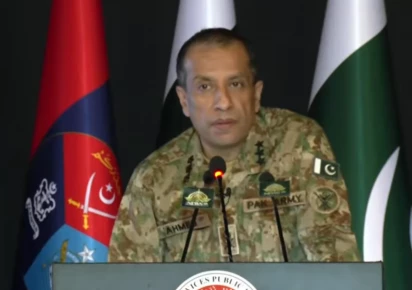
Pakistan’s military has categorically ruled out any future negotiations with terrorist groups, declaring that security forces will continue operations until militancy is eliminated. The announcement was made by Director General of Inter-Services Public Relations (ISPR), Lieutenant General Ahmed Sharif Chaudhry, during a detailed media briefing on the country’s security situation and ongoing counterterrorism campaign.

The military spokesperson said there was no possibility of holding talks with terrorists. He stressed that the state would not negotiate with those involved in violence against Pakistan. According to him, terrorists have only two choices: surrender before the law or face decisive action by the country’s security forces.

Lt Gen Chaudhry said the armed forces would continue to engage directly with the people of Balochistan instead of individuals or groups involved in violence. He emphasized that the people of the province are the true stakeholders and that the military remains committed to protecting their lives and supporting their development.

He also criticized certain influential elites and tribal leaders, claiming they had failed to promote the welfare of ordinary people. According to him, some powerful groups do not want children from poor families to progress through education and development.

The military spokesperson further alleged that the Taliban administration in Afghanistan was providing support to terrorist groups carrying out attacks inside Pakistan. He said cross-border militancy remains one of the country’s major security challenges and continues to complicate efforts to maintain peace.

Rejecting claims that the security situation in Balochistan is rapidly deteriorating, Lt Gen Chaudhry said a coordinated propaganda campaign was being carried out to create a false impression about conditions in the province. He maintained that while security challenges exist, the state is actively responding through intelligence-based operations and law enforcement measures.

Speaking about Balochistan, he said the province’s unique geography presents operational challenges. Its vast territory, scattered population, and long distances between security posts require extensive coordination and resources. He added that security forces are dealing not only with terrorism but also with organized criminal activities, including drug trafficking, fuel smuggling, robbery, and other illegal networks that threaten stability.

Addressing the issue of missing persons, the military spokesperson said the relevant commission had received hundreds of complaints. However, he noted that investigations had revealed that some individuals listed as missing were later found to have been killed during security operations, while others had joined militant organizations and were living in terrorist camps.

Lt Gen Chaudhry presented detailed statistics on the country’s counterterrorism campaign. He said security forces have carried out 40,348 intelligence-based operations across Pakistan during the current year. These operations resulted in the killing of 2,084 confirmed terrorists, averaging approximately 10 militants eliminated every day.

He added that security forces conduct nearly 194 operations daily as part of ongoing efforts to dismantle militant networks. Khyber Pakhtunkhwa remained the main focus of these operations, with 1,971 intelligence-based missions conducted in the province alone.

The military also shared figures regarding casualties suffered during the ongoing campaign. According to Lt Gen Chaudhry, 819 people embraced martyrdom during the year. These included 303 personnel of the Pakistan Army, 194 members of law enforcement agencies, and 322 civilians who lost their lives in terrorist attacks and security-related incidents.

The ISPR chief further revealed that 28 suicide attacks had been recorded across Pakistan during the current year. He claimed Afghan nationals were involved in the recent suicide attacks in Tank and Karachi, describing the incidents as evidence of continued cross-border terrorist involvement.

Highlighting the importance of national unity, Lt Gen Chaudhry said Pakistan’s Constitution and legal system apply equally to every citizen. He stressed that loyalty to the state is a fundamental responsibility and said national peace, political stability, and economic development depend on a strong and secure Pakistan.

Similar Posts

  • | |

    Fakhar Zaman urges patience over PSL performers

    Pakistan opener Fakhar Zaman has urged selectors and fans not to judge players solely on one or two impressive Pakistan Super League (PSL) performances, stressing that franchise cricket is very different from the demands of international cricket. Speaking during a media interaction in Lahore, the experienced batter said consistency should remain the key criterion for national team selection. The 35-year-old noted that several young cricketers earn Pakistan call-ups after performing in only a handful of PSL matches. While he welcomed healthy competition for places in the national side, he insisted that players must prove themselves over a longer period before being considered ready for international cricket. Fakhar said: “Many youngsters break into the national side after performing in just one or two Pakistan Super League matches. If a young player is good enough to take my place in the white-ball team, they are welcome to do so tomorrow. However, they must prove their quality, consistency, and form.” The left-handed opener explained that domestic and franchise cricket cannot be compared directly with the international game. According to him, many players realise the difference only after representing Pakistan, where the level of competition and pressure is much higher. He added: “When domestic performers step into international cricket, they realize the difference is significant. Development camps like these should be held regularly. A player should not be labeled extraordinary after just one or two good PSL matches because league cricket and international cricket are very different.” Fakhar also spoke about Pakistan’s batting order, revealing that discussions had taken place with the team management. However, he made it clear that certain decisions remain internal and cannot be discussed publicly. He said: “We have discussed the batting order with the management, but some matters cannot be shared publicly. I always think about what the team needs, and that remains my priority. Every player has personal preferences, but not everything can be discussed in the media. The important thing is that we are all on the same page.” The opener emphasised that team success always comes before individual preferences. While every batter has a preferred position in the lineup, he said professional players must be willing to adapt according to the team’s requirements. Looking ahead, Fakhar also expressed confidence about Pakistan’s future assignments in South Africa. He recalled enjoying success on South African pitches in the past and believes the conditions complement his style of batting. He concluded by saying: “I have many good memories of playing in South Africa. The bouncy pitches suit my technique, and I am preparing with the 2027 World Cup firmly in mind.” Fakhar’s remarks come as Pakistan continues to evaluate its white-ball squad ahead of major international tournaments. His comments highlight the importance of balancing opportunities for emerging players with the need for consistency and experience at the highest level. While welcoming competition, the veteran opener believes sustained performances—not just a brief run of form in the PSL—should determine who earns the honour of representing Pakistan on the international stage. 

  • Train Driver Tests Positive For Drugs In Deadly Bangkok Level Crossing Crash

    BANGKOK, Thailand — The driver of the freight train involved in Saturday’s fatal collision with a passenger bus in Bangkok has tested positive for drugs, while the railway crossing barrier operator has been formally charged with negligence causing death and injury, according to official statements from Bangkok Metropolitan Police. Bus And Train Drivers Charged Following […]

  • | | |

    PM orders digital overhaul of oil sector

    Prime Minister Shehbaz Sharif on Friday directed the Oil and Gas Regulatory Authority (Ogra) to implement a modern digital monitoring system across Pakistan’s oil and gas sector to improve transparency, eliminate hoarding and curb profiteering. The directive was issued during a high-level meeting chaired by the prime minister to review Ogra’s institutional reforms and measures aimed at strengthening the regulator’s performance. The prime minister said the government was committed to protecting public money and would not allow anyone to exploit consumers or manipulate the country’s energy system for personal gain. He instructed authorities to accelerate Ogra’s reform process and ensure that the government’s institutional reform agenda was implemented effectively across the organisation. Shehbaz Sharif also directed officials to develop a comprehensive digital tracking mechanism for fuel movement, using the Federal Board of Revenue’s modern tracking system as a model. He said the system should closely monitor the transportation of petroleum products from ports and refineries to fuel stations across the country. The prime minister stressed that digital oversight of the entire fuel supply chain would help improve transparency, reduce irregularities and strengthen regulatory enforcement. To improve Ogra’s institutional capacity, he called for the induction of qualified professionals from the private sector with strong reputations and relevant expertise. He also ordered the restructuring of the authority, saying appointments to all positions should be made through a transparent and merit-based process. Shehbaz Sharif assured officials that the federal government would provide all necessary professional and technical support to ensure the successful implementation of Ogra’s reform and restructuring programme. During the meeting, the Ogra chairman briefed participants on the regulator’s current performance, key challenges and the progress of its reform agenda. The meeting was attended by Deputy Prime Minister Ishaq Dar, Law Minister Azam Nazeer Tarar, Petroleum Minister Musadik Malik, Planning Minister Ahsan Iqbal’s representative Ahad Cheema, Information Minister Attaullah Tarar, IT Minister Shaza Fatima Khawaja, Minister Ali Pervaiz Malik, Special Assistant to the Prime Minister Tariq Bajwa and other senior government officials.

  • | | |

    Nawaz Sharif fires warning: Politics must not beco…

    Pakistan Muslim League-Nawaz (PML-N) President Nawaz Sharif has called for political tolerance, saying political rivalry is a normal part of democratic politics but differences should never turn into personal or political enmity. Addressing a PML-N meeting in Murree on Saturday, Nawaz Sharif said he was surprised by the Pakistan Peoples Party’s (PPP) objections regarding the Azad Jammu and Kashmir (AJK) elections. He noted that the PPP had previously been in power in AJK and said the political situation that emerged during the elections was a matter of concern for all political stakeholders. Nawaz said the situation had developed because previous governments had failed to properly fulfil their responsibilities. He stressed that political parties should respect democratic differences and avoid creating an atmosphere of hostility. The PML-N president said his party had always treated its political opponents with respect. He urged all political forces to demonstrate patience and tolerance and keep political disagreements within the limits of democratic debate. Nawaz Sharif said the PML-N had secured a simple majority after the first two phases of the AJK elections. The party has won 24 seats, while the PPP has secured 10 seats in the first two phases. The third phase of the election process is yet to be completed, with final results expected after the remaining polling process. Nawaz expressed confidence that the PML-N would form the government in AJK. He said the party would work to fulfil the commitments made to voters during the election campaign. He congratulated PML-N leaders and workers on their electoral performance and appreciated their efforts during the election campaign. Nawaz Sharif called for maximum financial resources to be provided to Azad Kashmir. He said improving the lives of the people and accelerating development should remain the government’s top priority. He claimed that the people of AJK were looking towards Punjab for development and better public services. Nawaz said development work had been initiated during Shehbaz Sharif’s tenure in Punjab and later expanded under Chief Minister Maryam Nawaz. He pledged that the PML-N would seek to replicate its development model in AJK. “The way we transformed Punjab, we will transform Azad Kashmir as well,” Nawaz said, while stressing that failing to deliver on promises made to voters could result in public disappointment. The PML-N president also praised Prime Minister Shehbaz Sharif and his team for their efforts to address Pakistan’s economic and administrative challenges. He said the government inherited an extremely difficult situation but was now working to improve the country’s overall position. According to Nawaz, economic conditions were gradually improving and efforts were underway to put Pakistan on a stronger and more sustainable footing. He said the government was also seeking to reduce Pakistan’s dependence on the International Monetary Fund (IMF) and move the country towards greater economic self-reliance.

  • |

    Expo Faisalabad 2026’ a springboard for MSMEs: SAPM Haroon Akhtar Khan

    LAHORE (July 25) – Special Assistant to the Prime Minister for Industries and Production Haroon Akhtar Khan has reaffirmed the government’s commitment to creating a robust and competitive ecosystem for Micro, Small and Medium Enterprises (MSMEs). Speaking at “Expo Faisalabad 2026”, being held from July 24 to 26 at the Expo Center, Lahore, he emphasized that the sector remains central to Prime Minister Muhammad Shehbaz Sharif’s vision for sustainable economic growth, industrial development and export promotion. He said Pakistan has militarily shown its prowess to the world and it’s time to show economic resilience and development. He appreciated the efforts of the Faisalabad Chamber of Commerce & Industry (FCCI) for organizing the exhibition. “Faisalabad is the industrial and textile heart of Pakistan and a major contributor to our exports and manufacturing sector. Platforms like Expo Faisalabad create valuable opportunities for entrepreneurs to showcase their products, build business partnerships and explore new markets,” he said. The SAPM said the government has placed special emphasis on improving access to finance, promoting business formalization, enhancing exports and creating an enabling environment where entrepreneurs can innovate, invest and expand their businesses. He appreciated SMEDA’s proactive engagement with the business community and its efforts to connect entrepreneurs with government support programmes through exhibitions and outreach activities across the country. Earlier, CEO SMEDA Nadia Jahangir Seth said the Authority remains committed to supporting entrepreneurs through strategic partnerships and market-driven interventions. “SMEDA believes that exhibitions such as Expo Faisalabad are powerful platforms for connecting entrepreneurs with opportunities, knowledge and government support services. Its participation reflects the commitment to promoting business formalization, improving competitiveness, facilitating market access and strengthening Pakistan’s MSME ecosystem through sustained engagement with the private sector,” she emphasized. SMEDA has established a dedicated helpdesk where entrepreneurs and visitors are being briefed on the flagship initiatives, government support programmes and business development services. The helpdesk is also facilitating free registration of informal enterprises through the SME Registration Portal (SMERP), enabling businesses to formalize their operations and benefit from enhanced opportunities for growth, financing and market access. As part of its capacity-building programme, SMEDA is conducting sessions on “Marketing Strategies for SMEs” and “Improving Product Quality for Export Markets”, equipping entrepreneurs with practical knowledge to improve competitiveness and strengthen their presence in domestic and international markets. Expo Faisalabad 2026 has brought together leading manufacturers, exporters, investors, entrepreneurs and business support organizations to showcase Faisalabad’s industrial excellence and create new avenues for trade, investment and business collaboration.

  • | | |

    PM Shehbaz says Makkah pact sends message of unity…

    ISLAMABAD: Prime Minister Shehbaz Sharif has described the recently signed Makkah Joint Defence Agreement between Pakistan, Saudi Arabia and Türkiye as a significant step towards greater regional unity and peace, saying the pact has brought the three countries closer. The prime minister made the remarks on Friday during a meeting with Saudi Arabia’s Minister of Environment, Water and Agriculture, Engineer Abdulrahman bin Abdulmohsen Al-Fadley, who called on him at the Prime Minister’s House in Islamabad. The Makkah agreement was signed on Aug 7 by Saudi Crown Prince and Prime Minister Mohammed bin Salman, Turkish President Recep Tayyip Erdogan and Prime Minister Shehbaz Sharif in Makkah. The agreement provides a framework for stronger collective defence cooperation and states that an armed attack against any one of the three countries will be regarded as an attack against all. Sharif said the agreement had further strengthened the strategic relationship among Pakistan, Saudi Arabia and Türkiye while conveying a message of unity and peace across the region. The prime minister also stressed that Pakistan and Saudi Arabia should now build on their strategic partnership by expanding economic and agricultural cooperation. He said stronger trade and investment ties could help transform the longstanding relationship between the two countries into a broader and more mutually beneficial economic partnership. Focus on agriculture and food security Agriculture emerged as a key area of discussion during the meeting, with both sides reviewing ways to increase cooperation in agricultural productivity, technology, research and development, and efficient water management. Sharif expressed satisfaction with the ongoing cooperation over Pakistani agricultural exports to Saudi Arabia. He said Islamabad was keen to expand the range and volume of agricultural products supplied to the Kingdom. Pakistan has increasingly sought to strengthen its economic relationship with Saudi Arabia beyond traditional financial and energy cooperation, with agriculture and food security offering significant opportunities for both sides. The prime minister announced that a delegation of Pakistani agricultural experts would soon travel to Riyadh to continue discussions and explore practical areas of cooperation. The delegation is expected to focus on improving agricultural productivity through modern technology, research and more efficient use of water resources. The Saudi minister, meanwhile, reaffirmed Riyadh’s commitment to expanding cooperation with Pakistan in agriculture, water management and food security, according to the Prime Minister’s Office. A broader strategic partnership The meeting reflects Islamabad’s effort to translate its close political and strategic ties with Riyadh into greater commercial and economic engagement. Saudi Arabia has historically remained one of Pakistan’s most important partners, providing financial support and assistance during periods of economic pressure. In recent years, however, both countries have increasingly emphasised investment, trade and private-sector partnerships. The latest discussions also come shortly after the signing of the Makkah Joint Defence Agreement, which marked a new phase in security cooperation among Pakistan, Saudi Arabia and Türkiye. Pakistan’s Foreign Office has described the agreement as defensive in nature, saying it is intended to strengthen collective deterrence and promote regional peace and stability rather than target any particular country. For Islamabad, the challenge now will be to convert the political momentum generated by the Makkah pact into tangible economic gains. The planned visit by Pakistani agricultural experts to Riyadh could provide an early test of that approach, particularly as both countries seek greater cooperation in food security, water management, agricultural technology and exports. The meeting therefore carried significance beyond diplomatic messaging, highlighting Pakistan and Saudi Arabia’s shared interest in developing a relationship that combines strategic cooperation with stronger economic ties. As regional security concerns continue to shape diplomacy in the Middle East and beyond, Islamabad appears keen to present the Makkah pact not simply as a defence arrangement, but as part of a wider push for stability, cooperation and closer partnerships among the three countries.

Leave a Reply

Your email address will not be published. Required fields are marked *