houthis claim attack
| |

Houthis claim attack on Saudi Tanker as US Naval b…

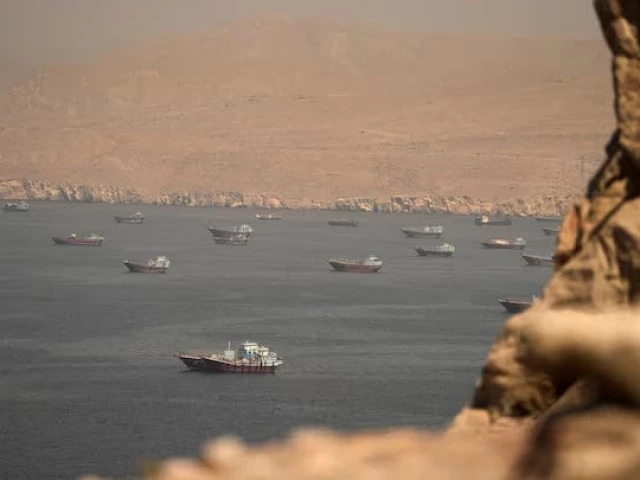
Yemen’s Houthi rebels have claimed responsibility for targeting a Saudi oil tanker in the Red Sea with ballistic missiles, alleging the vessel violated a blockade on Saudi ports announced by the group last week .

The Houthi military spokesman identified the ship as the NCC Ghazal, stating it had been “forced to turn back” after ignoring warnings. This attack is the latest in a series of maritime operations by the Iran-aligned group, which previously claimed to have targeted two Saudi tankers, the Encelia and Layla, and to have forced around ten ships to retreat .

In a related development, the US Central Command (CENTCOM) announced on Tuesday that it has redirected 18 commercial vessels, disabled two, and boarded two others as part of its ongoing naval blockade against Iran . The intensified maritime operations come amid a complex regional conflict involving US-Iran hostilities, with CENTCOM stating there are more than 20 ships currently supporting military operations in the Middle East .

The Houthi actions and the US naval blockade add new layers of tension to the region’s shipping lanes, critical for global energy supplies, and coincide with broader diplomatic efforts to de-escalate the wider conflict.
Similar Posts

  • Cold Snap Descends on Thailand, Temperatures to Drop 1–4°C Nationwide

    BANGKOK – A strong high-pressure system sweeping down from China is set to bring a noticeable chill across Thailand starting tomorrow, with temperatures expected to fall by 1 to 4 degrees Celsius, the Meteorological Department announced today. Thailand Braces for Nationwide Temperature Drop as Cool Season Intensifies The cooling air mass will first blanket the […]

  • | |

    Pakistan’s new diplomatic momentum: Ishaq Dar’…

    Pakistan’s diplomatic profile has undergone a significant transformation over the past year. Once viewed primarily through the prism of regional security, the country is now increasingly being recognised as a constructive diplomatic actor capable of facilitating dialogue and contributing to regional stability. Against this backdrop, Deputy Prime Minister and Foreign Minister Senator Muhammad Ishaq Dar’s official visit to the United Kingdom, beginning on Monday, carries considerable strategic and political importance. The visit comes at a time when Pakistan’s international standing has strengthened through an active and confident foreign policy. Islamabad’s recent role in facilitating dialogue and reducing tensions in the Middle East has earned international recognition, while its efforts to promote regional peace have been acknowledged by major global powers. Pakistan’s leadership in supporting diplomacy between the United States and Iran, together with its broader commitment to regional stability, has enhanced its credibility as a reliable international partner. This growing diplomatic influence has also been reflected in the historic Makkah Joint Defence Agreement between Pakistan, Saudi Arabia and Türkiye. The agreement has reinforced Pakistan’s position as an important contributor to collective security, strategic cooperation and peace in the wider Middle East, demonstrating its ability to work closely with key regional partners on issues of shared security. Senator Ishaq Dar’s visit to the United Kingdom is aimed at building upon this diplomatic momentum by further strengthening Pakistan’s relationship with one of its most important international partners. It will be Pakistan’s first high-level engagement with the United Kingdom since Prime Minister Andy Burnham assumed office on 20 July 2026, making the visit particularly significant in establishing an early and comprehensive dialogue with the new British leadership. A central feature of the visit will be Mr Dar’s meeting with United Kingdom Foreign Secretary Ed Miliband. The discussions are expected to cover the full spectrum of Pakistan–United Kingdom relations, including political cooperation, trade and investment, institutional collaboration, education, cultural exchanges and people-to-people links. Particular emphasis is likely to be placed on the invaluable contribution of the British Pakistani community, which continues to serve as a bridge between the two countries. Regional and international developments, particularly the evolving situation in the Middle East, are also expected to feature prominently on the agenda. The Deputy Prime Minister is also scheduled to meet the United Kingdom’s National Security Adviser, Jonathan Powell. These talks are expected to focus on regional and global security challenges, with discussions covering counter-terrorism cooperation, intelligence sharing and broader strategic coordination. Such engagement reflects the growing importance both countries attach to security cooperation in an increasingly complex international environment. Another significant engagement will be Mr Dar’s meeting with International Maritime Organization (IMO) Secretary-General Arsenio Dominguez. The meeting will reaffirm Pakistan’s longstanding cooperation with the IMO and underline Islamabad’s commitment to promoting safe, secure and efficient international shipping. As a maritime nation with expanding regional connectivity ambitions, Pakistan’s engagement with the IMO remains an important component of its international diplomacy. Beyond the scheduled meetings, the visit represents a broader strategic opportunity. It offers both Islamabad and London the chance to redefine and modernise a long-standing partnership that extends beyond traditional diplomacy to encompass trade, investment, technology, education, climate cooperation and regional security. With changing geopolitical dynamics and emerging economic opportunities, both countries have strong incentives to deepen cooperation across multiple sectors. For Pakistan, the visit is also a demonstration of a more proactive and confident foreign policy that seeks engagement rather than isolation. It reflects Islamabad’s determination to cultivate stronger ties with major global powers while simultaneously playing a constructive role in addressing regional and international challenges. If successful, Senator Ishaq Dar’s visit is expected not only to strengthen Pakistan–United Kingdom relations under the new United Kingdom leadership but also to pave the way for further high-level exchanges in the months ahead. More importantly, it will reinforce Pakistan’s growing image as a responsible diplomatic partner whose influence extends beyond South Asia and whose voice is increasingly valued in discussions on international peace, security and strategic cooperation.

  • Pakistan’s imports from Iran hit record $1.395 b…

    ISLAMABAD: Pakistan’s imports from Iran surged to a record level during the fiscal year 2025-26, highlighting the growing importance of bilateral trade despite heightened geopolitical tensions in the region. According to sources, Pakistan imported goods worth around $1.395 billion from Iran during FY2025-26, marking a significant increase compared with the previous fiscal year. The data shows that imports from Iran grew by approximately 12% year-on-year during the latest fiscal year. The increase reflects a continuing upward trend in Pakistan’s purchases from its western neighbour, with the import bill rising steadily over the past several years. The growth became particularly pronounced in June 2026. Pakistan’s imports from Iran reached approximately $119 million during the month, representing a 47% increase compared with June 2025, according to the sources. On a month-on-month basis, imports also showed notable growth. Pakistan imported around $100 million worth of goods from Iran in March 2026, while the June figure stood significantly higher. Imports show long-term upward trend The latest figures indicate that Pakistan’s reliance on Iranian imports has expanded considerably over the years. In FY2024-25, Pakistan’s imports from Iran stood at approximately $1.241 billion, compared with $1.395 billion in FY2025-26. The import value was even higher in FY2023-24, when Pakistan purchased goods worth around $1.37 billion from Iran. Despite fluctuations from year to year, the overall trend has remained substantially higher than the levels recorded several years ago. In FY2022-23, imports from Iran amounted to approximately $880 million, while the figure stood at around $773.8 million in FY2021-22. Pakistan’s imports from Iran were recorded at approximately $518.6 million in FY2020-21, showing how sharply bilateral import activity has expanded compared with earlier years. The import bill stood at around $440 million in FY2019-20, meaning the latest figure of $1.395 billion represents more than three times the level recorded six years earlier. Growing trade despite regional tensions The continued rise in imports underscores the importance of cross-border economic activity between Pakistan and Iran. The two neighbouring countries share a long border and have historically maintained trade links involving energy, food products and other commodities. The latest increase also comes amid a challenging regional environment, with geopolitical tensions affecting trade routes, commodity markets and economic activity across the region. For Pakistan, trade with neighbouring countries remains strategically important as the country seeks to manage its import requirements, diversify supply sources and strengthen economic links within the region.

  • Contemporary Thai Fashion Takes the Spotlight at Wat Arun

    Contemporary Thai Fashion Takes the Spotlight: Red-Carpet Moments from the Amazing Thailand Ambassador Launch. Leading stars expressing the richness of Thai identity through designs by renowned Thai brands. Grand Opening of Amazing Thailand Ambassador is Stunning with Spectacular Drone and Fireworks Show over Wat Arun Bangkok, 4 February 2026 – The unveiling of “Lalisa LISA […]

  • |

    Healthy diet out of reach for one in three people globally, UN report reveals

    One in three people worldwide, approximately 2.69 billion individuals, cannot afford a healthy, nutrient-rich diet, according to a joint report by five United Nations agencies. The State of Food Security and Nutrition in the World 2026 calculates the global average cost of a healthy diet at 4.28 purchasing power parity (PPP) dollars per day. This figure significantly exceeds the international extreme poverty line of $3 PPP per person, placing diverse, nutrient-dense foods such as fruits, vegetables, dairy, and lean meats out of economic reach for billions. Public health experts note that historic agricultural subsidies have heavily favoured starchy staples over nutrient-dense options, driving a global surge in adult obesity rates from 12.1 per cent in 2012 to 16.2 per cent in 2024. While global hunger declined for a third consecutive year in 2025, affecting 7.8 per cent of the world’s population compared to 8.1 per cent in 2024, regional disparities remain severe. Africa has become home to the highest absolute number of hungry people for the first time, with roughly 309 million affected. Across the continent, 66.6 per cent of the population was unable to afford a healthy diet in 2025, more than double the rates observed in Asia or Latin America. UN officials warn that ongoing disruptions to maritime trade, alongside potential climate shocks, threaten to reverse recent progress and jeopardise international targets to eliminate global hunger by 2030.

  • |

    Nepal flood disaster deepens as new threat emerges

    KATHMANDU: Rescue teams in Nepal are digging through thick layers of mud and debris in search of survivors two days after a devastating flash flood swept through Himalayan communities, killing at least 469 people and leaving nearly 1,000 others missing in Nepal and neighbouring Tibet. The scale of the destruction has left entire villages cut off, roads and bridges destroyed and families desperately waiting for news of loved ones. With the possibility of another major flood looming, authorities are also racing to prevent a second disaster. The catastrophe began on Wednesday morning after a glacier collapse sent a massive torrent of water, rocks, ice and mud rushing through mountain river systems. The sudden surge tore through settlements along a major route connecting Nepal’s capital Kathmandu with Lhasa in Tibet. The affected region is also popular with trekkers and pilgrims, adding to concerns over the fate of foreign nationals caught in the disaster. Authorities said almost 1,000 people remained missing on both sides of the border. At least 540 of those reported missing are foreigners, according to officials. Rescue teams battle destroyed roads Nepalese rescue workers have been using heavy machinery, helicopters and sniffer dogs to search damaged areas. Helicopters have also been delivering emergency supplies to people stranded in remote towns and valleys where roads have disappeared beneath mud and debris. Rescue operations have been particularly difficult in the mountainous terrain, where landslides and damaged infrastructure have restricted access. In one of the most heartbreaking accounts from the disaster, Dibga Tamang was among the final people rescued from the badly affected town of Rasuwa on Thursday. He was airlifted with three others to an army camp in Nuwakot. Tamang described the devastation in deeply personal terms, saying that his community had been destroyed and that he had lost everyone who mattered to him. His account reflected the grief of hundreds of families still waiting for information about relatives who disappeared when the floodwaters swept through their communities. New flood threat raises alarm Even as rescuers continue searching for survivors, authorities are facing a dangerous new threat. Nepal’s disaster management authorities warned that a debris blockage had created a lake on the Bhotekoshi River. The water level is continuing to rise, raising fears that the natural barrier could collapse and unleash another destructive flood downstream. Across the border, Chinese authorities are also monitoring a rapidly filling barrier lake in Tibet. Chinese officials said around three million cubic metres of water could flow into the already dammed lake over the next three days. That volume is roughly equivalent to 1,200 Olympic-sized swimming pools. The situation could become particularly dangerous around September 1, when officials expect the water flow to reach its peak. Chinese state media reported that authorities had deployed an eight-member engineering team to carry out aerial surveys and three-dimensional modelling of the barrier lake. Engineers are studying whether a drainage channel can be constructed through the natural dam to lower the lake’s water level. However, the operation is complicated by steep cliffs and unstable terrain created by the glacier collapse. Engineer Chen Hanxiao told Chinese state broadcaster CCTV that experts needed precise calculations of the lake’s filling rate and the speed at which water could pass through a proposed drainage channel. Teams are also expected to monitor the lake floor, collect additional data and keep a close watch on weather conditions in the coming days. Gyirong border crossing badly damaged On the Chinese side, the Gyirong border crossing has emerged as one of the worst-hit locations. Chinese rescue teams had yet to reach the most severely affected area by Thursday evening, with crews concentrating on clearing debris from the road leading to Gyirong Port. Dramatic footage from the disaster showed huge torrents of muddy water and debris racing through the border crossing within seconds. Structures were engulfed while people scrambled to escape. Authorities said 558 people were missing in Gyirong County, including 260 foreign nationals. Three deaths had been confirmed on the Chinese side at the time of the report. The seriousness of the disaster was underscored by the visit of Chinese Premier Li Qiang to Gyirong on Thursday. His presence signalled the high priority Beijing has placed on the rescue and relief operation. Families wait desperately for news Far from the disaster zone, relatives of missing people have been searching for answers. Sneha Sudhir, from Chantilly, Virginia, is among those desperately waiting for news. Her husband was part of a group of 10 men from northern Virginia who travelled from Nepal towards Tibet’s Mount Kailash when the disaster struck. Several Americans are believed to be among those still missing. Sudhir said families were supporting one another while contacting officials, politicians, friends and relatives in the United States and India in an effort to locate their loved ones. Her account captured the painful uncertainty facing families who do not know whether their relatives survived. US President Donald Trump said the United States had offered assistance to Nepal following the disaster. “Nobody’s ever seen anything quite like that,” Trump said, describing the destruction and promising American support. Bodies recovered hundreds of kilometres away The force of the flood was so immense that bodies were carried far from the areas initially hit by the torrent. Ganesh Aryal, administrator of Nepal’s Chitwan district, said authorities had recovered 103 bodies from the river system in his district. Chitwan lies around 100 kilometres from the worst-hit areas around Trishuli, highlighting the extraordinary reach of the floodwaters. Local hospitals have struggled to accommodate the large number of bodies recovered. Authorities have therefore been preparing tents and other facilities where families can identify and claim the remains of their relatives. Government faces major test Nepal’s Prime Minister Balendra Shah visited flood-hit Nuwakot on Thursday and acknowledged the severity of the situation. He said government agencies were operating at full capacity, with the immediate priorities being the rescue of missing people, treatment of the injured and delivery of emergency assistance to affected families. The disaster presents a

Leave a Reply

Your email address will not be published. Required fields are marked *