increasing pakistans water

Increasing Pakistan’s Water Resilience

Stockholm Resilience Centre defines resilience as the capacity of a system to deal with change and continue to develop. System can be an individual, a forest, a city or an economy. In simple words, resilience refers to the ability of an ecosystem to deal with disturbances and returns to its former state. When it comes to water resource management in Pakistan, unfortunately, we are not managing our water resource as sustainably as we should. WWF Pakistan points out a robust difference in water consumption between communities in Pakistan. Those who can afford uses 10 times more water than global average that stands at 10 gallons a day. On the contrary, poor lacks access to water in Pakistan. How sad it is that there exist two different water realities in Pakistan. On one hand, we have people that uses 100 gallons of water each day. On the other hand, we have masses that don’t even have access to water. We must put an end to existing water inequality in Pakistan.

Water forms the backbone of our society and economy and without sustainable water management practices in place, we can neither have socially equitable society nor can we achieve sustainable economic growth for Pakistan. We must ensure that each person in Pakistan should have access to clean water regardless of geographical location and financial resources at disposal. If we really want to achieve Sustainable Development Goals (SDGs) for Pakistan, we must end water inequality in Pakistan. An access to clean water is a basic human right and thus it should be available to all in the country. It is important to mention here that each of the 17 Sustainable Development Goals (SDGs) is strongly coupled with how we manage water as a natural resource. If we mange water wisely (with tomorrow in mind), we can easily achieve all 17 SDGs for Pakistan. However, an unsustainable water resource management will act as Achilles heel and prevent us in realizing Sustainable Development Goals. We certainly need a paradigm shift in managing water as a resource in Pakistan.

Ministry of Planning, Development and Special Initiatives (Government of Pakistan) highlights that at the time of independence, per capita water availability in Pakistan was over 5000 cubic meters each year. Unfortunately, today, per capita water availability in Pakistan is sharply reduced to roughly 1000 cubic meters per person each year. In other words, each person in Pakistan now only has 1/5 of the water available every year, when compared to 1947 (at the time of independence). Public policy makers in Pakistan must tackle decreasing per capita water availability in Pakistan with utmost seriousness and do all it takes to tackle it in the most sustainable manner. Before we head on to solutions, we must understand the root causes of decreasing per capita water availability in Pakistan. According to Australian Centre for International Agricultural Research (ACIAR), population in Pakistan has increased 7-fold since independence in 1947. Naturally, when we distribute the same amount of water we have each year on 7 times more population, the per capita water availability in Pakistan would then sharply reduce. ACIAR then stresses on the fact that irrigated agriculture in Pakistan consumes 95% of surface water supply in the country. Another report from Pakistan Council of Research in Water Resources (PCRWR) highlights that irrigated agriculture consumes 93% of the available water resource and acts as the single largest sector of economy employing 44% of the labour force, generating 60% of the foreign exchange earnings and produces roughly a quarter of Pakistan’s gross domestic product (GDP). The already spoken report from PCRWR then points out that Pakistan waste 60% of water from canals to farm gates. Do you know that per capita water storage ability of Pakistan is roughly 159 m3? On the contrary, the per-capita water storage ability of USA and Australia is over 5000m3, followed by China with a per-capita water storage ability of 2200m3, Egypt 2362 m3, Turkey 1402 m3 and Iran with 492m3.

PCRWR further indicates that inadequate water storage ability has forced Pakistan to lose 120 BCM of water during floods of 2010, 2012 and 2014. If Pakistan had ample surface water storage infrastructure in place, it could had saved at least half of 120 BCM of surface water that could then be used to increase per-capita water availability in the country. The remaining 60 BCM of floodwater could restore Indus River Delta where many species are fighting for their survival due to reduced river flow. There is a dire need for Pakistan to build small, medium and large dams to store surface water. Doing so, will increase surface water availability on year-round basis, decrease flood related damage to agricultural lands and infrastructure, increase per-capita water availability, reduce reliance on underground water, recharge aquifers and mitigate their depletion. We have what it takes to build a series of small, medium and large dams in Pakistan to harvest floodwater during monsoon season.

Do you know that 1 billion cubic meters of water has 1 trillion litres of water? Now imagine, if 50 litres of water cost 1 USD, the price tag of 1 billion cubic meters (or 1 trillion litres) of water would be 20 billion USD. Thus, a cumulative cost for 60 BCM of floodwater would roughly be USD 1200 billion. Now, if we would sharply reduce the already spoken figure to its one-tenth, the cost would still be a whooping USD 120 billion for 60 BCM of floodwater. We must understand that this is just the price of water. It is crucial to mention here that water forms the basis of all sorts of social and economic development, and we must learn to manage water sustainably to ensure a resilient Pakistan for all. We must invest heavily in constructing dams of all sizes to increase surface water availability and to enhance per-capita water in Pakistan. Here is an example. Do you know that Sweden has roughly 10,000 dams to manage surface water. It is quite simple, the more dams we have, more surface water we can store and as a result, can reduce the sheer intensity of monsoon floods. Simultaneously, we must also ensure to keep Indus River Delta in a healthy state, so that species would not have to fight for their survival due to reduced river flow.

Apart from dams’ construction, we must also invest heavily in recycling wastewater and to reuse the recycled wastewater in different industrial processes. Do you know that Singapore turns its sewage into safe and clean drinking water through advanced filtration and treatment methods. Singapore’s Changi Water Reclamation Plant can treat roughly 900 million litres of wastewater each day. So can be the case for all big cities and industries in Pakistan. We can collaborate with Singapore and can learn from it as to how to turn wastewater into clean and safe drinking water. Doing so, will help Pakistan to learn from Singapore’s experience, foster economic growth, make our societies more resilient and would prove to be a crucial step in mitigating water shortage in Pakistan. We can create artificial lakes outside each big city in Pakistan where we can store the recycled water to reuse it in future. To prevent water loss due to evaporation, we can install floating solar PV farms in these artificial lakes and thus can even produce clean electricity while avoiding water loss. Do you know that Portugal has installed a floating solar PV farm that is equivalent to 5 football fields in size on a reservoir in southern part of the country? If Portugal can, so can Pakistan as well.

Another important step to increase water resilience is to keep a keen eye on repairs in water infrastructure in our homes in Pakistan. Now imagine, if we have a leaking tap that drips a drop of water, every other second and altogether leaks a litre of water each day into drain. Without repair we will lose 365 litres of water in a years’ time. Now assume, if we have 20 million such taps in Pakistan that remained unrepaired and loses a drop of water every other second. In a years’ time, 20 million leaking taps will lose roughly 7.3 billion litres of water to drainage. Can we afford this wastage of water? I doubt. On surface, it seems quite harmless losing a drop of water every other second from tap but being able to see the larger picture helps us in understanding the real consequences. Quite often, minor repairs can make a major difference.

When it comes to managing water, we must learn to do more with less. As already discussed, irrigated agriculture consumes 93% of the available water resource and produces roughly a quarter of Pakistan’s gross domestic product (GDP). It is certainly here that we need a paradigm shift in managing water as a resource in Pakistan. We must learn to see the value of each drop of water and the enhanced productivity that we can achieve against each drop in agriculture sector. Here is an example. How about if we would generate the same output in agriculture (that we normally do) but with 50% less water? Doing so, will help us spare 43% of surface water that can then be used for domestic and industrial purposes. How about if we would use only drip irrigation technique in agriculture sector in Pakistan. Using drip irrigation method will help us to produce more crop per drop and certainly will prepare our agriculture sector for a future with below average rainfall due to the impacts of climate change. Pakistan Economic Survey 2025-26 points out 2025 was the second warmest year in 65 years where average temperature was 23.9 °C and we had 3% below average rainfall. It also sheds light on the fact that Pakistan has experienced an increase of 0.5 °C in annual mean temperature during last 50 years and is further expected to experience an increase of 3 °C to 5 °C in annual mean temperature by the end of 21st century. We must do all it takes to mitigate climate change and to increase Pakistan’s water resilience.

To conclude, the responsibility to increase per-capita water availability in Pakistan lies on all. We must all act together to conserve water in Pakistan for us and our coming generations. With right public policy actions, implemented in the right direction, we can certainly increase Pakistan’s water resilience. Without water, there is neither social stability nor economic growth of any kind. We must strive to increase per-capita water availability to roughly 3000 cubic meters per person each year by 2050. This means 3 times more water per person with an ever increasing population in Pakistan. We must build dams to store more of the surface water, recycle every single drop of wastewater and fix leakages in the water infrastructure in our homes and in agriculture sector. Simultaneously, we must prepare our agriculture sector for a transition to drip irrigation technique. Without adopting drip irrigation method across the length and breadth of Pakistan, unfortunately, we cannot make any significant improvement in per-capita water availability in the country. Be it our agriculture, industry or houses, we must learn to see the worth of each drop of water and must increase productivity achieved against each drop of water. United Nations Population Fund (UNFPA) has named Pakistan as the fifth most populous country in the world with a population of over 255 million. It further predicts that our population will be 403 million by 2050. We must control the unsustainable growth in our population at some point as we cannot expect us to grow infinitely. International Organization for Migration (IOM) has named Pakistan as 15th most water-stressed country in the world and predicted it to be water scarce by 2035. We cannot afford to maintain the status-quo when it comes to managing water in Pakistan. We must treat water as it is more precious than diamonds and gold (which it is in-fact). Time is slipping through our hands, and we need to act now. Choice is ours and will always be.

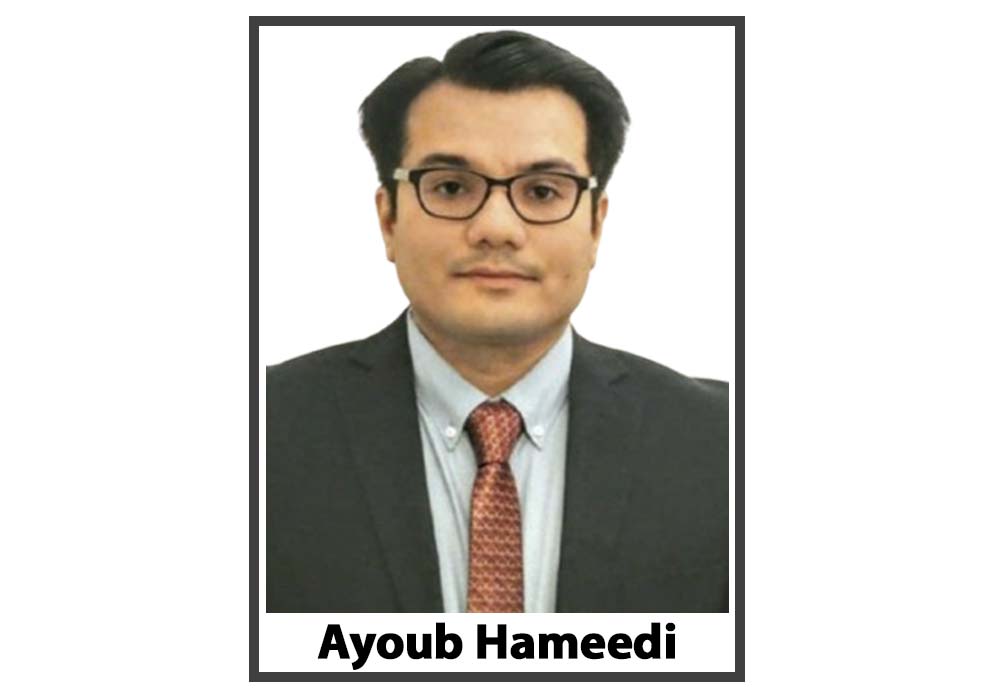
The writer is a Stockholm-based policy analyst and the Founder / Operations Manager of Project Green Earth (www.projectge.org). He can be reached at aubhameedi@yahoo.com

Similar Posts

  • Why rigging and violence in Pakistani Kashmir?

    Elections are currently being held in Pakistani-administered Kashmir (POK), and their results have already become controversial at the very first stage. Gilgit-Baltistan, which is essentially also part of Kashmir, held elections recently. Bilawal Bhutto Zardari’s Pakistan Peoples Party (PPP) won there, while the Istehkam-e-Pakistan Party also received some seats, and the Pakistan Muslim League-Nawaz (PML-N) won fewer seats. Despite this, the PML-N accepted the results and fully cooperated in the formation of the government. In the first phase of elections in Mirpur, however, the PML-N won nine seats, while Bilawal’s PPP secured four. Despite winning four seats, the PPP immediately began raising allegations of rigging. Even more painful is the fact that these elections have been marked by bloodshed. During clashes surrounding the long march of the banned Awami Action Party, one Rangers personnel was killed and five police officers were confirmed injured. The Awami Action Committee, meanwhile, claims that its protesters came under firing, resulting in the deaths of 14 of its workers. The number of people killed or injured from the Awami Action Committee has not been officially confirmed. However, if government personnel have been killed and injured, it is reasonable to assume that protesters also suffered casualties. The question now is what should be made of the rigging allegations being levelled by the PPP and Bilawal Bhutto Zardari. If one side refuses to accept the election results and uses such harsh language against the other side, could the situation not deteriorate further? From a strategic perspective, it would have been better to hold the entire election on a single day. The total number of voters is not so large that the process needed to be stretched out in this manner. The second phase is scheduled for August 2, followed by the third phase on August 10, as if this were a battlefield. Bilawal should also think beyond repeatedly raising the issue of rigging. At present, his own party is in power in Kashmir. The deputy commissioners, assistant commissioners and other officials were appointed by the ruling party. So who has greater opportunities to influence elections—the ruling party or the opposition? Nawaz Sharif and Maryam Nawaz conducted an effective election campaign during the final days. However, the writer believes it was not befitting of a three-time elected Pakistani prime minister to say words to the effect of: “I will ask my brother Shehbaz Sharif to make me the prime minister of Kashmir, and I will solve all its problems.” Instead, he should have said that whichever member from their party is elected to the assembly, he and his party would fully cooperate with that representative in resolving the problems of the people of Kashmir. Maryam Nawaz also sent air-conditioned buses for the people of Kashmir, but they were stopped on the instructions of the Election Commission. Nevertheless, the message reached the people of Kashmir that the PML-N was in a position to do something to address their deprivation. This thinking could help the PML-N achieve further success in the next two phases as well. But the real decisions, after all, remain in the hands of those who possess the power and influence. In our country, writing and speaking the truth has become extremely difficult. There is immense pressure not only from powerful circles but also from violent and extremist mindsets. Their proxies can be found roaming freely in the streets. In normal states, something that would be considered ordinary or insignificant was used as a pretext to shut down the country’s largest media organisation, Geo, for two weeks. This alone gives an idea of the pressure facing the Jang newspaper and the national media. For this reason, the writer says he tries to avoid writing about national and domestic affairs and mostly focuses on international issues. Even there, however, he has to be careful not to write anything critical of China, Iran or certain other countries. Likewise, he says he cannot write anything supportive of India, Israel or certain other countries that might highlight a positive aspect or truth about them. This, he says, is the pressure he faces every moment. When it comes to Indian-administered Kashmir, we can freely write and speak about alleged government abuses without facing difficulty or objection. We can exaggerate as much as we want and add as much colour as we like. The violent militants there are portrayed as victims under all circumstances. But when it comes to our own Kashmir, we are expected to portray the movement for public rights as anti-state, Indian-sponsored and terrorist, regardless of how strongly its members insist that they are simply demanding rights for ordinary people. The organisation is not even named after any military or jihadist group. It is called the Jammu and Kashmir Joint Action Committee. It consists of local Kashmiri traders, transporters, workers, students and lawyers. These are ordinary citizens of the region. They demand rights for ordinary Kashmiris. They speak against rising inflation and call for reductions in the prices of wheat and flour. They oppose excessive privileges for the elite, misuse of public resources and corruption. They also demand an end to what they consider unjust taxes. Despite this, the organisation has not only been banned, but its workers have allegedly been arrested and subjected to violence in ways that are deeply disturbing. While witnessing all this, writers like us sometimes adopt deliberate ignorance and tell the members of the Awami Action Committee: “You make allegations against our sacred institutions. How could they possibly commit excesses against you?” We are told that these institutions are the reason this small part of Kashmir remains with us. We are also told that they have kept the Kashmir issue alive so that the entire region can eventually be recovered. Therefore, according to this argument, their praise and appreciation are justified. If, according to protesters, 30 or 35 people have so far been killed and around 300 injured during demonstrations, then we are also told to consider how many of our security personnel have

  • The Reality of the Struggle, Two States, One Playb…

    In both Pakistan and India, what citizens are resisting is no longer standard party politics, it is the structural weaponization of the state. In India, political movements that emerged from populist or anti-corruption roots, like the Cockroach Party,  Aam Aadmi Party, along with regional dissenters, activists, and journalists, have faced arbitrary arrests, custodial pressures, and continuous raids by central agencies. In Pakistan, the state’s military-civilian establishment has used mass roundups, military trials for civilians, social media blackouts, and political bans to strip away electoral mandates and crush dissent. The torture, surveillance, and intimidation targeted at ordinary organizers and political workers across both borders mirror each other. The state’s goal in both contexts is identical, to make the cost of resistance so high that the public submits out of sheer exhaustion. Is It Time to Change? The short answer is, It is long overdue, but swapping rulers will change nothing. For decades, the public in both nations has been trapped in a cyclical trap. In Pakistan, people rally behind one party to remove the military-backed regime, only for the new government to use the exact same military apparatus to crush the next opposition. In India, hyper nationalism and state control have been normalized to the point where institutional checks, courts, enforcement agencies, and investigative bodies have lost their neutrality. If “change” simply means voting in a different political party while leaving the underlying security state and unchecked executive powers intact, the fascism simply changes its coat. True change requires dismantling the tools of authoritarianism, not just replacing the hands holding them. To actually break this cycle of state suppression in South Asia, three fundamental shifts must take place from the ground . As long as investigative agencies, financial crime bureaus, and intelligence services answer directly to political  bosses, they will be used as weapons of torture and political elimination. The primary demand of any genuine popular movement must be strict, legally enforced operational independence for courts, election commissions, and law enforcement.Parties, whether AAP, Cockroach Party, PTI, Congress, or regional blocs, are vehicles, not saviors. Authoritarian regimes thrive on divide-and-rule tactics, convincing one group to applaud when their political rival is jailed. The public must build non-partisan civil fronts where an attack on any citizen’s fundamental right, journalist’s freedom, or political worker’s safety is met with collective public outrage, regardless of party allegiance.Fascist narratives in South Asia rely heavily on manufactured enemies, hyper nationalist rhetoric, and national security panics to justify state overreach. Resistance movements break this spell when they relentlessly ground the conversation in tangible economic survival,inflation, labor rights, land grabs, and local self-governance. When the public realizes that state coercion is being used to mask economic failure, the moral authority of the regime collapses. The resilience of the people in both countries is undeniable, they continue to take to the streets despite jail, violence, and state power. But for that resilience to yield real liberation, the focus must shift from merely fighting for individual leaders to systematically dismantling the legal and institutional machinery that makes fascism possible in the first place.

  • Petroleum Minister’s diagnosis & indictment

    Federal Minister for Petroleum Ali Pervaiz Malik has made an unusually candid assessment of Pakistan’s energy sector. Speaking at the Energy Conference 2026, he conceded that inconsistent policies discourage exploration, petroleum has been subjected to “exorbitant taxation”, domestic refineries remain in a dilapidated condition, gas-sector liquidity is impaired, circular debt remains a central concern, and structural reform requires competition, unbundling and private participation. These admissions deserve attention because they come from inside the government. They also raise an unavoidable question: if the government understands the structural weaknesses so clearly, why does its own fiscal and administrative policy continue to aggravate them? The minister’s strongest observation was that the Petroleum Division cannot remain the instrument upon which excessive taxation and financial interventions are loaded merely to meet budgetary requirements. The diagnosis is correct; the choice of victim is not. A government division does not bear taxation. Consumers, farmers, transporters, manufacturers and exporters do. Pakistan collected a record Rs. 1.567 trillion through petroleum levy during the fiscal year (FY) 2025-26, exceeding the budgeted target by about Rs. 99 billion. Petroleum products are nominally exempt from general sales tax, but motorists should not confuse exemption with relief. The levy, customs duty and the new climate support levy together impose an enormous burden at the pump.  An analysis of notified prices and consumption estimated that these petroleum charges generated around Rs. 166 billion in July 2026 alone—equivalent to roughly one-fifth of that month’s collection of Federal Board of Revenue (FBR). On petrol, government imposts exceeded Rs. 100 per litre during parts of August. [Ministry of Finance fiscal operations; OGRA notified prices] This is not energy policy. It is fiscal opportunism. Petroleum levy is especially attractive to Islamabad because, unlike federal taxes included in the divisible pool, its proceeds are retained by the federal government. Replacing sales tax with levy does not broaden the tax base or improve its progressivity [Bankruptcy of ideas—VII: The Petroleum (Levy) State, June 18, Minute Mirror, 2026].  It merely enables the federation to collect revenue without sharing it under the National Finance Commission mechanism. Provinces lose their constitutional share while the entire economy absorbs higher transport, agricultural and production costs. The levy is also excessively regressive. A litre consumed by a motorcyclist, rickshaw driver or small farmer attracts the same fixed charge as one consumed by the owner of a luxury vehicle. Diesel taxation travels through freight into the price of flour, vegetables, medicines and construction materials. The poorest household may not own a vehicle, but it still pays petroleum levy indirectly on almost everything it buys. The minister should have said plainly that Pakistan’s narrow and inequitable tax system is being sustained by taxing mobility and production. Powerful retailers, speculative real-estate interests, large landowners and beneficiaries of untaxed or lightly taxed wealth remain inadequately documented. The salaried class, formal businesses and petroleum consumers are repeatedly squeezed because they are visible and collection is easy. The minister also called for consistent and predictable policies to attract investment in high-risk onshore and offshore exploration. No serious investor can disagree. Exploration requires large sunk expenditure, long lead times and the possibility of complete failure. Pakistan cannot invite investors with one policy, reinterpret its terms through another notification, delay payments, restrict remittances and then wonder why exploration interest remains weak. The Pakistan Economic Survey 2025-26 acknowledges constrained domestic petroleum production, continued import dependence, suboptimal refinery utilisation and the effect of international instability on the import bill. These are not new discoveries. Governments have been promising energy security, refinery upgrading and accelerated exploration for decades. The institutional cycle remains familiar: announce a policy, delay agreements, accumulate liabilities, offer concessions, change fiscal terms and launch another policy. Offshore exploration is important, but it must not become another slogan. A dry well is a commercial risk; unstable contracts, delayed decisions and politicised administration are sovereign risks created by the state. Pakistan cannot remove geological uncertainty, but it can remove bureaucratic caprice. That requires published contractual frameworks, credible dispute resolution, transparent bidding, assured repatriation rules and protection against retrospective fiscal changes. The minister’s claim that the flow of circular debt has been maintained near zero without increasing consumer prices also needs closer examination. Circular debt is not eliminated merely because its current flow is temporarily contained. Arrears can be shifted through subsidies, delayed payments, financing arrangements, tariff adjustments, accounting recognition or government guarantees. The stock remains a claim on citizens even when it disappears from a ministry’s preferred flow indicator. Gas-sector circular debt reflects delayed tariff adjustments, expensive imported LNG, diversion of gas between consumer categories, distribution losses, theft, weak recoveries, unpaid subsidies and government-directed supplies without timely budgetary compensation. It impairs the liquidity of exploration and production companies, which then lack funds for new exploration. The state taxes petroleum to repair its budget while withholding or delaying money owed within the energy chain. This is fiscal cannibalism: one part of the sector is consumed to keep another functioning. The condition of local refineries provides another indictment. The minister rightly asked why they remain “dilapidated” and have not become deep-conversion facilities. Old hydro skimming refineries produce an output mix increasingly misaligned with domestic demand, including excess furnace oil and insufficient quantities of cleaner, higher-value fuels. Modernisation requires billions of dollars, technological planning and certainty over tariffs, duties, pricing and product specifications. Refineries, however, have enjoyed various forms of protection and deemed-duty support in the past. Any new incentive must be conditional. Public support cannot become a permanent reward for postponing investment.  Each refinery agreement should disclose the investment commitment, financing plan, completion milestones, product-quality improvements, environmental obligations and consequences of default. Consumers should not finance refinery upgrades through protected margins without enforceable delivery. The proposed unbundling of the gas sector—separating infrastructure from commodity trading—can improve transparency. An independent network operator, regulated access charges and genuine third-party access could allow producers and large consumers to contract without forcing every transaction through an opaque state monopoly. But changing organisational boxes will not cure political pricing, excessive losses, poor

  • Gen Z, Jantar Mantar & PM Modi

    If a protest is peaceful, does not create problems for the public, and remains free of violence, it is a basic human right. In fact, protest is a sign of a living society. Dead people cannot protest or resist. Unfortunately, in our society, the protests of ordinary and poor people are often looked down upon, even though every protest should be judged on its own merits. People often complain that today’s generation is not as good as the previous one. But history shows that every older generation has made the same complaint about its youth. Even centuries ago, elders believed that young people had lost their values. Times have changed, but this mindset has remained the same. I believe that every new generation brings something better than the one before it. Today’s young people have access to knowledge in ways that no previous generation could have imagined. The internet and artificial intelligence have placed the world’s knowledge within everyone’s reach. As a result, today’s youth are more informed, more curious, and more aware. This is exactly what can be seen in the recent **Generation Z protests in India**. These young people are presenting their demands in a calm and respectful manner. Their speeches are based on logic rather than emotion. Whether boys or girls, they explain their concerns with confidence and reason. According to the protesters, **152 examination papers have leaked over the past ten years**, affecting nearly **70 million students**. They believe that Education Minister **Dharmendra Pradhan** should take responsibility and resign. They are demanding reforms in the education system, action against police officers who used force on students, medical treatment for the injured, the release of arrested protesters, and the withdrawal of cases filed against them. One female student said that their movement should not be turned into a Hindu-Muslim issue. She explained that her closest friend is Muslim and that religion has never come between them. According to her, the real issues are education, employment, and a better future—not religious divisions. She also argued that public money should be spent on schools and hospitals instead of fueling religious politics. Another young protester remarked that India’s two prominent leaders, Prime Minister Modi and Yogi Adityanath, do not have children of their own, so they may not fully understand the struggles faced by students and young people. Some protesters also mocked allegations that they were receiving funding from Pakistan or China. Holding packets of chips and spices, they jokingly referred to them as their “Pakistani funding,” using humor to challenge what they described as baseless accusations. The movement has not relied only on slogans. Students have also used songs, poetry, and creative performances to express their message. In some places, however, clashes with the police have occurred. The movement traces its origins to remarks made by **Justice Surya Kant** of the Supreme Court of India, who reportedly compared some unemployed young people to “cockroaches” during a court hearing. Many students felt insulted by the comment, which eventually led to the formation of the **Cockroach Janata Party** protest movement. The movement focuses on issues such as examination paper leaks, unemployment, and reforms in the education system. Among its well-known figures are **Abhijit Deepke** and **Sonam Wangchuk**. Wangchuk carried out a 26-day hunger strike before being taken into custody and moved to a hospital. What began in Delhi has gradually spread to other cities across India. Reports indicate that police have used baton charges, tear gas, and water cannons against demonstrators. Several international human rights organizations have expressed concern over the use of force against peaceful protesters. The students argue that India is the world’s largest democracy and that the right to peaceful protest must be protected rather than suppressed. Prime Minister Narendra Modi has announced that cases involving examination paper leaks will be referred to fast-track courts and that those responsible will face strict action. However, many protesters believe that promises alone are not enough and that concrete reforms are needed. History has shown that governments often underestimate public movements in their early stages. If legitimate concerns are ignored, such movements can grow into much larger crises, as has happened in several countries in the past. If the demands of these young people are genuine and reasonable, the government should engage with them directly, listen to their concerns, and reform the education system where necessary. If officials have failed in their responsibilities, they should be held accountable. A strong democracy is one that listens to peaceful voices instead of trying to silence them.

  • The Crisis of Leadership and Fading National Prior…

    ​To diagnose the profound structural, intellectual, and economic stagnation gripping contemporary Pakistani society, one cannot analyze it merely through the lens of conventional lamentation or superficial moralizing. This pervasive crisis of the state and society is not the byproduct of a sudden natural calamity, but rather the logical culmination of a long-standing political economy where the unequal distribution of state resources, flawed policymaking mechanisms, and elite capture have systematically closed off all avenues for collective intellect. The devastating budget cuts inflicted on the social sector—specifically education, healthcare, and research institutions—under the relentless guise of International Monetary Fund (IMF) bailout packages and structural adjustment have compounded this crisis. When foundational pillars of a state are subordinated to personal self-interest, temporary political loyalties, and non-productive extravagances instead of fostering a productive economy, a leadership crisis ceases to be an accidental anomaly and entrenches itself as a permanent, systemic reality. The roots of this historical tragedy undeniably lie in the colonial state apparatus engineered by the British Empire to secure its subjugation over this region; yet the tragic reality is that post-independence, the domestic elite simply stepped into the shoes of the white master, retaining this exploitative machinery intact while refining it to serve their own interests. ​A hard look at ground realities and economic indicators reveals a deeply alarming landscape. The state’s warped priorities are laid bare in the fact that the lion’s share of federal and provincial budgets is routinely swallowed by debt servicing, non-productive administrative and defense expenditures, and lavish exemptions for the privileged class. Conversely, human capital development—education, scientific research, and health—languishes at the very bottom of the national agenda, treated as an unwelcome afterthought. Data from the World Bank and UNESCO confirm that Pakistan allocates a mere 0.2 to 0.3 percent of its Gross Domestic Product (GDP) to Research and Development (R&D), whereas dynamic economies like South Korea invest upwards of 4.8 percent and Israel surpasses 5 percent. This truncated, abysmally low allocation compared to regional peers is a damning indictment. When a nation’s educational budget is starved, and university leadership is appointed through political patronage, personal recommendations, and favoritism rather than merit, vision, and academic pedigree, the system ceases to radiate light, breeding instead sycophancy, boot-licking, and intellectual sterility. Such a decayed framework might churn out compliant manual laborers and clerical cogs for offices, but it will never produce a conscious citizen or independent critic courageous enough to question flawed state policies. ​The most agonizing casualty of this policy paralysis is the relentless brain drain—the systematic migration of our brightest minds abroad. Immigration bureaus and professional research data confirm that Pakistan’s finest intellects—top-tier engineers, specialized surgeons and physicians, global IT experts, scientists, and dedicated researchers—are abandoning their homeland in droves for Europe, North America, and the Gulf states. The state has never paused to calculate the immense national cost of educating and training a youth only to witness that capital, and the future it represents, vanish across borders. When policymakers trample over merit to appease political cronies, the meritocratic class finds itself fighting a losing battle for sheer survival. This is not mere emigration; it is the intellectual execution of an entire generation, sacrificed at the altar of incompetent governance. Nations like Singapore, Malaysia, and South Korea reached a historic crossroads where they discarded empty political rhetoric in favor of rigid meritocracy, transparent governance, and rigorous education, whereas our polity cultivated a culture that treats politics as a lucrative enterprise and the state as spoils of war. The dividends of that mindset surround us today. ​Another compounding driver of this societal decline and intellectual regression is the entrenched feudal and imperial character of our state structure, which bars the common human and ordinary citizen from accessing basic constitutional and human rights. In a stratified society where the rule of law is selectively enforced against the weak while endless judicial backdoors remain open for the powerful, justice becomes an elusive mirage. The ordinary citizen must endure decades of legal labyrinths just to secure elementary justice, while the resource-hoarding elite exploit every legislative loophole to remain above the law. This glaring injustice has bred an overwhelming sense of alienation, systemic frustration, and moral decay. When the younger generation observes that honesty, hard work, and integrity hold zero currency in this system, and that influence, corruption, cronyism, and deception are the lone keys to advancement, the moral fabric of society shatters. This ethical erosion metastasizes into a national malignancy when state patronage actively paralyzes intellectual spaces and universities, stifling critical discourse and strangling freedom of thought. ​Escaping this deep quagmire and resolving the crisis of leadership requires courageous structural reforms. First and foremost, the state must fundamentally overhaul its national priorities, elevating scientific self-reliance, research autonomy, and intellectual sovereignty to the core of national security alongside physical defense. Pushing the cumulative budget for education, science, and research to a minimum of four percent of GDP without delay is non-negotiable if we harbor any genuine ambitions of building a knowledge economy. Second, purging public administration, the civil bureaucracy, and state enterprises of political interference while establishing the ironclad supremacy of merit is paramount to ensure decision-making is driven solely by professional capability. We must transition away from traditional public service delivery by handing policy formulation over to empowered task forces composed of domestic and international technocrats. Concurrently, genuine autonomy must be restored to the Higher Education Commission (HEC), backed by stringent constitutional safeguards against political appointments in academia. To stanch the bleeding of brain drain and transform it into a “brain gain,” the state must proactively craft an attractive, enabling ecosystem that leverages the capital and expertise of the overseas Pakistani diaspora through modern remote research initiatives. ​True, visionary leadership rises above the hollow temptation of cheap, temporary popularity to lay enduring foundations for generations unborn. Until those occupying our corridors of power step outside the narrow confines of personal, familial, and factional self-interest, and until society sheds emotional sloganeering in favor of scientific, logical, and critical inquiry, the vicious

  • Triple alliance and the regional situation

    The effects of the defence agreement between Pakistan and Saudi Arabia were witnessed by the entire world during the recent US-Iran-Israel war. At the same time, there was continuous speculation about whether the scope of this defence agreement could be expanded in the coming days. For years, the defence of major Middle Eastern countries has largely depended on the United States. However, during the recent conflict, the US appeared unable to fully protect either these countries or even some of its own military bases in the region. When Iran attacked Saudi Arabia, Pakistan immediately issued a strong warning, stating that if Iran wanted to protect its own territorial integrity, it should avoid any aggression against Saudi Arabia; otherwise, Pakistan would honour its defence commitments. Soon afterwards, the world witnessed a different situation in areas where Pakistani forces were present. While attacks continued in various parts of the region, areas protected by Pakistani forces experienced a markedly different security environment. Against this backdrop, international newspapers began suggesting that the United States’ influence in the Middle East could be entering a period of decline. As the poet famously said: “Insha Ji, get up and leave now; What is the point of becoming attached to this city?” The peace talks between Iran and the United States, hosted by Pakistan and referred to as the “Islamabad Accord”, created further diplomatic momentum. Shortly after the first meeting, discussions surrounding the Pakistan-Saudi defence agreement began attracting global attention. Influenced by these developments, other countries in the region also started exploring the possibility of joining or cooperating with the defence arrangement. Pakistan is the world’s only nuclear-armed Muslim-majority country. Saudi Arabia is one of the world’s most influential oil-producing states and holds immense religious significance for Muslims worldwide. Türkiye, meanwhile, has established a strong reputation for its drone technology and non-nuclear missile capabilities. The combination of these three countries could have significant strategic consequences for the region. Their growing defence cooperation is unlikely to be viewed favourably by either the United States or Israel. Even before the reported expansion of the defence arrangement, statements from the United States and Israel indicated growing concern. The role of American military bases and radar systems located in several Muslim-majority countries has also come under greater scrutiny, particularly over their alleged role in supporting Israel during the conflict. One US think tank reportedly described the emerging regional landscape as involving two major blocs: a Sunni alliance and a Shia alliance, with Israel and the United States potentially prepared to confront both. Such assessments could be interpreted as an indication of changing strategic dynamics and a possible reduction in American and Israeli influence across parts of the region. As mentioned earlier, several other countries are reportedly watching the development of the Pakistan-Saudi defence partnership closely. Egypt is also said to have participated in preliminary discussions, and its potential inclusion in the future cannot be ruled out. If Egypt joins the arrangement, the strategic balance could become even more significant. Egypt controls the Suez Canal, one of the world’s most important maritime trade routes on which a substantial portion of global commerce depends. It also possesses one of the region’s strongest naval forces and a large fleet of military aircraft. Access to Egyptian territory and strategic waterways could therefore have major implications for the Middle East, Israel and Europe. With Pakistan, Saudi Arabia, Türkiye and potentially Egypt forming a broader strategic group, the combined military capabilities of these countries, supported by Saudi Arabia’s enormous energy resources and financial strength, could create a formidable regional bloc. This is one reason why the emerging defence arrangement is increasingly being compared with Article 5 of the NATO treaty. Under Article 5, an armed attack against one NATO member is considered an attack against all members, triggering a collective commitment to assist the country under attack. NATO invoked Article 5 for the first and only time in its history following the terrorist attacks against the United States on September 11, 2001. In the coming days, countries such as Egypt, Bangladesh, Kuwait and Jordan could potentially become part of broader defence cooperation, although their formal participation would depend on future diplomatic and strategic decisions. At present, Israel, the United States, India and Iran all appear to have concerns about the potential consequences of such an alliance. However, the coming months will reveal its actual structure, scope and strategic impact on the region.

Leave a Reply

Your email address will not be published. Required fields are marked *