mental health elite

Mental Health and Elite Universities: The Mounting…

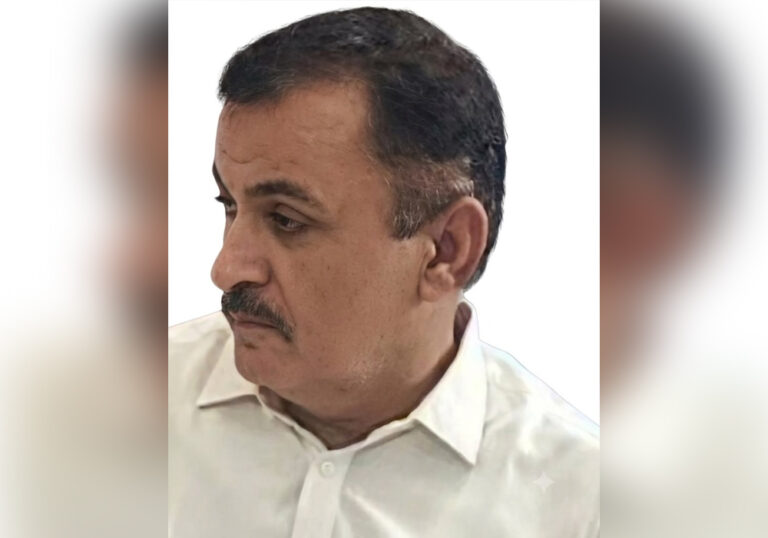
Bio: Hamza Tareen is a student at LUMS majoring in Political Science, with a keen interest in philosophy and theology.

‘I am utterly overwhelmed; the deluge of quizzes is beyond my capacity,’ my friend slowly sighed as his head drooped in exhaustion. Students across the country nurse dreams of pursuing higher education in premier institutes such as the likes of LUMS or IBA. They navigate the rigorous selection process, pay exorbitant fees and, when they finally clinch admission, little do they anticipate the stringently demanding atmosphere that would exact a heavy toll on their mental health.

Those who get into these prestigious universities are students who have already demonstrated exceptional academic excellence, and, unsurprisingly, they formulate a highly ambitious criterion for defining success, i.e., consistently acing their courses. However, since the assessment follows a bell-curve distribution which evaluates performance relative to peers, the grading is highly competitive and only a small proportion land in the A/A- categories. This not only fails their expectations but plunges them into depression as they call into question their academic capabilities and self-worth. And, to top it off, peer pressure, which is ever pervasive in the culture, further complicates the problem.

It would be tempting to label setting unrealistic expectations as the sole culprit; but the elephant in the room is something else. It is the culture that continuously pushes students to the brink of burnout and brands it as ‘academic rigor.’ From having interminable quizzes, assignments and mid/final exams to being expected to excel in four/five different courses simultaneously, the pressure is intense. And students are expected to somehow manage it all—along with carving out time for extracurriculars and social life. University is not all about academics, and there are a multitude of other problems that students steer through during the semester. But, to their dismay, they are assumed to carry through it all. Justified it would be to say that by the end of the term, they are sapped of all strength, teetering on the precipice of collapse.

It is a well-researched—and unfortunate—fact that depression and mental health problems abound in elite universities. The aforementioned factors, coupled with other personal and social challenges that characterize this phase of students’ academic journeys, become a crucible of pressure for them. They stumble, totter, and fall into a shroud of uncertainty. And, lamentably, the stigma associated with seeking help or counselling multiplies the problem. Mental health is stigmatized as something alien, suited for the ‘feeble.’

Amidst these circumstances, the onus falls upon the administration. Supportive counselling sessions which help students in threading their way through university life and academics are crucial; dedicated mental wellness centers need to be introduced, encouraged and endorsed; and students should be empowered to zoom in more on learning than deriving their self-worth from grades alone. This does not mean exhibiting apathy towards academic performance, but a reorientation of priorities which do not impede their growth and self-esteem. Finally, a reconsideration and reassessment of balancing academic rigor with students’ well-being is indispensable on the part of the administration. Mental well-being will naturally translate into more productivity.


Similar Posts

  • Ebola Outbreak-The deadly Epidemic

     The Ebola outbreak in DRC is not getting the required traction from the world despite being categorized as the fastest growing infection so far recorded by the World Health Organization (WHO). Before diving deep into the threats posed by this disease, it is imperative to provide the readers with an overview of this viral infection. An Overview of Ebola Outbreak The Bundibugyo virus, one of the Orthoebolavirus species is responsible for causing severe Ebola disease known as Bundibugyo virus disease (BVD). It is a zoonotic disease, with fruit bats suspected to be the natural reservoir.  With the close contact of a human to the blood or secretions of infected wildlife (including bats or non-human primates), the human gets the infection. Consequently, the infection spreads from one human to other through direct contact with the blood, bodily secretions, and organs of the infected ones. The viral infection can also spread through close contact with the surfaces and materials contaminated with the bodily secretions of the infected individuals. Very similar to the Corona virus, the spread of this infection is particularly high in health-care settings having inadequate sterilization measures in place. Moreover, a direct contact with the infected deceased individuals during their burial can contribute to its spread as well. Incubation period and Clinical symptoms The incubation period for BVD ranges from 2 to 21 days, and infected individuals are not infectious until symptom onset. Fever, fatigue, muscle pain, headache, and sore throat may represent as the early symptoms of this disease. But the non-specific nature of these symptoms often makes the diagnosis difficult resulting in delayed detection. Without early detection, the symptoms of this disease aggravate leading to gastrointestinal symptoms and organ dysfunction. In some cases, haemorrhagic manifestations may also occur in the infected individuals. Diagnosis and Treatment In the absence of confirmatory tests such as Polymerase Chain Reaction (PCR) or antigen- or antibody-based assays in the laboratory, it becomes a challenge for the health care professionals to differentiate BVD from other endemic febrile illnesses such as malaria. Outbreak control depends on early detection, isolation and care, contact tracing, safe burials and strong community engagement. Since there are no approved vaccines or specific treatments available for BVD, the current mortality rate of 44% to 46% for this disease poses a great threat to the affected communities. Current situation of Ebola outbreak Ebola, which spreads through contact with bodily fluids and causes a hemorrhagic fever, has killed more than 15,000 people in Africa over the past 50 years. As per the reports of international media outlets, the Ebola outbreak in DR Congo has spread to sixth province as death toll passes 2,100 with 4665 confirmed Ebola cases. The World Health Organization has already warned about its pace- the Ebola epidemic, already the deadliest in the country’s history, is spreading faster than any previous Ebola outbreak. Until now, five Congolese provinces had recorded cases: Ituri, which borders Uganda and South Sudan, North Kivu and South Kivu, Haut-Uélé and Tshopo. The risk of cross-border spread of this infection primarily to Uganda and South Sudan is very high. To make things worse, the response to contain this virus in the DRC is hampered by stretched health services, insufficient clean water and safe toilets. Some of the provinces where Ebola is present are densely populated and have only a weak government presence and largely lacking health infrastructure. North Kivu and South Kivu are also split by the front lines between the Congolese army and the anti-government armed group M23, backed by Rwanda, which has seized vast swathes of territory. This makes the conflict-ridden territory extremely prone to viral spread. Should we be worried? According to WHO official statement, the organization hopes to reverse the spread of this deadly virus in DRC within a span of three months with proper medical intervention. However, the pace with which it is spreading within DRC and bordering areas, it is quintessential to take some preventive measures. Since the globalization of the world was primarily responsible for Covid-19 pandemic, it is essential to have preparedness in advance. The healthcare authorities should establish proper communication channel with their counterparts in DRC to have real time data in hand. Similarly, a stock of screening kits should be maintained in the repository. In our airports and seaports, no preventive measures are in place for the screening of any such disease. To put things into perspective, our agencies working in the airports handle body search of persons and their belongings with no protective gears. They do not even wear any mask while dealing with international flights. Most of the time, those passengers who present with clinical symptoms of disease like coughing, flu or fever tend to wear no mask. This puts the fellow passengers and the airport authorities at risk of many diseases. Therefore, the government should take proper measures in this regard. The seaport and airport personnel should be trained to wear masks and protective gear while handling the flights coming from DRC directly or indirectly. Proper screening booths should be installed having health care professionals equipped with medical kits and personal protective gear. There should be proper sanitization within the airports and seaports vicinities. All these measures will put us in a better position to prevent many contagious diseases beforehand. Prevention should be the top most priority of our health care system only then we can envisage a healthy future. In the end, let us hope the viral infection in DRC subsides before getting out of control.

  • Paying tribute to Miskeen Jahan Khan Khoso, a lege…

    Today, is the 45-death anniversary of Miskeen Jahan Khoso, one of the legends of Thar. Miskeen Jahan Khan Khoso was a man who dedicated his life to serving the people of Tharparkar. He was born on July 9, 1909, in a Village Sami Veri near Nangarparkar Taluka Head Quarter. His father’s name was Bijar Khan Khoso. He joined the government job in police department which, he inherited from his father and grandfather. Not tolerating the exploitation of poor, peasants and marginalized in hands of landlords and Patels, rock-hard young yet a passionate Jahan Khan changed his mind other way, he resigned from the police job in 1937. He dedicated rest of his life in serving the humanity, in this way he spent 43 years in rendering a noble work. Not tolerating the exploitation of poor, peasants and marginalized in hands of landlords and Patels, rock-hard young yet a passionate Jahan Khan changed his mind other way, Many times, cases were registered against him to intimidate and punish. He was convicted and jailed for two years under a notorious goonda act. Carrying stakes of newspapers, with trademark cape on head and an iron wrapped baton in the hand, he either walked on foot or travelled through camels, horses and khekhras (GMC trucks 6×6) thousands of miles in his life. He would remain away from family and village for months. He never ever favored nepotism, he equally fought against his brothers while came to know they were illegally occupying the land of poor Kolhi farmers. As usual, he stood with poor farmers and lodged FIR against his own brothers. Miskeen always identified himself as a humble and down-to-earth character. He was known as the social worker of Thar by the poor people of Nagarparkar for his relentless efforts to help them in their times of need. Miskeen’s dedication to his people knew no bounds. He would associate with the Kolhis, Meghwar and Bheels, making them feel at ease, even though he came from an affluent family. He was not just a social worker or philanthropist; he was a true friend to the poor people of Tharparkar. He raised his voice against all forms of oppression and cruelty inflicted upon these communities by local waderas and feudal lords. Miskeen fought against these powerful and influential people through the power of the pen and the spoken word. His unwavering dedication to his people often landed him in trouble. He was imprisoned and jailed for raising his voice against the injustices suffered by the poor people of Tharparkar. Despite facing numerous FIRs and cases, Miskeen never gave up on his cause. He would return to his people after his release from jail, listen to their issues, and take them to the He was nominated for an international award in recognition of his services to the poor, marginalized, and oppressed communities in America. However, due to financial constraints, his son was unable to attend the ceremony. Miskeen did not undertake these social services for any personal gain or consideration. He did everything voluntarily out of his love and concern for his people. That is why he is also known as the Edhi of Thar, named after the late Abdul Sattar Edhi, a legendary Pakistani philanthropist who dedicated his life to serving the underprivileged. Miskeen’s efforts continue to be remembered and appreciated by the people of Tharparkar even after his death. He did great service without having or getting resources from others. He was a true humanistic and poor-friendly and did not believe in conversion of religion. Today, many Non-Government organizations and philanthropists are praised for helping the poor in Thar, but it’s important to remember that Miskeen served the needy purely out of humanitarian concern, without seeking recognition. It is encouraging to see that Miskeen’s legacy lives on in Tharparkar. Many people, such as Mama Vishan Thari, have taken up the mantle of continuing Miskeen’s work in their own way. Mama Vishan Thari, also known as the Edhi of Thar, is a resident of Mithi city. For over a decade, he has run a blood bank near the civil hospital Mithi, providing free blood to those in need and saving hundreds of lives. He does not categorize based on religion, caste, or creed, believing that everyone is equal and deserves help regardless of their background. Miskeen passed away on 23rd July 1980, leaving behind a remarkable legacy in Tharparkar. Majestic and resilient like Karoonjhar itself, his life story is far too vast to be captured in a few words.

  • Reforming the Security Council Without Entrenching…

    The United Nations was founded in 1945 after the League of Nations had failed to preserve peace. Its Security Council was designed for the world that emerged from the Second World War, with five permanent members holding the veto and a small number of elected seats. That basic architecture has scarcely changed since 1965, when the non-permanent membership rose from six to ten. The veto was meant to keep the great powers inside the system and to prevent open conflict among them. Eight decades later the organisation still carries the imprint of 1945 while the membership of the United Nations has grown to 193 states and the global population exceeds eight billion. The Council’s composition therefore no longer reflects the international community it is supposed to serve. In 2008 the General Assembly launched the Intergovernmental Negotiations to consider reform. The discussions have centred on five linked questions: categories of membership, the veto, regional representation, the size of the Council and its working methods. Africa still has no permanent seat. Latin America, South Asia and large parts of the Muslim world remain under-represented. The present arrangement is widely seen as a remnant of the colonial order that concentrates power among a few states. Many argue that emerging powers and significant regional actors—Pakistan, Brazil, Egypt, South Africa, Nigeria, Indonesia, Türkiye, Saudi Arabia, Mexico and India among them—ought to enjoy greater weight if the Council is to regain legitimacy and effectiveness. Yet the debate is locked. The Group of Four seeks permanent seats for itself and two for Africa. The African Group demands two permanent seats with full veto rights. France and Mexico urge the permanent members to refrain voluntarily from using the veto in cases of mass atrocity. The Uniting for Consensus group, led by Pakistan and supported by Italy, Mexico, Argentina, Canada and South Korea, rejects any enlargement of the permanent category. It proposes instead an expansion of elected seats that would be longer-term and renewable. The rival camps cancel one another’s majorities, leaving the process stalled. Enlarging permanent membership would not reform the Council so much as entrench new privileges. Additional veto-holders would multiply the occasions on which national interests can block action. The repeated American vetoes that have shielded Israel and allowed the destruction of Gaza to continue illustrate how a single permanent member can nullify the will of the rest. More permanent members would introduce further competing interests and raise the risk of paralysis. Once granted, permanent status is effectively irreversible; the new members would be free to obstruct any future attempt to revise the arrangement. India’s claim to a permanent seat invites particular scrutiny. Permanent membership requires sustained confidence in a state’s fidelity to the Charter. India’s refusal to implement successive Security Council resolutions on Jammu and Kashmir, its rejection of a United Nations-supervised plebiscite and its unilateral constitutional changes in the territory sit uneasily with that standard. Concerns about human-rights practices in the disputed region and elsewhere, the suspension of the Indus Waters Treaty, reports of transnational repression, the Citizenship Amendment Act, the treatment of Rohingya refugees and a foreign policy that has offered strategic comfort to Israel all raise legitimate questions. India’s status outside the Non-Proliferation Treaty and the Comprehensive Test Ban Treaty adds a further layer of unease. Germany’s candidature faces different objections. Europe already holds two permanent seats. Adding a third would deepen regional imbalance. Recent German positions on Gaza have been criticised as inconsistent with the very humanitarian principles permanent members are expected to uphold. The country’s failure to secure even a non-permanent seat in a recent election suggests that its aspirations do not command the necessary breadth of support. The Uniting for Consensus proposal offers a more measured path. Expanding the elected membership from ten to twenty would open opportunities for Africa, Asia-Pacific, Latin America and the Caribbean without creating new permanent centres of power. Periodic elections would keep members accountable to the wider membership. Rotation would allow more states to contribute to the maintenance of peace and security. Broader participation could improve the quality of deliberation on intractable questions such as Palestine, Ukraine and other long-standing disputes, without multiplying vetoes that have so often produced deadlock. Reform should strengthen the Council’s legitimacy without sacrificing its capacity to act. Expanding permanent membership would create additional privileged seats, heighten the risk of institutional paralysis and make subsequent change more difficult still. Wider geographical representation is better achieved by enlarging the elected ranks. The Uniting for Consensus approach preserves the existing institutional framework, enhances inclusivity, promotes accountability through regular elections and reflects the interests of the membership as a whole. Sustainable reform therefore lies in widening participation and reinforcing regional balance rather than in extending permanent privilege and the veto.

  • Xi Jinping’s vision for stronger party governanc…

    Since the 18th National Congress of the Communist Party of China (CPC), the CPC Central Committee with General Secretary Xi Jinping at its core has put forward a series of new ideas, new thinking and new strategies centered on the major issue of the era—what kind of long-term governing Marxist party to build and how to build it—giving rise to Xi Jinping Thought on Party Building. As an important component of Xi Jinping Thought on Socialism with Chinese Characteristics for a New Era, Xi Jinping Thought on Party Building carries significant practical relevance and far-reaching guiding significance for strengthening the Party and the nation. It explicitly sets forth the “14 commitments”, namely: adhering leadership by the CPC as the defining feature of socialism with Chinese characteristics; upholding the centralized, unified leadership of the Party Central Committee; exercising full and rigorous Party self-governance; staying true to the Party’s original aspiration and founding mission; taking strengthening the Party politically as the overarching principle; building cohesion and inner strength with the Party’s latest theory; forging strong Party spirit; improving the organizational system to ensure vertical coherence and effective implementation; cultivating high-caliber officials capable of shouldering the mission of national rejuvenation; making sustained and effective efforts to improve conduct; governing the whole Party with strict discipline; taking integrated steps to ensure that officials do not have the audacity, opportunity or desire to conduct corruption; governing the Party through systems and regulations, and ensuring that the political responsibility for Party self-governance is fulfilled. The “14 commitments” represent a concentrated summary of General Secretary Xi Jinping’s landmark, guiding new ideas and strategies on party building in the new era. They serve as the fundamental guideline for the CPC in strengthening party building, as well as a Chinese approach for political parties around the world to enhance self-improvement and state governance. China and Pakistan are ironclad friends and all-weather strategic cooperative partners. We are ready to deepen exchanges and mutual learning with Pakistan on party building and governance, work together to improve people’s well-being and promote prosperity and development, and accelerate the building of an even closer China-Pakistan community with a shared future in the new era. We must put people first and ensure that China-Pakistan cooperation delivers greater benefits to the two peoples. The CPC has always upheld building the Party for the public good and exercising state power for the people. Xi Jinping Thought on Party Building explicitly stresses “remaining true to the original aspiration and founding mission”, namely to seek happiness for the Chinese people and rejuvenation for the Chinese nation. Back in 2012, General Secretary Xi Jinping pointed out that our Party is dedicated to serving the people wholeheartedly; the people’s desire for a better life is the goal we strive to work for. Guided by this profound devotion to the people, in the well-known poverty elimination campaign in China, General Secretary Xi Jinping set a shining example through personal commitment. He conducted more than 50 field research visits on poverty alleviation, covering all 14 contiguous poor regions across China. Based on thorough investigations, he put forward and applied the concept of targeted poverty alleviation, setting a brilliant example of integrating the power of truth with moral integrity. Under his leadership, China won the poverty alleviation campaign, built a moderately prosperous society in all respects, and embarked on a new journey of advancing national rejuvenation and building a great modern socialist country through Chinese modernization. Practice since the 18th National Congress of the Communist Party of China (CPC) has fully demonstrated that the historic achievements and transformative changes in the cause of the Party and the country are fundamentally attributable to the steady guidance of General Secretary Xi Jinping as the core of the CPC Central Committee and of the Party as a whole, and to the scientific guidance of Xi Jinping Thought on Socialism with Chinese Characteristics for a New Era. Under the strong leadership of General Secretary Xi Jinping and the Party Central Committee, over 3 million first secretaries of CPC village committees and village-based officials, together with nearly 2 million township officials and millions of village officials, fought in unison to eliminate absolute poverty. This fully demonstrates the CPC’s capacity to mobilize resources to accomplish major undertakings, and embodies two core principles highlighted in Xi Jinping Thought on Party Building, which is “adhering to the leadership by the CPC as the defining feature of socialism with Chinese characteristics” and “upholding the centralized, unified leadership of the Party Central Committee. It is precisely because the CPC always puts people first and regards delivering people’s wellbeing as its paramount achievement that it enjoys enduring popular support and stands as the most reliable backbone for the Chinese people. Beyond seeking happiness for the Chinese people and rejuvenation for the Chinese nation, the CPC also strives for progress for humanity and the common good for the world. As General Secretary Xi Jinping noted, we Chinese not only aspire for good living for ourselves, but also hope people in other parts of the world lead a decent life. This is fully reflected in the development of China Pakistan relations in the new era. General Secretary Xi Jinping has always been concerned about and supported Pakistan’s national development and the improvement of people’s livelihoods. He and Pakistani leaders established the all-weather strategic cooperative partnership between the two countries and reached important consensus on building an even closer China-Pakistan community with a shared future in the new era. General Secretary Xi Jinping has stressed that China’s friendly policy toward Pakistan is always oriented toward all Pakistani people, the planning and layout of the China-Pakistan Economic Corridor (CPEC) should take into account all regions of Pakistan, so that the fruits of development can benefit all the Pakistani people. To date, CPEC has brought in over 25.9 billion US dollars in direct investment, created more than 260,000 jobs, added over 8,000 MW of power generation capacity, built 510 kilometers of highways and 886 kilometers of core national power

  • The Exorbitant Cost Of Numbness

    By Hamza Bio: The author is a student at LUMS from Quetta, Baluchistan, majoring in political science. Cobwebs clung to the corners. Old things lay strewn across the floor. Musty air permeated the room, heavy with a dense smell. And there lay Muntaha, old enough to shoulder a schoolbag, yet young enough to trust that the world outside would not betray her. A seven-year-old child assaulted, raped, and murdered. Was it an aberration, a crime so atrocious that it crossed the bounds of abomination—liable to be dismissed as the work of a depraved mind? Facts offer an utterly different story. Eighteen-month-old Aizal recently met the same fate. Mir Raza, a young IBA graduate and a thriving businessman with a promising life stretching before him, was robbed of his life; his post-mortem examination revealed traces of acid and marks of torture that his body bore. Different names. Different stories. Yet testifying to the same grim pattern that recurs persistently. And perhaps more distressing is our habituation to it: another story breaks, headlines saturate social media feeds, condolences arrive, vacuous promises follow, and eventually, the outrage subsides. Until it happens again. With each gruelling episode, our emotional responses are sapped. That which once transfixed us with horror now hardly unsettles us. The gravity does not diminish; we resign ourselves to the dismal reality. What’s even more disturbing is the gradual erosion of our capacity to acutely realise the weight of these atrocities. This phenomenon ought not to be labelled as apathy. Apathy is much simpler: it is the vacancy of feeling. What we are experiencing is something far more pernicious: a gradual distortion of our senses, recalibrating what we consider shocking. We are undergoing an unconscious normalisation and readjustment to realities that are far from normal. Accustomed to darkness, we watch the very conception of light wither away. We do not cease to care. We require more to feel the same empathy and gravitas that were once instantly evoked. The implications of this shifting baseline are dire. Now for a story to break through, it requires something more heart-rending. It must involve fire, a child, acid, or a lynching to pierce through the noise—although briefly. We have not become cruel; our threshold has changed, filtering out and grading horrors on a curve. And the worst part? We scarcely realise the higher standard that we establish. There is a peculiar cruelty that this readjustment entails. No one consents to feel less over a murdered child, an acid attack, or a sexual assault. It unfolds and creeps in us in increments: one story, one headline, one brutality, one brief sigh. Until the sum of it all is a society that can read about Aizal, Muntaha, and Mir Raza in a single sitting, with its emotional faculties completely exhausted. The prevailing emotion changes from fury to fatigue. What we are surrendering, with each successive case, is not compassion; it is accountability. Accountability when it matters the most, until the headlines fade away from our feeds, the case is buried in the docket, and the victim is swallowed by history—before another name appears to draw another sigh of grief. A society that, though unconsciously, decides to exist beside crimes instead of demanding a reckoning for the culpable is perpetually doomed to remain rife with them because the ability to feel, to question, and to compel accountability has been effectively degraded. The outcome of it all is not that we will turn a blind eye to the horrors; we will grieve—briefly, outrageously, sincerely, and uselessly. Our grief will remain precisely in the same fashion but will fail to prevent such abhorrent acts because the mechanism that might have translated outrage into tangible outcome has been rendered inoperative through the desensitising monotony of repetition. The result? A society that has stopped reacting meaningfully. Brief outcry coupled with a hollow response results in a late, defanged, or no outcome at all. The perpetrators, who may have been deterred by the consequences, now have less to dread. Thus, further crime is bred, and its miscreants emboldened. Desensitization is a distinct peril from the crimes that breed it in the first place. It consistently curtails the cost of crime for everyone still capable of inflicting it. When the very alarm that stirs our conscience has been paralysed, a subtle message is whispered that another child, another toddler, or another youth awaits the same fate as Muntaha, Aizal, or Mir Raza.  

  • The Mirage of Fragmentation: Territorial Redrawing…

    A familiar and recurring phantom is once again haunting the political and intellectual horizon of Pakistan: the clamor for administrative redistribution and the carving out of new provinces. Whenever structural collapse, economic decay, and institutional governance reach their absolute nadir, the sanctums of power and the opaque enclaves of the establishment begin to chant a singular, predictable refrain. The root of all systemic malady, we are told, lies in the sheer geographical expanse of our existing provinces, and the ultimate panacea is the relentless division of the state. When one scrutinizes the subterranean motives, logical contradictions, and political expediencies governing this discourse, an uncomfortable truth starkly emerges. This persistent endeavor to shift the blame for chronic misgovernance and policy failure onto geographical boundaries, cultural entities, and ethnic identities is merely a resurrection of a time-worn colonial playbook—a deliberate diversion designed to distract the citizenry from real structural grievances while consolidating the apparatus of absolute control. History bears poignant witness to the reality that whenever ruling elites fail to mask their administrative ineptitude, systemic incompetence, and constitutional deviations, they seek refuge behind the seductive mirage of better governance, transforming the republic into an endless laboratory of reckless experimentation. One is compelled to ask: does any sound mind truly accept the medical wisdom of amputating a limb simply because a malignant ulcer has taken root in the arm? Are the pathologies of governance so superficial that merely redrawing cartographic lines will spontaneously engender distributive justice, institutional merit, the rule of law, and administrative transparency? A careful, unvarnished reading of pre-partition South Asian history reveals that this formula of administrative fragmentation was never a native or democratic innovation. Rather, it was a tested and ruthless instrument of British imperialism, rooted entirely in the cynical philosophy of “Divide and Rule.” In October 1905, when Lord Curzon partitioned the sprawling province of Bengal under the alluring and deceptive banner of administrative efficiency, improved governance, and better public service delivery, the official justification was identical to today’s rhetoric: that managing such a vast demographic mass from a single center was untenable. Yet history dealt a merciless blow to that colonial experiment. The people of Bengal rightly perceived the partition as a direct, existential assault on their linguistic, cultural, and political integrity, rising in fierce and unyielding resistance. Ultimately, the imperial master was forced into an ignominious retreat, revoking the partition of Bengal in 1911. That historical episode remains an enduring monument and a stark warning to contemporary rulers who imagine they can trifle with the collective historical memory, cultural affinity, and geographical unity of a populace under the intoxicating influence of unchecked power. From the very inception of Pakistan, the ruling classes consistently spurned the genuine principles of cooperative federalism, choosing instead to enshrine coercive and authoritarian centralism as the ultimate guarantee of their survival. During the formative decades of the republic, when the delicate question of distributing democratic rights among diverse constituent units arose, the dominant factions lacked the political maturity required for a pluralistic state. Instead, they forced all the western provinces and states into an unnatural straitjacket known as the “One Unit” scheme. That dark chapter of authoritarian engineering laid bare the callous indifference of the ruling elite toward the historical identities and rich diversity of the people, subjugating all societal bonds to the preservation of concentrated power. When that forced administrative edifice eventually fractured under the weight of unrelenting public resistance, the four-province federal structure was reluctantly conceded. Yet the true spirit of federalism was never allowed to breathe. The constitutional imperatives of provincial autonomy were systematically subverted, resources were inequitably distributed, and the unquenchable thirst for hegemony converted the federation into a fragile, crisis-ridden entity perpetually at war with its own constituent parts. Renowned scholars and theorists of public administration and cooperative federalism universally agree that when any sub-national unit exceeds optimal parameters in territory and population, it inevitably succumbs to bureaucratic inertia and administrative paralysis. According to global academic consensus, effective public service delivery demands a balanced proportional equilibrium between geography and demography, ensuring that the writ of the state and essential services penetrate even the most peripheral districts. However, the high-performing federal democracies of the world—such as the United States, Canada, Australia, or Germany—do not achieve excellence in governance merely because their constituent units happen to be geographically compact. They succeed because they rigorously enforce the foundational principle of **Subsidiarity**, which dictates that governance decisions must always be executed at the lowest possible tier capable of addressing them, rather than being arrogated by a distant center or provincial capital. Conversely, the powerful elite who orchestrate policy from behind the veil in Pakistan remain profoundly detached from this philosophical prerequisite. The core issue here is not the mere physical size of a province; it is the centralization of coercive power, deep-seated fiscal distortions, and a bankrupt political intent. In a country like Pakistan, where provinces already depend abjectly on federal transfers through the National Finance Commission (NFC) Award, attempting to carve out new provinces without addressing the fundamentals of fiscal federalism will only exponentially multiply the economic burden. If one merely replicates provincial capitals, bloated cabinets, and superfluous administrative secretariats without dismantling the underlying corruption, nepotism, and systemic incompetence, the public will find no relief from their miseries. Instead, the state will be pushed deeper into fiscal insolvency and bureaucratic suffocation. This brings us to the most fundamental and inescapable question: if four provinces were to be multiplied into eight, sixteen, or thirty-six administrative units tomorrow, would traditional political parties magically vanish? Would the actors occupying the corridors of power in these new provinces descend from another planet, or would they simply be the identical political dynasties and entrenched interest groups of the Pakistan Peoples Party, the Pakistan Muslim League, or Pakistan Tehreek-e-Insaf donning new nameplates? When the foundational structural architecture, the prevailing political culture, and the patronage networks of the elite remain utterly unaltered, how can the mere shifting of administrative borders dissolve the cancer of corruption, the

Leave a Reply

Your email address will not be published. Required fields are marked *